

Editor’s Note
Woah, we’re half way there, woah-oh, livin’ on a prayer! The words of Bon Jovi, for many of us, I’m afraid to say, could not be ringing more truely.
Steeling yourself for fifth week blues, or that slap-in-the-face-with-a-cold-fish-feeling of another 2000 word essay due in two hours time? Procrastinating now can’t hurt you anymore that it already has done – so why not take a break and have a flick through some events from around the world this week. Coming up we have ….
Nancy Gittus takes a deep dive into the ongoing conflict in Somalia. Uganda is withdrawing its troops, as the US has cut its funding for the UN mission to support the Somalian government against an Islamist insurgency.
In happier news, Dillon Shukla casts an eye over a blue Texas – and no, surprisingly, its not that global warming has got so bad that Texas has been fully submerged by the Atlantic, but rather for the first time in over 30 years Texas has voted for the democrats !
Finally, Noah Allerton takes a quick break from his duties as Editor-in-Chief and pops over to Paraguay, where President Santiago Peña has been impeached and placed under house arrest. Read on to find out why …
A Turning Point for Somalia
By Nancy Gittus
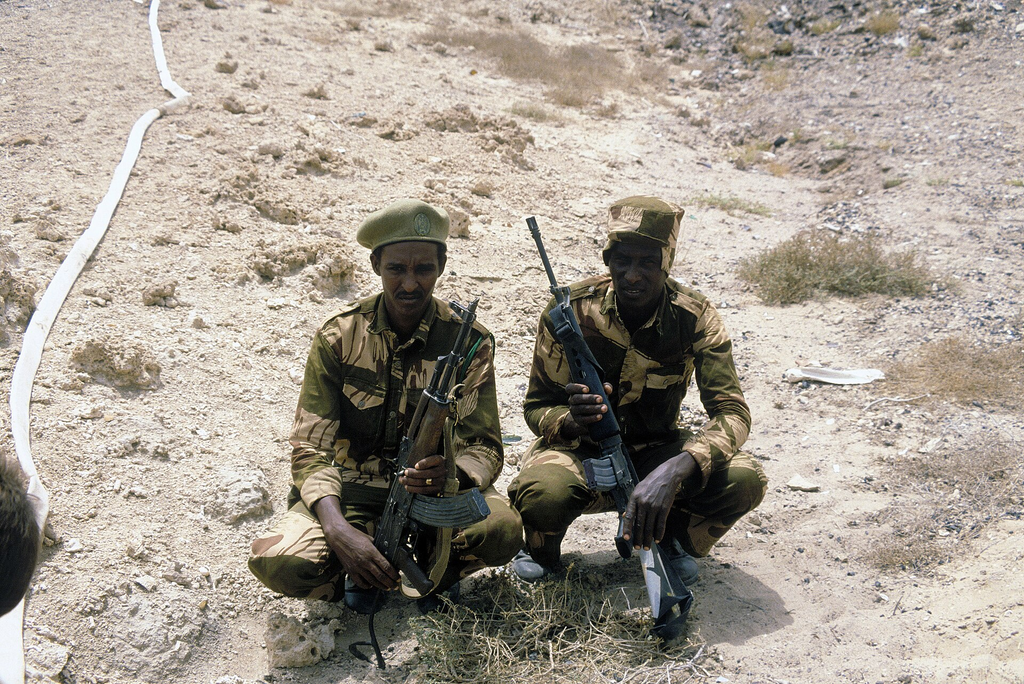
Image credit by GYSGT W. R. Hower. This file is a work of a U.S. military or Department of Defense employee, taken or made as part of that person’s official duties. As a work of the U.S. federal government, the file is in the public domain in the United States.

Twenty years ago Uganda sent troops to Somalia to aid the country in defeating Islamist militant attacks against the government. Today (2 November 2026) those soldiers are finally being brought home. Over the course of this week, the 4500 Ugandan troops deployed under the African Union’s AU Support and Stabilisation Mission in Somalia (AUSSOM) will be withdrawn as part of a phased drawdown (a systematic withdrawal of troops, equipment, assets etc.). AUSSOM, which was initially set up in 2024 to help transfer security responsibility to Somali forces, is having to drastically reduce its operations, for reasons which will be explained below.
Unfortunately this withdrawal is not a jubilant one. Ever since the early 2000s, Uganda – along with many other countries and organisations – has supported the Federal Government of Somalia, based in Mogadishu, against attacks from the al-Shabaab insurgency. Al-Shabaab is a jihadist organisation affiliated with Al-Qaeda, which emerged during Somalia’s first civil war (1988-1991). Since 2012 the group has perpetuated continuous attacks against the military with the aim of establishing an extremely conservative Islamic state.
Although an eventual withdrawal of support was always the aim of AUSSOM, its timing has been forced by the US’ decision to cancel funding for the UN Support office in Somalia next year. This will cut off $500 million (£373 million) worth of funding for the mission. Washington also informed the African Union it would block the UN from supporting the AU Support and Stabilisation Mission in Somalia from next year onwards.
“This will have huge ramifications for Somalia,” Ahmed Koshin, a former director general in Somalia’s defence ministry and current member of the national parliament, told Reuters.
Washington stated, “Internal rivalries and political infighting continue to undermine the fight against al-Shabaab and ISIS, and the benefits of international support will remain limited until Somalia’s leaders unite to address the country’s security and governance challenges.” By laying the blame at the feet of Somalian leaders, the US justified its withdrawal of funds.
As of Monday, Uganda’s acting spokesperson Chris Magezi, stated that Somalia is expected to “assume full responsibility for security.”
Somalia’s military forces remain, however, overstretched and underequipped, and ACLED’s Senior Research Assistant for Southeast Africa stated that, “Al-Shabaab is poised to aggressively exploit this security transition by launching a major, coordinated offensive during the 2026–2027 transition period. This push could allow the group to reclaim territorial footholds in the central and southern regions while directly threatening major urban hubs, including Mogadishu and Kismayo.” He went on to warn that “Localized competition over critical infrastructure like airports could quickly devolve into armed inter-clan conflict, severely disrupting counter-insurgency efforts and worsening the humanitarian crisis.”
In the next year Somalian citizens will see whether or not their country is able to defend itself from the internal opponents who have posed an existential threat to the national government for so long.
There are some reasons for hope. Training programmes supported by countries such as Turkiye, the UAE, and Eritrea have boosted the Somali National Army by more than 10,000 troops. The Somalians have recently also been leading more offensive operations against Al-Shabaab, rather than simply defending the territory which remains in their possession. However, the government still relies heavily on foreign intelligence, air support, training, and logistics. For instance, the UN office in Somalia provides food, water, fuel, transport, engineering, communication, medical support, and casualty evacuation to government forces in Somalia.
Somalia is faced not only with taking over its security forces; it must, at the same time, fill in the significant gaps left behind by the departure of UN aid.
As things stand, it’s not looking good for the country’s inhabitants, as a report of the Secretary-General pursuant to resolution 2809 (2025) warns, AUSSOM “remains indispensable in supporting Somali security forces to consolidate peace and security gains.” As the Ugandan troops head home, the AU can only hope that the recent election results in the US lead to some of Trump’s decisions to withdraw aid being blocked, or reversed, in time to save the mission in Somalia.
Has Texas Finally Turned Blue?
By Dillon Shukla
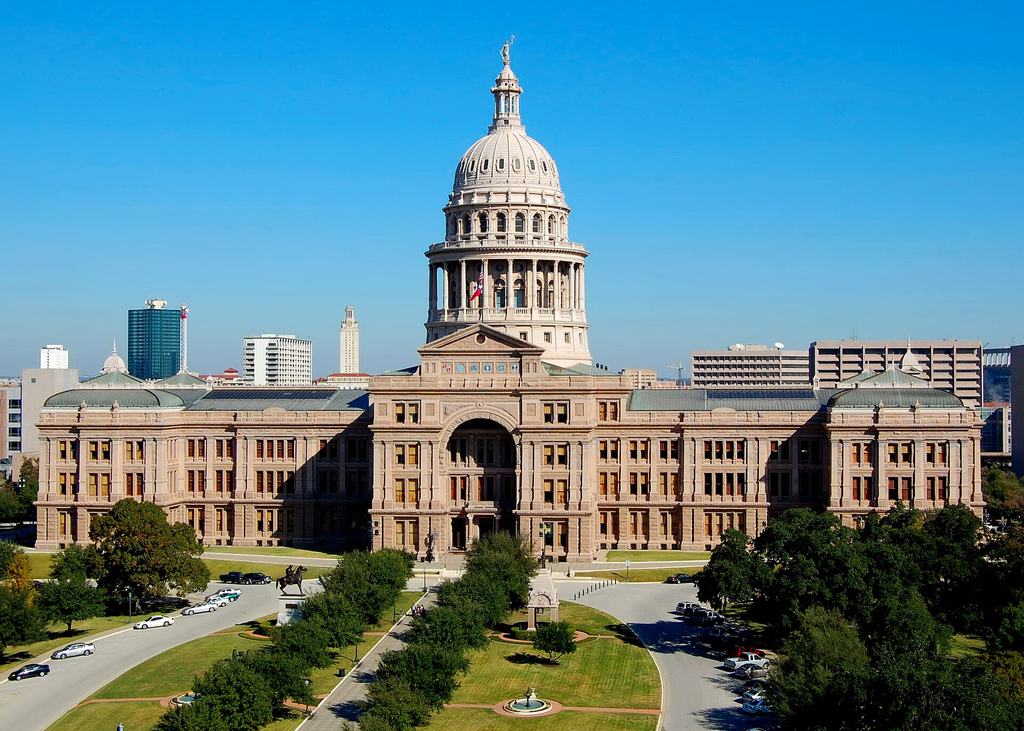
Image Credit: LoneStarMike. This image is licensed under the Creative Commons Attribution-Share Alike 3.0 Unported license.

On 3 November 2026, the US held midterm elections for all seats in the House of Representatives, a third of Senate seats, and various state offices such as the role of Governor. The results were a huge victory for the Democrats, dubbed a ‘blue wave,’ winning competitive races in states such as North Carolina and Michigan, and exceeding expectations to win seats in traditionally red states such as Kansas.
However, one state stands out as the crowning touch for Democrats, namely their victory in Texas. Democrats outperformed their own expectations to win a slate of offices in what was formerly viewed as a solidly Republican state. Most notably, James Talarico defeated scandal-plagued Ken Paxton in the race for senate, winning 55.1% of the popular vote in a state in which Donald Trump had won 56.1% just two years prior. Gina Hinojosa also defeated incumbent Governor Greg Abbott, winning 52.8% of the vote. Hinojosa will be the first Democrat governor of Texas since 1994, and also the first Latina governor of a state in which Latinos constitute the largest ethnicity.
Democrats succeeded in downballot races too. Democrats swept the Texas House of Representatives, gaining control for the first time since 2002, meaning that they hold two of the three leavers of government, with Republicans holding the Texas State Senate. Democrats also won the positions of Attorney General and Railroad Commissioner by considerable margins.
But how did the same state which produced both Bush presidents end up here? Some issues in the election are Texas specific. Ken Paxton, Talarico’s challenger for senate, has had multiple scandalous accusations levied against him during his career. Trump himself has teased Paxton, stating he “may not dress right, he may not talk exactly perfectly, and he may not be the best-looking guy I’ve ever seen.” A major scandal arose in 2020 while he was Attorney General of Texas, when eight of his staffers asked the FBI to investigate if Paxton had abused his office to help a donor, in return for a free kitchen renovation and a job for a woman with whom Paxton had been having an affair.
Paxton was not the Republican’s only polemic candidate. Railroad Commissioner candidate Bo French, who was defeated by Democrat John Rosenthal, has also had his fair share of scandals. These mainly relate to his numerous bigoted comments. For example, he published a post on X making racist comments against South Asian Americans at a University of Texas football game. Even some Republicans publicly denounced him for his comments.
However, nationwide discontent has also been brewing. President Trump has become incredibly unpopular, with 62% of American voters disapproving of his job, and his approval rating has dropped to 36% following the Iran war. Moreover, 63% of voters believe that the US made the wrong decision to take military action against Iran, while two thirds of Americans believe that Trump’s policies have made economic conditions worse.
Texas’ demography is also interesting. Texas is a majority minority state, with a significant Hispanic population and a growing Asian American population. Traditionally, ethnic minorities are more favourable to the Democratic Party, however in 2024 non-white voters bucked this trend, shifting to the right, which helped carry Trump to a comfortable victory in Texas. However, minorities have been impacted by the same economic woes which caused Trump’s approval rating to collapse. Moreover, the issue of ICE is close to many Latino voters, with 68% of Latinos disapproving of how ICE has handled its role. This summer, ICE fatally shot Mexican born Lorenzo Salgado Araujo in Houston, Texas’ largest city.
The recent elections in Texas show that Democrats have, at least for now, managed to regain minority voters. In the elections for the United States House of Representatives, Democrats managed to win back all seats along the Texas-Mexico border, seats which are heavily hispanic. Overall, in the race for senate, Asian voters shifted 32 percentage points to the left from the 2024 presidential election, and Latinos shifted a massive 42 points to the left. Overall voter turnout increased to 51.6% in Texas, equating to 9.8 million voters – the highest for a midterm election since 1970. An estimated 65% of voters who didn’t vote in 2024 voted for Talarico.
For years, Democrats have chased Texas. Texas is a massive electoral prize, by far the second largest state, holding 40 electoral votes in the electoral college. Its demographic diversity, and the gradual shift of suburban voters to the Democrats in the MAGA era brought hope that one day Texas could be in play. However, the closest they’d previously come to taking a statewide office in Texas was in 2018, when Beto O’Rourke won 48.3% of the vote, but still lost to incumbent Ted Cruz.
2026 was undoubtedly a blue wave for Democrats, if not a blue tsunami. They won the popular vote by an estimated 13 points, the largest since 1976, in circumstances that were very favourable to them. There is valid reason to be cautious, as Trump’s 2016 and 2024 victories demonstrated that Democrats cannot take any groups for granted, and Texas is by no means consolidated for Democrats, with 2028 being a big test. However, these elections prove to Democrats that, when the circumstances are right, Texas is not out of reach.
Paraguayan President Impeached After Attempting to Resign
By Noah Allerton

Former Paraguayan President Santiago Peña at his inauguration dinner in 2023. This image is licensed under Creative Commons Attribution 2.0. Image credit: Office of the President of the Republic of China.

Paraguayan President Santiago Peña has been impeached and placed under house arrest following the collapse of one of the country’s largest banks, which left almost three million people unable to access their savings. On 6 November, Paraguay’s Senate voted unanimously to remove Peña from office, just one day after he had announced his resignation.
The decision marks a dramatic end to Peña’s presidency, which began in August 2023 after Peña won the Presidential election in the same year by a 15% margin. The former economist, considered a close ally of US President Donald Trump, now faces a criminal investigation into alleged corruption and financial misconduct.
Vice President Pedro Alliana has subsequently been sworn in as president, inheriting a government facing widespread protests and growing concerns over the security of public savings. However, the impeachment raises several questions: how did the collapse of a single bank bring down Paraguay’s president, why did lawmakers refuse to accept his resignation, and what happens next?
How Did the Crisis Begin?
At the centre of the scandal is Ueno Bank, a digital lender which experienced rapid expansion under Peña’s presidency. Originally established as a finance company in the 1970s, Ueno was acquired by Paraguayan conglomerate Grupo Vázquez in 2021. In 2023, the bank received authorisation to expand its operations, subsequently attracting millions of customers through generous cashback offers and extensive advertising campaigns.By November 2026, the bank claimed to serve approximately 60% of Paraguay’s adult population, becoming one of the country’s largest financial institutions.
However, concerns emerged regarding the bank’s financial practices and its relationship with Peña’s administration. More than $800 million in public funds had been deposited in Ueno, including substantial investments from state pension institutions. Peña had previously held shares in the bank’s parent company, whilst Carlos Carvallo, whom he appointed as central bank president, had formerly been a Ueno executive.
Opposition politicians accused Peña of using his political influence to direct public money towards the bank, whilst regulators allegedly overlooked risky lending practices. Peña has consistently denied any wrongdoing.
On 2 November, Paraguay’s central bank ordered Ueno into resolution proceedings after concerns over its solvency. Almost three million customers subsequently found themselves unable to withdraw cash, make payments, or access their savings. In response, thousands of Paraguayans gathered in the capital, Asunción, demanding the return of their money and accountability from the government.
Why Was Peña Impeached After Resigning?
On 5 November, facing mounting political pressure, Peña announced his resignation in a video address, explaining that he wanted to preserve national stability and prevent further division. However, Congress refused to accept his resignation, instead proceeding with impeachment proceedings. Either outcome would have resulted in Peña leaving office, however impeachment carried stronger consequences. Under Paraguay’s constitution, elected former presidents ordinarily become senators for life, receiving parliamentary immunity associated with that position. However, presidents removed through impeachment do not receive this privilege. Consequently, lawmakers argued that accepting Peña’s resignation would allow him to retain protections which could complicate criminal proceedings against him.
Peña’s political position had already deteriorated considerably. Members of his own Colorado Party withdrew their support, including former President Horacio Cartes, his former political mentor. On 6 November, all 44 senators present voted to remove Peña from office for misconduct, making him the second Paraguayan president in recent history to be removed through impeachment, following Fernando Lugo in 2012.
Shortly afterwards, prosecutors ordered Peña’s detention as part of an investigation into alleged breach of trust, influence peddling, and misappropriation of public funds. Peña was placed under house arrest following his removal. He has denied the allegations against him, and the investigation remains ongoing.
What Happens Next?
Following Peña’s impeachment, Vice President Pedro Alliana was sworn in as president on 6 November. Alliana, also a member of the Colorado Party, will serve the remainder of Peña’s presidential term, which ends in August 2028. However, his appointment does not necessarily signal an end to the crisis. Alliana has himself faced allegations relating to Ueno Bank, although he denies wrongdoing. An attempt to impeach him was unsuccessful, allowing him to assume the presidency.
His immediate priority will be restoring public confidence in Paraguay’s financial system and ensuring that affected customers recover their savings. According to Associated Press, by 7 November approximately 1.2 million customers had received partial or full reimbursement of their insured deposits. Nevertheless, millions remain affected by the collapse, whilst concerns persist over the security of public pension funds. Alliana promised, upon assuming the presidency, to not “abandon” these millions of affected customers.
The political consequences could also extend beyond Peña’s removal however. The Colorado Party, the right-wing party of both Peña and Alliana, has dominated Paraguayan politics for decades, and the scandal has exposed tensions within its leadership, particularly between Peña and his former ally Cartes.
The crisis has also raised questions about the independence of Paraguay’s financial regulators and the relationship between political leaders and private businesses. Furthermore, Peña’s removal creates uncertainty surrounding Paraguay’s relationship with Washington. His administration maintained close ties with Donald Trump, whilst the United States had previously described Paraguay as an important partner.
Peña’s impeachment may have brought his presidency to an end, but with criminal investigations continuing and thousands of Paraguayans still demanding accountability, the wider consequences of Ueno Bank’s collapse remain unresolved.