
Maybe it is the History student in me, but I feel as though I’ve had more than the usual number of conversations about who I’d be if I travelled back in time. Then, we list so many periods that are put on a pedestal: the Roaring 20s, the Renaissance, Ancient Rome, and more. For example, a few years ago, my friends and I did a PowerPoint night for a friend’s birthday, and I presented, “Who X would be in different historical periods.” In this, I used her personality to fit her within different eras – and I don’t think she was thrilled when I claimed she would have accidentally started the Great Fire of London. I believe that, perhaps, I could adapt to fit in anywhere, and be placed in any position. We all have certain qualities that would make us thrive, or at least have a story to tell, at any point in the past.
Nonetheless, as much as I would love to be a flapper girl in some New York City dive bar on the eve of the Great Depression, when this discussion arises, every suggestion comes with a small caveat. If I were to say, “I would want to be a Victorian-era duchess!”, I would quickly be met with the realisation that it is “…not entirely historically accurate”.
Obviously, I know that; I am a mixed-race woman. I am fortunate enough to live in the historical period most suited to my freedom and success, even if there are still limitations in the 21st century – although I won’t go into them now. The present time is still clearly the best era for me to live in. Nevertheless, a girl can dream; I can yearn to be an Ancient Egyptian pharaoh, ignoring the constraints of race and gender-related historical issues.
People have been having these discussions for as long as history itself, and so the subversion of historical accuracy in fictional imagining has been represented in the media as long as it has existed. Yet, the first time I saw a concrete visual example of someone like me in a “desirable” position in history was through the release of Bridgerton in December 2020. The Netflix television series provided representation for people of colour in historical fiction with a deliberate choice to discard strict adherence to historical accuracy. This disregard is something that is a feature of our ‘back in time’ discussions, as we focus on glamourised histories, whilst generally bypassing more marginalised ones, which Shonda Rhimes (Bridgerton’s producer) has, finally, brought into the public sphere. Of course, though, if we were to be realistic, around 99% of us would be peasants in the Regency era: we can’t all be nobility. But who actually wants to admit that?
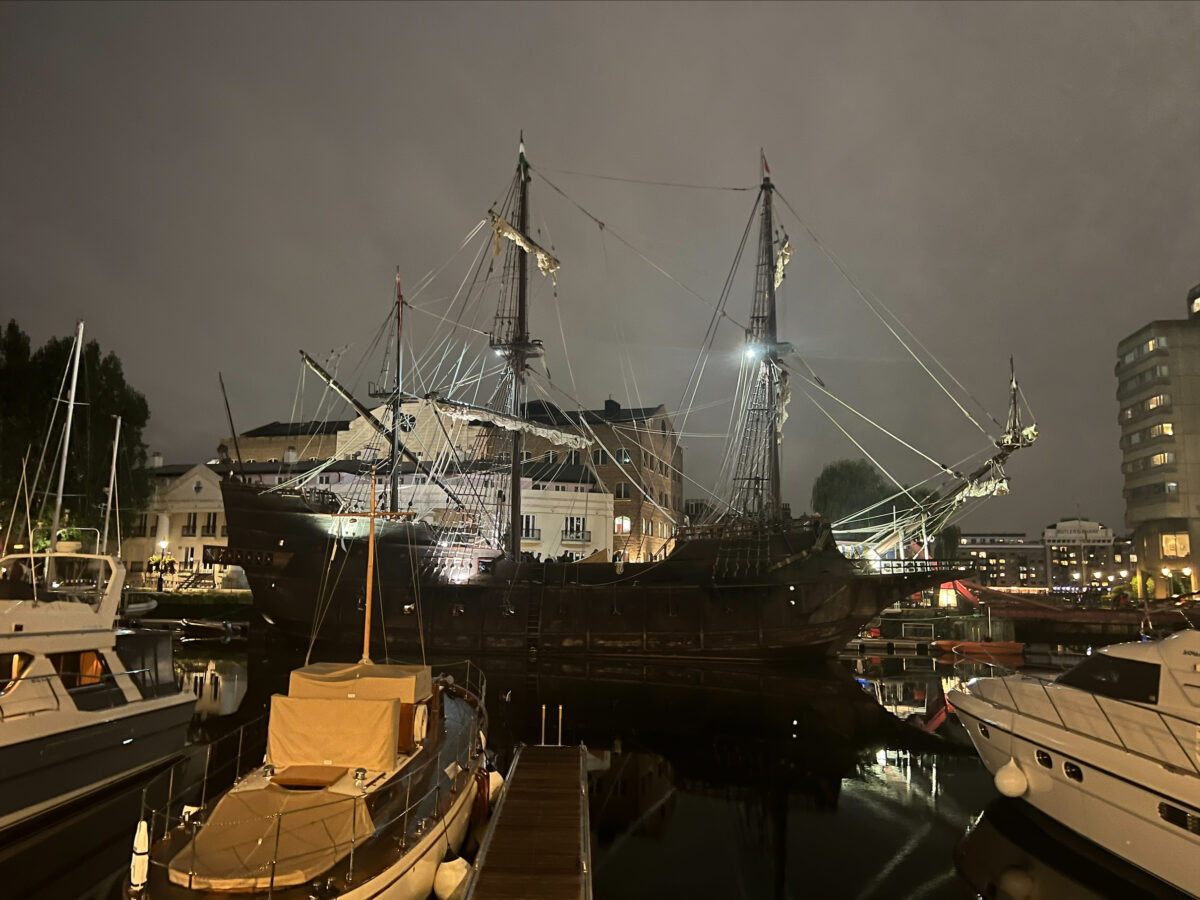
Instead of becoming overwhelmed by these complex historical negotiations, here, I want to discuss a genuine answer to the question of who I would be if I travelled back in time as a reflection of my character, passions, and personal experiences.I do not want to focus on external or physical features, nor do I want to simply say that I would be this or that historical figure who already exists – that’s too easy an answer. I’d rather construct a new figure, fitted within a historical period, who mirrors my 21st century character, instead. Naturally, therefore, I would be remiss not to construct my character into my favourite historical period: the Golden Age of Piracy (or, in simpler terms, think Pirates of the Caribbean). As I sit here wearing my skull and anchor necklace, it seems, to me, more than appropriate.
So, anyone who knows me – or has had the misfortune to hear me talk about history – knows that my favourite historical figure is the esteemed pirate, Anne Bonny. In any discussion, my go-to answer would be Anne herself, or more simply: a pirate. And yet, I have to construct how I would live in this position. This era of piracy doesn’t just represent a thirst for blood, peg-legs, parrots, and Jack Sparrow, but, in reality, an imperial rebellion and a democratic republic. While Peter Pan and Treasure Island have convinced people to often wish to be pirates in order to escape society, and be free, I want to think of this more deeply, and in a genuine interpretation of the pirate lifestyle. The stories of the most renowned female pirates of the age, Anne Bonny and Mary Read – another esteemed female pirate – remain largely a mystery, and, as someone who largely keeps to myself, I find it straightforward to make myself a third on this list of pirates.
If I were to travel back in time, I wouldn’t change my upbringing, although I do imagine it would be quite different. In any life, I’d enjoy being raised and educated on the outskirts of London, and spending the weekends exploring the city, or attending the theatre. This type of childhood would be the early part of my story, as it has been so far, just as the most notorious pirates were raised in Britain prior to escaping to the Caribbean. From here, like many pirates, I feel it’d be fitting for me to cross the sea. At heart, I am a traveller, with a great desire to see more of the world than I already have. In no historical period, I believe, would I remain in Britain, but, in this story especially, I’d go to the place that I’m currently desperate to go: the Caribbean. For me, this would mean crossing the sea from one home to another, whilst reflecting the typical history of many pirates.
So, you can see why I think I’d fit in.
British-Caribbean with a passion for travelling, living in a diverse society – sounds familiar.
Again with the stereotypes: “diverse society?”, some might say. Well, between ex-privateers, runaway slaves, and women who’d escaped their husbands, the pirate republic of Nassau had a miscellaneous assortment of citizens. Like Bridgerton’s depiction of the past, this era offers a “desirable” historical role, without the general worry of racial or gender-related limitations. So, when the realisation occurs, I get the fortune of explaining the truths of the period.
Piracy involved stubbornness, ambition, and, in more ways than one, a sense of justice. Yeah, that sounds like me. When I think of my mind through time, yes, I’d construct my role as a pirate. Yet, following a career of fighting against the British Empire (as these pirates did), my historical construction is yet to have an ending. Much to the dismay of many a pirate – like the periods of the Wild West or of Gladiators in Rome – the Golden Age of Piracy was not long-lasting. I refuse to take the egotistical view that I would escape Woodes Rogers (the governor who arrested and hanged the most infamous pirates), as he ended the Golden Age of the Caribbean pirates, but I don’t think my time-travelling story would end there.
Anne Bonny, following her arrest, became lost to history. With a lack of documentation, it remains a mystery what happened to this prominent figure, and I like to think that I could fit within this category. Perhaps because I’m only 19, and I’m not sure how my character will affect my own life, I can’t say how this constructed figure’s life would end. For now, like Bonny, she can remain a mystery, and, honestly, I’m content with that.
Here lies my answer to the question, “Who would you want to be if you could time travel back?”, and, nevertheless, I have clearly avoided asking, “Who would you be?” Realistically, I would be far more average, since, like I have said, we would all probably be peasants (although, to be fair, I know some of my fellow History students wouldn’t be opposed to this), but how we would live this version of history would be relevant to our individual personalities in any lifetime. I’d choose to put my personality in a period that I love, and yet I could put this personality anywhere.
I’ve been optimistic in my piracy description. Maybe, in another life, I was something far more average. Maybe I was a writer, loving the histories and constructing characters, rather than living it myself.
Actually, that might just be me today. Who knows?
I know the role that I’d want to construct in history, and that’s what I choose to focus on. It’s far too boring to be realistic – no one reads fantasy books because they’re accurate, or a book on rural peasants because they’re jealous.
For that reason, I’ll gladly keep my piracy pipe dream.
What’s yours?