
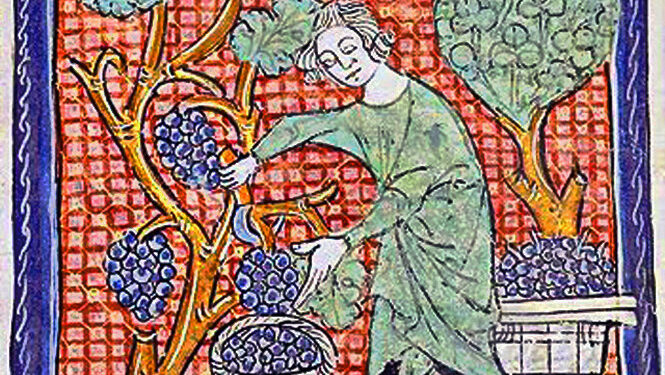
There are few occasions, especially as an Oxford student, to which bringing wine is socially unacceptable. A staple of formal dinners, sports socials, and precious moments of friendship consolidation, wine trickles through the cracks of many of our everyday lives. This is by no means a modern practice. Wine predates chess, the toothbrush, and the construction of the Pantheon, and will undoubtedly outlast us. Whilst this column is a small drop in the glass of the wine world, I hope to at least provide some handpicked, student-budget-friendly wine recommendations that you can pick up from Oxford’s very own wine company to try for yourself.
My first recommendation is a wine symbolic of the expansion of viticulture: the red Bordeaux. Bordeaux wine production appears to have started sometime after AD43, with the purpose of cultivating wine for Roman soldiers. In the Middle Ages, following the marriage of Henry II and Eleanor d’Aquitaine, the popularity of Bordeaux wines crossed borders. Like Eleanor, who is often referenced as a source of inspiration for medieval romance writers, claret (a generic term for a dry, dark-red Bordeaux, originating from the French clairet) is a symbol of love. Its city of origin is commonly visited by British honeymooners seeking edification from its neoclassical architecture and gastronomic prowess. A bottle of Bordeaux is an equally frequent purchase for those attempting to impress on a first date at a swanky-yet-quirky Soho bistro, and those scrambling to rustle up a service station anniversary gift in a pinch. With a rich, 2,000 year history, a glass of Bordeaux transcends being and time, and sits proudly on the shelves of many British households (to Henry II’s delight, I’m sure).
To argue my case for the wines of Bordeaux, I present the following: a 2021 Bordeaux Supérieur from the Château la Tuilerie du Puy, acquired from The Oxford Wine Company. A Bordeaux Supérieur is a slightly more premium claret, held to higher standards of ripening and ageing for a richer, more structured glass. This bottle contains a blend of three quintessential Bordeaux grape varieties: Merlot, Cabernet Sauvignon, and Cabernet Franc, and is sourced from Bordeaux’s Entre-Deux-Mers subregion. The relatively high contribution of Merlot is reflected in its smooth, plummy opulence, gentling the impact of the other two grape varieties. Cabernet Sauvignon, Bordeaux’s Jessica Rabbit, has a famed body, as exhibited in this wine’s round tannins and nose of blackcurrant. Cabernet Franc is delicate and botanical, lifting the wine and preventing it from being too overbearing.
A tasteful balance of Bordeaux’s Three Musketeers, this wine offers an exceptionally pleasant sensory experience. In terms of colour, I would be hard-pressed not to describe it as love at first sight. The deep scarlet is reminiscent of David Lynch’s red curtains, and will no doubt inspire my next nail varnish shade. On the nose, ripe raspberries and currants can be detected, yet, despite its intense aroma, the wine remains soft and velvety on the palate. This wine is a prime candidate for the beginner’s Bordeaux.
The sensory experience of wine doesn’t end at the bottle – the mise en scène in which it is consumed is of equal importance. This phenomenon is termed the Provençal rosé paradox, and it describes the clichéd experience of engaging in a breathtaking romance with a bombshell of a bottle while holidaying, only to see his true colours (dull with a brownish hue, indicating oxidation) when back on home soil. Acknowledging the historical practice of oenology and paying homage to my archaic sisters, I enjoyed this wine while participating in the most ancient ritual known to (wo)man – girls’ night. Much like the hetairai (educated female companions in ancient Greece), my female companions and I often engage in modern-day kottabos (Ring of Fire) and, as Classics scholar Leslie Kurke describes, “flattering and skillful conversation” (gossip) over a glass of wine. For the reader’s information, we consumed this particular bottle with the sonic seasoning of the movie Wicked in the background and a Boots sheet mask sur nos visages.
If you’re yet to find your soul-wine, The Oxford Wine Company is a brilliant place to start. With three shops across Oxford (Turl Street, Little Clarendon Street, and Botley), alongside a Wine Café, a Wine Cellar, and a Wine Tavern, there’s plenty of opportunity to discover something new. Not to mention that Oxford University students receive 10% off with a valid Bod card, while societies, common rooms, and college balls can enjoy a minimum 15% discount, with further preferential pricing available for larger orders (for enquiries about bulk wine orders or bespoke wine tastings, contact minyee@oxfordwine.com). In sum, whether you’re just beginning to explore wine or already know your favourite grapes, I implore you to both consider the rich history of wine consumption and to perpetuate the tradition.