
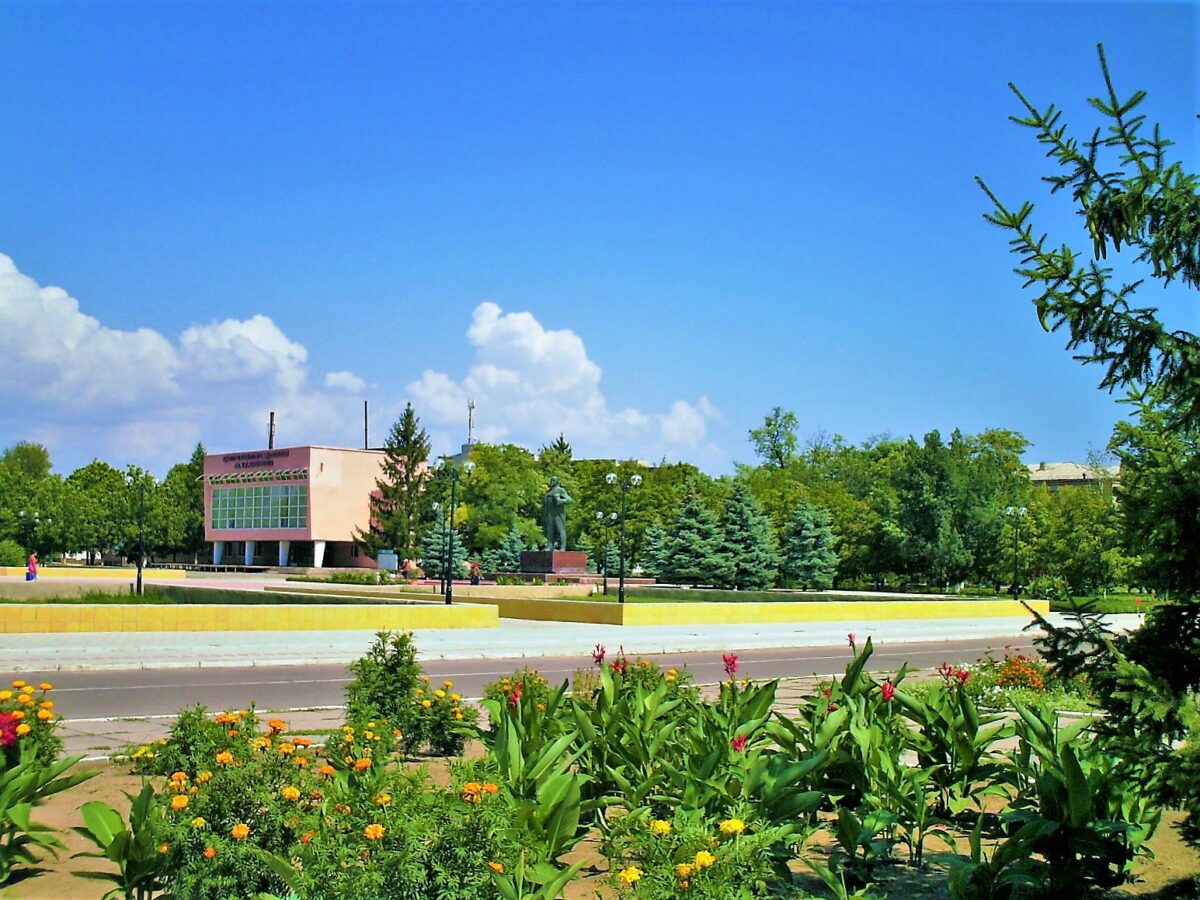
Image credit : ru:user:Gottinight. This file is licensed under the Creative Commons Attribution-Share Alike 3.0 Unported license.

When telling people that I would be writing an article about the situation in Oleshky, it surprised me how many had no idea what I was referring to. Whilst it has been a major event for those who follow the situation in Ukraine closely, the media has covered the story far less than would be expected. For that reason I’ve decided to break down the situation, reviewing ongoing events and discussing what this means for the Ukrainian city.
What is Oleshky and what role has it played during the war until now?
As part of the full-scale invasion of Ukraine that began in February 2022, Oleshky, a Southern Ukrainian city, was occupied by Russian forces. The city had been home to almost 25,000 residents before the war. It now hosts only 2,000 (although no official census has been conducted in the area since 2022).
As part of Russia’s attack on the region, citizens have been cut off from food and water supplies. In September, the BBC reported that children in the area are suffering from malnutrition and lack of access to healthcare and education. According to Telegraph’s daily podcast Ukraine: The Latest, local residents have resorted to eating grass due to the lack of food being supplied to the region. The situation in Oleshky embodies the problems facing Ukrainian citizens in this ongoing war. To add to the devastation, the collapse of the Nova Khakova Dam in 2023 caused major flooding in the area.
What has changed?
US First Lady Melania Trump brokered a deal on 23 October 2026, in which a ceasefire was agreed between Ukraine and Russia. This allowed for the evacuation of hundreds of residents from the area. According to The White House, the ceasefire was an agreement from both Russia and Ukraine to temporarily cease military action, so that people could be evacuated from the area, and humanitarian aid brought in. According to the BBC, the ceasefire officially began on 27 October 2026 at 01:00 GMT, although The White House announced it would begin on 29 October 2026.
However, the journey to the areas in Ukraine for many residents has not been so easy. Ukrainian territory lies only three miles away, but nevertheless, evacuees had to travel to the Russian city of Anapa, before proceeding to Belarus, and finally entering Ukraine’s Chernihiv region. The Kyiv Post claims that the reason for this is due to a fear of weakening Ukraine’s line of defence in the region. According to The Guardian, 25 buses and ambulances arrived as part of the humanitarian convoy, in order to provide humanitarian aid and evacuate individuals from the area.
How does this affect ordinary people?
Many residents have been evacuated from the area, with social media showing a variety of heartfelt scenes as they reunite with their loved ones in Ukraine. Each newspaper highlights different success stories that have emerged, as individuals are returned to the safe regions of Ukraine with tears in their eyes – weeping for the woes of the past few years, but also the joy of escaping the blockade.
However, there are some who remain sceptical of the ceasefire. Despite the atrocious conditions that the residents have lived under throughout this blockade, there is such a strong distrust of Russia, that many have chosen to stay in the area. According to the Kyiv Independent, citizens feared Russian filtration at checkpoints, hence their decision to stay in the area.
Analysis
Naturally, there is a huge positive in this most recent development. The ceasefire could be an indication of hope for peace from both Russia and Ukraine. This is a vital moment in the progression of the war. Until now, there has been a distinctive unwillingness from Moscow to bring the war to an end, as well as from foreign powers. Trump has been accused of only being interested in Ukraine to the extent that it affects any relationship with Putin, and JD Vance has played an active role in wanting to withdraw support. This latest development can therefore only be regarded as positive for Ukraine.
However, this ceasefire comes at a very interesting point in wider global politics. As already said, the US shows increasingly little interest in Ukraine, but the ceasefire, brokered by Melania Trump, places itself neatly in the run-up to the midterm elections, which took place only last week.
Furthermore, hidden behind the media-coverage of the American elections has also been one of Moscow’s biggest attacks on Ukraine yet. In the Zaporizhzhia region, Moscow has attacked aid centres, hospitals, and hospices. Despite the notably high civilian death toll of this attack, media coverage has been more focused on the mid-terms, obscuring this tragedy from the world stage. Danielle Bell, head of UN Human Rights Monitoring Mission in Ukraine (HRMMU), has said that the attack had “violated the most fundamental principles of international humanitarian law”. Her statement reveals the scale of this tragic event.
But what does this mean in relation to the ceasefire in Oleshky? It seems that Moscow has, to a global audience, maintained the appearance of being open to peace, whilst committing brutal attacks, whilst hidden behind the coverage of the midterms. Considering the recent attack in Zaporizhzhia, the hope for peace sparked by the Oleshky ceasefire seems to vanish quickly. Willingness to cooperate was only temporary. Moscow has since returned to its ambushes against Ukrainian infrastructure.
Whether this war is coming to an end is unclear. The various elections across the globe in the past two weeks could certainly play an influence, and there has been notable improvement brought about by the ceasefire and evacuation of Ukrainian citizens. However, in the midst of a wider, more violent context, Ukrainian residents remain, regrettably, hidden behind the media coverage of other vital, global events, interestingly, which will help to shape the situation in Ukraine. What does the future hold for the residents of Ukraine? Only time will tell.