
Editor’s Note
This week is politics, politics, politics. I’m sure many of you will have already seen the seismic results in America that came in last night and this morning, but in many other countries around the world the electoral ground is changing under our feet.
This week Nancy Gittus explores the stunning rise of the Student List movement in Serbia, and the fall of President Vučić, after 12 years in power.
Guillaume Antignac reports on the decline of Netanyahu’s party in Israel. After the election last week, Israel’s prime minister lost fifteen seats, setting him well below what was needed to make a majority.
Finally, Angelica Ratcliffe takes a look at the turbulent elections in Brazil, which saw left-wing President Lula secure a fourth term in office. His opponent, Bolsonaro has contested the results, an indication of just how divided Brazil remains over its politics.
“Serbia is free” : The End of a Vučićian Era
By Nancy Gittus
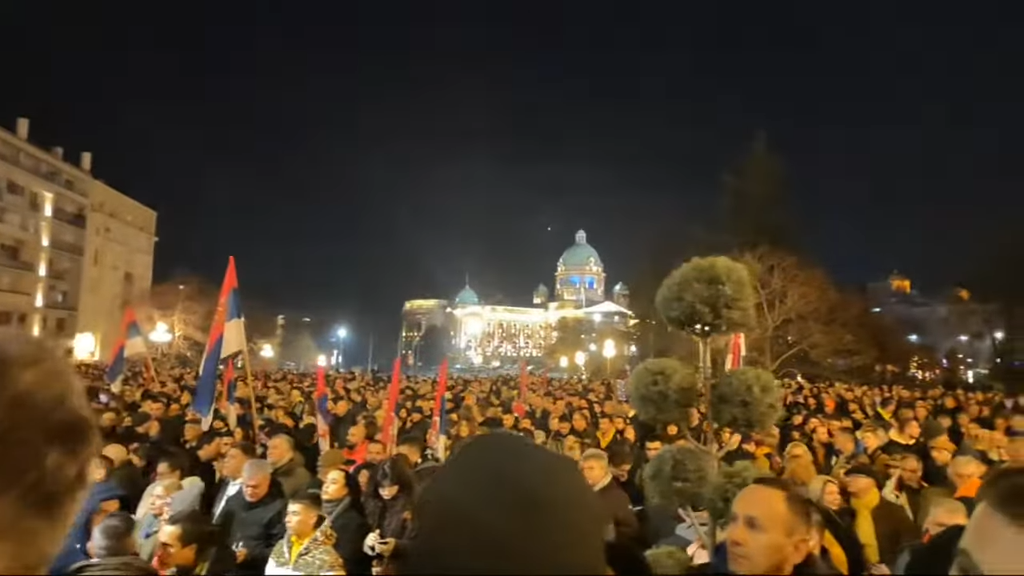
Image credit : СРБИН.инфо. This file is licensed under the Creative Commons Attribution 3.0 Unported license.

25 October 2026 marked a watershed moment for Serbia. Hundreds of thousands danced and sang in the streets of Belgrade, as a movement which started just two years ago, the Student List, swept to electoral victory, winning 140 out of 250 seats. With a turnout of 70%, the highest since the break up of Yugoslavia in 1991, this was an electoral victory which firmly nailed the coffin of Aleksandar Vučić’s 12-year reign. Vučić’s defeat was so decisive that he conceded even before the final results were in. “We still do not have final results,” Vučić told his supporters, but “on the basis of a sample …. It is clear that we have lost these elections.”
The mood at the Student List HQ was somewhat different, “Serbia is free” they announced in a jubilant post on social media. Citizens reported feeling as if they could “finally breathe again”, optimistic that, “everything is going to get better now”.
Student List is a strange, new form of political beast. It has no clear leaders, and many of its candidates have no grounding in politics, and yet the party fielded candidates for all 250 parliamentary seats.
The beginning of the stunning rise of this political movement was the collapse of a concrete canopy outside Novi Sad train station in November 2024. A tragedy which killed 16 people. The President had closely associated himself with the renovation of this train station, and its collapse was immediately linked to the widespread corruption which has plagued Serbia. In 2025 the country scored just 33 out of 100 for corruption, with 0 being highly corrupt, and 100 being very clean. This score landed it 116th place out of 182 in global corruption rankings. Helena Ivanov, a member of the Henry Jackson Society think tank described the event as, “the last straw”.
It was the spark that ignited a wildfire. Weekly student marches developed into a national movement attracting followers from every level of Serbian society. Despite the resignation in January 2025 of Vučić’s prime minister, March 2025 saw Serbia’s biggest ever anti-government protest. By this point the movement had been able to organise itself through student assemblies or plenums, so when snap elections were called last month, the Student List was ready to strike.
However, there is one slight issue which comes with such a leaderless body. The question now arises: who will become prime minister? For now, the role is being filled by the president of the National Assembly Ana Brnabic, but potential candidates range from Ilija Srdanvoci, a cardiology professor and lead candidate for the party, to Dejan Šoškić, the former governor of the National Bank of Serbia. Whisperings have indicated that Šoškić is the favourite, and he has spoken out about the changes he would make to the economy, but the fact that Srdanovic led the movement during the campaign cannot be dismissed. We shall simply have to wait for the new National Assembly to be established (which can take no longer than 30 days) and the government to be formed, within 90 days, after that.
The 11-point manifesto which the Student List’s elected candidates are now responsible for legislating includes aims to eradicate corruption; purge the internal affairs ministry of employees who broke rules on cracking down on protesters or anyone linked to organised crime; free Serbia’s media of political control; and stop recruiting party loyalists of head public enterprises.
However, other than corruption, the Student List does not seem to agree on much. Although the diversity of its voter base enabled it to take power, the Student List seems hopelessly divided now that it has become the governing party. From progressives to centrists and the political right, there are strong divisions within the party over issues at the heart of Serbian politics. For example, attitudes towards the EU, Russia, and Kosovo (a country which claimed independence from Serbia in 2008) vary widely. This could pose significant problems to Serbia’s ability to form coherent foreign policy.
An exciting, although potentially turbulent period, lies ahead for Serbia, as after 12 years of continuous rule by Vučić, this new party will need to find its feet, its head, and then, its momentum.
Israel’s Prime Minister Caught In A Deadlock.
By Guillaume Antignac
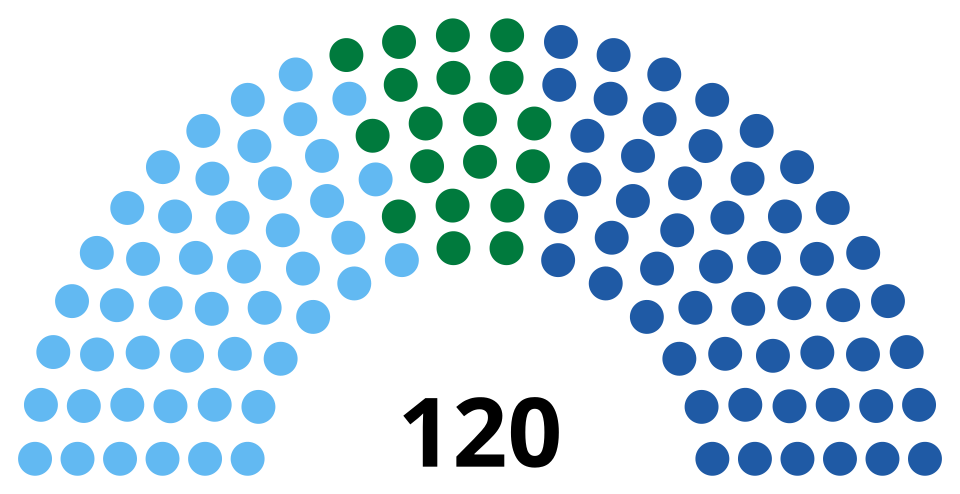
Image credit: President Loki, Public domain, via Wikimedia Commons

Final counting came through in the early hours of Friday morning. On Tuesday 27 October, Israelis swarmed general election polls with a 77.9% voter turnout – the highest turnout in decades. The result puts Netanyahu’s right-wing bloc at just 53 seats, a 15-seat drop from his previous majority, while the anti-Netanyahu bloc now holds 48 seats of Israel’s 120-seat Knesset parliament. After almost two decades in power, Netanyahu may have hit a dead end.
Unable to secure a 61-seat majority, Netanyahu now needs to form a coalition to retain power. The prospect is as of yet indefinite. Most Zionist parties aligned to Likud, Netanyahu’s party, are unwilling to sit in a coalition with the opposition. A unity government with the main opposition party Yashar, led by the ex-general Gadi Eisenkot, seems like the most palpable possibility to avoid a re-election.
Yet fundamental disagreements between them make it difficult to imagine. Although both Netanyahu and Eisenkot align on continued assault on Gaza and the occupation of the West Bank, Yashar’s political campaign was based on unseating Netanyahu from a leadership they say engendered a “culture of lies”. They also vow an investigation into the causes of the attacks on 7 October, something they consider a structural failure on behalf of Netanyahu’s government. This complicates the prospect of a coalition.
Against most projections, Israel’s Arab factions won 19 parliamentary seats, the most Israel’s 21% Arab population has ever held. Ra’am took a 42% lead in Israel’s southern Be’er Sheva Region, bordering the West Bank. The Joint List, another Arab party, took staggering majorities in some of Israel’s northern regions, including 87.8% of votes in Shefar’am.
Following the results, in what has reportedly been an 80% turnout, Likud is now accusing Arab parties of election fraud. In a post on X, Netanyahu said his party was transferring evidence of election theft to the police, including bribery, forgery, and intimidation against polling station members.
On election day, Netanyahu warned his supporters that Arabs were “trying to steal the election”. Rhetoric of Arab influence at the polls goes back more than a decade. In 2015, Netanyahu claimed that Arabs were flocking to the polls in droves. Later, in the 2019 elections, his party ran initiatives to observe Arab electoral districts, including placing 1200 hidden cameras on polling workers.
The claims of widespread election fraud have been rejected by the Central Elections Committee, though it has asked the Shin Bet, Israel’s security service, to investigate reports that Qatar had tried to influence the votes through monetary funds.
Netanyahu’s strategy in targeting Arab parties, which extends to his government’s domestic isolation and discrimination of Palestinian populations, has caught up to him in the recent election turnout. Unsurprisingly, after decades of occupation in the West Bank and settler violence surging this past year, Palestinians within Israel feel oppressed by its leading parties.
The now three-year war in Gaza affects many non-Arab Israelis too. According to surveys taken on election day, among opposition voters, a clear majority supported forming a government with Ra’am to topple Netanyahu’s majority.
It could mean the end of a government mired in accusations of human rights abuses and war crimes. Commenting on the election result, UN human rights chief Volker Turk urged whatever new government takes shape in Israel to end “the current course of warfare where you think you are above international law.”
Unprecedented Results in Brazil Elections
By Angelica Ratcliffe
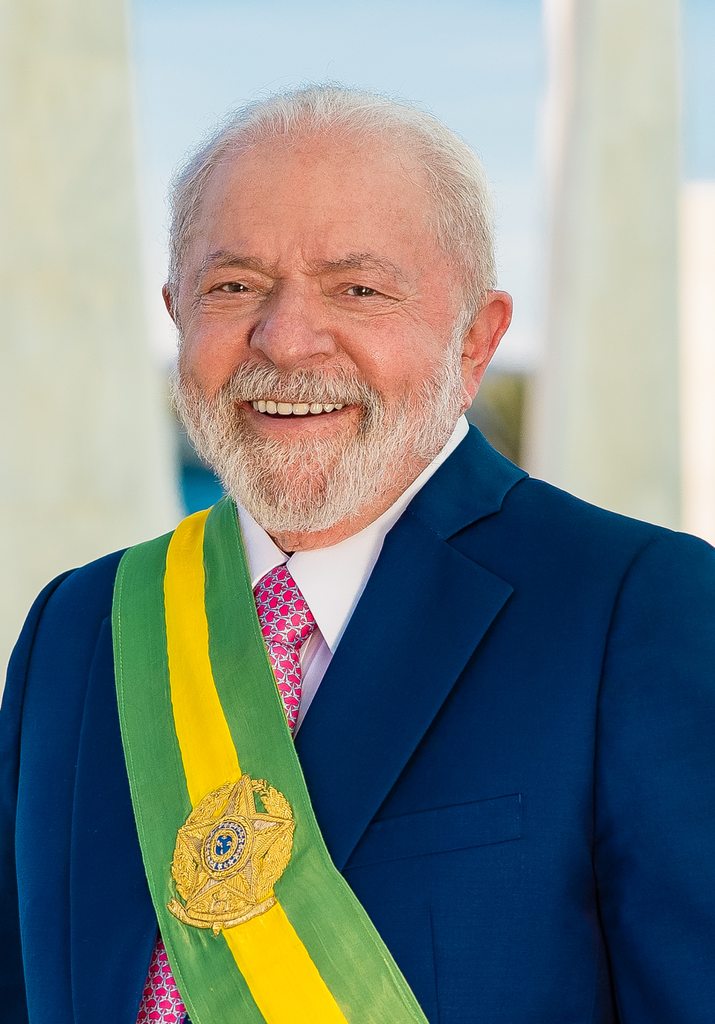
Image credit: Palácio do Planalto. This image is licensed under the Creative Commons Attribution 2.0 Generic License.

Over in Brazil, left-wing President Lula has secured a fourth term in office after a turbulent election process. His right-wing opponent, Flávio Bolsonaro contested the validity of the results, citing Lula’s victory as ‘inexplicable’ given Bolsonaro’s winning of the first round of elections. But as the country remains divided in the wake of the controversy, many Brazilians may be feeling a curious sense of déjà vu…
Bolsonaro’s father, former president Jair Bolsonaro, is currently serving a 27-year prison sentence for leading a failed coup after losing the 2022 election. Whilst Bolsonaro Junior has not attempted such rash actions, his calls for an annulment of the election results seem eerily familiar.
Bolsonaro’s disbelief emerges from his success in the first round of voting. He won the 4 October election with 47% of votes, surpassing Lula’s 45%. This did not, however, constitute an outright majority, resulting in the need for a run-off election. Many doubted Lula’s ability to turn the tide in just three short weeks, especially given that no candidate has won the second round after not winning the first round since democracy was restored in 1988. Despite the odds, Lula ultimately won with 51.76% of the vote, beating Bolsonaro’s 48.24%.
Further to this, Bolsonaro criticised the Brazil Supreme Court’s decision to extend voting deadlines. This was an interesting reaction, considering both candidates had formally requested the extension for different reasons. The decision led to widespread confusion as some polling stations were not informed of the update and proceeded to close the polls at the original times.
The court president, Kassio Nunes Marques, rejected the claim that the extension of polling hours interfered with the result.
It has been a lively election process, with supporters of both candidates coming out in droves to offer their support. They have even taken to dressing in the colours of their chosen party, wearing red to show support for Lula and green and yellow in solidarity with Bolsonaro. This use of Brazil’s national colours by the right-wing Liberal Party has come much to the chagrin of the left.
It is not just physical support, however. Congressman André Janones was thanked by Lula for his “exponential” role in the campaign. Janones founded a viral WhatsApp channel named “Lula’s Army” which is being credited as a key element of the campaign’s digital mobilisation. Prior to the election, the channel surpassed ten million followers.
During President Lula’s previous terms he was widely praised for his improvements to social welfare, spearheading programmes such as Bolsa Família which provides financial aid to support children’s education and healthcare. However, his image was tainted after he was convicted of corruption and money laundering in 2017, charges that he denied and that were later annulled.
Bolsonaro, a trained lawyer, has served as a senator since 2019. Running as part of the right-wing Liberal Party, he has frequently aligned himself with President Donald Trump, particularly during his visit to the White House in May. He also shares Trump’s scepticism over climate change, a view that came under scrutiny in the run-up to the elections. When defending this stance, he stated that whilst there have been “extreme climate events”, he believes these to be merely “cyclical”.
Lula’s Workers’ Party have termed the election a “battle for democracy”, viewing the actions of Bolsonaro Senior as evidence of the family’s threat to Brazil’s democratic principles. In response to his opponent’s association with the US president, Lula has also stressed that Brazil will “not accept being anyone’s backyard”, alluding to current fears about US influence in Latin America.
Flávio Bolsonaro, meanwhile, has taken pains to remind voters of the Workers’ Party’s financial scandals, and promised to “free the Brazilian people”. With such adversarial rhetoric between the two candidates, it is no wonder that the election process has sown further seeds of division amongst Brazilian voters. This was perfectly encapsulated by the images released in the aftermath of the results; Lula’s supporters’ ecstatic celebrations were aired alongside images showing the Liberal Party’s despair. Whilst it is unlikely that Bolsonaro’s calls for annulment will be accepted, his rejection of the result will likely exacerbate these tensions.