
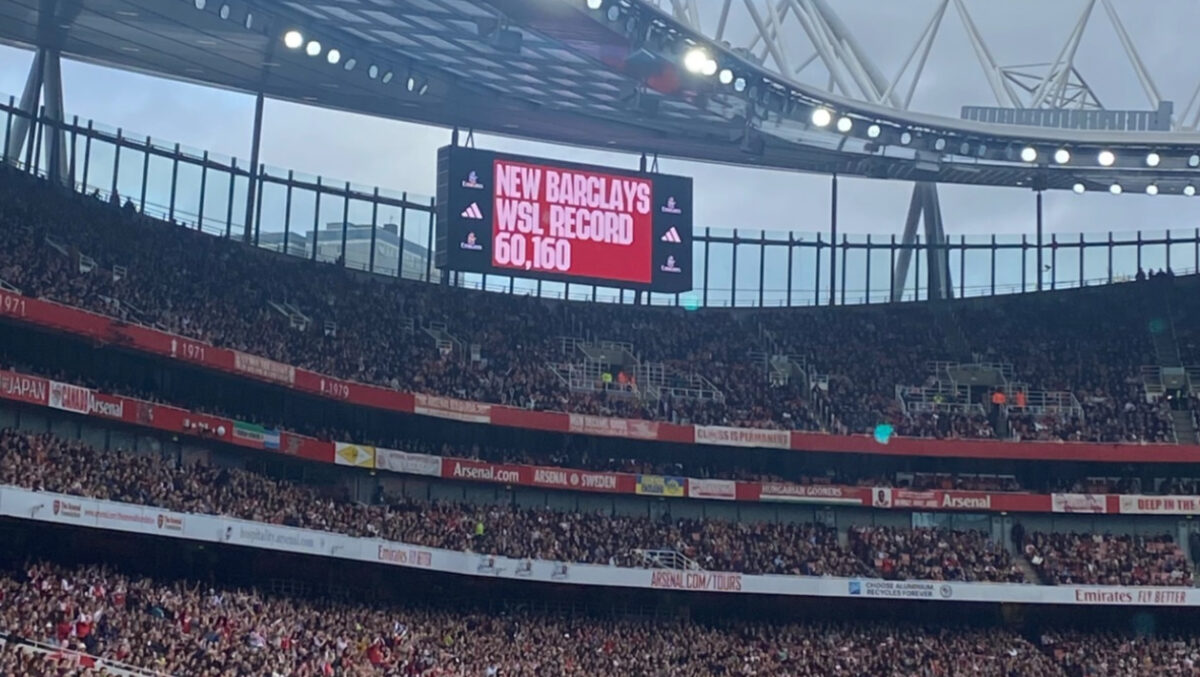
The 2025/26 season marked a new era of seven-figure transfers in women’s football, as striker Olivia Smith moved from Liverpool to Arsenal for a record-breaking one-million-pound fee, quickly followed by other players across Europe.
Since the Lionesses’ 2022 Euro win, women’s football has seen unparalleled growth in attendances and commercial success. Average attendances reached 33,000 last season, bolstered by Arsenal’s Women’s team moving into the Emirates Stadium, and matchday revenue is soaring.
But are these million-pound milestones a long-overdue recognition of women’s sporting value, or the first signs of the financial excesses which have come to define the men’s game?
Although the influx of high-value transfer fees in the Women’s Super League (WSL) over the past two seasons seems to show a shift towards commercial extravagance, similar to that of the men’s game, significant financial challenges still exist, particularly in terms of wages.
A 2025 survey revealed that over a quarter of elite women players worldwide have a second job in addition to football, due to the financial insecurity associated with the women’s game.
While minimum salaries for players in the top two women’s divisions were introduced for the 2025/26 season, and seven-figure transfer fees suggest women’s football could be entering an era of wealth, it still has a long way to go before it can be considered authentically professional.
In terms of exposure, women’s football has secured increasingly significant broadcasting deals; however, it still needs to compete for commercial visibility, with the men’s game continuing to dominate our screens.
The scheduling of women’s matches continues to be a problem, with weekend and lunchtime kick-offs often clashing with men’s football broadcasts. The North London Derby, which kicked off last month at 12.45pm, clashed with Arsenal Men’s fixture against Everton, forcing some fans to choose between the two. Attendance at the women’s derby was just 13,719 – less than half that of the same fixture in 2024.
While scheduling is not the only problem here, it raises questions about the importance of prioritising the women’s game as a sport in its own right. These games could be rescheduled in order to grow the commercial side of the women’s game, but that would only mean giving into the predominance of the men’s sport. After all, increased investment in broadcasting deals means nothing if the sport cannot reach its fans.
Even success stories are financially vulnerable. Arsenal Women reported just £22,000 in after-tax profit for the year ending May 2025, despite revenue of approximately £21.5 million. For a club that plays to large crowds, wins European trophies and buys household-name players such as Chloe Kelly and Ona Battle, it is worrying that Arsenal still relies heavily on support from the wider club.
This dependence on parent companies to fund losses gives teams like Arsenal and Chelsea an advantage over less financially secure rivals. Domestic titles are often won by the same team over and over, with Chelsea as current WSL champions six years running. This creates a risk that the women’s game could reproduce the same financial inequalities of the men’s game, but without its prosperous investment and high revenue.
However, there is no easy fix here. Raising ticket prices could threaten the family-friendly atmosphere associated with women’s football. Wealthy investors such as Michele Kang, who owns London City Lionesses, show how vital private funding can be to the development of women’s football, but this risks leaving smaller clubs behind. The women’s game should not have to choose between financial growth and the accessibility which defines it as a sport.
The answer here is not simply that football needs more money. It is that the question of whether football has ‘too much’ money cannot be considered without thinking of the women’s game. The emergence of million-pound transfers should be celebrated as a huge achievement, not a sign that women’s football is now equal to the men’s game. Women’s football may eventually show signs of commercial excess, but for now it must focus on gaining greater momentum, visibility and investment to reach its potential.
Too much money in football? Perhaps. But the women’s game is still waiting for its turn.