
Editor’s Note
Hello all, and welcome back for this week’s edition of Outside OX1. There’s been a lot in the news this week, so we’ve picked out a range of stories from across the globe for your interest.
First up, Nancy Gittus covers the recent scandal surrounding Deutsche Bank. She explores what exactly the 15 million leaked documents reveal about the organisation, and what it means for their future.
Next, Guillaume Antignac reports on the decision to induct Fela Kuti into the Rock & Roll Hall of Fame. This makes Kuti the first African in history to receive this honour.
Finally, Dillon Shukla investigates the outbreak of Ebola in the Democratic Republic of Congo. He follows the progression of the outbreak so far, as well as looking at how the complicated geopolitical situation in the DRC has affected treatment.
Deutsche Bank Exposed
By Nancy Gittus
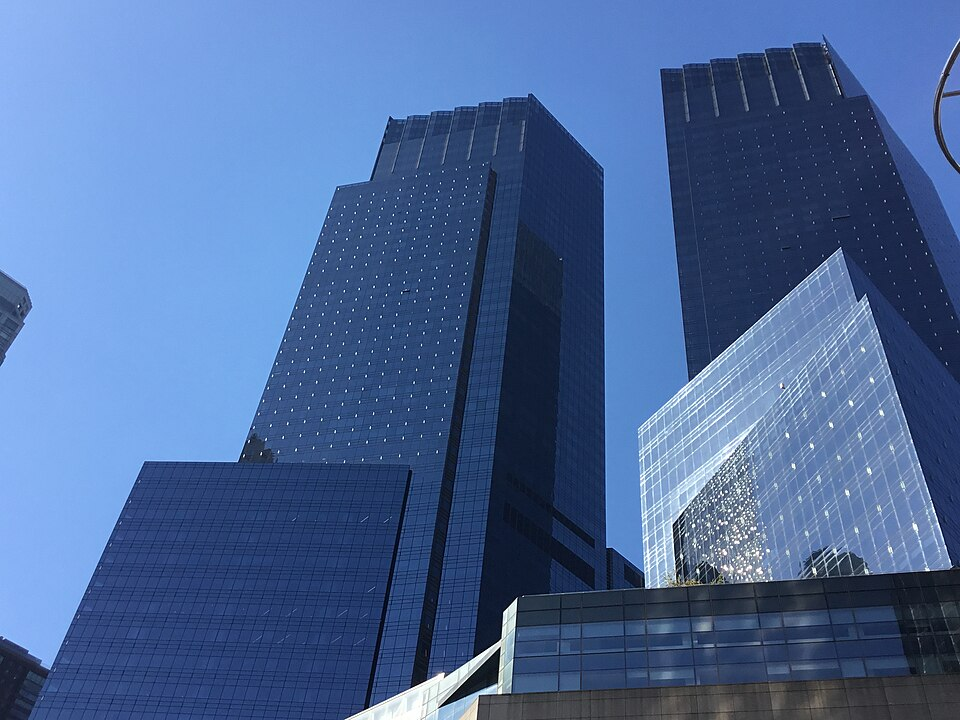
Image credit : Kidfly182. This file is licensed under the Creative Commons Attribution-Share Alike 4.0 International license.

Arms deals, money laundering, Russian oligarchs under sanctions, and Jeffrey Epstein – it’s all going down at Deutsche Bank. The bank which was supposedly getting its act together after the Panama Papers scandal in 2016, a scandal which revealed how Deutsche Bank was involved in supporting the super rich access off-shore tax havens, has now shown itself to be a rather old dog. An insider leak of 15 million Deutsche Bank documents reveals ineptitude at best, and outright criminal activity at worst. Even the shiny new CEO Cristian Sewing, who had promised to set the bank to rights and been praised for doing so, seems to have been unable to pull the organisation out of its murky dealings.
Deutsche Bank (DB) isn’t just any old bank. Before the 2008 financial crash it was the biggest bank, by assets, in the world. It is the flagship of the EU economy, with 90,000 employees, covering 55 countries. DB is bigger than Germany’s second-and third-largest banks combined.
The leak, which contains emails, internal probes, board minutes, compliance files and employee chat logs was released by whistleblowers and has brought to light dozens of dodgy and botched operations. In 2017 the bank accidentally leaked Donald Trump’s Bank statements, along with thousands of other clients – a leak Cristian Sewing tried to keep under wraps. The bank also chose to maintain clients such as Russian oligarch Oleg Deripaska, who was labelled “a high-risk client”. Deripaska was placed on a list of “Most Sensitive Client Relationships”, which included several other Russian companies and billionaires. Importantly, the recent leak reveals the systematic laundering of tens of billions of dollars for Russian criminals, spies, and oligarchs between 2010 and 2015, continuing in its criminal dealings long after it promised to reform. Indeed, Deutsche Bank seems to have been suspiciously chummy with Russia; in 2021, just days before the invasion of Ukraine, the bank opened a brand new office right in the heart of Moscow. Concerns were raised at the time by the bank’s American chair Mayree Clark, who stated during a risk committee meeting that she was, “worried about the permanent reputational risk that this business carries”. Nevertheless, the extent to which DB had invested in Russia and the business’ lucrative earnings (its largest and most profitable account in Russia, Gazprom, generated €10 million in annual revenue) perhaps encouraged the bank to stick with the oligarchs.
The leaked files also reveal that almost $600 million of suspicious payments linked to Jeffrey Epstein were processed by DB. This figure underscores the role the German lender played in facilitating Epstein’s crimes. Internal documents revealed that the bank filed suspicious activity reports in the US in 2019. These related to payments to women, suspected misuse of charitable donations, and transfers from wealthy individuals such as Apollo Global Management co-founder Leon Black, and hedge fund billionaire Glenn Dubin. Despite Epstein’s 2008 conviction for soliciting prostitution from a minor, DB took Epstein on as a client in 2013 after JP Morgan cut him off. Today, the bank acknowledges its “error of onboarding Epstein in 2013”, but this still does not explain why the bank cut corners and ignored warnings about their client. For example, a high-risk client with a criminal conviction would normally require vetting by a reputational risk committee. However, in May 2013, Chip Packard, the then co-head of Deutsche’s US wealth management businesses, suggested this was not necessary. Although individuals within the bank sometimes raised the alert, or simply their discomfort, their concerns were dismissed. One woman recalls HR’s response to concerns she raised after working on Epstein’s account, “You feel uncomfortable doing the job you were hired to do?”
Another individual, a compliance officer, warned that, “we should have a discussion about the future of this account”, given Epstein’s lawyers had been caught cashing cheques on separate days to avoid a reporting threshold twice. Needless to say, little heed was paid to this suggestion. It was only in 2018 after media attention focused on Epstein that Deutsche Bank cut its ties with their profitable client. The Bank stated that it “regrets [its] historical relationship” with Epstein. I’m not surprised, its shares fell six percent today (17 November 2026).
The leak also revealed how DB performed several legal manoeuvres to enable them to fund arms deals. The documents spotlight how DB approached these deals with more concern over “RepRisk” (reputational risk) than ethical implications. One such deal was an 11 million euro advance deal to German defence manufacturer Renk to fund a deal with Israel. Renk was employed to make gearboxes for Israel’s Merkava 4 tanks. An assistant general counsel for the bank described the deal as, “a plain vanilla trade finance product, which does not carry any remarkable RepRisk in itself”. As gearboxes, in and of themselves, Renk and Deutsche Bank were able to sidestep any complications created by the German Military Weapons Act.
The question remains, what will happen next? How will individuals, governments, and organisations respond to Deutsche Bank’s latest scandal? How can they try to ensure this doesn’t happen again when, considering the Bank’s track record, they almost certainly won’t stop here?
Fela Kuti Inducted Into The Rock & Roll Hall Of Fame
By Guillaume Antignac
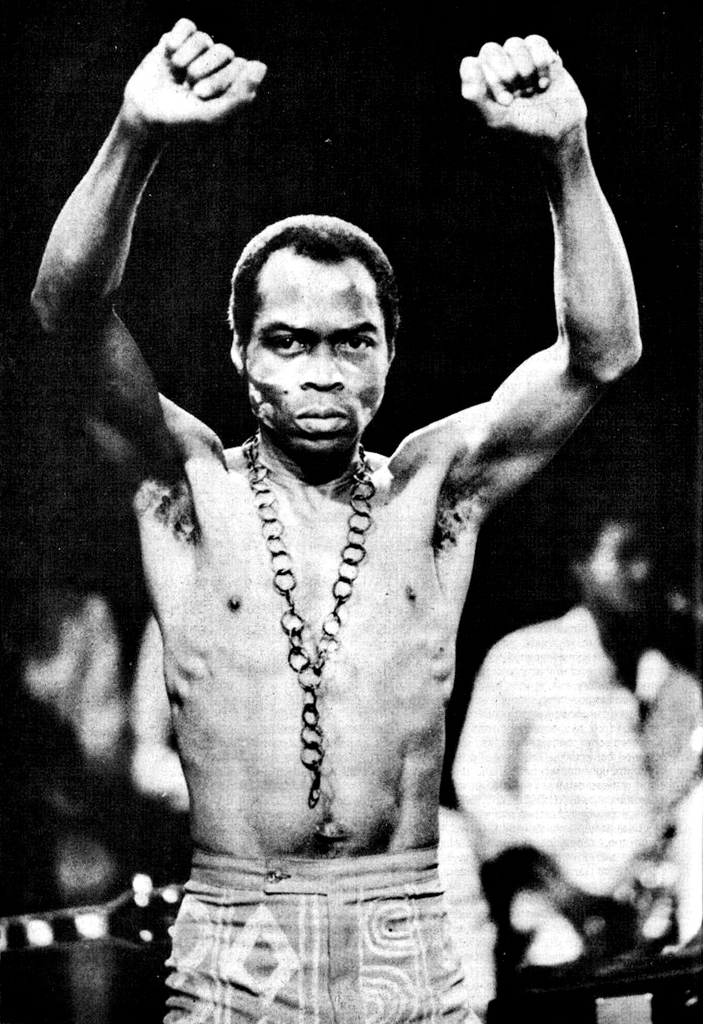
Image by Lygonstreet. Public Domain sourced at Wikimedia Commons.

On Tuesday 17 November 2026, Fela Kuti was inducted into the Rock & Roll Hall of Fame, becoming the first African artist to carry the honour. The award comes nearly three decades after the Nigerian music icon died in 1997, following heart failure caused by AIDS. Appearing on the red carpet to accept the award on his behalf, Kuti’s children described the honour as one of the greatest recognitions of their father’s career.
The Hall of Fame, founded in 1983, is a non-profit preserving and promoting rock & roll’s history through exhibitions and concerts. Co-founder of Atlantic Records Ahmet Ertegun and publisher of Rolling Stone Magazine Jann Wenner initially intended to erect a permanent shrine to rock music. Today, it is also a museum and concert hall in Cleveland.
Earlier this year, Fela Kuti had also been awarded a lifetime achievement Grammy award for his contributions to and influence on genres including funk, highlife and jazz. Other legendary musicians, including Carlos Santana, Chaka Khan and Paul Simon, were also given the award this year.
Kuti, née Olufela Olusegun Oludoton Ransome-Kuti, released over 50 albums during his musical career, which spanned three decades until his death. It’s “better late than never” said Rikki Stein, once his manager and long-time friend.
Few African musicians received international awards like the Grammy in the past, but in recent years, a new wave of African winners took Grammy trophies in a variety of categories. In 2024, a new category for Best African Music Performance was introduced, widening the reach to artists from the continent.
In the 1970s, having lived in the US and witnessed the growing funk scene, Kuti pioneered a musical genre alongside drummer Tony Allen called Afrobeat. They blended West African Yoruba rhythms and extended improvisation with American Funk’s groove.
Kuti was also strongly influenced by American Civil Rights activists, notably the Black Panther’s. His signature performance style went beyond music, infusing his lyrics with political messages as a vehicle for activism against problems facing Nigerians, including social injustice, corruption, and anti-imperialism.
His sermon-like performances particularly targeted Nigerian military regimes of the 1970s. In 1977, following the release of ‘Zombie’, soldiers raided and burnt down his compound in Lagos, also known as Kalakuta Republic. During the raid, Kuti’s mother Funmilayo Ransome-Kuti, a well-known Nigerian activist, was thrown out of a window by soldiers. She died a year later from injuries sustained during the assault.
For Kuti, music remained a means of mobilising people in protest against oppression. His performances were not spectacles, but a kind of communion. In 1979, Kuti formed the Movement of the People (MOP), a political party targeting corruption and social injustice through Pan-Africanist and anti-imperialist activism.
His lasting influence remains in contemporary Nigerian politics. In 2020, Kuti was used to mobilise Nigerians against police brutality during the #EndSARS protests, his sons Seun and Femi maintaining their father’s legacy.
Among a large span of influences, Kuti’s musical legacy also had an imprint on Nigeria’s world-famous Afrobeats. Though a very distinct genre from Kuti’s Afrobeat, Afrobeats artists such as Burna Boy have carried its characteristic political messaging, as well as traditional Yoruba rhythms into the modern genre. His induction into the Rock & Roll Hall of Fame reflects the lasting impact Fela Kuti had on modern music.
Ebola Outbreak in Congo as Armed Conflict Continues
By Dillon Shukla
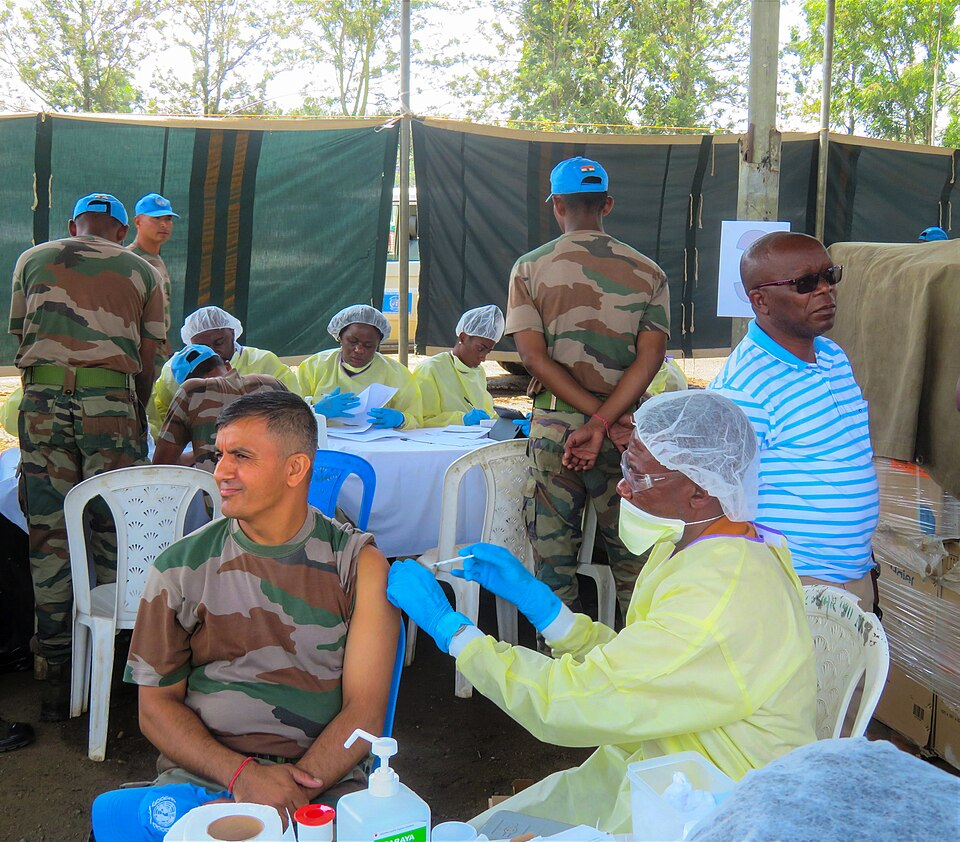
Image Credit: MONUSCO Photos. This file is licensed under the Creative Commons Attribution-Share Alike 2.0 Generic license.

On 15 May 2026, a new outbreak of Ebola was declared in the Democratic Republic of the Congo (DRC), with over 11,000 cases and 5,500 deaths reported as of November 2026.
Ebola is often associated with the 2014-16 West Africa outbreak, in which over 11,000 people died. Whilst this was the largest, smaller outbreaks of Ebola routinely emerge, and the DRC has experienced a total of 17 outbreaks since the discovery of Ebola. This is considered the second deadliest Ebola outbreak ever. This flare-up has been caused by the Bundibugyo species, with a significantly smaller number of cases reported in Kenya, Uganda, Nigeria, and France. It is thought that human infection occurs through contact with the blood or secretion of infected wildlife. The DRC health authorities have implemented several measures to attempt to stop the spread, including disease surveillance and laboratory testing.
The epicentre of the outbreak is the Eastern DRC, which has suffered conflict for decades, making it more difficult to deal with the outbreak. Fighting has continued in the eastern DRC between the Congolese Army and the Front for the Refoundation of the Nation (FRN), an armed group led by former President Joseph Kabila. The FRN incorporates Rwandan backed rebel group M23, and despite attempts at peace talks, the conflict continues. On top of the armed conflict, the Eastern DRC is also suffering from a hunger crisis.
There have been reports of multiple other issues as authorities attempt to manage the outbreak. Financially, there have been problems with tracking the distribution of aid money. The Africa Centres for Disease Control and Prevention (Africa CDC) have stated that $700 million of $962 million which was distributed to organisations working to manage the outbreak is unaccounted for. Despite this funding, health workers report not receiving pay since August, leading some to go on strike.
Healthcare workers’ conditions are also difficult. Armed conflict heightens the threat of violence, with the recent attack in Cantine-Aloya killing three health workers. Among some communities, there is also widespread distrust of outsiders like these workers, which creates obstacles in working with these groups. Healthcare workers also must battle against conspiracy theories surrounding Ebola. Some believe either that the virus does not exist or that medical workers themselves are spreading it. In October 2026, a nurse was killed by a mob who accused her of spreading Ebola in the water supply.
Coverage is another issue. Successfully stopping the spread of Ebola requires surveillance and contract tracing. However, the DRC lacks the appropriate infrastructure for this. Not only are the main affected regions, the Ituri and North Kivu provinces, extremely large, but they are also remote and poorly connected. Epidemiologist Neil Ferguson reports that more than half of cases are currently going undetected.
Several months on from the onset of the outbreak, the situation remains bleak, with the potential for this surge in cases to surpass even the levels of 2014-16. As Médecins Sans Frontières (MSF) President Javid Abdelmoneim has argued, “six months into the response, the situation is simply unacceptable.” Currently, there are no vaccines available for this strand of Ebola. There is some hope, as there are trials taking place to create a vaccine suitable for the Bundibugyo virus, but unfortunately, these trials will not be complete until 2027.