
CW: antisemitism and genocide
Has anyone seen Zack Polanski lately? I certainly haven’t.
It’s a far cry from the halcyon days of a mere few months ago, when the Green Party could justifiably claim to be one of Britain’s five main political parties. Following Polanski’s election in September 2025, the party’s membership had tripled by March, with YouGov voting intention placing the party at an unprecedented 21%. Their leader’s saturated media presence and broadened policy platform allowed the Greens to construct an enlarged electoral coalition – from pro-Palestine protesters to middle-aged environmentalists – reflected by a seat increase in May’s local elections.
However, a week is a long time in politics – months are even longer. As winter approaches, their polling position has halved, their membership has tumbled by 8% in the past month, and their leader is currently missing in action. So, what happened?
Naturally, it is impossible to ignore the Northerner in the room. The July 2026 coronation of Andy Burnham, who briefly ascended to a quasi-messianic status within Labour mythology as the saviour of Britain’s oldest left-wing party, sucked the wind out of the Party’s green sails (à la Greta, it’s unlikely they would have had a backup diesel engine). Whilst under Starmer, they had acres of territory on the political left within which to roam free and pillage votes at will, but Burnham yanking the Labour Party leftwards has left them fighting for relevance.
However, when examining the causes of their current dip, it would be disingenuous not to mention the adrenaline-fuelled political psychodrama that was their conference in Brighton.
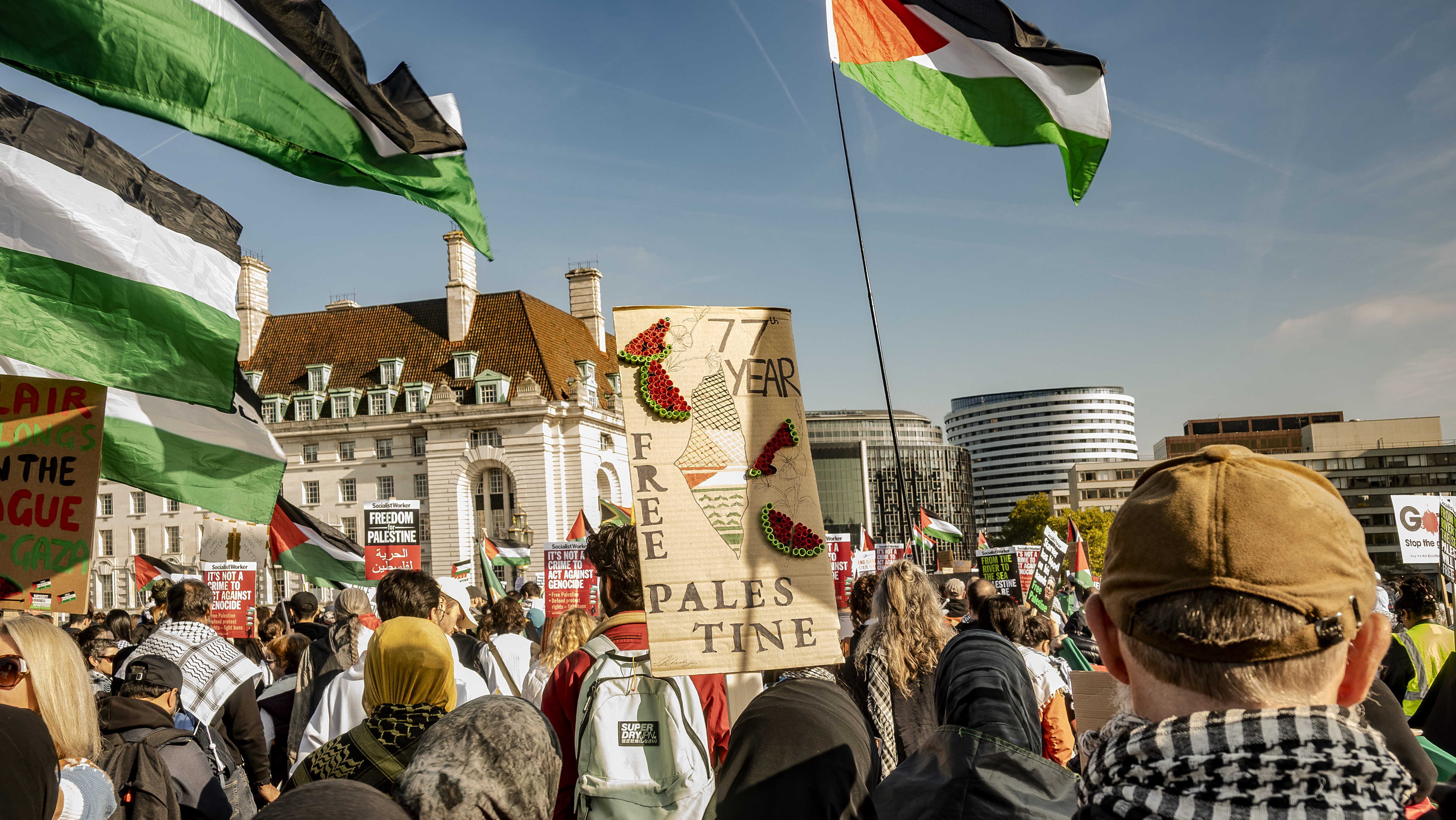
There are certain moments in politics which, whilst not the primary cause of a downward political spiral, reflect the dire straits in which a leader or a party find themselves. Think Liz Truss’ fracking vote. For the Greens, perhaps nothing encapsulates their current malaise more than their infamous “Zionism is racism” motion.
I should add that I will not use this article to take a position on what is a highly emotive and extremely contested issue. Adding my own opinion on the matter risks detracting from the purpose of this article. Instead, I am going to play the political cynic by stating that the motion was unbelievably bad politics. In what should have been an opportunity for the party to stake its claim to the future of progressive politics, the Greens ended up mired in three days of partisan wrangling over whether a position, adhered to by two-thirds of British Jews, is racist. Evidencing the potency of the Israel-Palestine debate as a political toxicant, this motion sliced the party down the middle, as cleanly as a knife through butter. Dairy-free butter, of course: this is the Green Party, after all.
Nearly every single Green MP opposed the motion. Zack Polanski, himself Jewish, stated that he had concerns and would support amendments. Former leader and party grandee Caroline Lucas pleaded with members “not to support the over simplification at the heart of this motion – a refusal to accept complexities which is leading to so many Jewish members feeling scared and unwelcome in our party.” By contrast, Deputy Leader Mothin Ali expressed support for the motion, whilst also rejecting the suggestion that all Jewish people who defined themselves as Zionists were, themselves, racists.
As always, no matter how many caveats were given, the logical extension of the motion was not lost upon many of the Green Party’s Jewish members, who were subjected to a deeply unpleasant atmosphere at the conference. Indeed, Vivien Lichtenstein, chair of Jewish Greens and previously a parliamentary candidate for the party, stated that she was considering terminating her membership – a damning indictment of a party which has already faced accusations of anti-Semitism. Where, you might ask, was Zack Polanski throughout all of this? Unable to pluck up the courage to unite his mutinous party, Polanski did not even attend the vote. However, the damage was already done, with the pandemonium setting the stage for his loss at the Holborn and St Pancras by-election a few days later.
Beyond the immediate consequences, however, the political hullabaloo surrounding the motion betrayed something far deeper: the Greens are a fundamentally unserious party. No party has the automatic right to elected office; the process of winning the trust of the public is a laborious one, which cannot be achieved by a single policy or a slick soundbite. Rather, it needs to show itself as structurally capable of governing. Whilst party democracy has its place within our political system, what is essential for sound government is discipline: the ability of a party to function effectively as a political unit, through a well-defined hierarchy and a commitment to the party’s larger interests –the surest way of achieving political change. The authority of the leader is crucial. Whether we like it or not, an assault on his or her authority can be drastically damaging, as there is nothing that makes the electorate smell blood more than any hint of weakness. This is not to state that the authority of a leader should be uncontested, but it is clear that, if done within the hierarchy within which any successful political operation must operate, the damage can be contained.
A democratised approach to the formulation of party policy often results in positions which, whilst definitely energising the most idealistic zealots, do not hold the appeal to the masses required for electoral success. Left-wing movements have often struggled with this concept. This is understandable, given that leftism is essentially predicated upon the belief that there is an objective right way, which will be visible to all who are truly Enlightened.
Think of Labour’s manifesto of 1983, dubbed the “longest suicide note in history”. The result of the domination of the party’s Annual Conference (the party’s ultimate decision-making body responsible for policy formulation) by left-wing activists, it led to a dismal electoral performance in that year’s election. Indeed, the party subsequently suffered an internecine civil war of the early 1980s, when the Trotskyist Militant Tendency caused an incessant headache for Neil Kinnock and handicapped the party’s ability to recover from its drubbing in 1983. Clearly mass democratisation is often at the expense of a party’s ability to present itself as a cohesive unit.
The question needs to be asked: what do motions such as “Zionism is racism” actually achieve? Given that most of the Green Party’s MPs opposed it, it is unlikely to affect their parliamentary position. Regardless of whether Zionism is racism or not, the Greens have always opposed Israel’s Gaza policy, which they would define as a “genocide”. Beyond the imposition of a label, it appears that nothing tangible has been positively achieved by the party. Instead, it has alienated vast swathes of Britain’s Jewish population, with condemnation echoing from across the British political spectrum; Labour has recently announced that it is ending power-sharing agreements with the Greens across 11 councils as a direct result of the motion.
Perhaps it can be attributed to the enthusiasm of smaller left-wing movements for well-meaning statements, imbued with their noble commitment to ideological purity. If they are clear about what they stand for, then they can work to achieve it in practice, so the logic goes. Whilst this is all well and good, the point still stands: what positive change has actually occurred as a result of this motion that would not have occurred without it?
At this point, dear reader, I can sense your ire. “What a cynical position,” I hear you say, “to reduce an issue that affects so many people throughout the Middle East to a mere question of political strategy. At least Green activists are standing for what they believe to be right!” To such an understandable criticism, I would offer two responses. Firstly, a margin of 209 votes is hardly a decisive majority, implying a lack of unanimity over what the party as a collective believes to be right. As I have argued, it has splintered, rather than bound the party together over a shared vision. Secondly, there is a difference between saying and doing. Talking the talk is all well and good, but the only way that a political party can walk the mile is by winning elections. For this to happen, they need to present themselves as a party structurally prepared for government, a perception shattered by events at Brighton. If democratised chaos is how the Greens are seen to formulate key policy decisions, they doom themselves to oblivion. This should be the greater evil for any Green supporter than not passing a motion for the sake of gesture. In our political system, power precedes change.