
https://www.bbc.co.uk/iplayer/episodes/m002zl60/blue-planet-iii
‘A ray of hope in a rapidly transforming ocean.’ – Sir David Attenborough, Blue Planet III
Blue Planet will always be something I treasure the opportunity to watch. It is one of those documentaries that makes the world feel vast, and reminds us amid the fast-paced life in Oxford, that we are just a small part of this constantly evolving world.
After the release of the first half of the series on Sunday 1 November, one message particularly struck me: while humans have undoubtedly contributed to the decline of our oceans, we also have the capacity to help ecosystems thrive. It reminded me that humans aren’t always the problem, but can also be part of the solution. This offers an underlying sense of hope. If we just lock in to saving our planet, then it won’t be so bad after all. Beyond its environmental message, this series also raises questions about how we capture and represent the natural world.
This season, producers emphasised that they wanted to stress realism in a time where AI is so prevalent. The BBC said that the series ‘features cloudier footage to prove authenticity’. The deliberate choice to retain imperfections feels particularly significant in an age where AI-generated imagery is making it hard to distinguish what is real. Despite the considerable improvement in filming technology since the last series was produced over a decade ago, the filmmakers have made a conscious effort to preserve the authenticity of what they have captured. No generative AI was used in the making of the series, and that feels powerful in itself.
The theme of human intervention was particularly prevalent in ‘Open Ocean’. Throughout Sir David Attenborough’s powerful narration, there was a persistent emphasis on how humans help, not just harm, the seas. One particularly striking example involved turtle hatchlings. Thousands hatch on the beaches of Mexico every year, with an estimated 90% successfully reaching the oceans. However, due to a combination of obstacles, their journey can be inhibited. The episode highlighted how plastics and sargassum (a form of marine algae) can slow their journey or prevent them from reaching the sea altogether. This leaves them increasingly vulnerable to predators waiting nearby. Conservationists can intervene in ways that are regularly employed by turtle sanctuaries, such as helping hatchlings navigate through sargassum, or deterring predators.
Another part of the episode showed how in the open ocean, we now have circular enclosures filled with thousands of fish, which turns out to be the increasingly widespread practice of fish farming. They can be suspended in the middle of the open ocean, in fjords, or even in freshwater lakes. Rather than solely relying on wild fish, these farms raise fish in an enclosed environment, offering an alternative source of seafood. These fish are harvested regularly, much like crops, offering an alternative to the continued exploitation of wild fish populations. Aquaculture is one of the fastest-growing sectors of food production globally. In the UK, Atlantic salmon is most often farmed this way, with global statistics suggesting that up to 90% of consumed salmon is farmed. Yet the ethics and sustainability of such practices remain ambiguous. While fish farming may reduce pressure on wild populations, questions on animal welfare and environmental sustainability still arise. In addition, many of these fish farms can be breeding grounds for parasites such as sea lice, sometimes requiring chemicals to try and prevent this. Nevertheless, by providing an alternative solution for seafood, fish farming has the potential to reduce pressure on wild populations and allow populations to resurge, which we have already seen. When we choose to protect animals, they can thrive. Hope is there.
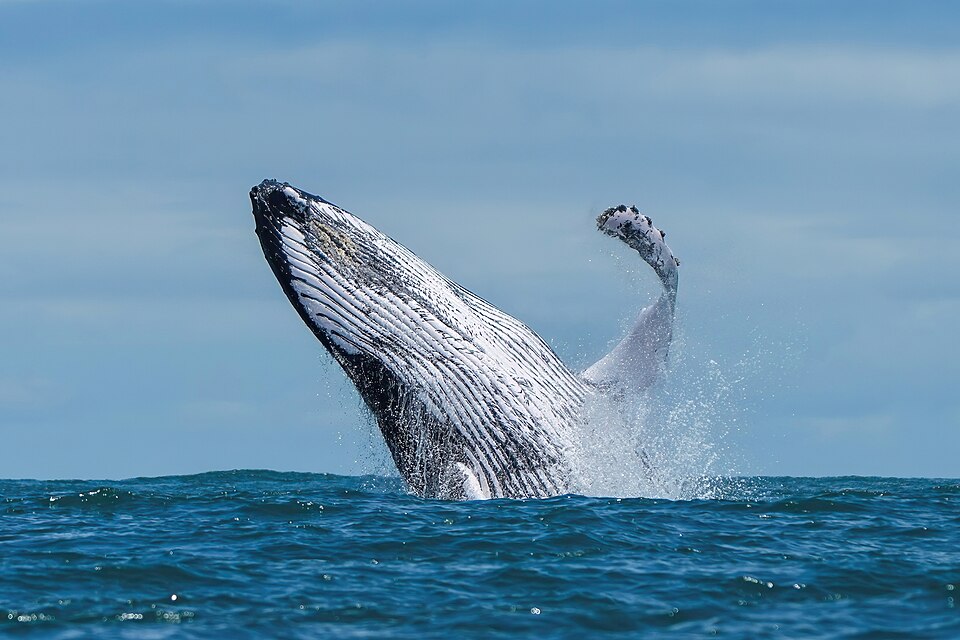
‘Just 15 years ago, only four humpbacks could be seen off New York City. Now up to 150 of them feast throughout the autumn’ – Sir David Attenborough, Blue Planet III
The third episode titled ‘Seasonal Seas’ offers a contrasting perspective, highlighting how human activity can also damage marine environments. Although this narrative is one that we have become increasingly familiar with, it remains an important one to tell. In Portugal, seagrass meadows that once flourished across the seabed are now reduced to barren landscapes, caused by anchors and ships essentially trampling the floor. Without seagrass to dampen the movement of water, currents can up to double in strength, making it even harder for marine life to thrive. In response, scientists are now creating artificial shelters and habitats to support the marine life that has been displaced by the destruction of the seagrass, yet again highlighting how we can fix the problem if we work to find solutions.
Hope is one of the most powerful emotions. People are quick to disengage when the environmental narratives become increasingly negative or leave little room for individual action. Shining a positive light on restoring rather than damaging ecosystems is a much more effective way to engage an audience. The underlying sense of hope running throughout the series is perhaps its greatest achievement. It continues to remind us that even though humans have contributed to the destruction of ecosystems, we can also help them recover.
In a world increasingly shaped by artificial representations of reality, there is something reassuring about seeing the natural world just as it is. Unpredictable. Imperfect. Extraordinary. Perhaps this is the greatest reminder that Blue Planet III is serving us: our oceans don’t need to be reinvented; they need to be understood, valued and protected.