
Editor’s Note
Welcome back. With 5th week firmly behind us, the final straight is in sight. This week we have two very different pieces. Nancy Gittus has written on the recent fridge hacking disasters in Europe, which have left tonnes of food spoiled and rotten. She investigates who is behind these attacks and why.
Guillaume Antignac heads to the other side of the world, where he reports on recent elections in South Africa, which produced surprising results. The African National Congress, a beacon of post-apartheid democracy, has lost 15% of votes since the last municipal elections in 2021. Who is replacing the ANC and why? Read on to find out …
The Death of the Fridge : Europe’s Hacking Disaster
By Nancy Gittus
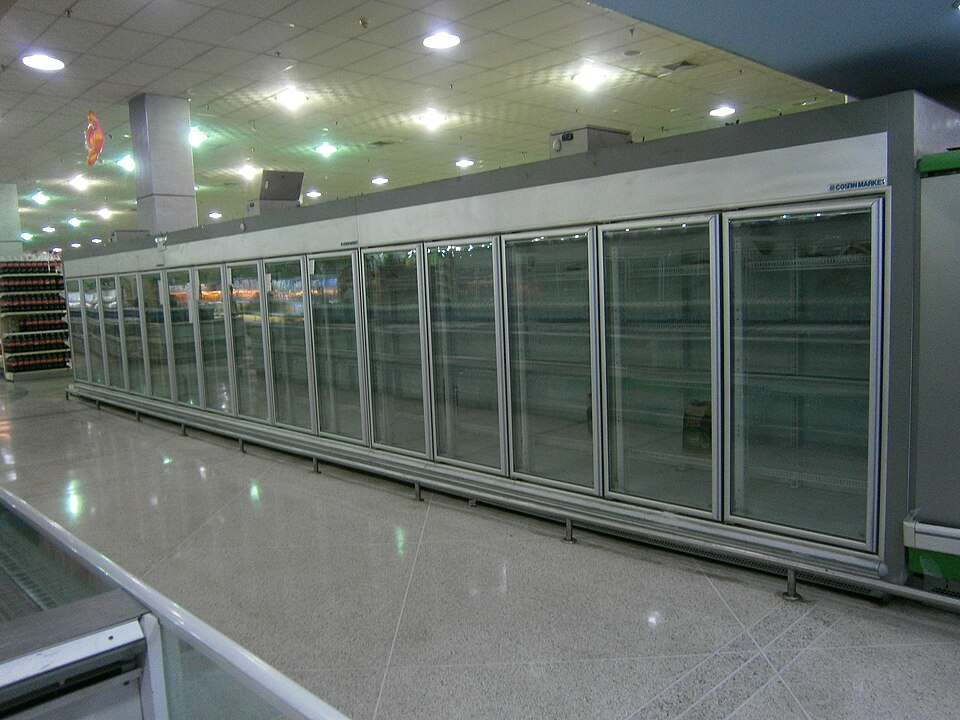
Image by Wilfredor. Creative Commons Zero, Public Domain Dedication
This week, France has accused Iran of orchestrating the attacks on the country’s supermarket fridges last month. Specifically, it has accused Shakid Kaveh, a group linked to Iran’s Islamic Revolutionary Guard Corps, of hacking into 700 French supermarkets’ refrigerating systems. The sabotage campaign spoiled millions of euros of food, with photos captured of employees hauling crates of inedible food into garbage trucks. Some fridges had their temperature turned up so high they caught fire.
France’s Foreign Minister Jean-Noel Barrot branded the attack “unprecedented in its level of aggression.” He warned the responsible party would be hit with sanctions.
Although Iran has denied the accusations, calling them “baseless and biased”, Nikita Shah, a senior fellow with the Intelligence, National Security, and Technology programme at the Center for Strategic and International Studies states that there has been a “notable uptick in Iran’s cyberoperations since March 2026”. This includes “cyberespionage” and “conflict-themed cybercrime” (real world tensions or conflicts mirrored in digital activity). Adding to this, a 2025 policy report by the UK Parliament’s Intelligence and Security Committee described Iran as “an aggressive cyberactor with extensive capabilities”.
The attack in France came after a wave of similar cyberattacks, notably conducted against Israel and the US. In May of this year an Israeli food production plant fought off attacks on its industrial freezers, and in August several US Army bases’ freezers broke down.
What is, perhaps, quite concerning is that, as senior director at cybersecurity firm Sophos, Sophos Rafe Pilling points out, “the attacks themselves were not particularly complex”. Although this might initially seem like good news, the fact remains that these attacks caused extensive financial damage, even without the use of sophisticated technological capacity or expertise. Attacks on fridges may seem more amusing than frightening, but when considering what else is stored in fridges – medical supplies of blood or vaccines, for instance – the threat of attack becomes more pressing.
AI presents a fresh and compounding concern for Europe’s vulnerability to cyberattacks. The UK’s national cybersecurity centre warned that the UK is in the “foothills” of a new level of cyber threat, and should expect a “huge rise” in attacks. AI could automate research on target vulnerabilities, and then execute attacks, allowing for minimal human involvement in these crimes. As Katrien Eggers, spokesperson for Belgium’s Centre for Cybersecurity, stated “All IT systems are potentially vulnerable, and AI can now be used to successfully exploit these weaknesses — especially by sophisticated actors“.
Last week, seven more countries were hit across Europe. Nations such as Belgium, Luxembourg, Sweden, Ireland, the Netherlands, Estonia, and Finland were targeted, resulting in over 100 stores being affected. Although it is not known if the incidents across Europe this month are linked to the attacks last month in France, information released so far by the supermarkets involved suggests that the same method of remotely switching on defrost mode was used in these attacks, as last month in France. “Everything is destroyed,” said Engla Ingwall, sales manager at an ICA franchise store in Stockholm, telling Reuters, “There has been a cyberattack and all our freezers reached 50 degrees (Celsius).”
It is not yet certain that Iran is the culprit. France has not released information as to how they reached the conclusion that the Middle Eastern country was at fault, and an investigation into the incidents led by prosecutor Laure Beccuau is underway. Attributing blame is also extremely difficult as hackers are able to hide their location. Theories swirl, therefore, about who might be to blame, compounded by two Russian-aligned hacktivists groups claiming they were responsible. In truth it could be anyone from Iranian hackers to teenage prankers, and Beccuau has her work cut out for her.
South Africa’s Liberating Party Takes Significant Blow In Local Elections
By Guillaume Antignac
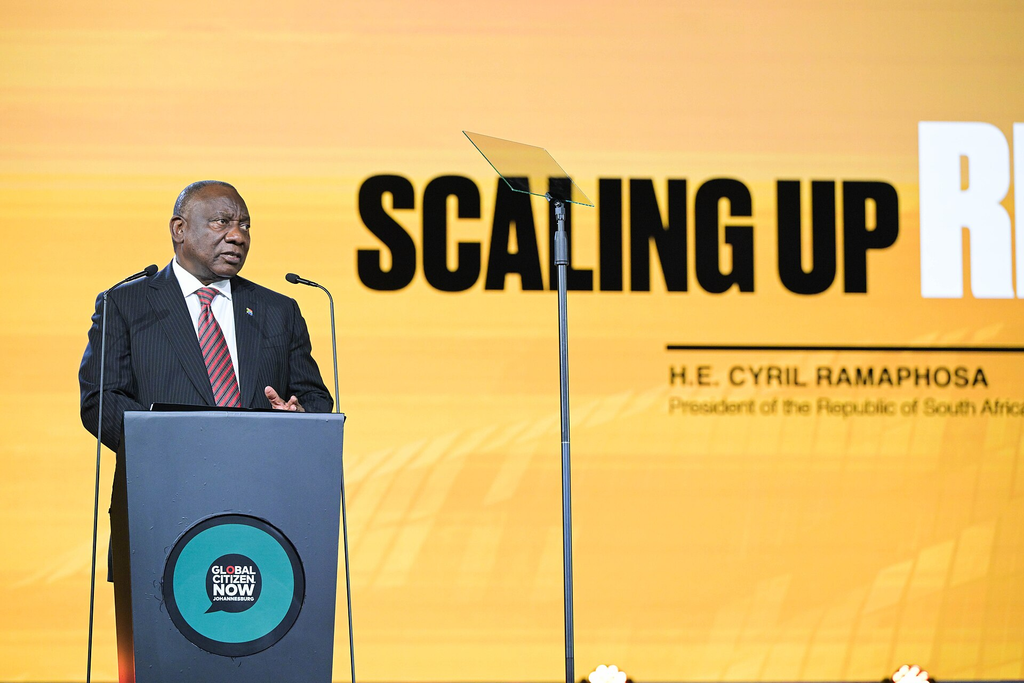
Image by OptimusPrimeBot. Creative Commons Attribution 4.0 International

On the morning of election day in Johannesburg, thousands woke up with no access to water. Just two days earlier, the local water utility had already proposed a 15% cut of all water usage after the city’s water scarcity problem intensified. To many residents, it was the final straw in what has been longstanding frustrations with the municipal government.
On Wednesday 4 November, Johannesburg unseated what was once South Africa’s beacon of post-apartheid democracy: The African National Congress (ANC). Across the rest of South Africa, most regions showed similar frustrations. While the ANC remains the leading party at 30%, its hold of South African municipalities fell by almost 15% from the last municipal elections in 2021.
The party lost votes in every region of the country, taking significant losses of more than 10% in Eastern Cape, Free State, and Gauteng, home of Johannesburg as well as the administrative capital Pretoria. In KwaZulu-Natal, once an ANC stronghold, the party lost almost all of its municipalities to uMkhonto weSizwe (MK), taking a near 20% loss.
MK, a party formed in 2023 by Jacob Zuma came third nationally with about 10%, a surprising comeback of the once jailed and disgraced South African ex-president. Democratic Alliance (DA), the main opposition and typically viewed as the ‘white party’, received almost 25% of votes, including a projected one million votes from black South Africans, a historic high. The party took significant wins in Gauteng, and widened its stronghold of Western Cape, which includes the country’s second largest city Cape Town.
ANC famously took South Africa into democracy after 46 years of apartheid, a feat which gave the party national and historical reverence, as well as a sense of invulnerability. But in the last decade, the party has seen a steady decline in its popularity. The recent votes have been the party’s poorest electoral result in the 32 years since apartheid.
Limited access to basic services, especially water and electricity, underpins the frustrations of many South Africans. The country has also been battling an unemployment rate of around 33% for the past five years, which has hit young South Africans particularly hard. Youth unemployment was at 63% in the third quarter of 2026.
The ANC has also failed to address its longstanding corruption problem. Local municipalities have consistently shown cracks in governance. Audit outcomes for 2024/25 presented in June this year showed only 15% of municipalities managed to achieve clean audits.
Frustrations could have also been drawing on the Phala Phala scandal, a judicial inquiry which dragged President Cyril Ramaphosa through an impeachment saga earlier this year. The president had been accused of constitutional violations after it was revealed that £432,000 disappeared from his farmhouse in the Limpopo province in 2020. Though the constitutional court had revived the case in May of this year, Ramaphosa was dismissed of suspicion in November after it was found the money had been stolen by a man named Imanuwela David.
These are some of the reasons the ANC took losses a few weeks ago. Analysts suggest the party has been relegated to the status of other parties – that votes are no longer something they can take for granted. William Gumede, a scholar at the University of Witwatersrand, told the New York Times it was “the end of the post-liberation era”.
Apart from Cape Town, all major cities failed to find a majority, meaning parties will need to form coalitions. While the ANC has stated its readiness to cooperate with rival parties, it is the first time in South African democracy that the liberation party could be locked out of governance in some cities. As the party itself conceded, now is the time for some serious self-reflection.