
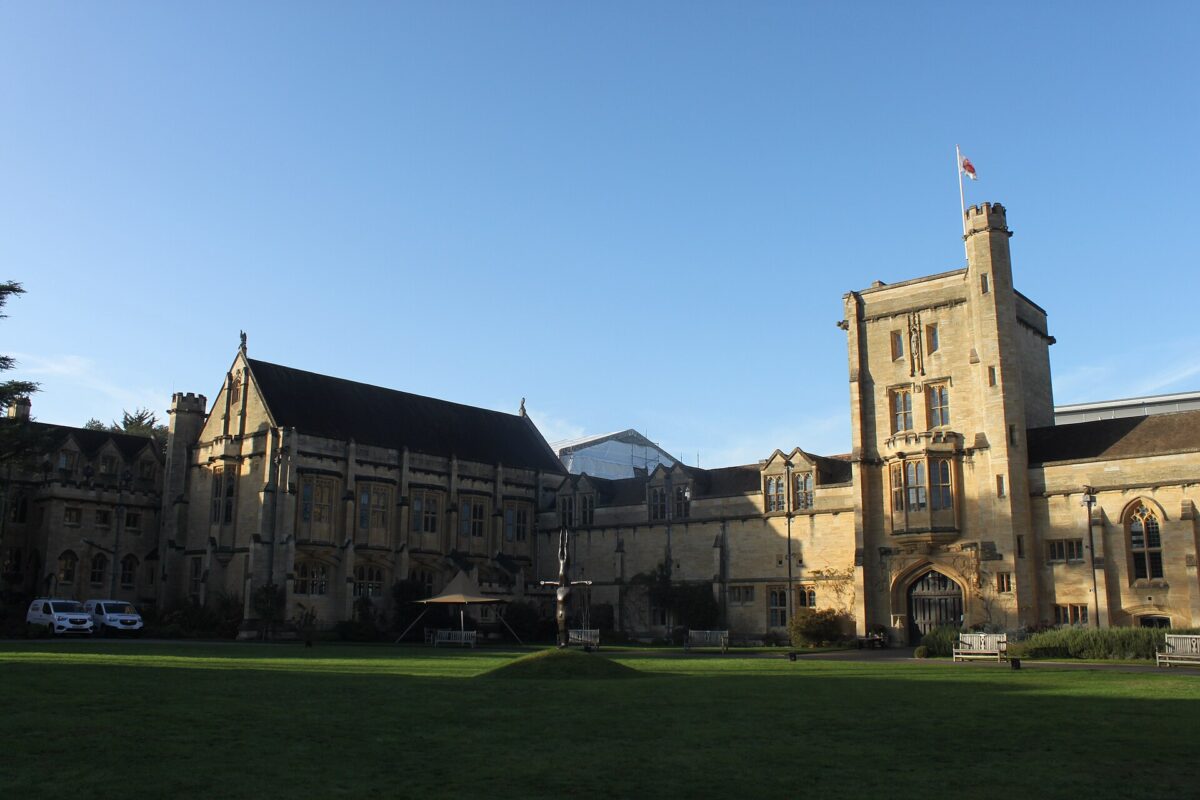
As tension builds in anticipation of Oxon Universities’ Reform Society’s event hosting Nathan Cofnas on 17 November, events surrounding diversity have been hosted by various colleges and societies. Most recently, Mansfield College and Colleges’ Heads of House have collaborated to discuss the importance of diversity and pluralism in higher education on 16 November.
The panel featured five heads of house: Baroness Valerie Amos LG CH PC (Master of University College), Professor Beth Breeze OBE (Principal of Harris Manchester College), Jude Kelly CBE (Master of St Catherine’s College), Helen Mountfield KC (Principal of Mansfield College), and Lord Neil Mendoza CBE (Provost of Oriel College). Though Lord David Isaac CBE (Provost of Worcester College) was supposed to be featured, there was a business conflict mentioned at the start of the meeting. The other heads of house were joined by Professor David Ruebain, the Free Speech Officer and Pro Vice-Chancellor for Culture Diversity and Inclusion at the University of Sussex.
Announced on 5 November in light of the looming invitation of Nathan Cofnas by the Oxon Universities’ Reform Society (OURS), the event explored diversity and pluralism within the higher education sector. The panel was moderated by Helen Mountfield KC, who opened by stating that she preferred “not to focus on individual student events”, possibly in reference to protests surrounding the Cofnas talk.
Professor Reubin focused on the “intrinsic importance of diversity of background, belief, identity, thought, and method”, citing evidence that diversity “improves outcomes”. Professor Breeze used Harris Manchester College as an example for an Equality, Diversity, and Inclusion college, as it is the only college dedicated exclusively to mature students. She emphasized the value of all different demographics participating in academic spheres, stating “it is not a conflict between excellence and seeking pluralism at the university”.
Though Mountfield tried to steer the conversation away from Cofnas, Baroness Valerie Amos passionately remarked that his invitation “undermines the identity of black students and their sense of belonging” and criticised the response from the University. She questioned the lack of continued conversation surrounding individual events, “How come we are not talking about these issues on a more regular basis?”
Amos further critiqued the Free Speech Act that ensures events like OURS inviting Cofnas “hiding behind a piece of legislation is a real problem”.
As someone with a background in the arts, Jude Kelly extrapolated the conversation to topics outside of strictly academia. She touched on the inclusion of diverse stories in theatre, and how this is an issue beyond academic spheres, “this is about the world”, which has been “set up for people who have power to hold onto it”.
Lord Mendoza took a more positive perspective, referencing the international community at Oxford and how its diversity is a large reason for the University’s high rankings. He stated, “we must do everything we can to welcome differences in race, religion, sex, socioeconomic background…this is the great strength of Oxford”. He continues by acknowledging Oriel College’s history with Cecil Rhodes, and the work that the College has been doing to remedy the effects of the actions of Rhodes, “EDI at Oriel isn’t perfect…but we must be vigilant all the time”.