Are you feeling tired of reading all day long for your demanding Oxford degree? Do you feel guilty for not reading more in your free time, or lost about what to read during what free time you do have? If so, you are in good company here. After doing my undergraduate degree in English and Philosophy, and now, as I begin my MSt in English and American Studies here at Oxford, it is safe to say that I have spent the last several years of my life wrestling between my love of reading and the demanding nature of my humanities coursework. So, I’m here to offer some suggestions on how to overcome reading burnout and to give some advice on balancing a largely reading-based course with the desire to read more ‘for fun.’
I want to start by affirming all of the ways that reading really is a wonderful and valuable use of time. Reading is shown to improve vocabulary, lower stress levels, and is even linked to postponing age-related cognitive decline. Stories, both from real-life and those imagined, have the power to take us out of our own lives, making them feel pleasantly smaller and further away. Exploring material outside of our usual field or genre can give us a different perspective on problems and concepts that require a more nuanced understanding, as well as introduce us to ideas that we otherwise might not have encountered. It can give us pathways to enter unique pockets of culture, allowing us to connect in a deeper way with friends and community through the written word. Perhaps most importantly, the act of reading requires us, if at least momentarily, to inhabit someone else’s mind, and in this sense, is a kind of exercise in active empathy.
In case I’m not being clear: reading is great.
And yet, it can be a demanding and not always enjoyable pastime. For myself, I have always been a slow reader; the experience has generally been something more akin to hiking through open country without a map – tripping over words, losing my place, and sometimes forgetting the chapter that I just spent the last 20 minutes trying so hard to concentrate on. With all the ways that reading can add to our intellectual and personal lives, I think it can be easy for us to idealize it as a kind of inherent moral good — as a superior pastime against which everything else falls short. This might be why you feel a sense of guilt after watching the newest episode of The Traitors or flipping through Instagram stories instead of that biography that’s been sitting in your TBR list for three years now. But I think this mindset does a disservice both to reading as a practice and to us as readers.
When we treat reading as some kind of a moral obligation, or when we do it because we think that it will earn us the respect and admiration of others, we subconsciously train ourselves to see reading as a chore – it sucks the joy out of it! In doing so, we also effectively remove ourselves from the act of reading by placing other people’s perceptions and judgements ahead of our own engagement with the text. This mindset inevitably contributes to more burnout and keeps us from reading simply because we want to, which I think should be the ultimate goal.
With this in mind, I think it is helpful and important to remember how reading fits more largely into our engagement with culture and with the world around us. In this way, it fills a role comparable to that of television, movies, documentaries, music, art, podcasts, and even social media. Now, this is not to say that each of these forms don’t have something different to offer or won’t help us develop certain habits of thinking and living in their own way. But, I think when we remember that reading is just one way of participating in the ever-expanding web of culture, politics, and history, we also free ourselves from the idea that reading is the only valuable way of engaging with the people and world around us.
Consider how many great movies come to us as adaptations and reimaginings of classic literary works? This summer’s new Odyssey film directed by Christopher Nolan, for example, invites us to consider the relevance of ancient texts for a new (and potentially wider) audience. How often do poets and authors inspire musicians to represent some aspect of the human experience in a different way? Lucy Dacus cites Mary Oliver as a major inspiration in a recent documentary about the Pulitzer-prize poet, Mary Oliver: Saved by the Beauty of the World. Once we begin to notice the ways in which these distinct pieces of literature, art, politics, and culture are all bound together, we can appreciate what each of these forms has to offer us on their own terms and start to think seriously about how we entangle ourselves in that web.
Now, if reading more really is your goal, but you feel stuck or slightly brain dead after working your way through five chapters of Hobbes’ Leviathan like me, try reading something that makes you excited! After I graduated from high school, I felt torn between a strong desire to get back into a reading habit, yet also massively exhausted from the end-of-year academic sprint. So, that summer, instead of trying to get through Anna Karenina or Infinite Jest, I decided to read all of C.S. Lewis’ Chronicles of Narnia. Yes, these are children’s stories, and, yes, I did receive some pretty funny comments from my friends’ parents… However, I found myself quickly drawn into that world of magic wardrobes, talking beavers, ice witches, and Turkish delight. More importantly, I simply enjoyed it! Since then, I try to approach reading with that same kind of wonder and curiosity, and also to let myself enjoy the kinds of reading I have been told (both explicitly and implicitly) aren’t worthwhile. From the stories I read as a kid to contemporary fiction to Pinterest poetry to graduation speeches; all of it has something valuable to offer!
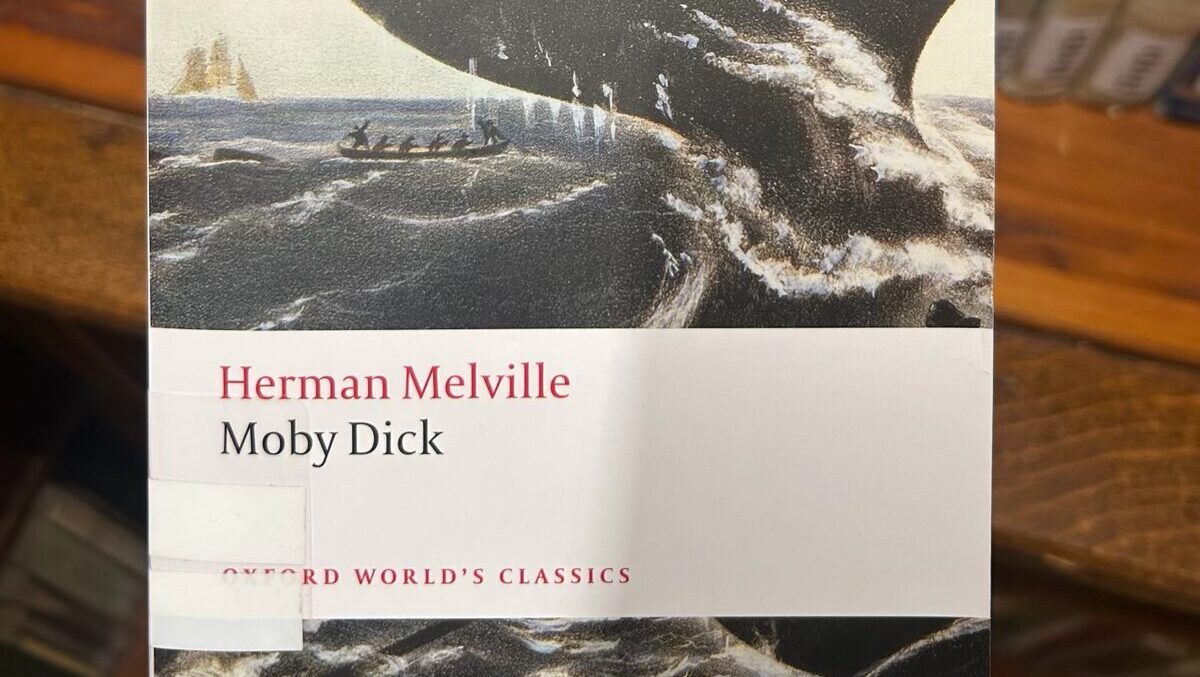
Before I wrap this up, a quick note on the topic of “great literature”: just remember that Jane Austen’s novels were written off by academics for a long time because they were about women’s lives and set in primarily domestic spaces. Melville’s Moby-Dick was essentially ignored by the literary world for almost 70 years before it gained popularity, and is now considered a foundational work of American Literature. Meanwhile, Socrates hated his words to be written down and probably would view the modern reading tradition as an impediment to learning. People have all sorts of opinions on what makes for “good” reading. Some of those opinions are even well-founded! But, at the end of the day, how and what you read is your choice; what other people think about your reading habits matters only as much as you let it. And whenever you’re feeling a little insecure about your choice of reading, remember that you are the reader (there’s power in that!) and that Y/A sci-fi romance fantasy you are reading might be celebrated 100 years from now as the single most important contribution to 21st-century fiction.
So, my final plea to you is this: life’s too short not to read the fun stuff! Read that hockey smut, or the newest Hunger Games, or that self-help book, or anything else that speaks to you. Pick up that new Odyssey translation, or Michelle Obama’s memoir, or that random paper your favorite professor mentioned three years ago. Watch that new A24 film and listen to that podcast, and maybe even scroll on TikTok for 30 minutes. Because, in a world constantly vying for our attention in increasingly malicious and calculating ways, allowing ourselves time intentionally dedicated to joy and wonder might be the greatest act of personal agency we can achieve. Happy reading — or not reading!