

You pull your bed away from the wall and find a patch of mould behind the headboard. Or you notice the same dark spots coming back around the bathroom window. If you’re renting privately in Oxford, take photos if you can and report the problem to your landlord or managing agent in writing. Ask for an inspection and keep a copy of your message. Oxford City Council also has a route for reporting damp and mould if your landlord or agent fails to respond or refuses repairs.
If you live in college accommodation, check your college’s maintenance procedure. The contact and reporting process can vary by college. If you’re unsure who manages your student house, look for the repairs contact in your accommodation agreement or move-in pack.
Take photos and write down what you’ve noticed
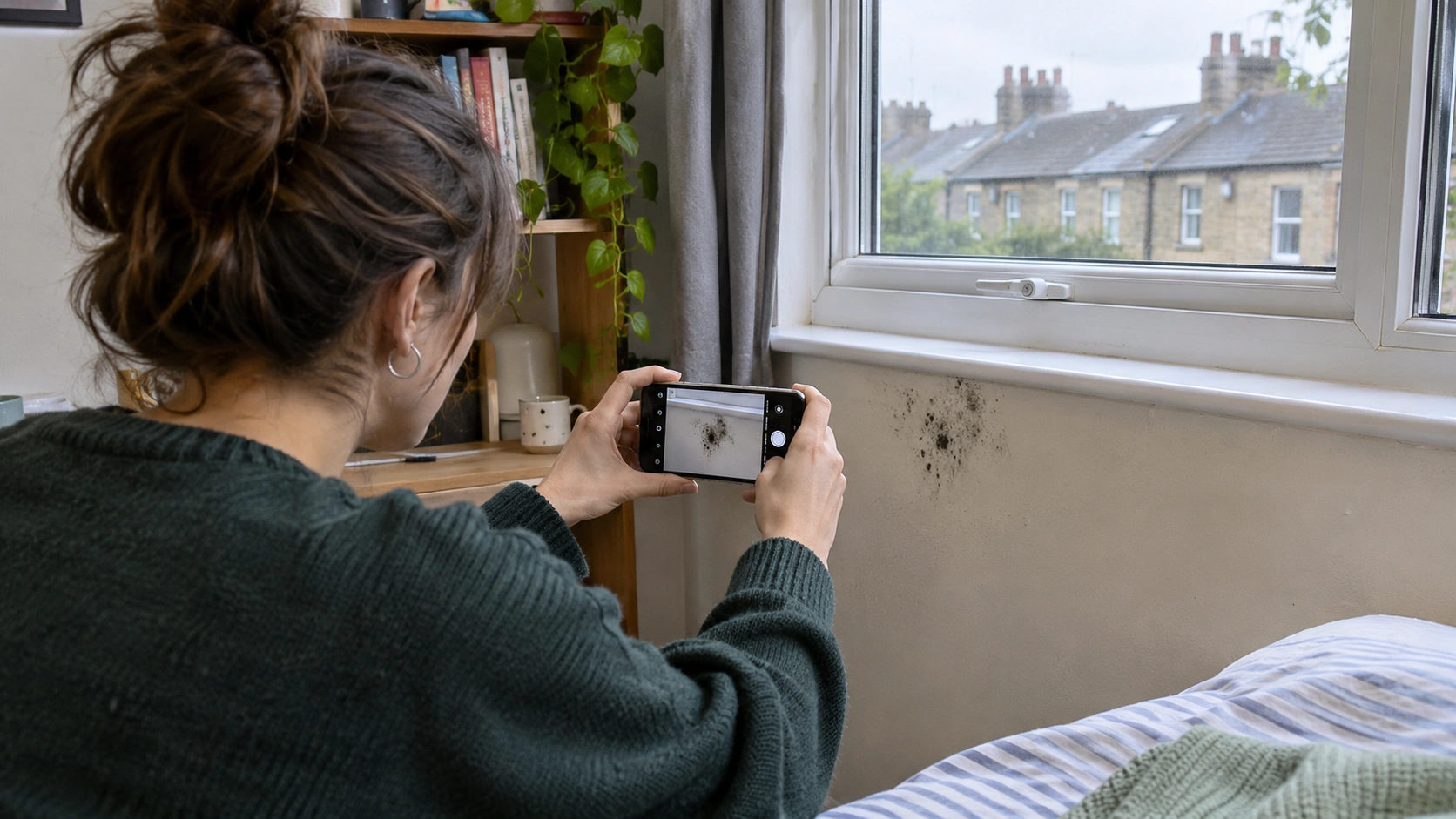
Take one wide photo showing where the patch is in the room and one closer photo showing what it looks like. A close-up of a dark spot can be hard to place once several rooms have been reported. If the problem is in a shared bathroom or kitchen, name the room and describe the exact area, such as the ceiling above the shower or the wall beside the back door.
Write down when you first noticed it and whether it has spread or returned. Mention anything that would help someone investigate, such as staining after rain, a dripping pipe under the sink or a bathroom extractor that has stopped working. These observations give the person inspecting the house somewhere to start. Government guidance lists multiple possible causes, including building defects, inadequate ventilation and condensation.
In a shared house, check whether anyone else has seen damp or mould in their room. If you send one email for the household, label each photo with the room and location. Keep copies of the photos, the original report and any replies somewhere everyone involved can find them. The council asks renters to keep their written correspondence and provide photos where possible.
Send a written report to your landlord or letting agent
Use the repairs email address or portal in your tenancy paperwork. If you’ve already called, follow up in writing with the date of the call and what was agreed. Ask who will inspect the affected rooms and when you can expect an update. If you’re reporting a recurring patch, include the dates of any previous visits or work.
Subject Damp and mould report for [property address]
Hi [name],
I’m reporting damp and mould at [address]. I first noticed it on [date] in [room and exact location]. Since then, [describe what has changed or whether it has returned]. I’ve attached photos showing the affected area.
Could you confirm you’ve received this and let me know when someone can inspect it? Please also let me know what access you’ll need and when I should expect an update on any repairs.
Thanks,
[Name and contact details]
If you use a reporting portal, save the confirmation or reference number. A short timeline with the date you reported the problem, the replies you received and any visits is easier to share than a long chain of messages.
Contact Oxford City Council if the problem goes unresolved
Oxford City Council says to contact it if your landlord or managing agent has given no response within 14 days of your written report, or has refused to carry out the repairs. Its guidance also says it may be able to help if the issue has gone unresolved for an unreasonable length of time. Include your address, contact details, the date you first reported the problem and any correspondence or photos that show what has happened since. The council lists rrt @ oxford.gov.uk and 01865 252211 for damp and mould reports from private renters. Oxford City Council’s reporting page
If something changes while you’re waiting, add the new information to the original report. For example, send a dated photo if a patch has spread since the inspection or if new staining has appeared in another room. Ask for the next step in writing so you can see whether there is a date for further investigation or repairs.
Ask what will be done about the underlying moisture
If you’re told the wall will be cleaned or painted, ask what the inspection found and whether there is any work needed to stop the moisture returning. A stain beneath a window could warrant a different investigation from one on the ceiling below a bathroom. The location is a clue, and the inspection should establish what is happening. Government guidance advises housing providers to address the underlying causes and investigate further if damp or mould comes back after remedial work. GOV.UK guidance on addressing damp and mould
In our mould treatment and surface repair work in London, we discuss when the patch first appeared, check accessible affected areas and flag where further investigation may be needed before surface repairs or redecoration. As a tenant in Oxford, your next step is to get your own report on record. Send the email with the address, room and photos, then save the date and reference so you can follow up.