
CW: human remains
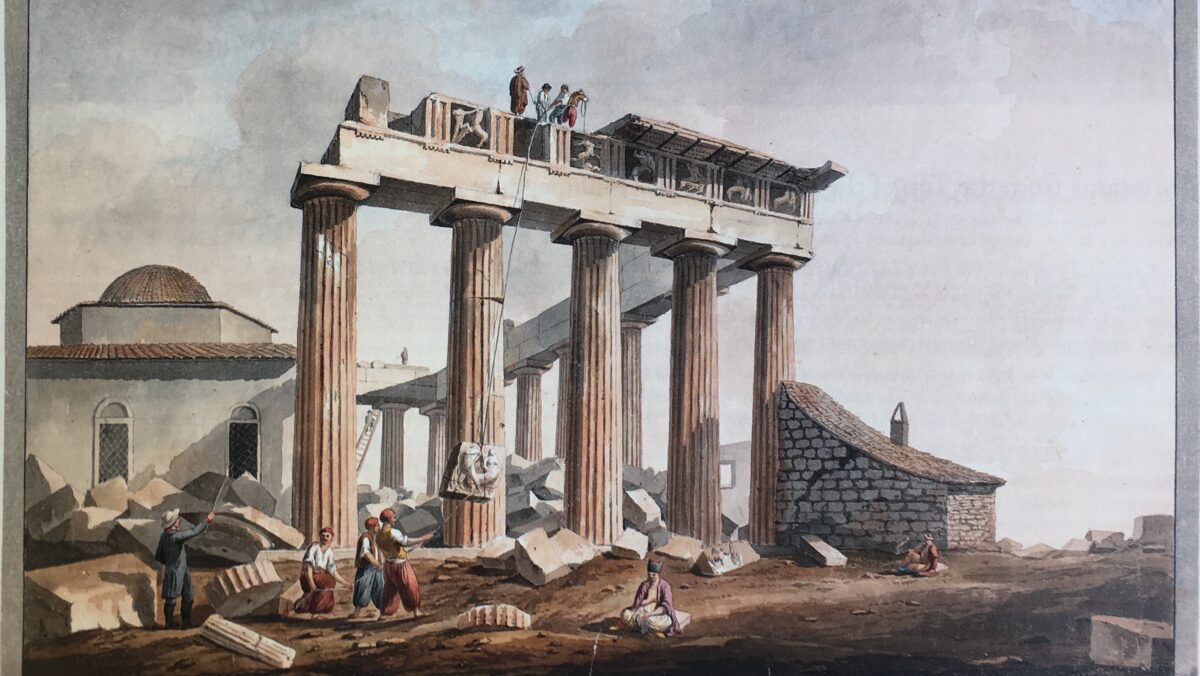
Times have changed. Objects that were once displayed in museums as ‘curiosities’ from ‘savage’ cultures have broadly been re-contextualised as artefacts from complex societies, worthy of our respect. For example, only one in five Britons still believe that the Parthenon Sculptures – also known as the Elgin Marbles, named after the Earl of Elgin who arranged their initial removal – should stay in the British Museum. But the British Museum’s staunch refusal to follow public opinion and return the sculptures points to a depressing truth: they simply don’t want to.
Obviously, the actions of the British Museum can hardly be said to represent those of all museums, many of whom have made efforts to confront their colonial pasts. Oxford’s museums have already done much in this respect, with both the Ashmolean Museum and the Pitt Rivers Museum returning sizeable collections in 2026. In 2019 the Ashmolean proactively reached out to the Indian High Commission concerning a collection of 16th-century bronze taken from a temple in Tamil Nadu, with the official transfer taking place earlier this year. The Pitt Rivers has undergone an even more delicate procedure, removing 120 human remains from open display in 2020, including their collection of shrunken heads. This has culminated in their “largest repatriation of human remains”, with the return of 39 human remains to the Naga people earlier this month.
Mentalities genuinely seem to have shifted within both museums, with the repatriation of these collections acting as the most tangible demonstration of their commitment to change. This action is also coupled with awareness, as the Ashmolean has openly recognised its collection as being a “by-product” of British colonial expansion. Even the division of the University’s collections between the Ashmolean and the Pitt Rivers, they acknowledge, is shaped by “now discredited ideas, which separated people into different races and placed them on a sliding scale of ‘primitive to civilised’”. Transcultural events held by both museums and the Ashmolean’s ‘Fingerprints’ podcast, produced in 2022, all indicate a commitment to recognising their colonial legacies.
But the same can’t be said for all museums. The British Museum firmly maintains that the Parthenon Sculptures – amongst thousands of other cultural artefacts – belong in London, where they “speak to the history of the world, and to millions of visitors from across the globe”. Similarly, they argue that the Rosetta Stone is legitimately owned by the British, as it was acquired by the Museum in the Treaty of Alexandria following Britain’s defeat of Napoleon. Egyptian claims to the stone tell a different story: the ‘Egyptian’ representative present for the treaty was an Ottoman general fighting alongside the British. In effect, the Rosetta Stone was yet another piece of a people’s cultural heritage pulled out from under them, whilst colonial powers squabbled over something that was never theirs to begin with.
So, why do some museums refuse to repatriate their artefacts, when they could mean so much more to the culture from which they were taken? After all, 99% of the British Museum’s eight million artefacts sit in storage, collecting dust. Because, they cry, it’s the law! They’re not wrong: the British Museum Act of 1963 and the National Heritage Act of 1983 legally prohibit museums like the British Museum and the Victoria and Albert Museum from permanently transferring an object in their collection to another country. Long-term agreements and renewable cultural partnerships between museum collections are allowed – and the V&A has been proactive in this regard at least. But this refusal to legally permit the repatriation of objects perpetuates a pretty colonialist message: essentially, finders keepers.
Museums hide behind these laws, using them as convenient excuses to cover up their ambivalence when it comes to actually addressing the root of their colonial pasts. This isn’t to say that the work that museums have done elsewhere to increase diversity and address colonialism is inconsequential or purely performative. Talking the talk is one thing, however, and actually returning these objects is another. Laws can change, and museums as significant as these surely have the influence needed to push for amendments – if they only wanted to.
This is where Oxford’s museums reap the benefits of answering to the University’s protocol rather than the mire of government restrictions. The University’s official Procedures for claims for the Return of Cultural Objects explicitly allows the repatriation of objects if the claim successfully jumps through all the needed hoops. This is all well and good, however, until you reach clause 6.4:
“Where a claim for return is approved, the claimant will be responsible for the costs of returning the object(s), including the costs of any conservation processing that may be required for safe transport, packaging, transport and travel. An exception to this may be made in cases of financial hardship, where the University may consider a contribution towards the costs on a case-by-case basis.”
Whilst their policy as a whole is far more flexible than that imposed by the British Museum Act and the National Heritage Act, this still speaks to an unwillingness to put their money where their mouth is. Oxford University’s policy even extends to the transportation of human remains, including for genealogical descendents – so if you spot a great-grandparent amongst the collections, good luck bringing them home.
Oxford isn’t the worst when it comes to housing human remains; a recent Guardian study uncovered that UK museums in total hold more than 263,000 items of human remains. Oxford University follows the Natural History Museum, the University of Cambridge, and the British Museum in the size of their collection. The Pitt Rivers has taken the first necessary step in removing their collection from display, but the friction added by this transportation policy continues to raise a lot of questions.
What are all these museums so scared of? That the floodgates will open and suddenly their eight million objects will disappear into thin air? That the museum will no longer provide a ‘universal’ picture of all the countries that we’ve colonised? Of course, there is something to be said for museums being a place of education and cultural exchange, and maybe this is where long-term partnerships between museums could be beneficial. However, this still presupposes British ownership over other countries’ objects – something that Greek ministers refuse to accept with the Parthenon Sculptures.
Arguably, this stems from a subconscious British desire to retain control over how other countries present their own cultures, and perhaps even a sense of superiority when it comes to the preservation of heritage. Sure, British museums might have the facilities needed to better prevent the degradation of fragile artefacts, or they might attract more tourists on an annual basis. But this mindset is ultimately damaging, taking the agency away from other cultures to choose how to display their history.
Public opinion has (for the most part) moved on from the destructive and exploitative mindset of the colonial era. Information boards drawing attention to the abhorrent ways in which objects came into a museum’s possession can only do so much if the artefact is still behind glass for us to glance at before moving on to the next. Action needs to be taken beyond merely words – if not, museums risk the irrelevancy that they so fear.