
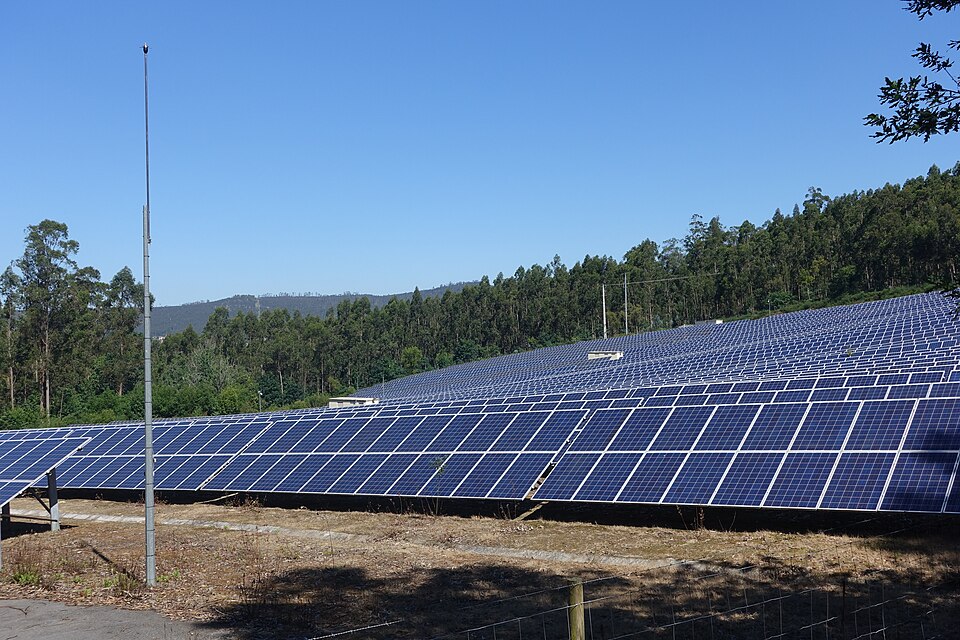
Following two postponements, the UK government rejected plans for the Botley West Solar Farm on 10 November 2026. Had the project continued, it would have been the largest in the UK. The 840 megawatt (MW) large-scale solar system was planned by German energy developer Photovolt Development Partners (PVDP) on behalf of SolarFive Ltd. This development would have spread over 2,000 acres of land (almost 6 times the size of Hyde Park, London) and was estimated to provide enough energy for 330,000 homes.
This is the first ‘no’ decision to be given to a solar nationally significant infrastructure project (NSIP). Two similar solar NSIPs were approved in October: the 800MW Great North Road (GNR) Solar Park and the 150MW Frodsham Solar project.
Baroness Margaret Curran, acting on behalf of the Secretary of State for Energy Security and Net Zero, rejected the Development Consent Order (DCO). The decision cited several concerns, including “substantial” harm to the Green Belt, which protects open land for agriculture, forestry, flood resilience, carbon storage, and nature conservation, keeping urban sprawl at bay. There were also serious negative impacts on heritage assets, including the initial plan covering one fifth of the Blenheim Estate. The decision also cited significant concerns for visual and landscape disruptions, as well as the loss of best and most versatile (BMV) agricultural land. This is a category of land which is most responsive to a variety of agriculture and non-food crop growth, such as biomass, fibres, and pharmaceuticals. Finally, a contentious point brought up aviation safety concerns for local flying schools and London Oxford Airport, with concerns for glare and loss of emergency landing space.
According to the DCO, the Examining Authority found that PVDP had promoted the proposed development as critical national priority (CNP) infrastructure, but in doing so had determined that both its negative and positive impacts were inevitable and acceptable. This therefore meant that they “had not appropriately applied the mitigation hierarchy”, a decision which the DCO observed as “systemic from the outset” and relied on being designated CNP to gain approval.
Solar plants are designated as CNPs in the UK, but even so, mitigation hierarchies are built into planning processes in an effort to counterbalance adverse impacts of the project in development. PVDP commented that their mitigation hierarchy was similar to proposals that had gotten approval, but the Secretary of State did not believe these strategies addressed the myriad of concerns for Oxford’s specific case. Of note, when reviewing concerns from Oxford’s aviation schools and airport, the Examining Authority concluded that PVDP had “overlooked or ignored the critical information from a key stakeholder and put forward a poorly designed scheme from the outset”.
The decision comes amid tense debates in the UK as government officials attempt to balance the growing needs of green energy with concerns about food security. The loss of productive land for food growth and grazing is a key concern for farming advocates. However, the Department for Environment, Food and Rural Affairs (Defra) note that climate change poses the single biggest long-term threat to agricultural yields and food security. Additionally, guaranteed income from solar leases can help to keep struggling farming businesses afloat and subsidise food production operations. Many solar arrays are classified as dual-use, allowing livestock to graze around or under panels, which may be raised and even protect the land underneath in heatwaves and extreme weather.
Local councils and campaign groups like Stop Botley West welcomed the Botley West ruling as a protection of the rural countryside. However, renewable trade body Solar Energy UK expressed disappointment over the rejection of clean energy and grid-decarbonisation capacity. Local planner George Gurney, who assisted the Examining Authority, posted a statement on LinkedIn, in which he said, “This refusal could have been avoided if the applicant had sought constructive and meaningful engagement at an early stage of the project’s design and this decision is testament to the importance of proper application of the mitigation hierarchy.”
For communities across West Oxfordshire, the decision marks the end of a lengthy planning examination, during which residents and local authorities raised concerns about the development’s effects on the countryside, agricultural land, and heritage sites. The contrasting responses to the refusal demonstrate that the debate can’t be reduced to an argument between supporters and opponents of renewable energy, but raise complex concerns about where developments should be located and how much influence local communities should have over their design.
Although the refusal brings the current Botley West proposal to a halt, the project’s future remains uncertain. PVDP has until 22 December to challenge the decision through a High Court judicial review. However, the developer has also indicated that it is considering submitting a revised application, potentially incorporating land outside Oxfordshire’s Green Belt.
The decision leaves wider questions about the future of large-scale solar development unresolved. While the government continues to prioritise renewable energy expansion, the Botley West ruling shows that national energy ambitions do not necessarily outweigh local environmental and planning concerns. Whether a redesigned proposal could successfully reconcile these competing interests remains to be seen.