

Editor’s Note
Welcome (back) to Oxford, and to our first edition of Outside OX1 for the academic year. For those of you with collections, I hope they all went well and congratulations to everyone on making it through first week! This Monday we have two very different stories, from very different parts of the globe.
Firstly, Nancy Gittus investigates the toxic smoke coming off wildfires in Indonesia, which has coated parts of Singapore, Malaysia, and the Philippines. Whilst wildfires are not unusual during the dry season, this year’s have been particularly intense.
Next Dillon Shukla reports on the kidnap of three police officers in Mexico by the Pueblo Unido gang. The gang kidnapped the officers in an attempt to force a trade for the release of their leader, whether or not their ploy was successful I will leave you to find out ….
Well done everyone on making it through the first week. To reward yourself, you can take some time off to find out what’s been happening in the world whilst you’ve been buried in the rad cam!
Wildfires and Toxic Smoke in South East Asia
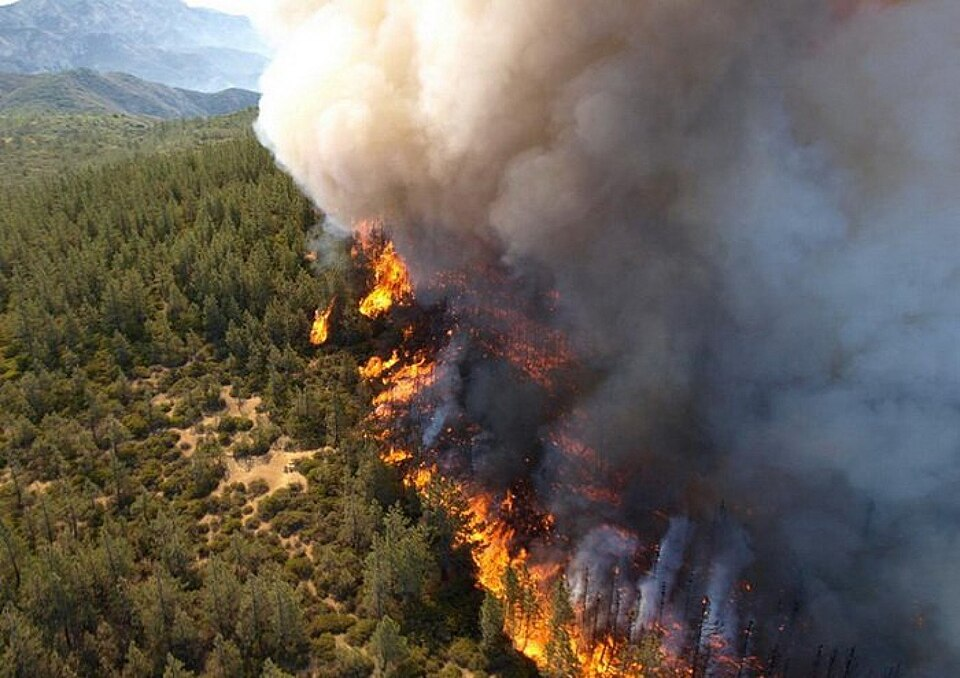
Image credit Salam2009. This file is licensed under the Creative Commons Attribution-Share Alike 4.0 International license.

Nancy Gittus
For weeks the skies in Singapore have been darkened. Infamous landmarks such as Marina Bay Sands and The Singapore Flyer, which dominated the landscape for miles around, appear now eerily shrouded. Its neighbours, Malaysia and the Philippines, are equally suffering under the pervasive, apocalyptic fumes. But it is not from any of these nations’ factories or furnaces that the smog has arisen, rather it has been blown by monsoonal winds thousands of miles across the South China Sea. It comes all the way from Borneo and Sumatra, where for the past weeks devastating wildfires have been burning through the Islands’ rainforests and peatlands.
Although wildfires are a normal and expected part of Borneo and Sumatra’s dry season, the blazes are particularly intense this year. As of last month, almost 2.2 million acres have been burned across Indonesia, and as of this month 120,000 hectares have gone up in smoke in Borneo alone.
This natural catastrophe has resulted from a combination of factors: climate change, and the Super El Niño, have made for a fatal collision of hotter, drier weather, and water shortages. Moreover, bad luck has, quite literally, added fuel to the fire. The fires have struck upon peatland, a surface notorious for its flammability. On peatland even when a fire appears to be extinguished on the surface, embers underground can reignite the blaze weeks afterwards. This, combined with water shortages, makes for a deadly recipe.
As you might imagine, these wildfires have had a combination of damaging effects on Borneo, Sumatra, and the surrounding areas. At the moment, pollution levels in parts of Singapore, Malaysia, the Philippines, and Indonesia are at an extremely unhealthy level. The haze has sparked deep public concern about health and reduced life expectancy. Officials have recorded more than 170,000 cases of acute respiratory infections linked to the wildfires and, on top of this, they are also warning that the worst is yet to come.
In some areas government data shows that the air quality index has reached over 1000. Bear in mind anything over 100 is deemed unhealthy. In Borneo schoolchildren have been issued with masks to wear at their desks, and residents such as Ely Marlina, a 46-year-old schoolteacher and volunteer firefighter, report that “Ever since the haze hit we haven’t opened our doors or windows in a long time. The wind carries smoke from the fires all the way to our porch. Ash and smoke seep directly into the house, and the conditions worsen at night.” She continues her description, “The physical toll is visceral; eyes are left stinging and weeping daily …. It feels like if we keep breathing in this smog, the dizziness will take over and our bodies will just give out.”
Humans are, of course, not the only victims. In Borneo, orangutans are already critically endangered. A century ago there were around 230,000 of the apes swinging through the jungle; now, that number has more than halved. The latest count numbers their population at 104,000. Last month the International Union for Conservation of Nature warned that wildfires were burning in habitats containing 52% of Borneo’s orangutan population, the organisation went on to explain that if climate change continues at its current pace large areas of habitat will become inhospitable for Borneo’s orangutans. A particular blow to orangutan conservation efforts came when Tanjung Puting National Park went up in smoke, losing 54,000 hectares to the flames – a worrying development for a country which advertises itself as a haven for ecotourism.
David Gaveau, a landscape ecologist who runs Nusantara Atlas (an organisation which tracks fires and deforestation in Asia), told the Guardian that, “these fires are really the legacy of 50 years of forest degradation, deforestation, and particularly on peatland.” Indeed, Pantau Gambut NGO, an organisation which campaigns for the conservation of Indonesia’s peatlands, estimates that of Indonesia’s estimated 24.2 million hectares of peatland, 16.4 million hectares have been degraded and are vulnerable to fire.
It would’ve been about now that residents of South East Asia’s islands could have expected relief. October usually marks the end of the dry season and the welcoming in of monsoon rains. However, in recent years this has slowly been shifting. Now, residents are not likely to see rain before the beginning of November. All that seems there is left for them to do, therefore, is to sit indoors and wait it out.
Police Officers Kidnapped by Mexican Gang in Exchange for Release of Leader

Image credits: Eneas de Troya. This image is licensed under the Creative Commons Attribution 4.0 International License.
Dillon Shukla
On Tuesday 13 October, three state police officers from the Mexican state of Morelos were kidnapped by members of the Pueblos Unidos gang. This comes in retaliation for the arrest of José David Vergara, also known as ‘El Güero Gym’, leader of the Pueblo Unido gang.
Members of the gang demanded the release of ‘El Güero Gym’ in exchange for returning the three officers. The Attorney General’s office of Morelos subsequently freed him five hours after his arrest, following threats to kill the officers if El Güero Gym was not released. The three officers were returned at 19:35 on the same day, with one officer reportedly being hospitalised due to a firearm wound, though he is in a stable condition. This approach follows the official Mexican guidelines to prioritise the wellbeing of the victims.
Morelos State Police were not anticipating to detain El Güero Gym, according to Security Minister Omar García Harfuch. Rather, police were on routine business in Totolapan when he was unexpectedly spotted . Due to this, the local police force was insufficient, and lacked backup from federal officers. Nonetheless, García has affirmed that the kidnappers will be punished in a later operation.
Despite the exchange being carried out on the same day, some tension did break out in Morelos, which is located south of Mexico City. There were reports of shootings, arson, and blockades. This is known as a ‘narcobloqueo’, or narco-blockade in English, where vehicles and tires are set on fire. This method is frequently used by Mexican gangs and cartels to cause disruption, such as in August when the Jalisco New Generation Cartel launched narco-blockades in the state of Michoacán.
This flare up of tensions speaks to the larger issue of Morelos’ high crime rates. Morelos lies close to Mexico City, which contains various neighbourhoods generally designated as safe for international travellers. Indeed, Mexico City’s tourism grew so much last year that it triggered protests against overtourism and gentrification. However, despite bordering Mexico City, Morelos faces a much more severe security issue. The annual murder rate in Morelos skyrocketed to over 1,000 in 2019, and in 2024 over 1,500 murders were recorded. Moreover, there are discrepancies in the level of policing between both states. Whilst Mexico City has 92,000 state police officers, Morelos only has 2,000.
It would be ingenuine to argue, however, that Mexico’s security situation has not improved. Following Claudia Sheinbaum’s historic election win in 2024, her government’s attitude to security shifted notably. Whilst her predecessor Andrés Manuel López Obrador pursued an approach labelled ‘hugs, not bullets’, Sheinbaum has chosen a stricter approach. Alongside Security Minister García, Sheinbaum has developed an approach relying on four axes, including consolidating the National Guard and strengthening investigation practices.
There is evidence that his approach has been somewhat successful. During her time in office, the daily average of intentional homicides has decreased by 51%. She also remains popular among the public, consistently achieving approval ratings above 60%, making her one of Latin America’s most popular leaders. However, the same polling also shows that 52% believed that public security had worsened, enforcing the idea that there is still work to be done.
These recent tensions serve to show that despite Mexico making some serious strides towards a more managed, safer security situation, violence continues to flare up periodically. In February 2026, the head of the Jalisco Cartel Nemesio Oseguersa Cervantes was killed, which caused a severe destabilisation of the security situation, placing parts of the country on standstill, with tourists in the resort town of Puerto Vallarta facing difficulties accessing food. The events in Morelos are ultimately a continuation of issues which Mexico has long faced, and which, notwithstanding the progress made under Sheinbaum, it continues to face.