


This week, I had the pleasure of speaking with a true staple of the Oxford music scene. I have only lived here since October, but have already heard about Chris Barker many times from friends and local artists. I was very excited to speak with him about his new EP, his experiences playing in town, and his recent collaborations.

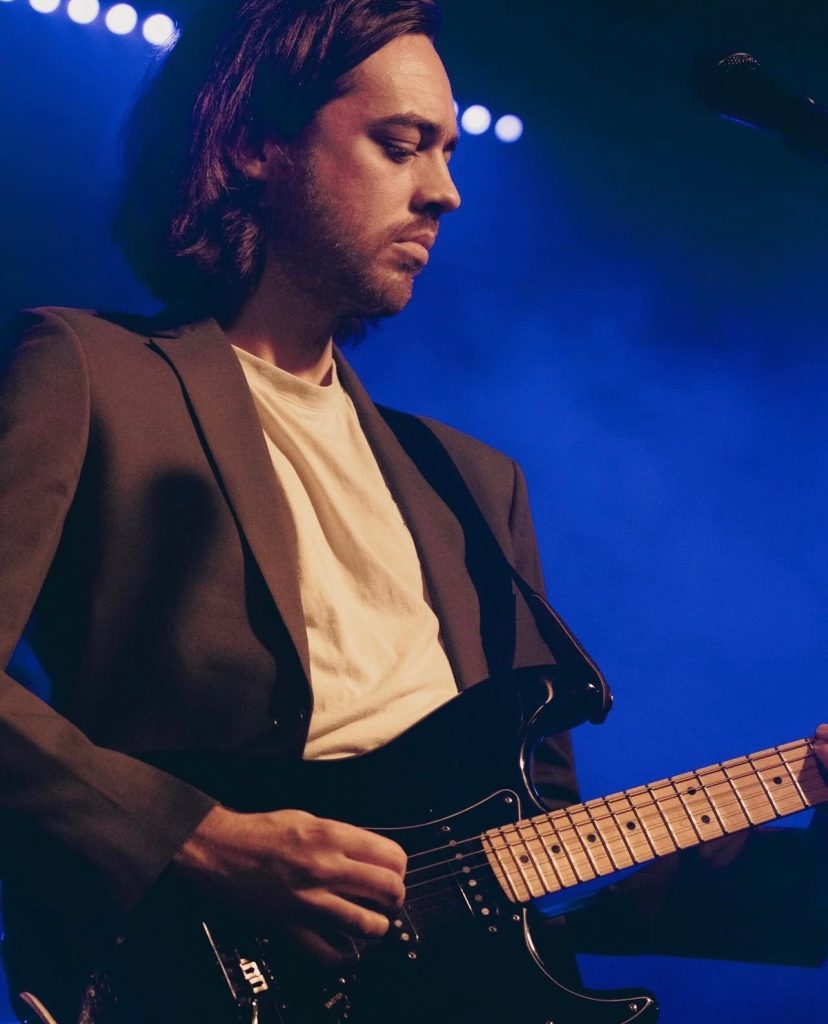
Chris Barker, photo by AJ Stark, used with permission
Julia: Welcome in, how are you doing today?
Chris: Well, thanks! Good to be in the Schwarzman Centre.
Julia: What have you been working on lately? What are you up to?
Chris: I was just in the studio with a band from London, actually. They’re all drama grads and they’ve put a band together which is very folk-oriented, so I’ve been mixing their new EP. It’s been quite a new thing for me. I’m usually working with guitar amps and things, but it was all very acoustic: violin, flute, vocals that were in the room bouncing off each other, almost conversing with each other. So it was a good challenge, and nice people.
Julia: What does the room look like? What are the acoustics like in there?
Chris: So, we did a few setups. My favorite one was where we just put a mic in the middle and they all stood round and played their songs… it was all very organic, and we built the song around that, so that was really good. Something I want to do a bit more of, I think. Moving towards that, performance-based recording is definitely more fun than layering things up.
Julia: Do you have a home studio, or do you rent out a space?
Chris: I’ve got a studio in my garden where I mainly do mixing and overdubs, and I’ve done a little bit of drums there but it’s very much an additional studio. This recent recording was done at Shaken Oak studio, which is near Witney. It’s a converted barn with high ceilings, it’s quite big, it’s got a grand piano and a mezzanine. A lot of options. There’s not a lot of treatment in the room, so the room is the sound. So I’ve made a few dens to sort of tailor it a bit, take the sting out of the room every now and then. Yeah, it’s great, and it’s in the middle of nowhere so it’s a proper retreat.
Julia: I got to listen to your new EP a little bit last night.When you do recording for your own pieces, do you tend towards one of those two ways of recording? Do you like to do big sections at once with multiple musicians or do you like to layer piece by piece? It all feels very intentional, but also organic.
Chris: Yeah, for that EP we did 3 guitars, bass and drums, or maybe two guitars and keys depending on the song. We laid that all down live – that was at Evolution Studios which is in the centre. I really like doing it live mainly because you just get that backward interaction. I think Glyn Johns famously articulated it really well, how if you layer up a song you just get that interaction below, and then the interaction below that, but if you do it live you have all of those. When you think about it, it makes such a difference. But we did a day of pre-production for this EP where we really refined our parts, so that’s maybe why it feels a bit more intentional.
Julia: What are some things that you’re really excited for people to hear on this album? You don’t have to give anything away, but any new techniques, or ways of writing, anything like that?
Chris: I think you pretty much hit the nail on the head with how it feels live, but intentional. I think that’s the kind of thing I really lean into when I’m putting things together, and not having too many elements coming in and out. I’m quite pleased with some of the guitar sounds we got. We also went for an approach of trying to use no pedals, just straight into the amp. We may have used one pedal when we were tracking, here and there, but really just getting the performance. I’ve just got really into performance over equipment lately. I just feel like I’m not really interested in a sound that’s really crazy; I’m more interested in a raw sound. Like, hearing the strings, hearing the fingers. That makes me feel a lot more than a mad delay or reverb.
Julia: You are an audio engineer, a singer, a musician, and a producer. Did you ever envision yourself in one of these roles more strongly? How do you find that doing a little bit of everything enhances your work in the other respective areas?
Chris: I guess growing up, when one starts playing music, you always just want to be performing. But I think, especially recently as I’m definitely enjoying being in the studio recording people and collaborating in that sense a lot more, I think I get a little bit more from it. I’ve always seen myself as a performer, but it has definitely drastically changed in the last 4 or 5 years. I just want to be in the studio more. I think that’s just come around from necessity. I’ve never really been able to record and produce in a studio with my own stuff, so I’ve always had to do it myself to some extent. Then luckily on the way with other projects, I’ve been able to get into studios, have that experience with Willie J. Healy… taking a bit of experience from that and feeding it into doing it myself.
Julia: Do you think that has affected your sound? Do you think that making music out of necessity, as you said, has led you to experiment with more DIY modes of production that you might not have otherwise?
Chris: Definitely. I remember when we first started, with Willie and Mike, his drummer at the time, I remember getting a towel down and laying out all our equipment that we had – budget stuff – and thinking, how are we going to do this? That really helped me just understand how mics sound different and how to use them differently. You’re limited, so you have to sort of put things in places that you may not have otherwise. Now that I have more options, I’m more ready to experiment when I’m in front of clients in the studio.
Julia: Yeah, just that trial and error is really the best way to learn. You mentioned Willie – I read that you met, I guess it was over 10 years ago now.
Chris: At Truck Festival, yeah.
Julia: Do you want to talk a little bit about your work with him? Also, I was curious how your writing and production process looks different by yourself versus when you’re with him or with other musicians.
Chris: He’s been the main reason that I do music, really, now. It’s through his project that I’ve met all the people I work with and learnt a lot of my audio engineering. I kind of owe him everything in terms of my career in music. But working with him has been great. He’s helped push me and take it really seriously. His approach is really amazing, both in the studio and live as a band. He approaches things quite openly and lets all the musicians do what they want – then sees what happens, and shapes it from there. We’ll go into the studio and he’ll just be playing the song we’re about to record and everyone around him will be working out parts themselves and he might be like oh, I like that! But he’ll be very hands off until it starts shaping up, then he’ll start chipping in a bit. So I learnt a lot from that freedom. I think David Bowie had a very similar approach: hands off, let the musician express themselves.
Julia: When you’re working with people you trust, you get that. That’s very cool.
Chris: Yeah. And then with the band he’s the same, he never wants to recreate the record with the live band, he just wants to serve the song in whatever form it’s in. So that’s kind of been my mantra going through with making music and getting bands together. The recording is just a representation of the song, you know. Keeping those things separate has been a good thing, don’t get hung up on the live sound. And you end up just having a bit more fun, I think.
Julia: You said something about Bowie, and I read that you are a big 70s music fan. Who are your favorites? Who do you listen to now, and who do you think kind of shines through in your work? Tell me if this is off base, but I was hearing a lot of T-Rex in your new stuff?
Chris: I mean yeah I love T-Rex. I love Marc Bolan’s vocal, he’s probably got one of the coolest voices.
Julia: Yeah, it was in the voice that I was hearing that.
Chris: Well, that’s a great compliment. Thank you. But yeah, I love T-Rex, I love Bowie, but more recently I’ve been loving The Band. I guess they’re sort of late 60s into the 70s. I went to watch The Last Waltz in the cinema, in the summer. I don’t think anything can beat that film. It’s just a pure representation of great music, and everything it’s all about for me. I always listen to a lot of Randy Newman, I love his albums from the 70s. And a guy called Bobby Charles as well, just from my digging into The Band a little bit more. His album is just incredible. The 70s, it’s the golden age, isn’t it.
Julia: What do you think it is about that time period, late 60s early 70s, that continues to appeal to modern audiences?
Chris: It’s a good question, and one I’m always searching for the answer for, like what’s the recipe?
Julia: What is “the thing”, yeah.
Chris: I think David Hepworth wrote a book about vinyl, the age of vinyl and how it changed. He talks a bit about the 70s, I think it might have been ‘73 or ‘74, and how there were a ridiculous amount of amazing songs written and released then that are now standing the test of time. But he said, and I probably agree with this, it’s maybe a time where – the 60s happened and popular music was starting to be a bit more commercialized, but I don’t think labels had a great deal of input into the creation of the music. I think that’s probably a factor, there was a lot of excitement and a lot of advances in technology and recording. You know, The Beatles paved the way for the studio album and experimenting in the studio and trying all these amazing techniques, and close micing came in and things like that. So there’s the technical element, but there’s also the commercial element…. and also, culturally and politically there was a lot going on.
Julia: In your interview with the Oxford Student, you spoke about how politics impact your songwriting, how did current events affect your new EP? What do you think it is about pulling from that side of life that inspires you to make something out of it?
Chris: I think it’s not really a conscious thing … when I write a song, I usually write the lyrics last. I’ll usually just have a bunch of ideas of topics that have caught my attention throughout the day, things that baffle me or things that excite me. And often that will be politically-related. I think as a songwriter, or writing anything, it’s very hard not to have some political element in there. I mean politics is kind of everything. For me, it’s just inherently connected.
Julia: What’s something that’s baffling you right now?
Chris: Well there’s a new song on the EP called Business, it sums up me being baffled by how certain things have become a certain way. There’s a line in it that refers to how food has got so out of control with processing. The theme of the song is, how did it come to this basically, with corporate life – sometimes I’m like, what the hell is going on?
Julia: It sneaks up on you a bit.
Chris: Yeah. Where’s the logic?
Julia: Well, Business was one of my favorites. Also, Pea, which is a little bit slower – what is that one about, if you don’t mind?
Chris: That’s about becoming a parent.
Julia: I thought it might be! How was the process of writing Pea? How was it different?
Chris: It was great. These bunch of songs felt like a bit of a new chapter, very much a family orientated EP. A domestic theme, you know, spending a lot of time at home, working out how to be a good dad. And also coming to terms with, I think this is quite common when one has children, you then start thinking about your own upbringing and things like that. It was quite emotional actually, I’d find myself playing the song and sometimes sort of welling up, which I don’t often do. It’s feeling a bit deeper maybe, that’s probably come with confidence in my songwriting – which I’ve never really had before, to write very heartfelt songs.
Julia: That’s very exciting.
Chris: My son and daughter came to Movements festival, and that was a really nice moment, just seeing them dance around. I hope they enjoy music like I do.
Julia: Do they have any favorite artists?
Chris: My eldest, who’s 3 and a half, is into Shakira at the moment.
Julia: Oh, excellent choice. And that’s, of course, a big influence on this new EP.
Chris: Exactly – particularly the Zootropolis soundtrack.
Julia: Yeah, I can see it.

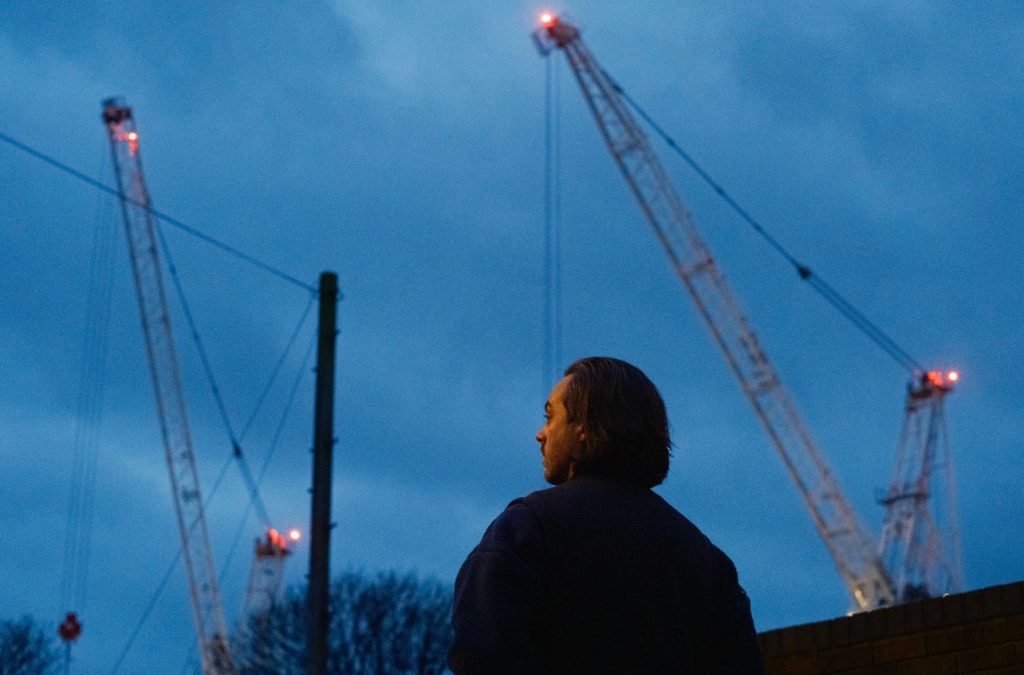
Chris Barker, photo by AJ Stark, used with permission
Julia: What are your favorite parts about living and working in the Oxford music scene? What do you hope to see in the future as it continues to grow?
Chris: Well I like the size of Oxford. I think the scene is relatively quite small, it’s hard to say, but for me it feels like it’s big enough to where there’s lots happening, there’s lots of bands, lots of people making music, but also, everyone knows each other. The scene isn’t competitive.
Julia: It’s collaborative.
Chris: Everyone is bolstering each other up, it seems to have always been like that, for me. But I think everyone’s experience of the scene is different. What I’ve noticed having started to record and work in studios and meet other engineers is that there’s lots of little pockets, it’s a small scene that feels very connected. So it’s really vibrant, and I really do love it.
Julia: Well I always like to ask this, to finish it out, just because many of my readers are students: what advice would you give to someone developing their creative career, or creative pursuits?
Chris: I think being a nice person helps. From working with people in studios and venues, and places where things can get heated quite quickly, I’ve been very lucky to be around people who are really nice and understanding and conscientious. I tend to see those kinds of people do really well, so getting rid of the ego is a big one for me, I would say.
If you’re looking forward to the release of Chris’s new EP as much as I am, you can keep up with his music on Spotify and Instagram. Thank you Chris, for the lovely conversation – and readers, here’s your reminder to listen to some Shakira this week.