




The Editor’s Note
Welcome back to this term’s final issue of Outside OX1! Hilary has flown by, and Trinity with its blossoming flowers and sunnier days awaits. What a journey this has been. I want to extend a warm thank you to all of our regular readers, we hope to see you back with us next term. Until then, I wish you all a lovely vacation; may you travel somewhere exciting, meet someone with a beautiful heart, enjoy the budding spring with your family, read that novel you have been neglecting all term, or simply do nothing and relax. And, of course, may there hopefully be better news ahead. See you on the other side, folks.
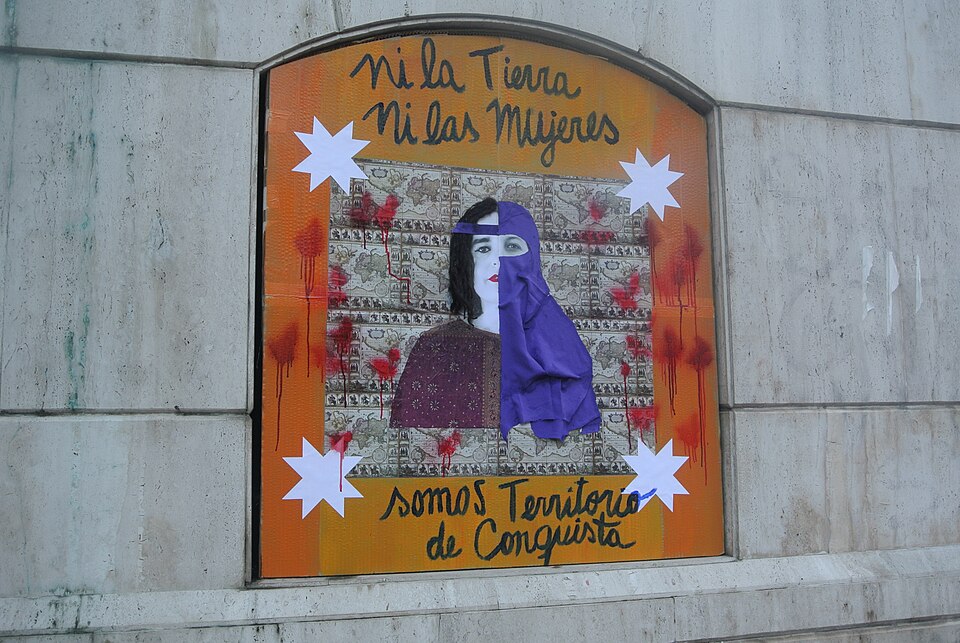
In Chile, right-wing José Antonio Kast has been sworn in as the country’s president, signalling the country’s sharpest shift to the right since dictator Augusto Pinochet was in power. His appointment has triggered a wave of protests across Chile on International Women’s Day, as women* fear for their rights given how vocal Kast has been with his anti-divorce and anti-abortion stance.
In Nepal, Balendra Shah has been appointed as the next prime minister. The engineer, turned rapper, turned politician rose to fame through Nepal’s underground hip-hop community to become mayor of Kathmandu, and has now gone even further. His campaign aims to tackle youth unemployment, and he is known for focusing on social issues in both his music and his policies.
In the UK, a volume of 147 pages of information relating to the appointment of Peter Mandelson as ambassador of the United Kingdom to the United States has been released. It comes amidst intense public scrutiny into UK Prime Minister Keir Starmer’s decision to appoint Lord Mandelson given his connections to Jeffrey Epstein – and indeed the files demonstrate that Starmer was aware of Mandelson’s ties to the convicted sex offender when making the decision to appoint him.
Fear for Women’s* Rights in Chile as Right-Wing President Kast is Sworn In

Lola Dunton-Milenkovic
On 11 March, José Antonio Kast was sworn in as Chile’s president, signalling the country’s sharpest shift to the right in decades as increasingly insecure voters have shown support for a broader conservative turn in large parts of Latin America. At the National Congress in Valparaíso, the 60-year-old lawyer received the presidential sash with an embroidered coat of arms. No leader since the return of democracy has incorporated this institutional symbol, and the last to do so was dictator Augusto Pinochet.
In his first address to the nation, Kast described Chile as riddled with organised crime and weakened by poor finances, and described his administration as the emergency government needed to fix those problems. He outlined emergencies in security, health, education and employment, and declared that, “we are going to restore our country, we are going to restore our streets, we are going to restore our institutions. We are going to restore hope. We build the future together.” He has promised to clamp down on migration and crime, while boosting economic growth through deregulation, spending cuts, and market-friendly policy.
However, his appointment is overshadowed by protests that have riddled the country. 8 March saw Chile’s biggest International Women’s Day demonstration (or 8M) since the pandemic. With protests in more than 20 cities across the country on Sunday and Monday, more than half a million people took to the streets of the capital Santiago. The environment felt joyous and celebratory with dance groups and artistic performances dominating the stage. Vendors sold micheladas (a beer-based Mexican cocktail) and cans of beer. People shouted pro-abortion slogans to the beat of a percussion band. Palestinian and Mapuche (a group of Indigenous peoples from south-central Chile and southwestern Argentina) flags soared above the crowds.
Although it felt like a carnival, there was an underlying fear among many present, as voiced by Sibila Sotomayor Van Rysseghem, co-founder of feminist collective LASTESIS: “Everything we believe in is in danger right now: women, queer people’s rights, migrant rights, Indigenous rights, the arts, culture, and activism.” She added, “We have always been on the streets on this date and it is something that we can never stop doing. We have to defend our basic human rights because as we have seen in Chile and across the world, you can always lose them.”
The appointment of ultra-Catholic Kast from the Republican Party has ushered in the most right-wing president since Pinochet’s dictatorship ended in 1990. Kast is also the country’s first president since then to have openly supported Pinochet’s 17-year dictatorship, during which 3,000 people were killed or disappeared, and more than 40,000 were tortured.
Kast is the son of a former Nazi party member who migrated to Paine, just south of Chile’s capital, in 1950. However, Kast has denied his father joined the Nazi party, membership of which was voluntary, and instead claims he was instead a forced conscript. Kast went on to study law, and at 22-years-old joined the failed “Yes” campaign when Pinochet called a plebiscite in 1988, asking the population if they wanted his rule extended for another eight years. Throughout his career, Kast has openly conveyed admiration of the late dictator, and even stated that Pinochet would have voted for him if he were alive. He has also picked two former Pinochet lawyers to be members of his cabinet.
Across his three-decade career in politics, Kast has consistently blocked progressive bids for women’s rights and equality. As a congressman, Kast voted against divorce when Chile became one of the last countries in the world to legalise it in 2004, and vehemently opposed the legislation of abortion under limited exceptions when it was passed in 2017. In Chile, abortion is legal in only three circumstances: in the case of pregnancy by rape, when the embryo or fetus is unviable, or when a pregnant person’s life is at risk. This criteria was introduced by Michele Bachelet’s government, which overturned a law criminalising all abortion, formerly introduced by Pinochet in 1989.
Kast has since pushed to revert to a total ban on abortion, and also require parental consent for the morning-after pill. Furthermore, he announced in January that his new women and gender equalities minister would be Judith Marín, an evangelical Christian and staunch opponent of abortion.
The future is in question, but activists are determined to keep fighting. On 3 March, the health commission of the Chamber of Deputies approved a draft bill to legalise abortion up to 14 weeks, which was introduced by progressive Gabriel Boric’s government in May 2025, moving it to the next legislative process. Kast’s government is likely to scrap the bill, but its success depends on whether there are enough progressive legislators willing to support it.
A member of the Con las Amigas y En La Casa movement said: “Kast is very dangerous, but we know that women in Chile are strong and organised. We are confident we will keep moving forward.”
Balendra Shah: A Super Victory for a Superstar


Nancy Gittus
Balendra Shah, widely known as Balen, has taken centre stage in Nepal’s latest election. The engineer, turned rapper, turned politician seems to have the magic touch, rising to fame first as a star of Nepal’s underground hip-hop community, then as mayor of Kathmandu, and now as Nepal’s next prime minister.
Despite his many different careers Shah has always remained focused on social issues. One of his most famous songs, Balidan (Sacrifice), laments the loss of the Nepali language. Another song, Nepal Haseko (Nepal Smiling) was strongly associated with the Nepalese youth protest movement which erupted across the country in 2025, the lyrics chanting, “What is the use of a society without happiness? Let’s wipe out the dark past, make a revolution, you [people] are the masters.”
Sakina Batt, a resident of Kathmandu, states that “most of his raps are about the country being corrupted and youth leaving abroad for employment”. This focus unsurprisingly struck a chord with many of the 2025 protesters. Batt continues, “he kind of understands his country, kind of understands his people, and he kind of knows the feelings and emotions of the youth”.
This social consciousness contrasts with former prime minister KP Sharma Oli’s brutal repression of last year’s protests. The protests were initially triggered by the banning of social media, which many considered an attack on free speech. However, they quickly spiralled into wider protests concerning the political system and class inequality, symbolised by the extravagant social media profiles of some of the “nepo babies” of the country’s political elite. 77 people were killed during the protests, and the BBC revealed that the country’s police chief issued an order allowing the use of lethal force against unarmed protesters. This violence cemented Oli’s unpopularity and forced his resignation, triggering last week’s election, which Shah won by a landslide.
Nepal’s electoral system has been dominated for over two decades by just three parties: the Communist Party of Nepal Unified Marxist-Leninist; Nepali Communist Party; and the centrist, Nepali Congress. For many in Nepal, this carousel of power has begun to grow tiresome. It is as Nischal N Pandey, director of the Centre for South Asian studies says, “People are tired of the same old faces. They want to see a generational contest between Gen Z and the group of older politicians from the 1990s.”
Shah is the face of that new contest: his campaign aims to tackle youth unemployment, which currently stands at 20.6%, one of the highest in South Asia. Shah managed to unseat the previous PM in his own former constituency, receiving 68 348 votes to Oli’s 18 734. His party, the Rastriya Swatantra Party, has rocketed from fourth place in the previous general election, to just two seats shy of “supermajority”, winning 182 seats out of the 275 available. This is a notoriously difficult feat in the country’s two-system format, which combines first past the post with proportional representation.
Dressed in his signature black rectangular sunglasses and all-black attire, Shah’s cool, confident, confrontational style has attracted him to Nepalese youth. As journalist Pranaya Rana says, “Young Nepalis see him as a decisive actor, who is not beholden to traditional political or business interests […] Many admire his macho public persona and his willingness to take on entrenched political patronage networks.” However, despite these worthy aims, Shah may have difficulty implementing his promised programmes of social justice. As political analyst Lok Raj Baral remarks, “[The Nepalese people] have placed extremely high hopes, but in a country like Nepal it is very difficult to deliver. The bureaucracy remains the same old one, only the political leadership is new.” Whether Shah can produce genuine reform, or if he will be barricaded by old-guard bureaucracy, only time can tell.
First Batch of Mandelson Files Released


Thomas Yates
An initial volume of 147 pages of information relating to Peter Mandelson’s appointment as ambassador of the United Kingdom to the United States was released by the UK Cabinet Office on 11 March. The release of these so-called ‘Mandelson files’ comes amidst a period of intense public scrutiny into the UK Prime Minister Keir Starmer’s decision to appoint Lord Mandelson to the post, given Mandelson’s connections to deceased convicted paedophile and financier Jeffrey Epstein.
Starmer appointed Mandelson as ambassador in December 2024, but by September 2025 he was sacked after the extent of his relationship with Epstein became increasingly clear. Though Mandelson’s connection with Epstein was not a secret, the government maintained that in September 2025 they became aware of new information not known at the time of his appointment – which led to the sacking. In February, Starmer said that he was “sorry for having believed Mandelson’s lies and appointed him.”
The files do indeed demonstrate that Starmer was clearly made aware of Mandelson’s links to Epstein when making the decision to appoint him in December 2024. A series of documents have the heading “Advice to the Prime Minister.” One of these is the “due diligence checklist” conducted on 4 December 2024. Here, in a section marked “Reputational Risks,” is an outline of Mandelson’s relationship with Epstein, which includes the fact that “after Epstein was first convicted of procuring an underage girl in 2008, their relationship continued across 2009-11.” It further highlights that “Mandelson reportedly stayed in Epstein’s House while he was in jail in June 2009.” It was therefore known to Starmer that Mandelson continued his relationship with Epstein after his conviction. This section also highlights the media’s knowledge of these links, referring to a January 2024 Telegraph article, and finishes by judging Mandelson’s relationship with Epstein to be a “general reputational risk.”
However, a note accompanying the checklist told Starmer that “your Chief of Staff has discussed Peter’s relationship with Jeffrey Epstein which we will go through with you, but your Director of Communications is satisfied with his response to questions about contact.” The diligence check also quoted a spokesperson of Lord Mandelson who said that “Lord Mandelson very much regrets ever having been introduced to Epstein… He never had any kind of professional or business relationship with Epstein in any form.” As such, the advice given to Starmer on the Epstein-Mandelson connection was not wholly negative. Moreover, this relationship is presented as just one reputational risk which Mandelson posed to Starmer amongst several highlighted in the document. Another “general reputational risk” was the fact that Mandelson had twice resigned as a Labour Party minister over financial-related issues in 1998 and 2001. His support of closer UK-China relations was also seen as potentially conflicting with the then-incoming Trump administration. Given that the Epstein connection appeared in the checklist as just one potential issue amongst several, was sight lost of just how significant the Epstein issue might be?
Mandelson was not the only option considered for the role. A note from the Cabinet Secretary shows that Starmer was given a choice of two different types of appointment to the ambassadorship. He could make a “political appointment” (such as Mandelson), someone who will “ensure a strong connection with the PM and political priorities” but who would “need to operate as an Ambassador for the first time while also navigating a new US administration. If anything goes wrong, you [Starmer] could be more exposed as the individual is more connected to you personally.” In the Cabinet Secretary’s eyes, having a “tried and tested” “official appointment” with prior diplomatic expertise (as the outgoing ambassador Karen Pierce had been) would be “less destabilising” if “anything goes wrong” – but this is not the route that Starmer chose to pursue. A note accompanying the due diligence review stated that Starmer had “expressed a preference for a political appointment,” and that Mandelson became the lead candidate after a discussion with the Chief of Staff – but due diligence was also “sought on an alternative political candidate,” which was shared with Starmer. POLITICO is reporting that this candidate was former Conservative chancellor George Osborne, according to an anonymous government official.
As to Starmer’s claim that Mandelson lied about his relationship with Epstein, this is harder to judge from what has been released so far. In the 147 pages of the files, comparatively little was written by Mandelson. Valuable information such as what was actually said by Mandelson to Starmer’s Director of Communications is not included. The Metropolitan Police are currently investigating allegations of misconduct in public office by Mandelson, relating to the alleged sharing of sensitive information with Epstein. This resulted in Mandelson’s arrest and release on bail in February. As the investigation continues, some material may be withheld for now as the police examines it. Chief Secretary to the Prime Minister Darren Jones said on the day of the initial file release that he hoped that the rest of the requested information would be released in one last batch, but that it is still undergoing checks by the Metropolitan Police and the Intelligence and Security Committee.
The documents do hint at some internal concerns relating to the appointment. A day after Mandelson was sacked, a fact-finding call was held between General Counsel to the Prime Minister Mike Ostheimer and National Security Adviser Jonathan Powell. Notes from this call show that Powell thought that the appointment of Mandelson was “weirdly rushed” and that at the time he expressed his concerns to Morgan McSweeney, Starmer’s Chief of Staff. McSweeney, who “responded that the issues had been addressed,” later resigned for his part in the Mandelson appointment in February. The then Foreign, Commonwealth and Development Office Parliamentary Under-Secretary also “had reservations around the appointment.”
After being sacked, Mandelson initially requested a payout of the rest of his salary. This amounted to £547,201. The Treasury later agreed a settlement worth £75,000. Darren Jones has since recommended that Mandelson donate this to charity.
Mandelson has been a well-known name in UK politics since the 1990s for his influential role in the rise of New Labour, a remoulding of the Labour Party that brought Tony Blair and Gordon Brown into office as prime ministers.