
The most recent instalment of Worcester College’s ‘Provost’s Role Models’ speaker series saw Anthropic board member, Chris Liddell, interviewed by Worcester College’s provost, Sir David Isaac CBE. These events are open to students, staff and members of the public alike, aiming to impart valuable experience.
Liddell has had a wide-ranging corporate career. He served as the Chief Financial Officer for Microsoft between 2005 and 2009, during which he oversaw a large volume of acquisitions of technology firms. He later acted as the vice chairman and CFO at General Motors, managing a then-record-breaking initial public offering of $23 million. He has been appointed to several influential roles in other companies, including cloud-based accounting software platform Xero; global sports and entertainment corporation Endeavour; and International Paper. He now sits on the board of directors of Anthropic, the company that created and owns Claude, one of the foremost large language models.
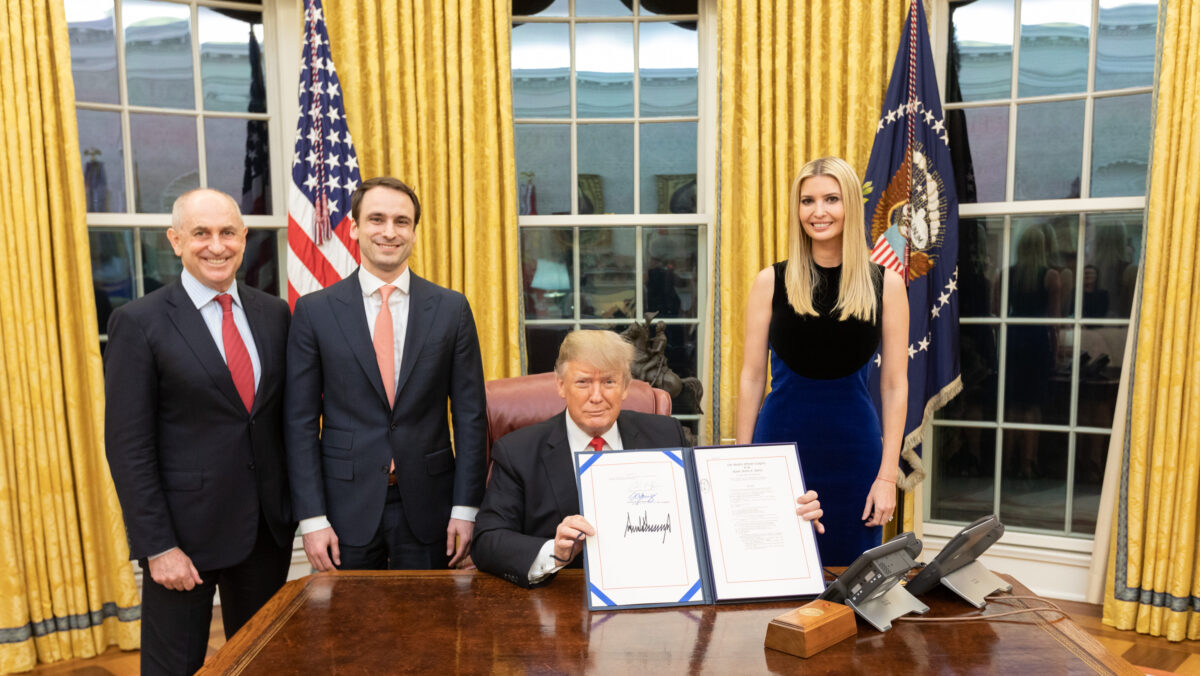
One of the more controversial moments in Liddell’s career came with his senior position in the Trump administration, beginning in January 2017. Liddell then worked his way up to an appointment to White House Deputy Chief of Staff for Policy in March 2018. He spoke about his time in the White House, speaking openly about the challenges of working with Trump. While Obama’s leadership style focused around preparation and reading research and history, Liddell said, Trump instead would ‘read the room’. He offered the insight that when consulting Trump on major decisions, he would ensure that there were as few people as possible in the room: otherwise, the President would ‘perform’ for the ‘audience’.
Liddell went into detail about being caught up in the events of January 6 2021, when the US Capitol building was attacked and broken into by a mob of Trump supporters. He spoke about waking up to a slurry of messages advising him to resign, given his proximity to the centre of power. He claimed that his decision to stay on was a result of ‘wanting to do the right thing’ and assist a smooth transition to the Biden administration. He was subpoenaed, along with ten other former White House officials, by the Select Committee investigating the attack.
As a newly-appointed member on the Anthropic board, he expressed his views on AI. He said that he and his fellow board members fully believe in developing AI in a ‘safe and ethically sound’ manner, pointing to the Long-Term Benefit Trust – an external group of trustees with no financial interest in the company. The trust aims to ensure that AI development stays in line with ‘the long-term benefit of humanity, even as commercial pressures intensify’. Liddell represented this group as more of a failsafe: there for consultation over contentious decisions, such as Anthropic’s recent standoff with the US Department of War, but not involved in the day-to-day running of the company in any capacity. He contended that Anthropic were industry-leaders in AI (self-)regulation, welcoming government intervention.
Liddell was very positive about the future of AI. He posited that the rise of AI will create ‘more jobs, not fewer’, and that AI is not playing a meaningful role in the erosion of democracy: it is merely, he argued, exacerbating issues that were already there. He remarked that ‘democratic institutions … are not fit for purpose’, being quick to clarify that they therefore need to be strengthened.
One of the most surprising moments in the event came as an audience member asked his thoughts on the role of AI in misinformation. Liddell could not conceive how AI could be used to create misinformation, beyond malicious actors creating false claims, which could be created by a human anyway. He had to be reminded by that same audience member of the fact that language models such as Claude and ChatGPT can create false images, videos and texts in seconds.