
Earlier this year, I spoke to Pedro Osuna about composing for film. It was exciting to hear how his career integrates music and cinema, a theme that has stayed with me these past few months.
I am a musicology student, which means that my favorite hobby is also my main academic focus. I used to finish my revision for the day and immediately grab my headphones or head to a gig to unwind. These days, I find that going to the movies is a better way to clear my head.
The Phoenix Picturehouse and the Ultimate Picture Palace have become two of my regular Oxford haunts. I have seen Springsteen: Deliver Me from Nowhere, Frankenstein, Wuthering Heights, Sirāt, The Secret Agent, and Project Hail Mary, among others.
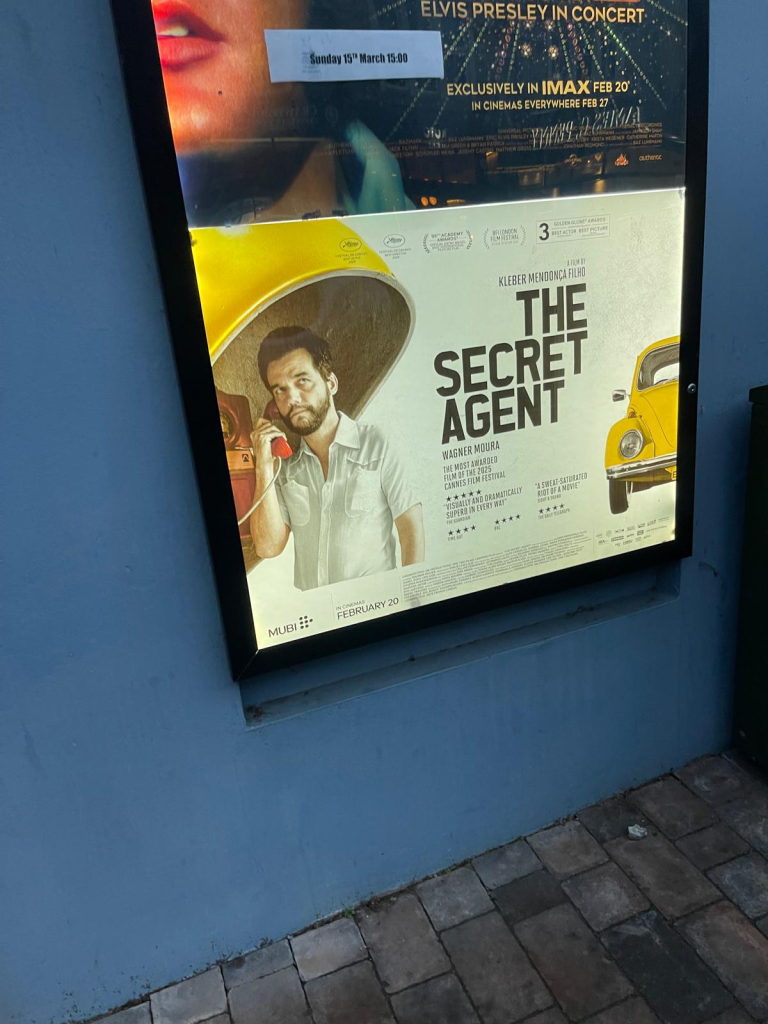
The Secret Agent at the Phoenix Picturehouse. Photo by Julia Blackmon.
It’s no surprise that I am constantly distracted by soundtracks: the drolly bittersweet placement of Kris Kristofferson’s “Sunday Mornin’ Comin’ Down”, Charli XCX’s gothic and brooding backdrop to the moors of “Wuthering Heights”, stomach-dropping grief carried by Sirāt’s industrial techno score, and Jeremy Allen White’s sincere recreations of the folk-rock I grew up with. I usually leave the cinema buzzing. Maybe I’m easily impressed, or maybe it has been a great year for music in the media.
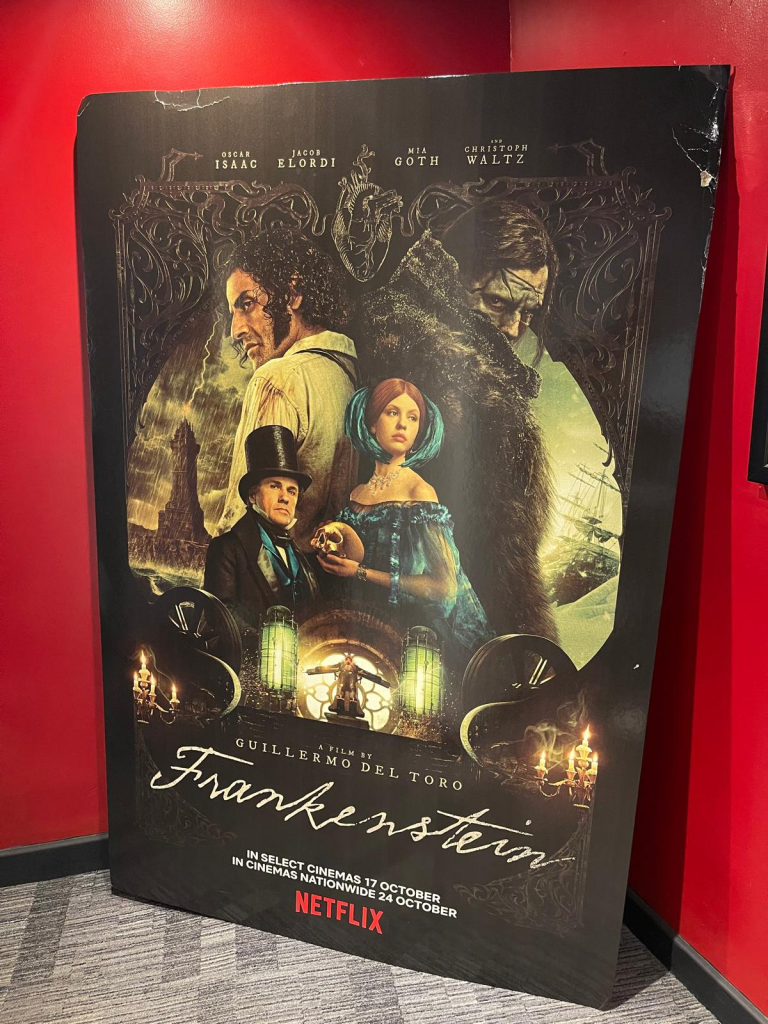
Frankenstein at the Phoenix Picturehouse. Photo by Julia Blackmon.
I’m lucky to be in a field with many peers who are well versed in audiovisual work. My good friend Madi introduced me to Mia Zeidler, a Music Coordinator at Amazon MGM studios.
Mia’s journey into film and music began in high school, when she picked up a camera to film a friend skateboarding.
Mia: That one moment sparked something. I started hunting for video cameras at flea markets and exploring the arts. When it came time to apply to colleges, I knew I wanted to pursue Film & Digital Media. A year into my studies, I followed another passion and applied to the Electronic Music Program at UC Santa Cruz where I learned more about audio engineering. With two degrees taking shape, I started mapping out where they could take me, and that’s when I stumbled upon music supervision.
Music supervisors are responsible for a variety of tasks: from script breakdowns and playlist pitches to music clearance requests, license review, and cue sheet creation.
Mia: Music supervision sits at the intersection of both worlds, and our role is to support the filmmaker’s vision sonically, working closely with them to find the right artists for the project. That process naturally brings in the broader music ecosystem, including partnerships with publishers, labels, and often the artists themselves. While the film and music industries may operate with different goals and agendas, they share a common thread: a genuine desire to uplift their creators and put the best work forward. Getting to collaborate with my peers across publishers, labels, and music production libraries is honestly one of the great joys of this work.
I asked Mia whether there were any tropes within the music and film world that she is particularly drawn to, and whether she thought certain musical elements are especially well suited for the screen.
Mia: The through-line of great music in visual media, for me, is the ability to take a lesser-known artist and find just the right visual pairing that lets their music breathe in a new context. I’m equally drawn to those moments when a music supervisor unearths a deep cut from a well-known band that I had never come across before. What I love most is the duality of it: hearing music I’ve never encountered placed in a way I never would have imagined, and on the flip side, hearing a song I know inside and out but experiencing it in a completely new light.
Julia: What are some early examples of soundtracks that impacted you strongly, and why were they powerful?
Mia: One of the earliest soundtracks that left a real mark on me was The Virgin Suicides, with a score by Air and music supervision by Brian Reitzell. It opened my eyes to the idea that musicians don’t have to exist in just one lane. Air was a touring band, and yet their score felt completely cinematic and purposeful. Tracks like “Dirty Trip,” “Cemetery Party,” and “Suicide Underground” showcased how well their sound could wrap around the film’s subject matter in a way that felt both unexpected and inevitable. Beyond the score, the needle drops introduced me to artists I had never heard at that age, Todd Rundgren, Gilbert O’Sullivan, and Sloan, planting seeds I didn’t fully understand at the time. I remember watching the film repeatedly, not yet able to articulate why it stayed with me the way it did. Looking back, I can see how much it shaped the way I think about the relationship between a composer, music supervisor, and a filmmaker’s vision.
A favorite from college, and honestly the television show that solidified my desire to pursue music supervision, is Russian Doll, with a score by Joe Wong and music supervision by Brienne Rose. The moment that cemented it for me is the scene where Natasha Lyonne’s character wanders aimlessly through the party to “I Go to Sleep” by Anika, slowly coming to terms with the fact that she is trapped in purgatory with no way out. The song does everything the scene needs without a single word of dialogue, carrying the full weight of her emotional unraveling in a way that felt completely effortless. The rest of the soundtrack holds that same energy throughout. Joe Wong’s score and the broader needle drop selections, featuring artists like ALA.NI, Noga Erez, and When in Rome, all feel like extensions of the main character’s inner world. It was one of the clearest examples I had seen of music and character psychology working in total lockstep, and it pushed me to pursue that kind of storytelling in my own career.
Julia: What are some of your favorite examples from recent years? What makes them so great?
Mia: One of the most recent films to captivate me both visually and sonically is Project Hail Mary, with a score by Daniel Pemberton and music supervision by Kier Lehman. Full disclosure: while I do work at Amazon MGM Studios, I was not involved in this release, so consider this an entirely unbiased endorsement. If you have the chance to see it in IMAX, do not hesitate! What makes this soundtrack so special is how it builds from world music to reflect the film’s core theme: that in the vastness of space, we are all fundamentally the same. Tracks like “Amaze Amaze” and “Believe in the Hail Mary” are standout moments from Pemberton’s score, which feels as expansive and emotionally open as the film itself. It services the unlikely bond at the heart of the story with a warmth and sincerity that is hard to pull off.
The song selections carry that same spirit. “Gracias a la Vida” by Mercedes Sosa, “Stargazer” by Neil Diamond, and “Sign of the Times” by Harry Styles come together to form something I love most in a great soundtrack: a cohesive listening experience that echoes the film’s message and gives you a way to carry the story with you long after the credits roll.
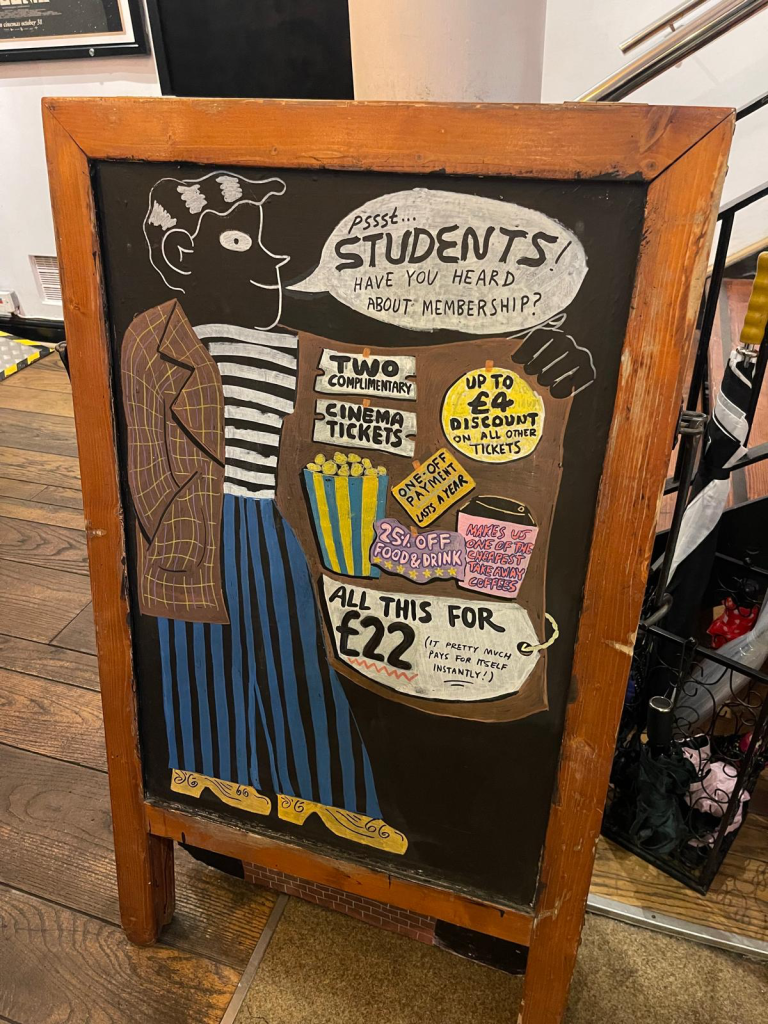
Student Memberships at the Phoenix Picturehouse. Photo by Julia Blackmon.
Mia: Another standout from this past year, One Battle After Another features a score by Jonny Greenwood and music supervision by Linda Cohen. Paul Thomas Anderson has always had a gift for pairing expansive visuals with music that feels equally vast, and this film is no exception. The source cues do something particularly compelling here, drawing out the two sides of the story by grounding us in those being repressed and then in those who push back against it. Songs like “The Revolution Will Not Be Televised” by Gil Scott-Heron, “Soldier Boy” by The Shirelles, and “Perfidia” by Los Panchos each carry their own world within them, and together they give the film a rich, layered sonic identity. Jonny Greenwood’s score, meanwhile, keeps the momentum relentless. It brings an intensity and forward drive that propels the film through its most expansive sequences, never letting the audience settle too comfortably. It is the kind of score that feels inseparable from the film itself, which is always the mark of something truly great.I am grateful to Mia for sharing her experiences in music supervision, and for giving me a reason to rewatch Project Hail Mary. She is currently working on Thomas Crown Affair, Tyrant, Spaceballs: The New One, Verity, and many more projects, so stay tuned!