


The German language contains a staggering multitude of long, morphologically unattractive, and phonetically—at least for most English speakers—unpronounceable words. To my mind, “Zerrissenheit” is one of them. Someone who feels Zerrissenheit feels as if they are torn between two poles: drawn to one, yet unable to reject the other. It quite adequately describes how I felt during my time as a visiting student at Oxford University.
Visiting students are somewhat peculiar figures in Oxford’s academic framework. They are undergraduates from other, predominantly American universities that spend one year (usually the third in their degree) at Oxford. They do not matriculate. And they do not leave Oxford with a fancy degree in their hands.
Yet, it’s impossible to distinguish these fleeting members of the Oxford community from their fully-matriculated counterparts; visiting students attend the same courses and tutorials, live on the same campuses, play on the same sports teams as every other “normal” student. Whilst some colleges—for instance, LMH and St Anne’s—host up to 40 visiting students, some colleges don’t have any visiting students at all.
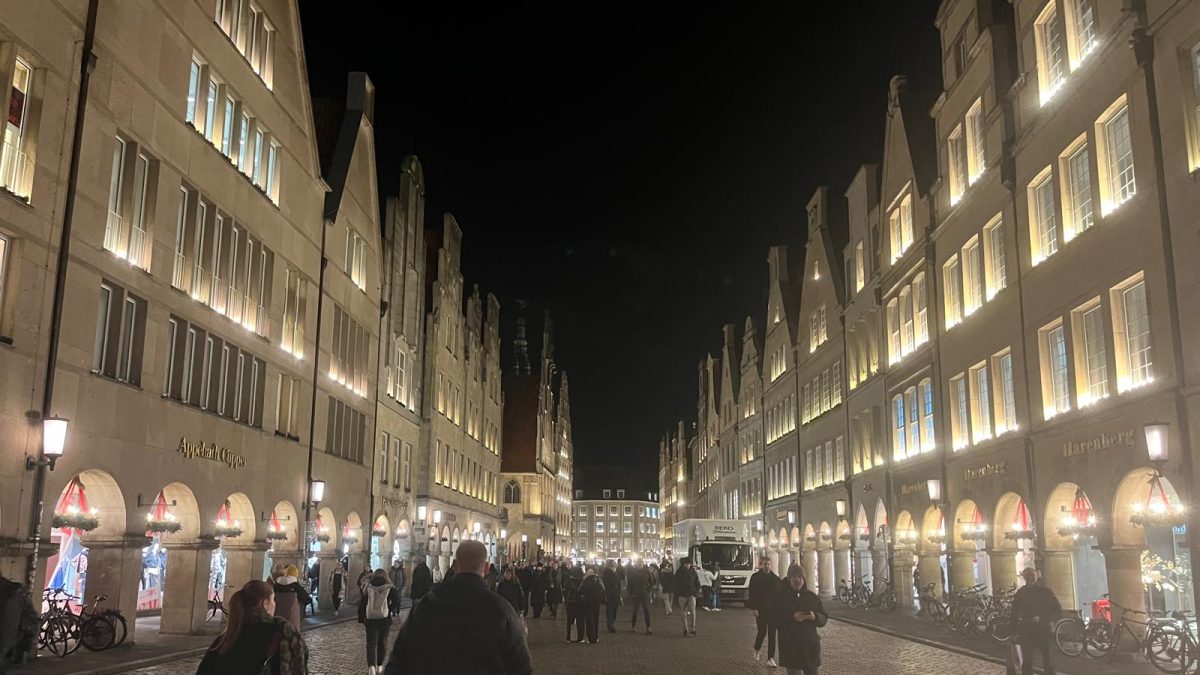
My name is Elias. I’m a 21-year-old Law student from the University of Muenster in Germany, and I had the pleasure of spending one year at St Anne’s College. Apart from the somewhat painful realisation that no one outside Germany had ever heard of Muenster before (“Wait, is that where Muenster cheese comes from?” “No, unfortunately I cannot claim even that for my home town,”) it’s difficult to exaggerate the impact Oxford has had on me: meeting friends, speaking a different language, being exasperated by the Oxford syllabus, living on campus, doing sports (best wishes to the St Anne’s football team, the MGA!), and innumerable other experiences.
But, with the certainty of spatial and temporal distance between Oxford and me, it’s more interesting to talk about the character and features of a visiting student in general. The visiting student is a peculiar figure. They are not fully part of Oxford; yet, at least for a while, they are not part of their home university either. They are still an undergraduate, and therefore too young to entirely appreciate the uniqueness of Oxford as a university; yet, they are not an unexperienced fresher either. Visiting students are ephemeral figures, and quite often they are aware of it. Of course, they study in Oxford, write their essays, attend their BOPs, and so forth—naturally, they are not mere tourists. Nevertheless, they cannot entirely ward off the impression that they have somehow become part of a play where they are side characters, acknowledged whilst present but always standing a little aside; they are not central components to the plot.
And this can result in some visiting students, though not all of them and certainly not all the time, feeling the aforementioned Zerrissenheit: torn between two worlds, they sense that they are not only “visiting” Oxford, but are also visitors when they go back home on their vacation—a double-visitor with no home base. A temporary situation only, of course, yet strange and nonetheless intense for its brevity.
Eventually, visiting students go back to their home unis, loaded with suitcases full of memories, and move back into the flats or dorms they had had to vacate. Then they start telling their stories, speaking of summer soirées, college formals, academic gowns, upper seconds, uni parks, summer eights. Countless things most people outside Oxford cannot fully understand. And once more, they feel weirdly isolated in those memories they cannot properly share. Admittedly, I have sometimes felt like that, and I know that several of my visiting-student friends felt it, too. But this article is not a jeremiad—on the contrary: all of us are so grateful to have had the amazing opportunity of spending one academic year at one of the most remarkable and extraordinary universities worldwide. It is incredible how quickly one forgets what a bubble Oxford truly is. I think this is the true benefit of being a visiting student: you are young enough for these experiences to be formative, yet experienced enough to see that Oxford is not the standard. It is in fact the very opposite of a standard university—where there are no formals, no thousand-year-old colleges, no sacrosanct traditions—and where the people are still able to have happy, fulfilled, and no less academically successful student lives. It might take a bit of Zerrissenheit to properly appreciate that.