


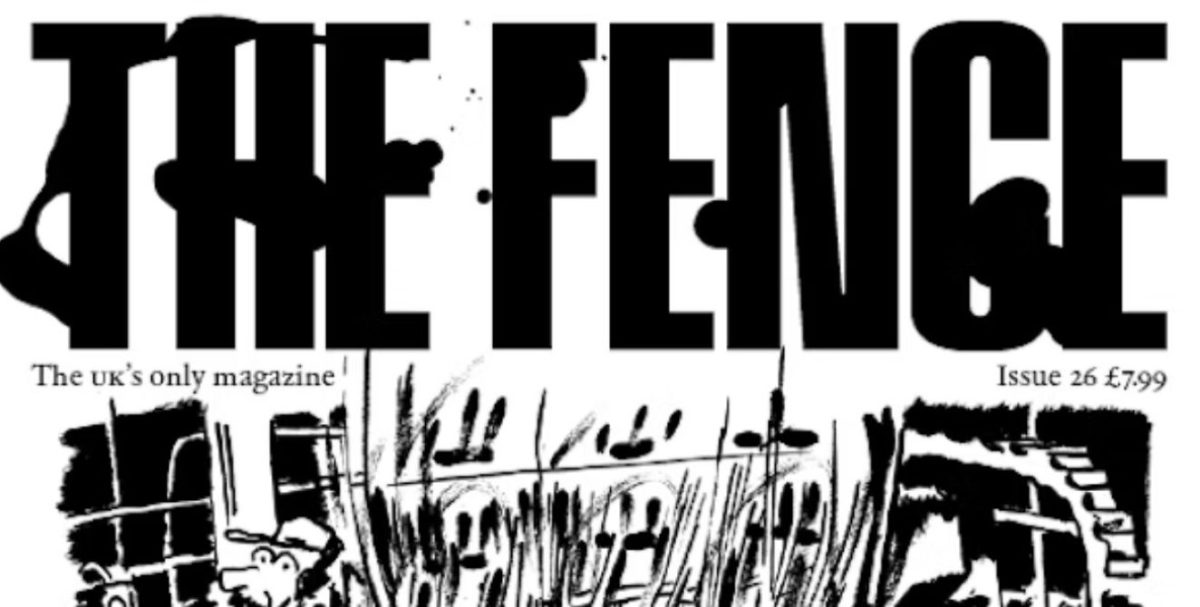
Charlie Baker founded the indie print magazine The Fence in 2018, bringing a mixture of humour and sharp intelligence to the publication scene. The quarterly magazine covers news in the UK and Ireland, and its content ranges from insightful investigations – such as an article about fraud in the Church of England – to irreverent pieces on life, culture, and personal experience. The Fence has seen increasing success over the past six years; the magazine now has two newsletters to add to their print editions and its articles are being picked up by larger publications across the world. In this interview, Charlie and I talk about The Fence and his career. As we discuss the industry, he emphasises the importance he places on building community. Journalism, for Charlie, is about meeting people and connecting with them, be that in a pub or an office (and preferably the former). It’s no surprise that The Fence has such electric and playful energy to it, and truly seems to adhere to no agenda other than that of providing a space for an eclectic multitude of voices and ideas. The magazine may be just what we need in a time when the world often feels too heavy to laugh about, and Charlie is certainly the right person to be leading the charge.
Why did you start the magazine?
In 2018, you could see that publications with serious heft like The Economist, New Yorker, the FT [Financial Times] and so on were doing well, while the digital-first platforms like Vice and Buzzfeed were floundering. There was a big gap in the market for something that was high-quality, in print and with a humorous stance.
What were your main sources of inspiration?
The Face, New York Review of Books, Twen, Eros… the big inspiration is Spy magazine.
What was the process of starting a magazine like?
It took till about Issue 6 to produce something really good.
What makes a good edition?
I hope all the magazines are good ones now! It’s really important that there are no bad articles, or even mediocre ones. This seems really obvious; you have to commission properly, communicate with writers and so on while not coming across as officious or malicious. Hard thing to do.
What’s been your favourite edition?
Probably still Issue 8, the first brilliant one.
What’s your favourite article that’s been published in the magazine?
Probably John Phipps’ articles in Issue 4 about silly names.
What’s the value of working with a small team?
I would like to know the value of working with a large team! A small team keeps you nimble and alert.
The name ‘The Fence’ was inspired by a Zadie Smith article about how people were living fenced-off, isolated lives in London. The Fence tries to discourage these attitudes and instead aims to bring people together, and the tone of the articles certainly seems to be one of authenticity and intimacy. Could you tell me a little bit about the importance of creating this?
Great question. I wanted the magazine to be something that you could see in a squat in Telegraph Hill or in a drawing room in an old rectory in the English countryside. It needs to be something that anyone feels they could write for, and also a byline that serious writers want to have in their repertoire. I want it to feel cool but not luxurious, and for it to be something that people want to broadcast that they’re reading. It’s also essential that you’re relaying information in print that isn’t already available on the internet.
How does the commissioning process work, and what are you looking for from potential writers or potential stories?
We approach a lot of writers with ideas or invitations to pitch to us. We don’t publish that much – four issues a year. With features, I’m always looking for ideas that are going to make other editors jealous. That’s always the benchmark. I do read all the submissions that come into the inbox, and we do pride ourselves on commissioning a lot of first-time authors.
What makes the job for you personally – is it writing or editing?
I am a decent writer – I’m better at editing.
If you could interview anyone in the world, who would it be?
Probably Anna Wintour, not least as she’d probably be quite rude to me.