



The Editor’s Note
As the end of term is finally here, many will be lacing up their skiing boots; or enduring painstaking journeys home around the country and around the world! Take a moment to catch up on some of the biggest stories that have hit the world this past couple of weeks so you can have an informed conversation with THAT uncle this Christmas – wishing you all a relaxed and blessed festive season.
Trump Announces Closure of Venezuelan Airspace
Lola Dunton-Milenkovic

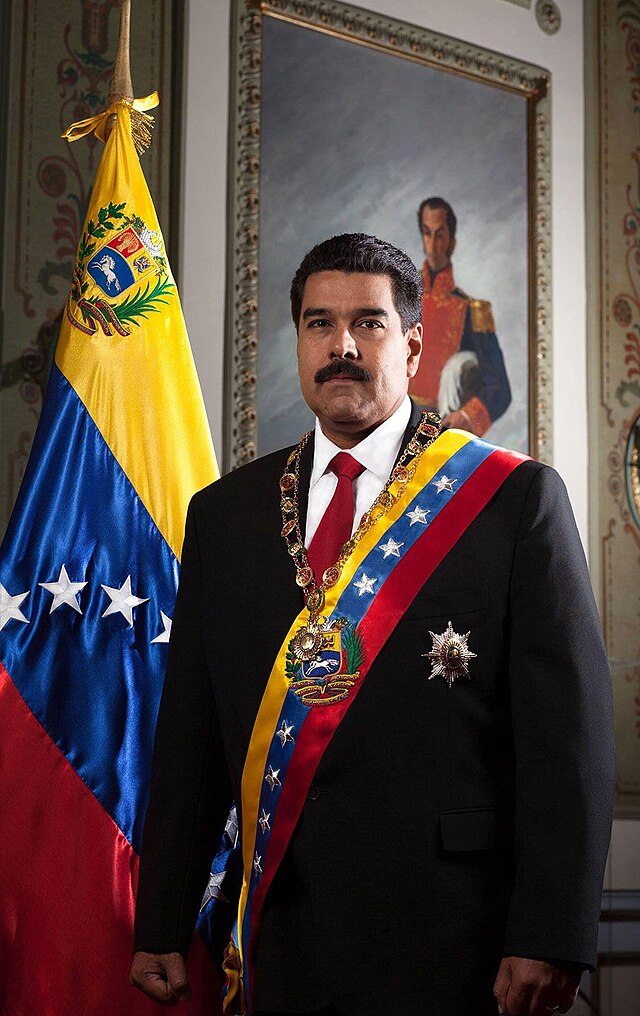
This image is licensed under the Creative Commons 1.0 Universal Public Domain Dedication.
On 29 November, President Donald Trump announced that the airspace “above and surrounding” Venezuela is to be closed “in its entirety”.
In a message on his social media network Truth Social, Trump wrote: “To all airlines, pilots, drug traffickers and human traffickers: please consider that THE AIRSPACE ABOVE AND SURROUNDING VENEZUELA TO BE CLOSED IN ITS ENTIRETY”.
This comes after a week that saw air traffic in Venezuela severely disrupted following an alert issued by the US aviation authority, which recommended that airlines exercise caution when operating in Venezuelan airspace “due to the worsening security situation and increased military activity in or around Venezuela.” This warning led several international airline companies to suspend flights, including Iberia, TAP, Avianca, Latam Colombia, Turkish Airlines, and Gol. The Venezuelan National Institute of Civil Aeronautics (INAC) then gave these airlines 48 hours to resume operations, threatening to revoke traffic rights that grant landing and takeoff positions at airports. The companies ignored this warning, which led to INAC revoking their air traffic rights. Thousands of passengers have been stranded in Venezuela since, with the number of flights to and from the country falling by 24.7% from 105 to 79 per week.
Responding to Trump’s latest announcement, the Venezuelan Foreign Ministry said that it “denounces and condemns the colonialist threat that seeks to affect the sovereignty of its airspace” in what it described as “a new extravagant, illegal and unjustified aggression against the people of Venezuela.”
Given that the US does not have authority over Venezuelan airspace, it remains unclear how Trump’s announced closure would be implemented. The Pentagon has refused to comment, and the White House has not provided further explanations. However, Trump’s social media post could deter airlines from traveling to Venezuela.
Tensions between the US and Venezuela have steadily been rising amid military maneuvers that Washington has been conducting in the Caribbean. Since September, the US navy has attacked at least 21 suspected drug-running boats in the Caribbean and in the Pacific, killing more than 80 people in what human rights organisations have termed “extrajudicial executions” that violate international law. The US has not provided evidence that the boats carried any drugs.
The US also deployed the world’s largest aircraft carrier, the USS Gerald Ford (just 23 feet longer than the Eiffel Tower), and about 15,000 troops within striking distance of Venezuela. The US insists that the deployment (the largest by the US in the region since it invaded Panama in 1989) is to combat drug trafficking. On Thursday, the US heightened its military threat when Trump warned that efforts to halt trafficking “by land” would begin “very soon”.
Although Washington claims that the objective of its military development in the Caribbean is to curb drug trafficking from reaching the United States, the Venezuelan government argues that the US is trying to depose Venezuelan President Nicolás Maduro, whose re-election last year was denounced by Venezuelan opposition as rigged, and who the Trump administration has accused of being involved in drug trafficking (which Maduro denies).
The US has also designated the Cartel de los Soles (Cartel of the Suns) as a foreign terrorist organisation, and alleges that the group is headed by Maduro. The Cartel is not a formal organisation, but rather an informal network of individuals that are involved in the drug trade. The group’s name was coined by Venezuelan journalists in reference to the sun-shaped badges on the uniforms of corrupt high-level military officials who are presumed to be involved in the drug trade. Although Venezuela’s foreign ministry has “categorically, firmly, and absolutely rejected” this designation, by labelling an organisation as a terrorist group, US law enforcement and military agencies are granted broader power to target and dismantle it.
Trump’s latest statement on closing Venezuelan airspace, and providing no further details, has only stirred up anxiety and confusion in Caracas, ramping up pressure on Maduro’s government.
Beyond the Pitch: How US Visa Issues Are Impacting Iran’s World Cup Journey
Saba Ahmadzadeh Noughani

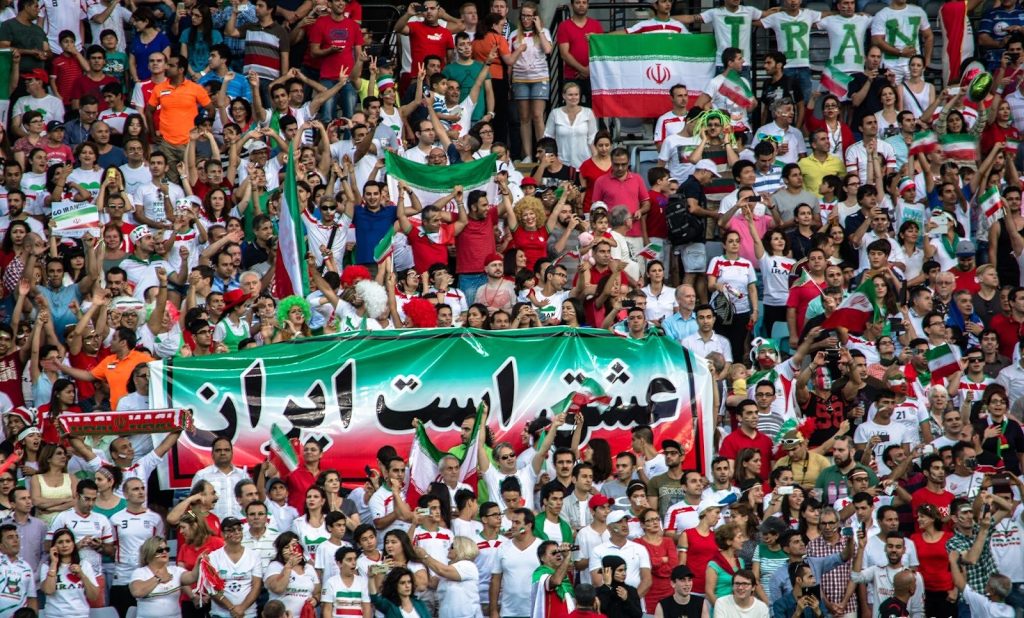
Iran has qualified for the 2026 FIFA World Cup and has secured its spot in the tournament, which is being co-hosted by the United States, Canada, and Mexico. The nation qualified as one of the top teams in the Asian Football Confederation’s (AFC) third round qualifiers, making this Iran’s fourth consecutive World Cup appearance and seventh overall. However, Iran’s participation in the 2026 World Cup has been subject to political issues that primarily concern the US denying visas for Iranian athletes.
Iran’s football federation has since announced that it will be boycotting the World Cup draw ceremony in Washington, D.C. which is scheduled for 5 December. Nevertheless, although the Iranian Football Federation (FFIRI) is refusing to attend the specific draw ceremony, Iran has declared its intentions to participate in the World Cup tournament itself, with the nation’s first match scheduled for Sunday, 14 June 2026.
The US Government’s Visa Policy and Reactions from Fans
The US has long-standing visa restrictions on citizens from several countries, including Iran. The US argues that these restrictions are for political and security reasons, and has therefore (despite exemptions for athletes) still refused to issue visas to a disproportionate number of members in the team’s delegation, including federation president Mehdi Taj. Therefore, unsurprisingly, in protest of the visa situation the Iranian Football Federation has decided to boycott the World Cup draw ceremony.
In June, the US issued an exemption to the travel ban which included a specific exemption for athletes and essential staff that are travelling for major sporting events such as the World Cup. While this exemption exists, the US is not abiding by it. The US has also not given a reason or issued any statement regarding why the federation president and athletes (with four exceptions , have been refused visas. This has led many to argue that the US is choosing to undermine FIFA’s long-standing assertion that politics must not interfere with football.
Haiti, (also one of the 12 countries on the banned list), qualified for the World Cup for the first time since 1974. However, despite the fact that there should be an exemption for athletes, the US administration announced that it will also not provide this exemption for any Haitian footballers. The US has not yet stated a reason for this decision.
Fans took to social media to argue that the US, as the 2026 World Cup host, has a duty to ensure access to all member associations. Fans have accused the US of hypocrisy, and further pointed to the fact that Israel is able to participate. Many on social media asserted that if any nation’s footballers should be denied visas, it should be Israel, which is responsible for killing up to 800 Palestinian footballers, youth athletes and sports officials over the past two years. This includes the footballer Suleiman al-Obeid, known as the “Palestinian Pelé”.
Politicisation of Sports and Uncertainty for Fans
The boycott is only for the draw, yet concerns remain regarding whether the team and their fans (those that have dual nationality) who intend to travel to the US to watch the match, would also face such visa obstacles for the tournament itself. As mentioned previously, the US government’s travel ban is supposed to exempt athletes and essential staff for sporting events, yet these recent visa denials tell a different story and have created uncertainty for many dual national fans.
The federation spokesperson Amir Mehdi Alavi said in a statement that:“The decisions taken are unsportsmanlike and the path has deviated from the sporting process”. Additionally, federation president, Mehdi Taj further argued that the US government’s refusal to issue athlete’s visas is politically motivated, and called on FIFA to take a stand against the politicised situation. In a statement, he said: “We have told the head of FIFA, Mr [Gianni] Infantino, that it is purely a political position and that FIFA must tell them [the US] to desist from this behaviour,”
However, FIFA rules prohibit political interference in national football matters and discrimination, therefore, this diplomatic issue has placed the governing body in a complex situation.
*This article was written on 3 December, accounts may be subject to change when published
G20 Summit Captures Growing Tensions Between South Africa and the US
Elana Roberts

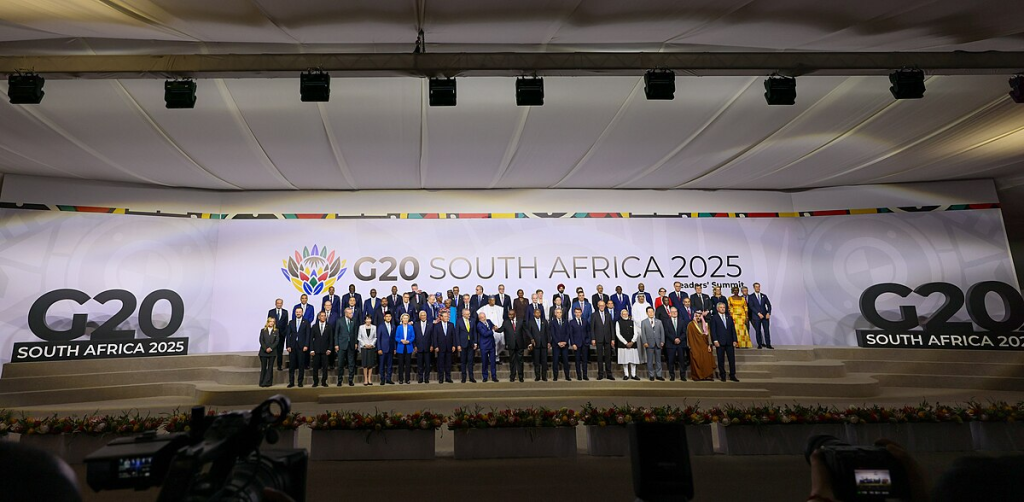
The 2025 G20 Summit took place from 22 November to 23 November in Johannesburg, South Africa. It was the first ever G20 Summit to be held in Africa. However, there was one guest missing: the United States.
The Group of Twenty (G20) was first established in 1999 for the largest global economies to coordinate on international economic growth. Over time, it has become a major forum to discuss the most significant global issues, beyond just economic policies. The members of the G20 are permanent: consisting of 19 countries, the EU, and the African Union. The annual host of the summit does at times extend invitations to other countries, with Spain being a permanent guest since 2008.
Bearing the G20 Presidency for 2025, South Africa invited 16 countries to be guests at the summit. In November, an impressive 42 countries and organisations confirmed their attendance at the summit. Yet notably, despite the US being a permanent member of the G20, US President Donald Trump announced that neither he nor a US delegation would be attending the summit due to alleged human rights abuses committed by the South African government against its white citizens.
Throughout his first and second presidential terms, Trump and his administration have made widely discredited claims that South African policies are disguising a genocide against the white citizens of South Africa. In an attempt to reverse the racist practices of Apartheid, the South African government does have policies addressing the land dispossession formerly faced by black people. However, several South African political groups, as well as a South African judge, have emphasised that such policies do not oppress South Africa’s white citizens.
US Secretary of State Marco Rubio further expanded on the reasons for the US boycott in a Substack post, where he called South Africa’s G20 an example of “radical agendas” that the US does not agree with.
Rubio was referring to parts of the content of the South African Leader’s Declaration at the summit. Over the past year, South African President Cyril Ramaphosa and his team have developed a Leader’s Declaration to be voted on at the Summit, tackling issues including climate change, gender equality, and reducing economic inequality.
The 2025 declaration was historic for a number of reasons. It explicitly centres disaster risk reduction and the potential impacts of climate change for discussion on a global stage. It also addressed several ongoing international conflicts, emphasising the importance of establishing lasting peace.
Furthermore, the G20 formally recognised and endorsed several strategies focused on reducing debt, an obstacle to development for many African countries. In particular, it emphasised the necessity for multilateral approaches to global challenges to prevent debt from being a development barrier.
The declaration was drafted without US input, which triggered further outrage from the White House.
During the summit, both Argentina and Saudi Arabia attempted to block consensus on certain issues. Saudi Arabia raised concerns on renewable energy goals, but ultimately accepted the declaration.
On the other hand, Argentina, whose President Javier Milei is a close ally of the US, chose not to accept the voluntary commitments outlined by the Declaration at the last minute. The Argentinian Foreign Minister Pablo Quirno later released a statement that “[the Declaration] addresses the longstanding Middle East conflict in a manner that fails to capture its full complexity”.
The US is due to host the G20 summit in 2026. Both Trump and Rubio have made statements suggesting that the South African delegation will not be welcome to attend the summit. As a permanent member of the G20, South Africa cannot actually be barred from the summit. However, the US can choose not to give visas to the delegation, meaning that participants would not be allowed to enter the country legally.
In response, the South African Presidential Spokesperson Vincent Magwenya called the decision “regrettable”, but has not suggested that South Africa will contend the decision or try to attend the summit. Instead, Magwenya emphasised that South Africa looked forward to the 2027 summit, due to be held in the UK.
The G20 summit is an important model for international cooperation on global issues. The increasing hostilities between some of its members could be seen as a sign of the growing turn away from global cooperation, as emphasised by the US refusing to attend the conference altogether.
Furthermore, when members of the group do not attend or do not come to consensus on the proposed outcomes, these are less likely to be as successful as possible. Therefore despite the progressive declaration resulting from the 2025 G20 summit, the actualised results may be much more limited due to the lack of support from the US and Argentina. It is also possible that next year the US Leader’s Declaration may swing in the opposite direction, challenging the progress of any work done during 2026.
Schoolchildren in Danger Amidst Northern Nigeria Abductions Surge
Thomas Yates

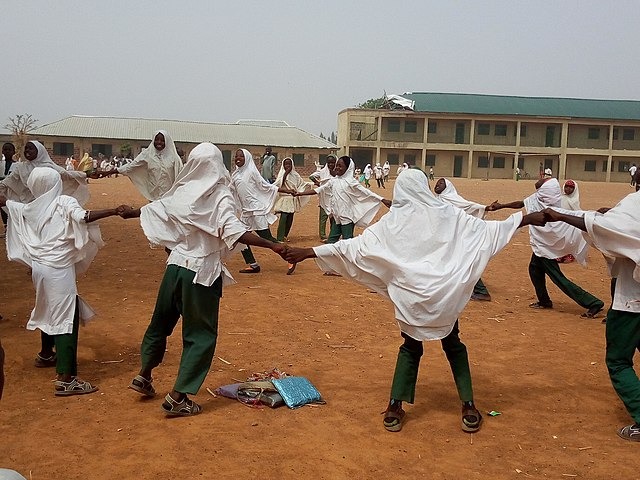
Since 17 November, over 400 people, mostly children, are estimated to have been abducted by gunmen across incidents in four different Nigerian states. The perpetrators’ precise motives and identities are still unclear. This form of crime is unfortunately not unprecedented in the populous West African nation, which is now in a declared state of national emergency. Some – but not all – of the hostages have since been freed.
According to reports from local police, at 4am on 17 November, men armed with rifles rode by motorcycle to Government Girls Comprehensive School, a boarding school in Maga, Kebbi State. After killing the school’s vice-principal, Hassan Yakubu Makuku, they managed to shoot off police reinforcements and abduct 25 hostages. One of those abducted succeeded in escaping from the group a few hours later. The rest had been freed by 25 November, according to a social media post by President Bola Tinubu, although how exactly this rescue took place is unclear.
Just one day after the incident in Kebbi State, raiders struck the Christ Apostolic Church in Eruku, Kwara State. 38 members of the congregation were taken during a service. The hostages were released on 23 November after a combined response from army, police, intelligence and security services – although it has additionally been reported that their freedom was only regained once the gangs slashed their ransom demands by a fifth.
By this time, however, there was an even greater concern to tackle. A day prior, on 22 November, there was another early morning attack, this time on St Mary’s School in Papiri, Niger State. Estimates vary, but the Christian Association of Nigeria most recently suggested that 315 people had been taken, 303 of whom were students, with the rest being staff. As of the time of writing, they still remain with the captors, though police have stated that they are “combing the forests with a view to rescue the abducted students”.
Who is behind this spate of kidnappings?
On 2 November, Donald Trump suggested military intervention to prevent radical Islamists from carrying out “mass slaughter” against Christians in the country’s north. Islamist terror groups have indeed been the perpetrators of previous kidnappings. One such organisation is Boko Haram, which in 2014 was responsible for the kidnapping of 276 girls from a school in Chibok, Borno State. Around 90 of these girls remain missing or in captivity. The girls, most of whom were Christian, were forced to convert to Islam, marry Boko Haram fighters and bear their children. Those who did not comply are thought to have been coerced into acting as suicide bombers and sexual slaves. While Christians have been disproportionately targeted in the most recent reported cases, the BBC has been told that the children abducted in Kebbi were Muslims. A statement by Minister of Information Mohammed Idris has also made it clear that “the violent activities of terrorist groups are not confined to any particular religious or ethnic community. These criminals target all who reject their murderous ideology, regardless of faith.”
Blame could also lie with local criminal gangs trying to extort ransom. Analysts at monitoring group Acled have suggested that militias of the Fulani ethnic group may be responsible. These “bandits,” as they are known, do not have the same level of organisation and objectives of terror as a group like Boko Haram.
President Bola Tinubu declared a state of emergency in Nigeria on 26 November, having cancelled a trip to Johannesburg for the G20 summit. Additionally, he has pledged to add 20,000 officers to the police force. However, there appears to have been an error in government communications that could have otherwise prevented the abductions in Papiri. The Niger State government has reported that St Mary’s School ignored a security warning by staying open, but the Archdiocese that owns the school denies having received such an alert.
Schools in eight states have now closed – nominally temporarily, but some schools that closed following attacks in 2021 never reopened. Former UK prime minister Gordon Brown, who now works as the education envoy for the UN, has said that it is “incumbent on us to ensure that Nigerian schools are safe spaces for learning, not spaces where children can be plucked from their classroom for criminal profit.” Young girls in particular are being denied their basic human right to education in Nigeria, but currently, a disrupted education is the sacrifice that is being made for the sake of their safety. Update as of 7 December: Since the time of writing (30 November), major progress has been made in securing the safety of the children in Niger State. It is being reported that 100 of the children abducted from St Mary’s School will be returned, though the government itself has not made official comment on this yet. As ever, the circumstances of the release – and what may or may not have been offered to secure it – are murky, and an even greater number will still remain in the captors’ hands.
The Pope Visits Blue Mosque
Sol White


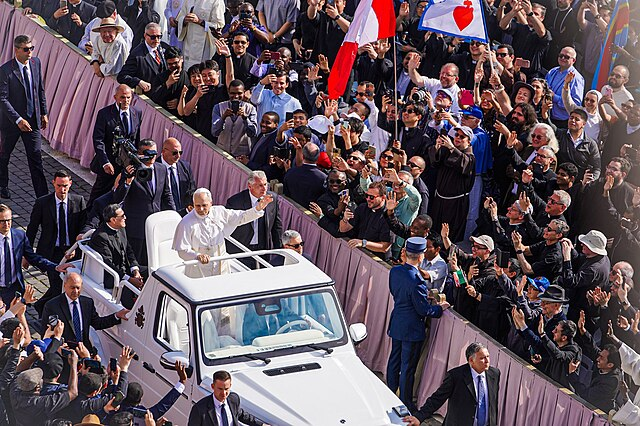
On 29 November, Pope Leo XIV paid a highly symbolic visit to Istanbul’s Sultan Ahmed Mosque, widely known as the Blue Mosque, in an event that analysts said underscored his intention to act as a truly global and outward-facing pope. The visit formed the centrepiece of the second day of his trip to Turkey, which Vatican officials describe as an initial test of his approach to interfaith outreach.
The pontiff entered the seventeenth-century mosque in silence after removing his shoes in accordance with Islamic custom. Guided by the mosque’s imam and the city’s mufti, he spent approximately 20 minutes inside the vast prayer hall. The pope listened to a short explanation of the building’s history, and admired the tens of thousands of blue-tinted tiles that give the site its name. He did not pause to pray. The Vatican later described the stop as “a moment of contemplation and respect” rather than a religious gesture.
Although choosing not to pray drew attention because previous popes, including Benedict XVI and Francis, did pause in prayer during their visits, commentators said that the decision appeared to emphasise a neutral but respectful tone. According to one Vatican watcher, Leo “wants to show that he comes as a guest who listens first and who does not impose Catholic practice on a Muslim sacred space.” Turkish religious officials present at the visit said that they viewed the gesture as polite and consistent with local sensibilities.
The mosque visit formed part of a broader itinerary in Istanbul which also included a meeting with leaders of the city’s Christian communities, and a joint declaration on Christian unity signed with Ecumenical Patriarch Bartholomew I. Although these meetings followed familiar patterns set by Leo’s predecessors, observers said that his overall approach felt different in emphasis. They argued that Leo is positioning himself as a pope who sees the Church as a global institution that must be physically present in regions experiencing political tension, economic instability or interreligious friction.
Analysts note that Leo’s early months have been marked by frequent references to global inequality and migration. He has encouraged Catholic missions in parts of Africa, Latin America and Asia, which he recently addressed as “frontiers of hope and hardship.” Several Vatican correspondents commented that the Istanbul visit should be viewed in the context of those remarks. One correspondent said that the pontiff “is clearly trying to show that the Vatican does not belong only to Europe and that the Catholic Church has a responsibility to engage with the Islamic world on equal footing.”
The Pope’s decision to visit Turkey before making extended trips to Western Europe was also interpreted as a signal of his intention to prioritise dialogue and engagement with the Islamic world. According to a senior Italian scholar of religion, Leo “appears determined to avoid the perception that the papacy exists only inside a Western political frame.” The scholar added that the Pope’s insistence on meeting local religious officials in Istanbul, as opposed to solely relying on diplomatic channels, suggests that he intends to prioritise personal encounters with non-Christian faith leaders.
Later in the day, the pope met with the Syriac Orthodox community at the Church of Mor Ephrem. He then travelled to the Church of Saint George where he signed a declaration calling for strengthened ties between Catholics and Orthodox Christians. Religious commentators described this signature as part of Leo’s wider attempt to expand the Vatican’s global relationships. They argue that he does not merely view Christian unity as an internal ecclesiastical issue, but also as a matter that is connected to wider geopolitical tensions.
The Istanbul stop precedes a scheduled visit to Lebanon, a trip that Vatican officials described as an effort to express solidarity with a country facing significant financial and political strain. Analysts argued that this itinerary further supports the perception that Leo is seeking to define himself as a global pastor rather than a solely European one. A French commentator stated that “by beginning his major travels in the Middle East, Leo is signalling that the papacy belongs to the entire world and that he wants to stand with communities living through conflict and uncertainty.”
Although it is still early in his papacy, experts have already cited the visit to the Blue Mosque as a defining moment. They point to the combination of respectful silence, personal engagement and attention to the sensitivities of another faith as illustrating how Leo intends to shape his international role. According to one senior Vatican analyst, “He is trying to be a pope for all peoples, not only in words but in the tone and geography of his actions.”