

The Editor’s Note
It’s time for another edition of Outside OX1, and what a special edition this is indeed! I write to you all from the beautiful city of Madrid, and yes it took me a whole three hours to get my hands on some fresh churros. Even more excitingly, however, this edition is brought to you all by a very special crew: aside from my regular appearance, we are joined by The Oxford Blue’s lovely Editors-in-Chief. What an exclusive and elite edition this will be indeed; expect top quality writing on this week’s biggest headlines from some of the most stressed people in this newspaper. So without further ado, it is my great pleasure to present Week 6’s super special edition of Outside OX1!
In Mexico, the country’s most wanted man – El Mencho, leader of the Jalisco New Generation cartel – was killed during a security operation aiming to arrest him. This is the biggest blow to Mexico’s cartels in more than a decade, and has been hailed as a massive victory in Mexico and the United States. However, El Mencho’s men have swiftly responded with violence in 20 different states that has resulted in at least 70 deaths.
In the Netherlands, Rob Jetten was sworn in as the new Prime Minister, heading a three-party minority coalition made up of his D66, the centre-right Christian Democrats, and the right-wing People’s Party for Freedom and Democracy (VVD). Despite immediate opposition from both the left and the right, this signals a significant shift in Dutch politics, with Jetten presenting an opportunity for a new era of consensus-building.
In the United States, the Supreme Court handed down its ruling, striking down a series of tariffs instituted by President Donald Trump through the International Emergency Economic Powers Act. It does not mean an end to all of Trump’s tariffs, but it represents a significant setback for the White House as many levies were imposed through the act.
Mexico’s Most Wanted Drug Lord Killed in Military Operation

Lola Dunton-Milenkovic
On 22 February, Mexico’s most wanted man – the leader of the Jalisco New Generation (CJNG) drug cartel – was killed during a security operation aiming to arrest him. Analysts have called this the biggest blow to Mexico’s cartels in more than a decade.
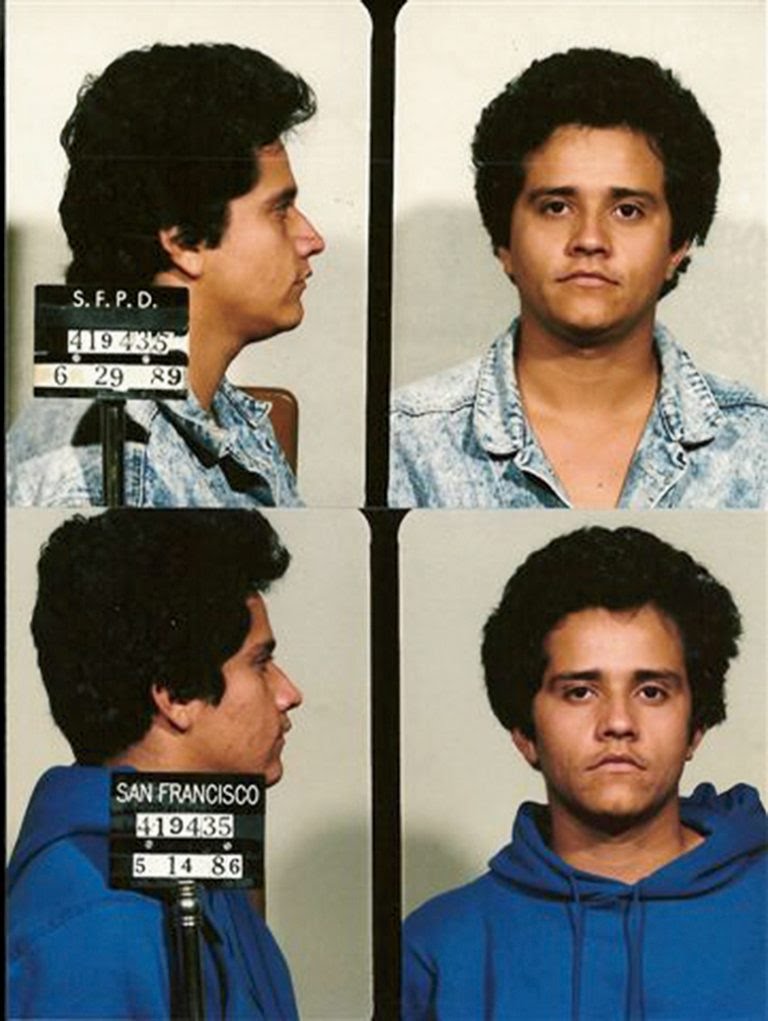
Nemesio Rubén Oseguera Cervantes, widely known as “El Mencho”, was a 59-year-old drug lord who ran a vast criminal organisation responsible for trafficking large quantities of cocaine, methamphetamine, and fentanyl into the United States. Hailing from humble rural roots in the western state of Michoacán, his rise to the top of one of the most feared and dangerous cartels in modern-day Mexico was meteoric, achieved through a combination of aggression, ambition, brutality, and ruthlessness.
He moved to the US as an undocumented immigrant in the 1980s. Having already flirted with criminality when cultivating marijuana fields in his native state, Oseguera was arrested several times in the US for entering the narcotics world of California, and was eventually sentenced to several years’ imprisonment. Aged 30, Oseguera was deported back to Mexico, and began immersing himself fully in cartel activity. He first worked for the Milenio Cartel, based in Michoacán, and grew his reputation as a calculating and cruel boss. He was at the perfect place when the cartel fractured, and from its remnants arose the CJNG, with El Mencho at its head.
Through territorial expansion and a nimble instinct to pivot the cartel into new, lucrative activities, he turned the group into what it is today: one of the predominant criminal forces in Mexico, infamous for its displays of violence and its grand, military-style arsenal.
His cartel significantly benefited from the collapse of the Sinaloa Cartel after the extraction of its leader, Joaquín “El Chapo” Guzmán, to the US. Warring factions in Sinaloa tore the group apart, and the CJNG was on hand to take over the fentanyl trade once El Chapo’s sons fell. One of them, Joaquín Guzmán López, handed himself in to US authorities, and took down the group’s biggest rival, Ismael “El Mayo” Zambada, with him. This series of dramatic events left El Mencho the clear beneficiary.
Mexican authorities tracked El Mencho down by following a romantic partner to his safe house. In a firefight between his bodyguards and the military commandos deployed to capture him, he was then seriously injured. He died while the military was transporting him from the town of Tapalpa, in Jalisco state, to the capital, Mexico City.
At least six of El Mencho’s security guards were also killed in the operation, and three military personnel were injured. Two alleged cartel members were, moreover, arrested with weapons that included rocket launchers capable of bringing down aircrafts and destroying armoured vehicles. At El Mencho’s hiding place, long guns, ammunition, and two rocket launchers (one rocket-propelled grenade of Russian manufacture, and a Blindicide) were also discovered.
El Mencho’s killing has been heralded as a victory in Mexico and the US. The incident shows progress on an issue the Trump administration has been vocal about, having previously described El Mencho as a “top target for the Mexican and United States government as one of the top traffickers of fentanyl into our homeland”, and offered a $15 million (£11.1 million) reward for information leading to his capture.
US intelligence was also involved in bringing down the kingpin via the US anti-cartel unit Joint Interagency Task Force-Counter Cartel, making the operation seem like cross-border co-operation that could benefit both governments. It underlines Mexican President Claudia Sheinbaum’s willingness to work with Washington in pursuit of the same goals. For the Mexican military too, a cartel leader has been removed from the equation, thereby (in theory, and at least for now) weakening the criminal group he ran.
The response from El Mencho’s men has been swift. Violence has flooded the streets in 20 different states, from Guerrero on the Pacific coast to Tamaulipas in the north-east. Even the capital, Mexico City, and the surrounding Mexico State have seen violent incidents. They have torched businesses, erected burning blockades, blocked roads by throwing spikes and nails on the tarmac, commandeered buses and other vehicles which they have torched in the road, and set alight dozens of banks and local businesses like pharmacies. Some of the worst violence has been in Jalisco itself, where masked gunmen have set fire to stores in the state capital of Guadalajara. It is a demonstration of loyalty from El Mencho’s soldiers, and a show of fury at the authorities for eliminating their leader. A prison in Puerto Vallarta was also broken open when armed men rammed one of the prison gates open with a car, allowing 23 prisoners to escape.
The scenes that unfolded reminded many of the violence that erupted in Sinaloa following the capture of notorious drug lord Ovidio Guzmán López, another of El Chapo’s sons, in 2019. The street battles between members of the Sinaloa cartel and security forces were so fierce that Mexican authorities freed Guzmán López to prevent further bloodshed – though he was re-arrested and extradited to the US in 2023. Ever since, retaliatory attacks by cartels have become the norm following high-profile arrests.
However, the scale of this retaliation is enormous. On Monday, Defence Secretary Ricardo Trevilla said an extra 2,500 soldiers were sent to western Mexico, with the government announcing 9,500 soldiers have been deployed since Sunday. Overall, more than 70 people – including 25 National Guard members – were killed in the operation to capture El Mencho and in the violence which has since followed.
Rob Jetten Sworn In as Youngest Dutch PM
Sol White
Last year, the Dutch government collapsed after just 11 months when the anti-Islam firebrand Geert Wilders withdrew his ministers from the ruling coalition, triggering a snap parliamentary election. On 29 October 2025, the election delivered a stunning result: the centrist, pro-European D66 party, led by Rob Jetten, narrowly defeated Wilders’ Party for Freedom, winning the same number of seats but securing more votes after a count of postal ballots.
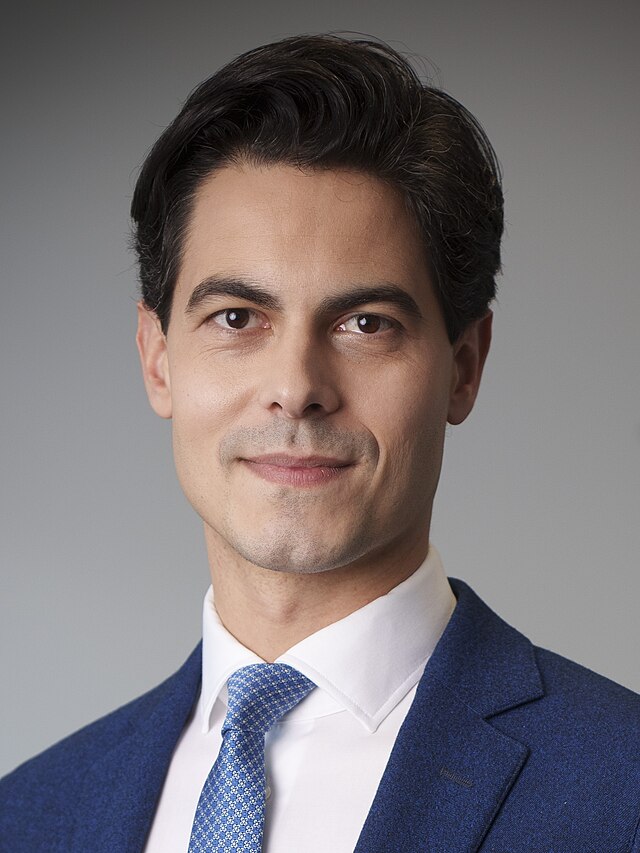
On 23 February, Rob Jetten was sworn in by King Willem-Alexander as the new Prime Minister of the Netherlands, heading a three-party minority coalition made up of his D66, the centre-right Christian Democrats, and the right-wing People’s Party for Freedom and Democracy (VVD). Consequently, Jetten will have to navigate a fractured parliament with a coalition holding only 66 of the 150 seats in the lower house, meaning he will need opposition support for every piece of legislation.
Jetten’s election as Prime Minister marks a significant shift in Dutch politics. After years of factional bickering and the divisive tenure of the previous right-wing government, Jetten’s narrow victory presents an opportunity for a new era of consensus-building. He has promised to use his collaborative skills to govern in “uncertain times“. This comes at a challenging moment: the new government has proposed a historic increase in defence spending to meet new NATO targets of 3.5% of GDP by 2035, funded by a “freedom tax” surcharge on income taxes and cuts to welfare and healthcare.
This has already presented another issue for Jetten: immediate opposition from both the left and the right. Left-wing opposition leader Jesse Klaver of GroenLinks has called the plans “unfair,” arguing that they will disproportionately hurt lower-income citizens, while Wilders has vowed to oppose any initiative by the new government, likely in part due to his exclusion from the coalition. Wilders has already unsuccessfully attempted to supplant Jetten with a failed vote of confidence on 26 February.
Who is Rob Jetten?
Rob Jetten is a 38-year-old raised in the southeastern town of Uden. Having never held the nation’s highest office before, Jetten has positioned himself to the public as a bridge-builder who is ready to shake up the political scene with a positive, optimistic message. Educated in business administration, Jetten worked at the government-owned railway infrastructure company ProRail before entering politics.
First elected to parliament in 2017 for the D66 party, he earned himself the nickname “Robot” Jetten after repeating apparently pre-rehearsed and bland responses to journalists’ questions. However, he has since adopted a more relaxed demeanour that has gained popularity with the general public, partly thanks to reaching the final round of a prime-time television quiz called “The Smartest Person“.
Jetten then served as a cabinet minister under longtime prime minister and now NATO chief Mark Rutte, championing a comprehensive package of climate legislation encompassing 120 measures aimed at slashing Dutch carbon emissions. His tenure in that role earned him another nickname: “climate pusher“. Despite criticism from some quarters, his advocacy for green energy initiatives places him firmly within the growing European consensus on the urgency of climate action.
Rob Jetten is also the Netherlands’ first openly gay prime minister, a milestone in a country that was the first to legalise same-sex marriage in 2001. He posts regularly on social media, including photos of himself and his partner, Nicolas Keenan, an Argentine field hockey star who won a bronze medal at the 2024 Paris Olympics. After his election victory, Jetten posted a photo of the pair hugging with a message combining Dutch and Spanish saying: “Dear Nico, thanks for your unconditional support, I couldn’t do it without you”.
US Supreme Court Strike Down Trump Tariffs
.jpg)
Dhillon Lalji
On 20 February 2026, the US Supreme Court handed down its ruling in the caseLearning Resources, Inc., et al. v. Trump, striking down a series of tariffs instituted by the president through the International Emergency Economic Powers Act (IEEPA). While this does not mean an end to all of Trump’s tariffs, the ruling is a significant set back for the White House as many levies were imposed through the act.
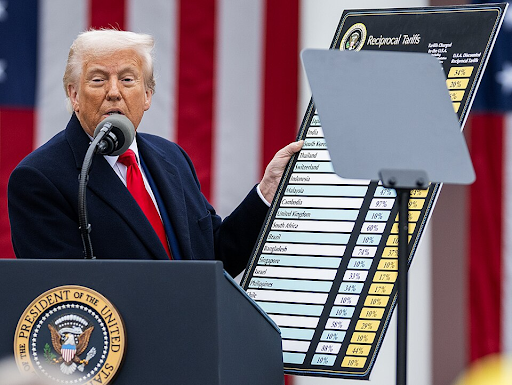
Following his second inauguration in January 2025, Trump has taken the view that America has been ‘cheated’ by other countries, claiming that while they had imposed fees on and held trade surpluses relative to the US, such moves were not being made in retaliation. This led to his famous ‘liberation day’ speech last April, during which he stood in the White House Rose Garden with a large board listing the new tariffs which would be imposed on various countries under the IEEPA. This act was designed for states of emergency and there have been significant legal challenges waged against the tariffs, arguing that this use of the IEEPA was unconstitutional.
Having made its way through the lower courts, the case against the tariffs arrived at the Supreme Court, which many believe currently has a conservative, pro-Trump leaning. This is because Chief Justice John Roberts, Clarence Thomas, and Samuel Alito who were appointed under previous GOP presidents, and Trump’s own first term appointees (Neil Gorsuch, Brett Kavanaugh, and Amy Coney Barrett) make up a 6-3 majority of the court’s nine justices. This majority has allowed Trump to achieve many judicial wins, but on this occasion, the tariffs were struck down by six votes to three, with the court’s three liberal justices joined by Roberts, Gorsuch and Barrett.
Although the six justices in the majority all agreed that the use of the IEEPA to impose tariffs was illegal, disagreement arose as to why. Roberts, Gorsuch, and Barrett’s decision was based on the ‘major questions doctrine’, the idea that a president’s administration cannot take certain important executive actions – such as the imposition of tariffs – without the approval of congress. This follows a similar ruling against Joe Biden’s authority where all three judges were in the majority. However, the court’s liberal justices were more sceptical of this view. Justice Elena Kagan refuted this, arguing that normal statutory interpretation alone would have been enough to lead to the same decision. Meanwhile, a dissent was penned by Justice Brett Kavanaugh, joined by Thomas and Alito, to express their disagreement with striking down the tariffs.
The reaction from the White House was one of shock and disappointment. Trump called the ruling ‘ridiculous’ and ‘anti-American’, particularly criticising his own appointments of Gorsuch and Barrett. In response to a journalist’s question, he called the two justices ‘a disgrace to our nation’. He also vowed to fight back and re-impose tariffs using a different legal mechanism. He imposed a 10% global levy using section 122 of the 1974 Trade Act that allows the President to impose tariffs without congressional approval for 150 days, before later raising this to 15%. This has caused significant uncertainty for the UK’s relationship with the US, given the previous agreement of a 10% deal. Furthermore, it’s currently unclear what the court’s ruling means for companies who may potentially have the money taken in tariffs paid back, with the majority opinion declining to take a stance on this.
However, there have been some positive reactions too. Alongside Democratic Party politicians, Republican critics of Trump such as former Vice President Mike Pence hailed the ruling, saying it would mean that “American families and business can breathe a sigh of relief”. While this particular court case is over, it seems that the tariff story is not over yet.