



Editor’s Note
Welcome back everybody to Week 3 of Outside OX1! Term is in full swing, with many exams having already begun, and the British weather is certainly doing its best to confuse everyone. If this confusion of Trinity Term has kept you away from the global headlines this week, you are in the right place: Nancy, Lewis, and Cormac have got the roundup just for you.
In Guatemala, Gabriel Estuardo García Luna has been confirmed as Attorney General. Nancy Gittus explores the implications of this new appointment for the Central American nation, and the challenges that lie ahead for García Luna in his new role.
On the other side of the world, President Trump has made headlines again during his bilateral summit with President Xi in Beijing. Lewis Haynes provides a one stop shop for everything you need to know from the summit; from the build-up, the proceedings, and the outcomes (or lack thereof).
Finally, following on from Anastasija Vranjes’s article on the politicisation of AI, Germany’s Federal Office for the Protection of the Constitution (BfV) has become the first Federal Office in Germany to opt into a contract with a European AI developer. Cormac Edwards takes a look at the implications of the choice to side with the French developer over giant Palantir, at a time where the latter is facing a wave of controversy.
We hope that this issue gives you a nice break from your studies, as Trinity term ramps up. From Chae and I as your Senior Editors, we hope you thoroughly enjoy this week’s Outside OX1, and our entire Global Affairs team has far more to bring you this term – stay tuned!
Guatemala’s New Attorney General: A Beacon of Hope

Nancy Gittus
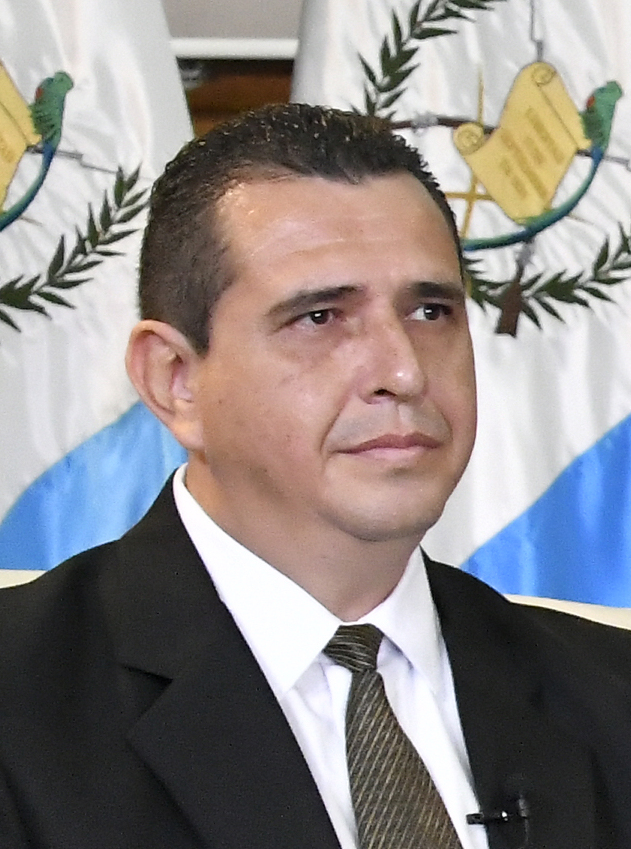
On 5 May 2026, Guatemalan president Bernardo Arévalo appointed Gabriel Estuardo García Luna to the position of attorney general. This decision will bring current attorney general María Consuelo Porras’ term to an end, at long last putting the fierce battle between Arévalo and Porras to bed.
García Luna brings new hope to a country that was once considered a leading light in promoting the rule of law in South America. Expectations were raised after the removal of the corrupt president Otto Pérez Molina in 2015. However, those hopes were soon dashed once more.
In 2018, María Consuelo Porras was appointed to the position of attorney general by Molina’s successor, Jimmy Morales, who is also accused of corruption. Porras went on to imprison and exile prosecutors, judges, and journalists. She has been sanctioned by 40 countries, including the US, Canada, and the European Union, for: alleged corruption; persecution of human rights advocates; and efforts to undermine Arévalo’s election in 2023.
Arévalo, who ran his campaign on a message of anti-corruption, has been dogged for years by Porras’ repeated attempts to block him from office. To name just two instances, the former attorney general instigated an investigation into Arévalo’s party, Semilla, before then attempting to strip the incoming president of his political immunity.
However, from 17 May, García Luna will take over Porras’ old office. President Arévalo stated: “The Public Ministry is getting a new authority who does not come to serve a president, the government of the day, or particular or spurious political interests.” As a former judge and university professor, currently serving as a criminal advisor to the top prosecutor’s office, García Luna brings hope of a new anti-corruption drive. His own statement mirrored that of the president’s, stating the attorney general “serve[s] an independent and impartial justice system dedicated to the people who make up the Guatemalan nation.“
Arévalo selected García Luna from a list of six candidates, narrowed down from around 48. The shortlist was submitted by a commission composed of: the president of the Supreme Court, deans of law schools from around the country, and the national bar association.
Many have responded positively to the appointment. Juan Francisco Sandoval, a prosecutor currently in exile, stated García Luna represented “An end to one of the darkest cycles for Guatemalan justice.” The Mission for the Strengthening of Democratic Institutions in Guatemala, “welcomes the appointment”, stating it “is a significant institutional milestone for Guatemalan democracy, the rule of law, human rights, the fight against crime – including corruption – and the guarantee of access to justice.” Most importantly, the choice of García Luna as the new attorney general marks an end to Porras’ ability to protect the powerful and corrupt in Guatemala.
However, García has a fight ahead of him. After eight years in power, Porras will have amassed many allies who still remain dispersed throughout the justice system. If nothing else, Porras’ tenure proves the extent of the problem Guatemala is facing. Some doubt the new attorney general will have the strength and willpower to pursue high-profile corruption cases or divisive reforms. Instead, they find it likely that García Luna will start small, strengthening prosecutors’ response to organised crime, extortion, and violence against women. Nevertheless, the mere symbolism of this new appointment certainly stands as a step in the right direction for the “new chapter” of Guatemalan politics.
‘Stalemate Summit’: Trump’s Visit to Beijing Ends in Confusion and Anticlimax

Lewis Haynes
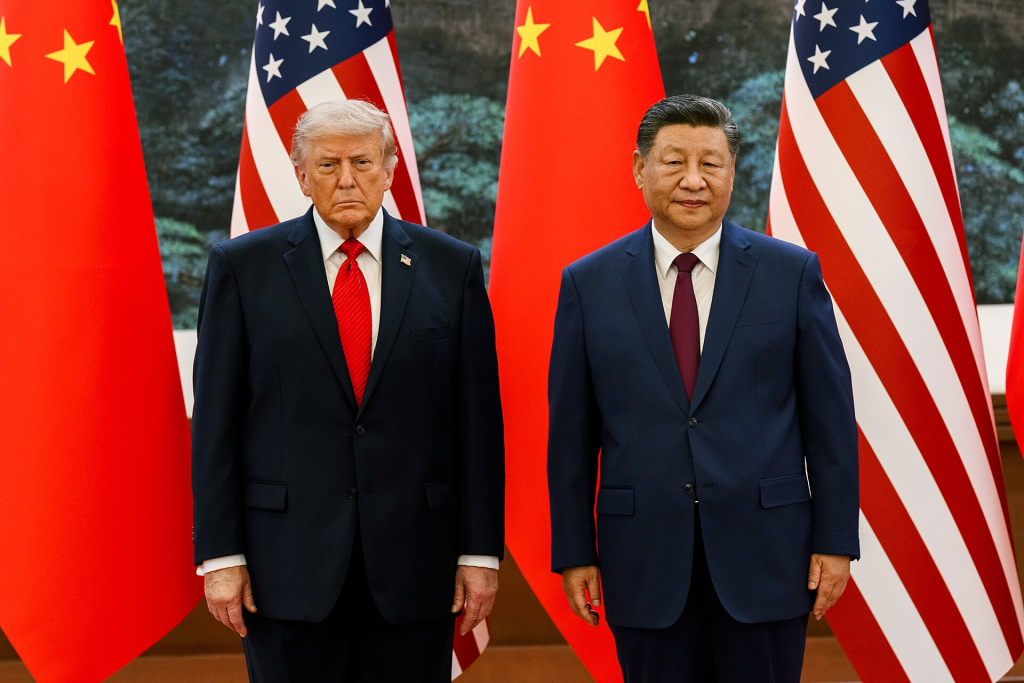
US President Donald Trump, alongside an entourage of administration officials and business executives, travelled to Beijing this week for a two-day summit. Trump paid compliments to Chinese leader Xi Jinping, and extolled the successful deals the two countries forged. Yet, a lack of concrete details has meant the discussions have seemingly ended with more questions than they began.
Hype and Expectations Entering the Summit
The state visit arrived at a time of increasing hostility and rivalry between China and the US, particularly over issues of trade and technological development. The long list of high-profile CEOs and industry figures set to accompany the President, therefore, added to speculation surrounding the meeting’s significance.
US-China competition over artificial intelligence and semiconductor technologies has escalated in recent years. The late inclusion of Jensen Huang, NVIDIA CEO, a leading US producer of advanced chips, inflamed hypotheses over the role AI and the chip trade would play in discussions. Since 2022, the US and many of its allies have imposed export controls on “advanced semiconductor technologies”. Meanwhile, in 2023, China placed restrictions on certain microchips being used in infrastructure, citing “national security”.
Crucial to theorising prior to the talks was the ongoing ‘trade truce’. Following Washington’s imposition of high tariffs on Chinese goods and Beijing’s response with restrictions on the export of rare earth materials used in manufacturing, the two countries reached a ‘truce’ in October 2025. Peter Qiu, chairman and founder of Hong Kong think tank Centre for Globalisation, speaking to DW, underlined his expectation that a deal would be made. “The bottom line”, he said, “is that I expect some kind of ‘big deal’ involving the national interests of two major nations”.
Alongside AI, other trade issues up for discussion included a potential deal on Boeing aircrafts, and an agreement on those agricultural products which had been caught in the crossfire of the trade war, particularly beef and soy beans.
Finally, the Iran War cast a large shadow over discussions. Washington has given mixed messages over their desires for a shift in China’s policy towards the war. Prior to the talks, Trump said “I don’t think we need any help with Iran”, insisting that the US will achieve victory “one way or the other”. Nevertheless, Marco Rubio, US Secretary of State, said during the talks that the administration hoped “to convince [China] to play a more active role in getting Iran to walk away from what they’re doing now and trying to do now in the Persian Gulf”. China’s economy, being highly export-reliant, has also been impacted negatively by the disruption to the Strait of Hormuz.
All Talk?
Trump said the talks had been “very successful”. Evidence for this is not necessarily forthcoming, however.
On the issue of the ‘Trade War Truce’, Trump surprisingly told reporters that he had not discussed tariffs with Xi at all. The truce remains set to expire in November, and the nations still lack a specific deal for what will happen.
A point of pride for Trump has been a deal he said that the two nations found on Boeing aircraft. China, he said, has agreed to buy 200 Boeing jets, with potential for this number to rise to 750. However, Reuters previously reported plans to discuss the export of roughly 500 Boeing jets. Trump’s announcement actually coincided with a 2.4% drop in Boeing shares in morning trading on Friday.
On agriculture and AI, expectations have similarly been defied. Jamieson Greer, US Trade Representative, indicated that deals were now solidifying on US agricultural products. Yet China’s foreign minister did not confirm this, only pointing to the maintenance of current trade ties, and the foundation on which expansion should take place: “equality, mutual respect, and mutual benefit”. Regarding AI, Greer simply stated that it was not a major talking point at the summit. Trump himself remained elusive here, saying only that “we talked about possibly working together for guardrails”. Asked what these would look like, he said: “standard guardrails that we talk about all the time”.
China’s stance on the Iran war seemingly has not moved, despite contrary statements by US officials. Trump has claimed that “[Xi would] like to see the Hormuz Strait open, and [that Xi] said ‘if I can be of any help whatsoever, I would like to help’”. However, China’s foreign minister repeated on Friday that “this conflict, which should never have happened, has no reason to continue”. The Chinese foreign ministry said it desired shipping lanes to reopen “in response to the calls of the international community”, but made no indications this would be achieved through US pressure on Iran. Instead, it pointed to Xi’s “four-point plan for Middle East peace and stability” and emphasised the need for a ceasefire. The contrast between the recent seizure of a ship outside a UAE port and reports by Fars of Iran allowing Chinese vessels through the Strait of Hormuz suggests China is holding on to its leverage in the Strait and maintaining its Iranian ties.
Concerning Taiwan, a shift in either country’s policies was already seen as unlikely. Xi warned Trump that Taiwan was the “most important issue” for the relationship between the two countries. The US does not officially take a position on Taiwan’s sovereignty. However, the Taiwan Relations Act declares that the US is required to provide means of defence to Taiwan. A record $14bn package of arms is set to be delivered to Taiwan this year. Trump stated, on Fox News, that he was still deciding whether to move ahead with this. Yet Rubio has insisted that while in Beijing, there has been no shift in the US’ policy towards Taiwan.
What now?
Trump has invited Xi to the White House in September for further talks. For now, discussions between the countries are expected to continue.
Nonetheless, structural issues may still inhibit the continuously anticipated trade deal. Both China and the US are working to offset each other’s leverage in trade. Since the 2022 controls were introduced, Beijing has pushed harder for movement towards self-sufficiency in AI and semiconductor production. Chinese domestic devices and SME (semiconductor manufacturing equipment) are currently “less advanced than foreign alternatives”. However, bolstered by government investment, Chinese domestic production has boomed, and innovation has increased across the industry. Alternatively, the US has been attempting “to break China’s strong grip on rare earths”, finding more difficulty. The question remains of how a lasting agreement can be forged in such an environment of suspicion and fear.
Germany’s domestic intelligence agency turns down Palantir in favour of French AI firm

_(cropped).jpg)

Cormac Edwards
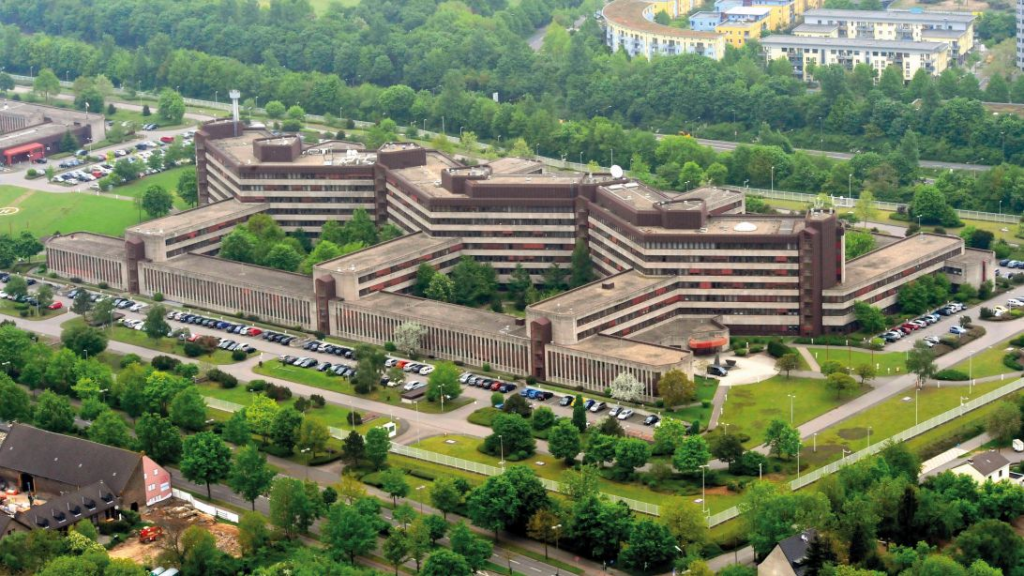
Germany’s Federal Office for the Protection of the Constitution (BfV) has opted to use ArgonOS from French firm ChapsVision over Palantir’s AI technology, making it the first German federal agency to adopt a European alternative to the US tech giant. ChapsVision already counts various French government agencies among its clients, including the domestic intelligence service DGSI. It has been reported that the Bundeswehr may also be considering using ChapsVision’s technology to organise its data, suggesting that the company could play an increasingly important role in Europe’s growing tech and AI infrastructure.
This decision has not been made in isolation, but is part of a broader strategy to strengthen technological independence in Europe. According to Laura Brunn, researcher at the Stockholm International Peace Research Institute (SIPRI), Germany, along with France and the UK, is leading on AI integration in defence.
The BfV’s decision to rely on ChapsVision represents an important step towards realising this goal. The agency itself has not commented on the motivations for the decision, with a spokesperson stating that commenting on operational matters “could pose a security risk that would allow conclusions to be drawn about the working methods of the BfV”. However, previous comments by its president, Sinan Selen, leave little ambiguity about the reasons for the decision. Speaking at BfV’s 21st symposium in Berlin in December 2025, Selen stated that “we are well advised to sharpen the European focus”, highlighting the need for Germany to consider how “geopolitically correct” a software may be to use, and not just how well it performs.
This position is reinforced by other members of the German security establishment. Marc Henrichmann, chair of the parliamentary oversight committee for the German intelligence services, says that the implications of the decision are clear. Speaking to POLITICO, Henrichmann said: “By choosing ArgonOS, the BfV is sending a clear signal for European digital sovereignty,” highlighting a growing sentiment in European politics that the continent must develop its own security and technological capabilities amid an increasingly unstable geopolitical climate.
Palantir CEO Alex Karp has previously expressed surprise at and criticised the Bundeswehr’s decision not to award military contracts to the US tech titan. Karp maintained that Palantir offered solutions that were already proven to be effective, unlike other alternatives. Karp lamented that much of the public discussion surrounding Palantir “sounds like they’re talking about witchcraft,” criticising some of the negative backlash his company has received.
Though governments in Germany are already using Palantir’s technology, it remains controversial. Police forces in 3 of Germany’s sixteen federal states are already using software developed by Palantir, with Baden-Württemberg intending to follow suit. However, their use and implementation have received significant backlash and legal challenges from civil rights groups. The Society for Civil Rights (GFF) has challenged the use of Palantir-developed technologies in police forces across Germany. They claimed that data-mining practices were being used indiscriminately, and that innocent people were being monitored and their data analysed. In 2023, the Federal Constitutional Court ruled in the GFF’s favour and suspended data-mining practices in Hesse and Hamburg. The GFF has continued to lodge similar complaints against the implementation of data mining. In addition, the online German petition platform Campact has collected over 400,000 signatures in a bid to stop the government from implementing Palantir’s software and “Total surveillance”.
Against this background, the BfV’s decision may represent a reaction to domestic politics as much as it goes beyond a wider geopolitical strategy. Choosing a European provider allows Germany to benefit from advanced AI capabilities whilst simultaneously avoiding the controversy associated with Palantir. This seems particularly pertinent to a coalition already struggling to please voters, where employing Palantir at the federal level would likely spark significant public outcry.
The BfV’s decision to rely on ChapsVision’s ArgonOS is an important step in guaranteeing Europe’s tech sovereignty. The fact that the EU’s wealthiest member, accounting for roughly 24% of its total GDP, is willing to employ European tech in critical sectors such as intelligence and defence acts as an endorsement of the idea that Europe could increase its tech independence. The decision is an indication of a greater goal for Europe to broaden its technological capabilities and reduce reliance on foreign firms to supply Europe’s digital infrastructure. The extent to which this ambition will be realised remains uncertain. Nevertheless, the BfV’s decision suggests that Germany’s commitment to the idea is not purely rhetorical, but is beginning to shape decisions at some of the highest levels of government.