



The Editor’s Note
A warm welcome back to Oxford, and a fresh new term at the Oxford Blue. The sun has been shining, collections have come to a close, but for many of you more exams still loom this Trinity. If these exams have kept you away from the global headlines this week, this is your one stop shop for a quick catch-up.
This week, we have taken an angle away from the plethora of news stories coming from the Trump administration in the United States, and shifted our focus elsewhere. Lewis Haynes explores the announcement of the UAE to leave the Organisation of Petroleum Exporting Countries, OPEC. He takes a look at how the decision may effect the other member states of OPEC, as well as the motivations for the decision, at a time where oil prices are fluctuating greatly due to the impact of the Iran war.
On a different note, this week the Transnational Justice Working Group published an updated report on the use of executions by Kim Jong Un’s regime in North Korea. I explore how the COVID-19 pandemic appears to have had great effects on the usage of executions, and the problems the regime faces in a world where internet connectivity is getting harder to stifle.
It’s a long term ahead, but with hopefully plenty of sunshine and good times to be had as well. Chae and I as your Senior Editors will have plenty to come here at Global Affairs, and we look forward to providing your news from around the world during this increasingly turbulent time.
The UAE Announces It Will Leave OPEC

.jpg)
Lewis Haynes
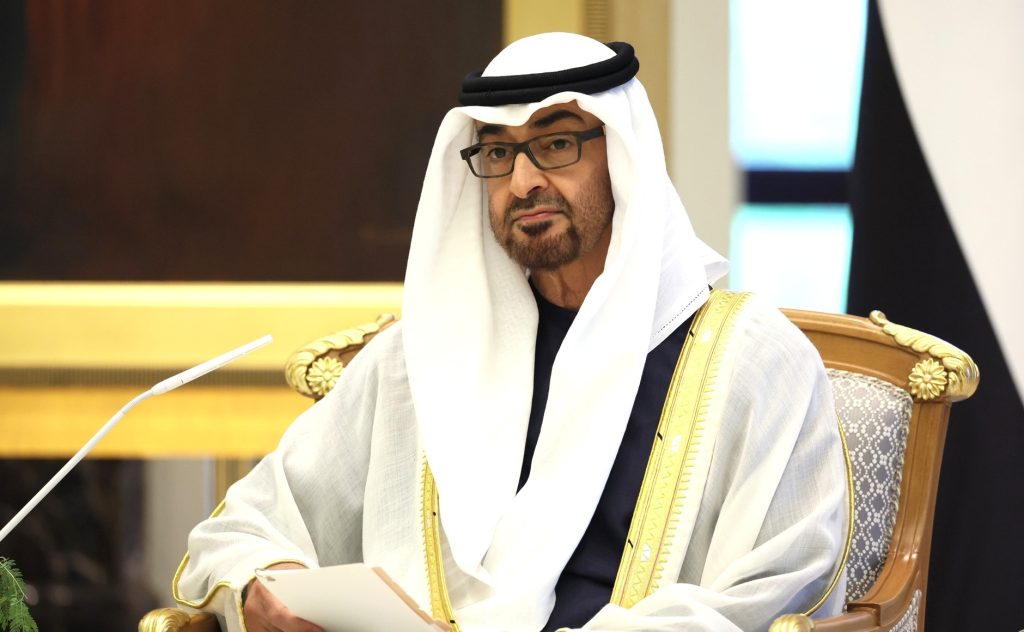
The United Arab Emirates announced on Tuesday that it would be leaving OPEC and OPEC+. The move underlines a conflict between the UAE’s economic vision and Saudi Arabia’s (the de facto leader of the organisation), but beyond this, also reflects a potential larger restructuring of alliances in the Gulf.
OPEC (‘Organisation of the Petroleum Exporting Countries’) is an intergovernmental organisation with the objective of controlling oil prices among its members. Founded in 1960, it currently has 12 members, including Iraq, Kuwait, Venezuela, among others. Additionally, since 2016, it has cooperated with other countries through OPEC+, including Russia, South Sudan, and Bahrain. OPEC uses production quotas to increase or decrease output to control prices.
UAE officials have cited a desire to prioritise “national interests” as the reason for its exit. The Emirati energy minister pointed to how leaving the group would provide greater flexibility for the country.
Economic incentives are key to understanding the UAE’s move. The UAE has the second-most spare capacity for oil production in OPEC, behind Saudi Arabia. In this sense, they are the second-most powerful member of the group for controlling prices. Currently, OPEC has limited the UAE’s production to 3-3.5 million barrels per day (b/d). However, the UAE has shown a desire to expand its oil production.
The UAE energy minister’s gestures towards confronting a “new energy age” demonstrate the extent to which fears surrounding oil’s future have played a role in the country’s decision. The importance of oil in global markets has significantly decreased since the 1970s, as has OPEC’s level of control in these markets, which has fallen from 85% then to around 50% today. Expanding production and selling large quantities of oil now reflects a worry that the window for such high revenues may soon close as the world moves away from hydrocarbons. The UAE has already been investing in production infrastructure and conducting new exploration for oil. It has publicly stated that its aim is to reach five million b/d total capacity by 2027.
Still, the decision to prioritise economic gain over Gulf collaboration comes at a time when geopolitics in the region is being more broadly restructured. The timing of the decision coincides with the Iran war, which has strained relations between the Gulf nations. However, these tensions have been growing long before the recent war, or the UAE’s withdrawal. The UAE’s move reflects a growing rift between itself and the rest of the Gulf.
In Yemen, for instance, what started as a Saudi-Emirati coalition ended in rupture. Saudi Arabia’s primary goals pointed towards eventual de-escalation. Their operations against the Houthis were motivated by border and regional security. This did not match the UAE’s focus on strategic control of ports, maritime routes, and infrastructure, often on behalf of the US. The final collapse in the coalition came in December 2025. Here, Saudi Arabia, alongside several other Gulf nations, publicly criticised the UAE’s support for the Southern Transition Council. From Saudi Arabia’s perspective, the UAE was inflaming instability in Yemen. The STC was at the time launching a military offensive, attempting to secede into a southern Yemeni state. Saudi Arabia, alongside their criticism, launched airstrikes on STC positions. The UAE was forced to withdraw its troops.
The smaller nations in OPEC are perhaps the most at risk from the economic consequences of the UAE’s decision. With the UAE set to increase output, there is the potential for a price war. If Saudi Arabia or Russia decides to ramp up production to compete, it will be the less economically diversified and smaller OPEC countries that will struggle.
Moreover, when considered alongside tensions between the UAE and the other Gulf nations in Yemen and Sudan, a move away from OPEC may come to be just one part of a more consequential shift in both the UAE and Saudi Arabia’s foreign policy strategies. The Carnegie Endowment for International Peace’s “hopeful” outcome for the Gulf states after the Iran War, that of increased cooperation, seems now less likely. Whether the path the Gulf is heading down will lead to a total rift is, however, still uncertain.
The UAE’s move aligns with Donald Trump’s previous criticisms of OPEC, saying it was “ripping off the rest of the world” through its restriction of production. The move also brings the UAE into even closer alignment with the US and Israel, with whom it opened ties in 2020 in the Abraham Accords, and away from Saudi Arabia and the rest of the Gulf. A deeper split in the Gulf may therefore be on the horizon. The UAE and Saudi Arabia remain allied with the US, supporting the Iran war, but the Emirates have not joined Saudi Arabia in lending support to the negotiation efforts in Pakistan. The UAE has increasingly been attaching their support to the US and Israel, and Saudi Arabia may thus end up choosing other partners.
OPEC itself now has an uncertain future. OPEC met, as planned, on 29 April, soon after the UAE’s announcement. Spokesman from the Kremlin, Dmitry Peskov, emphasised OPEC+ retains its important role in stabilising tumultuous global markets. Still others, like Saul Kavonic, head of energy research at MST Financial, have pointed to this as “the beginning of the end” for OPEC. Moreover, the question remains of how the move will impact other intergovernmental organisations in the region. The future of the Arab League, the Organisation of Islamic Cooperation, or other multilateral groups seems unsettled.
Ultimately, for the UAE, withdrawing from OPEC was an announcement that it was charting its own course in foreign and economic policy. As Kristin Diwan, a senior resident scholar at the Arab Gulf States Institute, told the New York Times: “It is an Emirati declaration of independence”.
New Report Finds Executions in North Korea Increased Drastically During the COVID-19 Pandemic
.jpg)
Noah Allerton
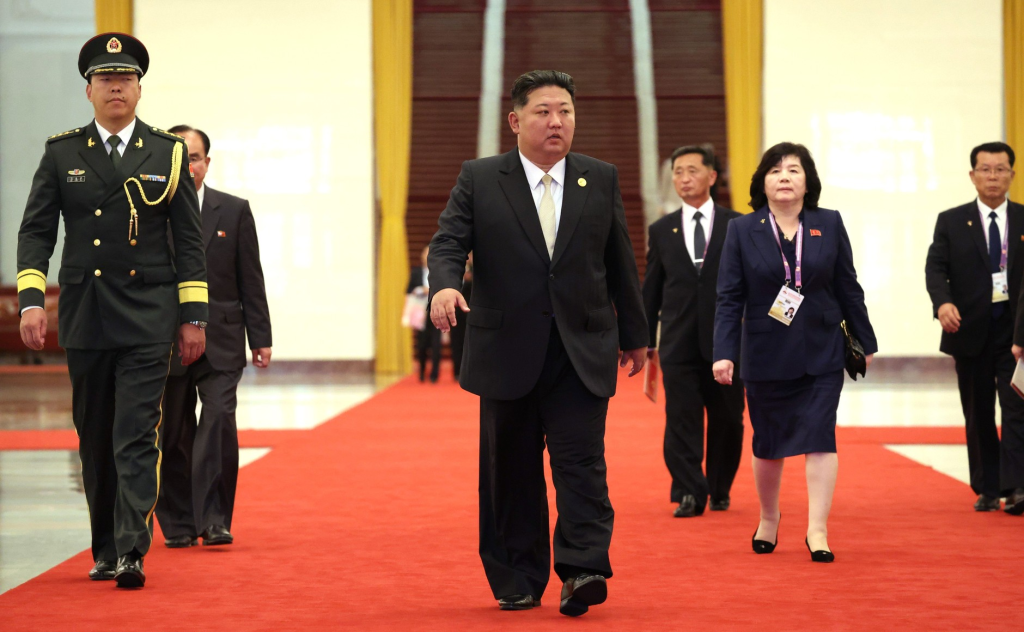
A new report published by the Transitional Justice Working Group (TJWG) has found that executions in North Korea increased to their highest level since 2014 during the early stages of the COVID-19 pandemic. In the five years preceding the COVID-19 pandemic, the average number of executions was 5.6 per year; in the five years 2020-24, the average rose to 23.6 per year, reaching a peak at the start of the period, with 54 executions in 2020 alone. This turn towards increased executions mirrors their greater usage towards the start of Kim’s tenure as Supreme Leader; however, their reasons appear to have shifted greatly.
The data from the TJWG report comes from a vast network of interviews with North Korean dissidents, who have fled the country for China, and in some cases, then South Korea. North Korea, a country already known for its secrecy, completely closed its borders at the onset of the COVID-19 pandemic in 2020, and has not fully reopened them since. This makes the task of mapping executions in North Korea exceedingly difficult, given the immense level of censorship in North Korea and the lack of information that is released via the internet, as well as the severe punishments, including possible torture for escapees that are returned from China.
During Kim’s rule (for the purposes of the report, this is as far as 16 December 2024), there have been 144 documented executions, accounting for the deaths of at least 358 individuals, with an average of 2.6 per execution. 39 of these executions, accounting for 99 of the deaths, were in the period 2020-21, accounting for around 27% of both executions and deaths in just 14% of Kim’s rule thus far.
Beyond just the numbers, perhaps the most interesting point of analysis here comes from the shift in reasoning behind the executions. Before the COVID-19 pandemic, most death sentences were linked to traditional criminal offences, such as murder. Since 2020, that has shifted significantly.
The regime has increasingly targeted acts such as consuming or distributing foreign media, or participating in religious or superstitious practices. This was not unprecedented before the pandemic, with the TJWG’s previous report demonstrating that at least one execution resulted from watching South Korean Television. However, the increase during the COVID-19 pandemic now places cases related to religion, superstition, and foreign culture as a plurality of all cases. The regime in the North is believed to have widespread fear of South Korean culture; Kim has been quoted by the New York Times as calling K-pop a “vicious cancer”; however, the true fear appears to stem from the themes of the culture. North Korean media is carefully curated by the state to be interpreted exactly how they intended. South Korean media obviously does not have this same effect. The regime’s inability to control the interpretation of the media provides an unknown for Kim, which is unacceptable.
Death is not the automatic sentence for consuming this media; rare footage emerged in 2024 of two 16-year-old boys being sentenced to 12 years of hard labour for watching and distributing K-dramas. However, this presents an ever-growing new threat to the regime, with satellite-based internet services such as Elon Musk’s Starlink possibly being able to bypass the regime’s internet blocking in the years to come.
The increase in executions, however, does appear to have returned somewhat to pre-pandemic levels. In 2024, just 3 known executions took place, the lowest number since 2017. This further suggests the possibility that the increase during the COVID-19 pandemic was a reaction from the regime to assert control and ensure that global shutdowns did not have an inverse effect in a country already experiencing such isolation.
The TJWG also pointed out that, as the regime will “pursue a 4th hereditary succession of power”, there is a heightened risk of an increase in executions taking place in order for the regime to ensure that it can continue to “strengthen cultural and ideological control”. A transition of power should not be expected anytime soon, however, given that Kim is relatively young at 42-44 years old (the exact birth date is disputed; North Korean media claim Kim to have been born 8 January 1982).
If trends are anything to be followed, it should be expected that executions should now remain at their current level. However, Kim’s tenure as Supreme Leader has been unpredictable at times previously, so there is no certainty that this will be the case yet again. A third wave of heightened executions in North Korea could come at any time, and without the transparency awarded by most of the world’s other states, there will be little knowing it has even taken place.