
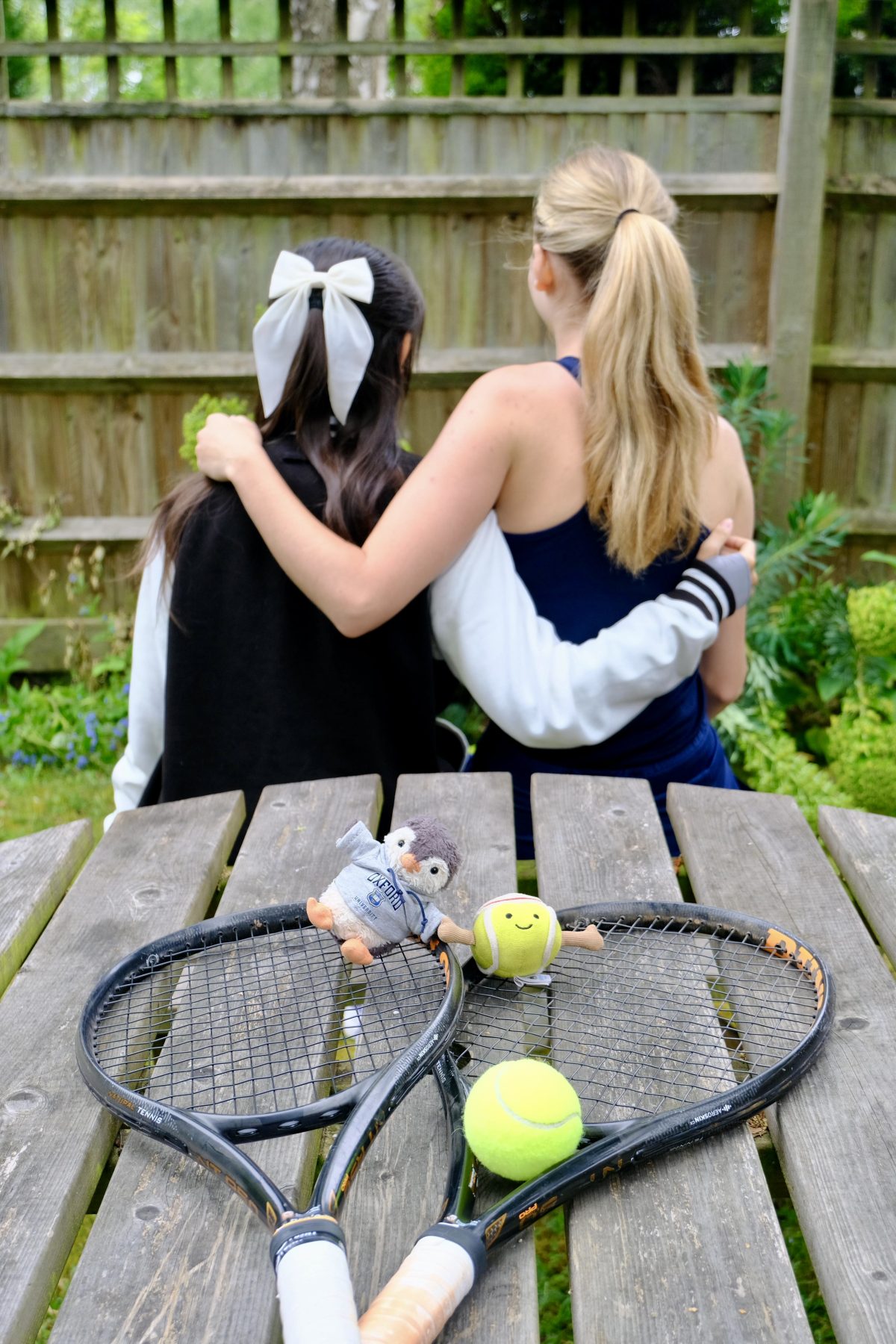
There is a particular kind of discipline that reveals itself early in the morning, before most of Oxford is awake. For Ana Brand, that discipline has been shaped over fourteen years of tennis—from competing in Germany, where she once ranked around 350th nationally and placed fourth in the German school championships, to playing collegiate tennis in the United States at Kenyon College in Ohio, whose team is currently ranked 12th in Division III. Originally from Frankfurt, she chose to study in the US largely to continue tennis at a competitive level, a decision that eventually brought her to Oxford as an anthropology visiting student. She now carries that same rhythm into her time here, balancing the demands of training alongside the intensity of academic life.
Routine
Her mornings begin early, often before the rest of Oxford has fully woken. Morning training, though difficult at the moment, sets a quiet foundation for everything that follows. Waking at 5:45 a.m. is, as she puts it, “always an inner battle,” but one that she has learned to win. There is a certain clarity that comes from having already challenged yourself before the day has properly begun, almost a sense of momentum that carries into lectures, essays, and everything in between. By the time most people are just starting their day, she has already settled into a rhythm that shapes what follows.
If the morning is about discipline, the afternoon offers something closer to release. After hours spent reading or writing, training becomes a way to step out of the mind and back into the body. It is not simply another obligation, but a different kind of break, one that allows her to reset rather than push through. Returning to her work afterwards often feels easier, with a clearer head and steadier focus. The shift is subtle but important; what looks like time taken away from studying often becomes what makes studying possible.
Pressure
Still, the balance is not always clean. Match days in particular stretch far beyond the court. Travel alone can take up entire days, compressing everything else around it and leaving little room to think about anything else. A trip to Leicester, for example, meant hours on a train alongside the pressure of an essay deadline the day before. After returning, she stayed up late to finish the work, despite the fatigue of travelling and competing. “You’re tired, but you still have to get it done,” she says, matter-of-factly. Academic work does not pause for sport, and sport does not wait for academic convenience. These two often sit in rivalry alongside each other.
And yet, she does not describe the experience as something to avoid. “It was worth it,” she adds. Travelling to a new city and playing alongside her team is, for her, part of what makes the balance meaningful. It is less about choosing one over the other, and more about committing to both and accepting what that requires.
What emerges instead is a constant negotiation with time. Training sessions, like tutorials, are fixed points, almost like immovable commitments that structure the week. Around them, everything else has to be arranged, often quite tightly. Planning ahead becomes less of a choice and more of a necessity, especially during weeks when deadlines and competitions begin to overlap. It is not just about managing time, but about anticipating pressure before it arrives and adjusting accordingly.
And yet, she doesn’t see the two as being in conflict. “Honestly, if you care about both sports and academics, you make it work,” she says. “In my experience, they don’t really clash, they in fact complement each other. Sport builds discipline for academics, and academics sharpen your focus for sport.”
Beyond competition
Yet it is precisely this hectic structure that gives tennis its meaning beyond competition. After long hours in the library, the court offers a kind of reset. “When I notice my concentration dropping, going to a tennis session really helps,” she says. “You can just focus on hitting the ball and take your mind off everything else.” The shift from thinking to movement is immediate, and when she returns to her work afterwards, it often feels clearer and easier to manage.
Over time, the discipline required by the sport begins to carry into other areas of her life. Early mornings, even when motivation is low, become something she pushes through rather than avoids. “Getting up at 5:45 is always an inner battle,” she admits, “but you still have to do it.” That consistency, she explains, is something she recognises in her academic work as well, especially in Oxford’s demanding system, where deadlines don’t adjust to how you feel on the day.
Tennis also shapes how she deals with pressure and setbacks. “You lose points all the time, even when you’re winning,” she says. Mistakes are constant, and there’s little time to dwell on them. Instead, the game demands a kind of mental reset, the ability to move on quickly and stay focused. It’s a form of resilience that extends beyond the court, particularly in an environment where pressure is often unavoidable.
At the same time, sport provides a sense of balance that is harder to define but equally important. It offers a break from sitting still, a reason to be outside, and a way of structuring time. Even though training takes up a significant part of her day, she finds that it ultimately makes her academic work more efficient. “After practice, my head feels much clearer,” she says. “I can actually focus better.” What might seem like time lost to sport becomes, in practice, what allows everything else to work.
In this sense, tennis is not separate from her academic life, but closely tied to it, shaping not just how she manages her time, but how she approaches both work and pressure.
Between Matches, Where She Is Most Herself
I met Ana here as a visiting student, and by chance we ended up living in the same building. Most of the time I see her away from the court, in the quieter stretches of the day that sit between training sessions and deadlines.
We are, in some ways, quite different. I tend to stay where things are familiar: at a desk, in the library, following the shape of the day as it comes. There have been afternoons where I would have remained where I was, watching time pass almost without noticing, and instead found myself outside, walking further than intended, sitting in the cold with a coffee, or drifting into plans that hadn’t been planned at all. More often than not, it begins with her: a suggestion made lightly, almost in passing, to step out or do something different. I don’t always plan to go, but I usually do. And somehow, the day shifts.
There’s something quietly insistent in that way of moving—not forceful, but difficult to resist. She has a kind of feistiness that doesn’t announce itself directly, but shows in small moments: in the way she pushes against staying still, in her reluctance to let the day settle too easily into routine. It’s not impatience, exactly, but a refusal to remain passive. There’s something in it that feels almost like the rhythm of a rally, a quiet back-and-forth, a shift from stillness into movement that doesn’t quite allow you to stay where you are. Being around it, I find myself pulled slightly out of my own habits, as if her energy sets a different pace to follow — one that is less about staying fixed, and more about responding, adjusting, and moving with it.
What stays with me is not that she is always doing more, but the way she moves between things. There is no visible strain in it, no sense of time being pulled too tightly. When she leaves something, she seems to leave it fully. When she arrives somewhere else, she is entirely there. It’s a small thing, but it changes how time feels—less something to be managed or filled, and more something that can shift and open, depending on how you move through it.
That way of moving between work, between places, between states of mind feels quietly continuous with how she approaches sport. There is the same steadiness to it, the same ability to reset without dwelling. Nothing lingers longer than it needs to, and nothing is rushed.
It’s a kind of balance that is easy to miss. It doesn’t present itself directly, but reveals itself slowly, in the spaces between things, in how time is used, and how it is allowed to pass.
A different kind of balance
From this perspective, tennis feels less like something separate from her time in Oxford and more like something that shapes it from within. Not just in the hours it takes, but in how those hours are held, with a kind of quiet control, an ability to move on without carrying too much forward. There is a rhythm to it, one that isn’t always visible at first, but becomes clearer over time.
What she brings to the court doesn’t stay there. It carries into everything else, into how she works, how she rests, how she lets one part of the day give way to the next without resistance. There is a steadiness in that movement, a way of keeping things in proportion even when the pressure builds.
It’s not a balance that feels forced or carefully constructed. Instead, it seems to emerge gradually, shaped by habit and repetition, by early mornings and long days, by the constant need to reset and begin again. And in that, tennis becomes less about competition, and more about learning how to move through everything else, with focus, but also with ease.