



Before you open a free AI animation tool, it’s worth spending two minutes understanding exactly what “free” means on that platform — because the answer varies enormously. Some tools use “free” to mean a genuine evaluation experience. Others use it to mean a frustration funnel toward an upsell. The difference determines whether your first session produces something useful or leaves you feeling like the whole thing was a trick.
The Vocabulary of Free-Tier AI Tools
The software industry has developed several distinct models that all travel under the “free” label:
Credit-based free access gives users a specific allocation of generation credits. Each action — a generation, an export, a higher-resolution render — consumes credits. When the allocation is exhausted, you either wait for the monthly reset or upgrade. This model is the most transparent: you can calculate in advance how much exploratory work is possible before hitting a limit.
Feature-gated free access provides full use of a subset of the tool’s capabilities, with specific features locked to paid plans. The challenge here is that the most important features are often the gated ones — you may discover the feature you need most is unavailable only after investing significant time.
Watermarked-output free access lets you use the tool fully, but marks every output with a visible brand watermark. For internal testing or personal experimentation, this works fine. For client-facing or public content, it doesn’t.
Time-limited free trials give full platform access for a defined period — typically 7 to 30 days. These can be genuinely useful for evaluation, but the pressure of a countdown timer often leads to shallow exploration rather than the deep workflow testing that produces a real evaluation.

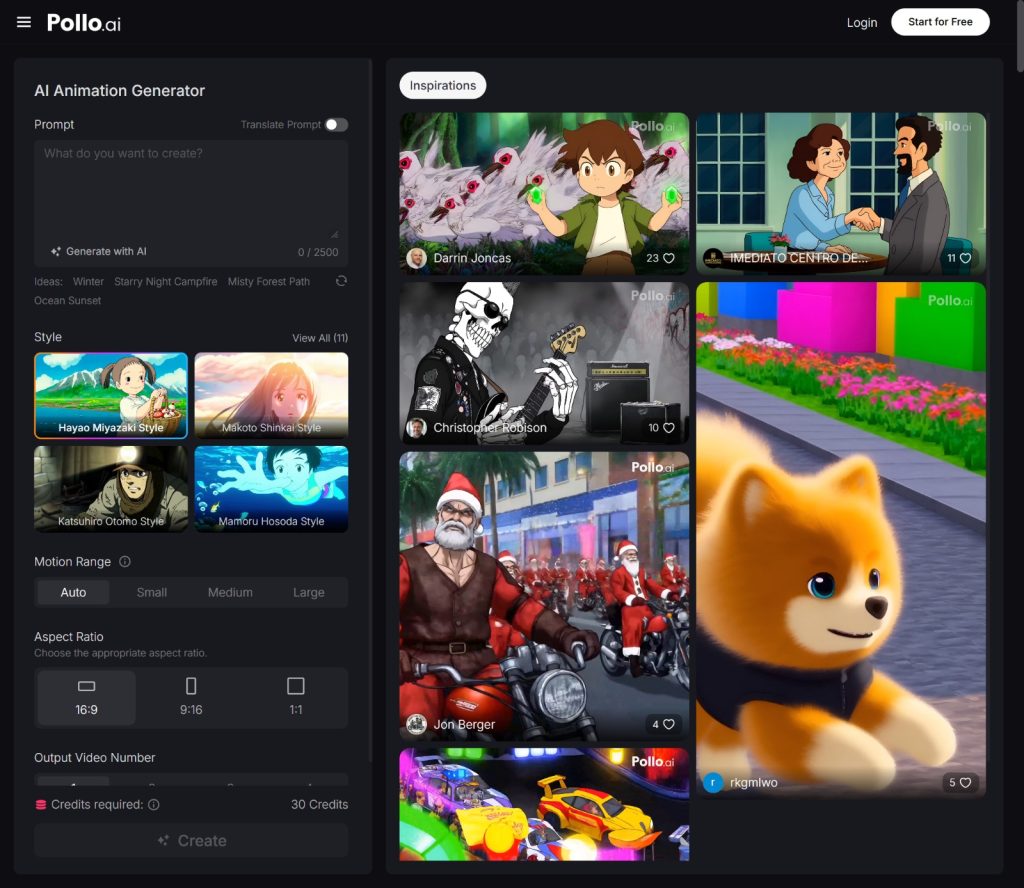
Pollo AI operates on a credit-based model. Understanding what that means in practice is more useful than knowing the label: your free AI animation generator access provides a real allocation of credits you can use to test actual outputs — enough to make an informed decision about whether the tool fits your workflow before committing to a paid plan.
What to Actually Evaluate During a Free-Tier Session
Most users spend their free credits suboptimally — generating variations on the same concept, trying to achieve production-perfect quality in a test session, or exploring features they won’t actually use. Here’s a more useful evaluation framework:
Test your actual use case, not a generic one. If you’re planning to use the tool for product explainers, generate a product explainer test — not a nature animation or a character walk cycle. The quality characteristics that matter vary significantly by content type.
Test the export format you need. Before spending credits on multiple generation iterations, confirm that the output format, resolution, and file type you require is available on the free tier. Discovering this restriction late is a common source of frustration.
Evaluate style consistency, not just a single output. If your use case involves multiple pieces of content that need to look like they belong to the same brand, generate at least two pieces and compare them. Style drift between outputs is difficult to detect from a single generation.

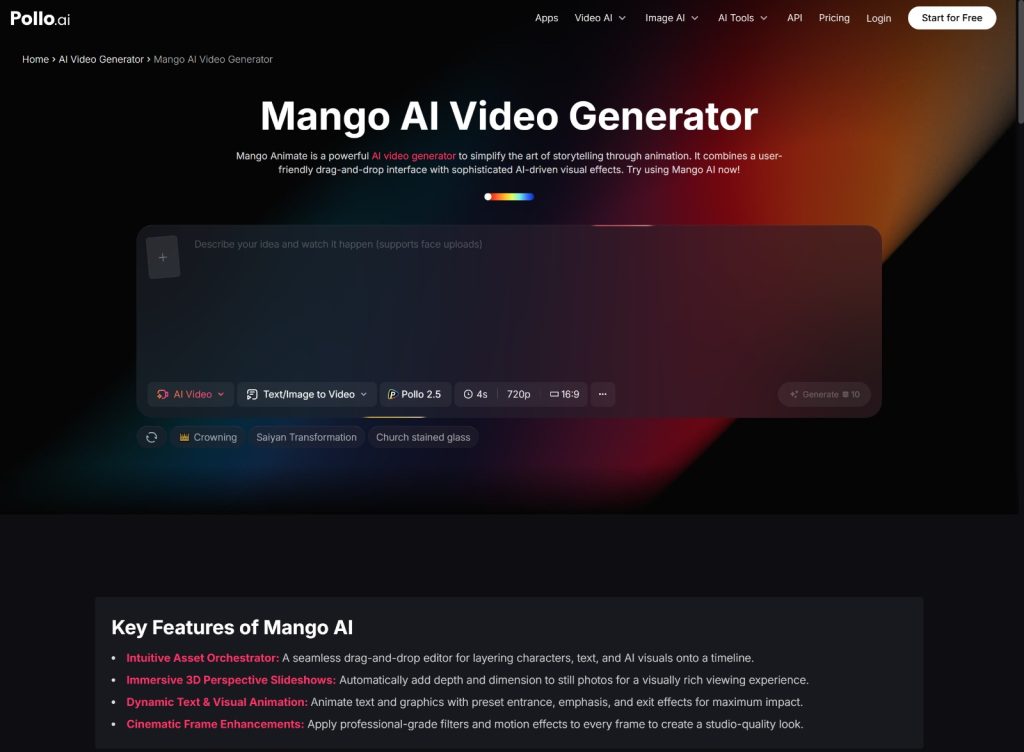
For users researching how free and paid tiers compare across different AI animation tools — including how tool providers structure access tiers and what’s typically available at each level — the Mango Animate page on Pollo AI provides useful internal context on how adjacent tools structure their access models.
When the Free Tier Is the Right Answer — and When It Isn’t
Free is genuinely sufficient for:
- Concept validation: does AI animation work for this use case at all? The free tier can answer this question definitively.
- Style evaluation: does the tool produce output that fits my brand’s visual language? A few test generations are all you need to know.
- Workflow compatibility testing: can I incorporate this tool into how my team already works? This is best tested with real content, not dummy inputs.
Free is not sufficient for:
- Client-facing deliverables: if the output is going to a client or public channel, watermarks and resolution limits make the free tier inappropriate.
- High-volume production: any project requiring more outputs than the credit allocation covers will require an upgrade before the project is complete.
- Feature-dependent use cases: if your workflow depends on a specific capability — advanced style controls, higher resolution exports, commercial licensing — verify it’s available on the free tier before building a workflow around it.
Conclusion
The most productive relationship with a free AI animation tier is an evaluative one. Use the credits deliberately, on content that reflects your actual production needs. Pollo AI’s credit-based free access is designed to give you enough output volume to make a real decision — not just enough to want more. Go in with specific questions. Come out with specific answers.