



Posture is often discussed in narrow terms: straight backs, squared shoulders, and ergonomic chairs. Yet for many people, posture problems persist despite conscious effort, supportive furniture, or occasional stretching.

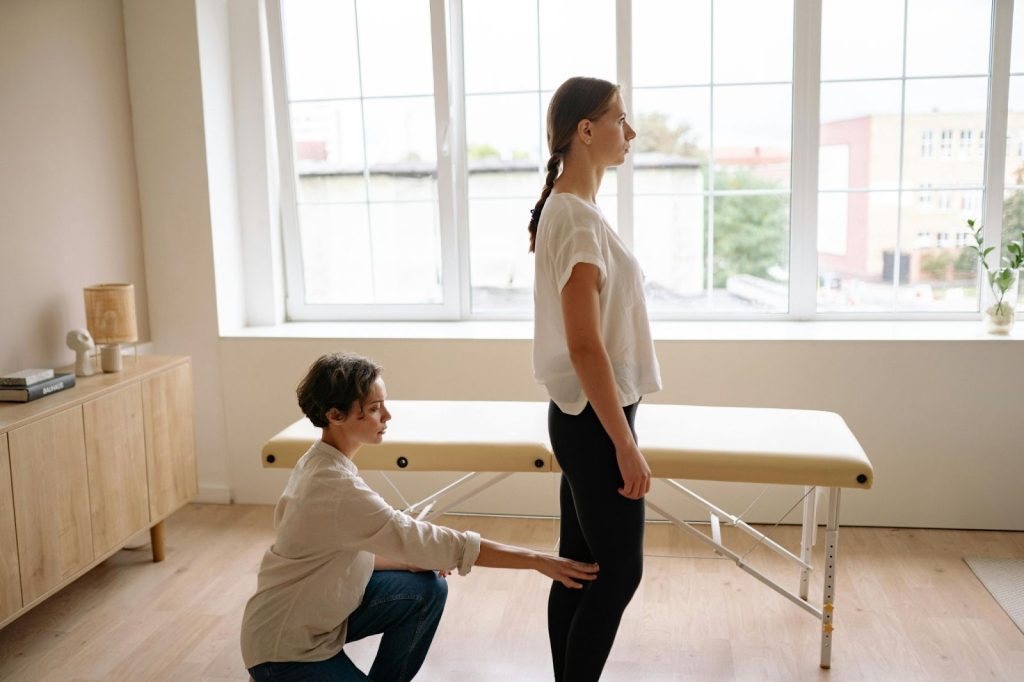
The reason is simple. Posture is not a static position to be held, but a dynamic system shaped by movement, balance, strength, and neurological awareness.
The hidden key to better posture and daily comfort lies not in forcing alignment, but in retraining the body to move efficiently. When posture improves as a by-product of functional movement, balance stabilises, discomfort reduces, and everyday tasks demand less effort.
Posture as a Reflection of Movement, Not Willpower
Good posture cannot be maintained through intention alone. The body defaults to the positions it has been trained to sustain, particularly during walking, sitting, lifting, and standing. Over time, repetitive habits — prolonged sitting, limited spinal movement, asymmetrical loading — shape muscle tone and joint behaviour.
Rather than correcting posture at rest, the more effective approach is to improve how the body manages movement and load. When muscles support joints appropriately and balance systems function efficiently, posture improves naturally without constant correction.
Balance: The Quiet Foundation of Comfort
Balance plays a larger role in daily comfort than most people realise. Subtle instability forces the body to compensate, often leading to unnecessary muscle tension, uneven weight distribution, and fatigue. These compensations frequently appear as shoulder tightness, lower back discomfort, or neck strain.
Balance training does not require complex equipment. Simple exercises that challenge coordination and body awareness can improve stability and reduce the need for compensatory tension. Standing on one leg, controlled weight shifts, or slow transitions between positions help retrain the nervous system to maintain equilibrium with less effort.
As balance improves, posture becomes less rigid and more responsive, allowing the body to adapt smoothly to movement rather than bracing against it.
Clinical Perspective on Functional Posture
As Evolve Chiropractic explains, posture is best understood as an outcome of how the body moves and adapts, not a fixed position to be corrected. Their clinical approach emphasises restoring functional movement patterns, improving joint mobility, and supporting balance systems so that posture improves organically as the body becomes more efficient.
This perspective aligns with growing evidence that sustainable comfort comes from improving coordination and load management, rather than relying on rigid postural rules.
Core Strength Beyond Abdominal Muscles
The term “core” is often misunderstood as referring only to abdominal strength. In reality, core stability involves a coordinated system including the diaphragm, pelvic floor, deep spinal muscles, and hips. When this system functions well, it provides a stable base for movement without restricting breathing or flexibility.
Exercises that integrate breath with controlled movement — such as slow bridges, bird dogs, or rotational patterns — are particularly effective. These movements encourage coordination rather than brute strength, which is essential for sustained comfort throughout the day.
Importantly, core engagement should feel supportive, not exhausting. Excessive tension in the name of stability often contributes to stiffness rather than resilience.
Mobility as a Prerequisite for Alignment
Restricted mobility forces the body to compensate elsewhere. Limited hip movement can strain the lower back; reduced thoracic spine mobility can overload the neck and shoulders. Addressing posture without restoring mobility often leads to temporary improvement followed by recurring discomfort.
Gentle mobility exercises that explore spinal rotation, hip extension, and shoulder movement help restore range and reduce compensatory patterns. The goal is not extreme flexibility, but sufficient movement to allow joints to share load appropriately.
When mobility improves, posture becomes less about holding position and more about moving well within available range.
Everyday Exercises That Make a Difference
Effective posture-focused exercise does not require long sessions or specialised equipment. Consistency matters more than intensity.
Simple practices such as:
- Controlled walking with attention to foot placement and arm swing
- Standing breaks that include gentle spinal extension and rotation
- Balance drills performed briefly throughout the day
- Seated posture resets combined with breathing awareness
These interventions work because they reinforce movement quality during everyday activities, rather than isolating posture as a separate task.
Over time, the cumulative effect of these small changes is often more impactful than sporadic, intensive exercise routines.
Daily Comfort as a Measure of Success
The most reliable indicator of improved posture is not how someone looks standing still, but how they feel throughout the day. Reduced end-of-day fatigue, fewer tension headaches, easier breathing, and smoother movement during routine tasks all suggest that posture is supporting the body rather than working against it.
Comfort achieved through movement quality tends to be more durable because it reflects genuine adaptation rather than conscious correction.
A Subtle but Lasting Shift
Improving posture, balance, and daily comfort rarely involves dramatic interventions. Instead, it emerges from small, deliberate changes in how the body moves, stabilises, and responds to everyday demands.
By focusing on balance, mobility, and coordinated strength, posture becomes less of a goal and more of a natural consequence. The result is not just better alignment, but a quieter body — one that moves with ease, adapts without strain, and supports daily life with less effort.