

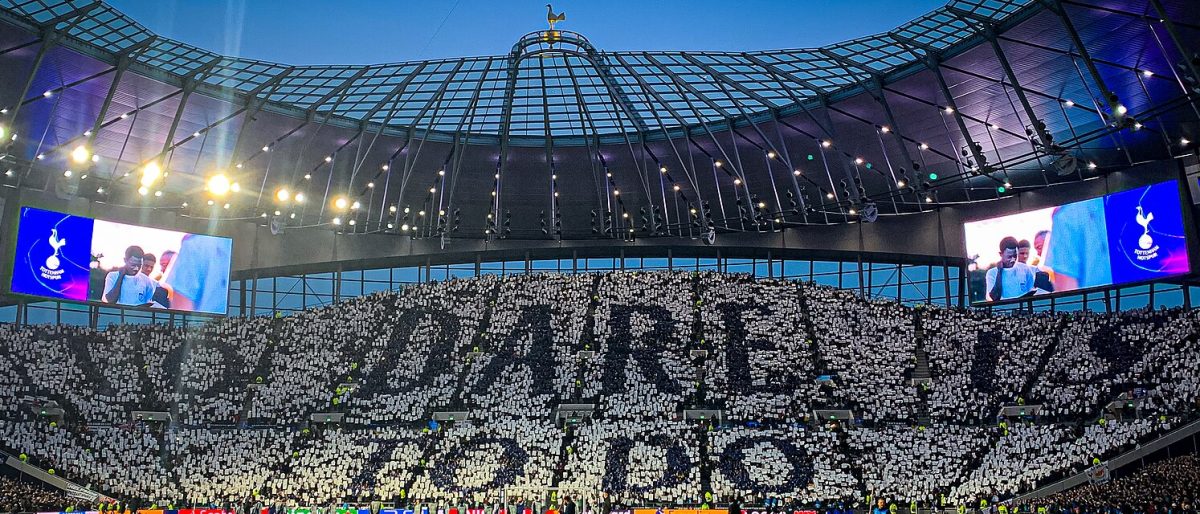
On 28 December 2025, Tottenham Hotspur travelled across London to play Crystal Palace at Selhurst Park. A headed goal by Archie Gray off a scrappy corner in the 42nd minute was enough to seal a 1-0 victory for Spurs, who started the new year in 13th place, with 25 points from 18 games – hardly an impressive tally, but enough to keep Spurs fans looking upwards. The European spots were still in touching distance. The relegation battle was of no concern, as West Ham United languished in 18th with 11 fewer points, having played a game more.
What would happen next was entirely unprecedented. Spurs failed to win any of their next 15 league matches, a miserable streak that spanned almost four months. On 10 April, Tottenham Hotspur, with the fifth-most valuable squad in the league and the ninth-highest revenue of any football club in the world, fell into the Premier League’s bottom three.
As of 16 May, relegation remains a distinct possibility. With two games to go, Spurs are out of the relegation zone by only two points. Should they go down, it would undeniably be the most shocking demotion in Premier League history.
To put this into some context, Tottenham were last relegated in 1976/77, the same season that red and yellow cards first appeared in English football, at a time when teams could make only one substitution. They have won seven major trophies since then, including the Europa League in 2025, and reached the final of Europe’s premier competition, the Champions League, in 2019. Their financial might is undeniable – they have spent €1 billion on players since 2021/22. That’s nearly triple the outlay of Everton, who are nevertheless seven places above them in the table. Their spending and revenue makes them part of England’s ‘Big Six.’ While their haul of major honours pales in comparison to the others in this group, it’s still a trophy cabinet that fans of most clubs dream of.
Speaking of fanbases, Spurs’ is particularly healthy. The 62,850-seater Tottenham Hotspur Stadium was opened in 2019, and the club has an estimated 180 million fans worldwide. It would be unthinkable for a club of this stature to go down.
And yet, here I am, writing an article about Spurs possibly going down. How on earth did we get here?
The Manager(s)
Spurs began the season under the guidance of Thomas Frank. Frank had done a stellar job of managing Brentford, getting the team promoted to the Premier League for the first time in 2021, and keeping them there with limited resources. In particular, he was able to get the best out of attacking players, turning Ivan Toney, Bryan Mbeumo, and Yoane Wissa into 20-goal talents. I was surely not alone in thinking that Frank would do well with the increased spending power available to him at Spurs.
Indeed, there was a positive start to the Danish coach’s Tottenham career. He lost just one of his first seven Premier League games, which included a 2-0 victory over title contenders Manchester City. But rarely could Frank provide the dominant attacking football Spurs fans expect, nor did he hold the players’ respect. After a 1-0 defeat to Chelsea in November, key defenders Djed Spence and Micky Van de Ven appeared to snub Frank’s offer of a handshake at the end of the game, storming straight past their manager. In January, Frank was inexplicably pictured drinking from a mug with arch-rival Arsenal’s crest emblazoned on it, before the team lost 3-2 to Bournemouth. Following a poor run of results, Frank was sacked in February after a 2-1 home defeat to Newcastle that saw them slip to 16th.
As we know, however, Tottenham’s form did not improve. Spurs hired Croatian manager Igor Tudor, who had no Premier League experience, but had had some success in providing short-term turnarounds at various clubs in Europe. But he could not offer an improvement at Spurs. His first game, the North London Derby against Arsenal, ended in a 4-1 defeat. Two more league losses and a draw later, and Tudor found himself in a must-win game at home against relegation rivals Nottingham Forest.
Forest, themselves already on their fourth manager of the season, had fallen to 17th in the table, equal with West Ham in the drop zone. Spurs were just a point above them, though. Tottenham needed a lift, and that’s just what they got. Fans turned out in their thousands to welcome the team bus, setting off pyrotechnics to galvanise the players before kick-off in the “Show Up, Sing Up, Stay Up” campaign. If ever there was a time to pick up a victory, this was it.
Spurs started brightly, dominating possession and outperforming Forest on xG (expected goals, a measure of the number and quality of attacking chances). Tottenham looked like a team that wanted to win, with a genuine threat in the final third. Really, all that was missing was an actual goal.
Then, in the 45th minute, a Forest corner was met by the head of striker Igor Jesus, who netted what was just his third league goal of the season. At half-time in their biggest match of the season so far, Tottenham went in a goal behind.
Spurs looked like a different team in the second half, and not in a good way. There was a notable dropoff in energy, and the substitution of Van de Ven for a midfielder left the defence more exposed. Forest attacker Morgan Gibbs-White duly seized this opportunity by doubling Forest’s lead in the 62nd minute. He slotted home from just over the penalty spot, where he probably wouldn’t have had as much space with an extra defender still on the pitch. An 87th minute strike by Taiwo Awoniyi made the final score 0-3 to Nottingham Forest, giving their new manager Vitor Pereira his first Premier League win in five attempts. Tottenham sank to 17th.
I didn’t think that Tudor’s position was really tenable after that game. He lost once more, away at Sunderland, before departing by mutual consent on 29 March after 44 days in charge.
Did the managers set up the players for failure? Possibly. Certainly, both managers were somewhat conservative in their approach – indeed, Tudor sometimes shunted players like Joao Palhinha out of their natural position to play as an extra defender. This stood in complete contrast to the gung-ho attacking football that brought Ange Postecoglou’s Spurs to fifth in 2023/4 and European glory in 2024/5. But even Ange’s league performance in his second season was appalling, finishing 17th (albeit safe from relegation by 13 points). The inability of the squad to live up to its potential under multiple coaches deserves scrutiny.
The Players
In theory, the players should not be an issue. Spurs’ squad is littered with seasoned internationals, including World Cup champion Cristian Romero and UEFA Nations League winner Joao Palhinha. Pedro Porro made nine appearances for a strong Spain side last year, and Xavi Simons scored against England for the Netherlands in the 2024 European Championships. The average player in the first team is worth around €28 million, €15 million more than at Leeds United, who are safe this season.
But much is still to be desired. Up front, Spurs have lacked top quality since legendary striker Harry Kane’s departure in 2023. Richarlison’s workrate is evident, but he struggles to create goals himself in the way that more technical players can. Dominic Solanke has not found form, and outside of one stellar season with Bournemouth, has never scored more than 10 league goals in a single Premier League campaign. Randal Kolo Muani has not been an adequate alternative, scoring just one league goal this season.
In the goalkeeping department, Guglielmo Vicario is weak at set pieces, while backup Antonin Kinsky was infamously substituted by Tudor after conceding three goals in the opening 17 minutes of a European fixture – although he may just have redeemed himself with a superb save against Wolverhampton Wanderers in April to end the losing streak.
On the wings, Wilson Odobert and Mathys Tel are still improving, and whilst Tel’s graft in particular has been notable, I don’t think either would start at most other clubs in the league. Mohammed Kudus started the season brightly, but his campaign has been cut short by injury.
Speaking of injuries, Tottenham just can’t get enough. James Maddison and Dejan Kulusevski – two of Spurs’ most talented attackers – have been stuck in the doctor’s office for the entire season, with Maddison only just returning. Long-serving defender Ben Davies is having surgery, as is Vicario. Odobert, Romero and Solanke are all currently struggling for availability, whilst Simons has undergone knee surgery following an injury sustained in the victory over Wolves.
Injuries blighted Ange’s time in charge, too. His intensive tactics might have been blamed, but that issues persist suggests problems lie behind the scenes. When Thomas Frank arrived, Spurs underwent an overhaul of its medical department. This included the arrival of three specialists in physiotherapy and conditioning from Brentford. This move may have backfired, though. Brentford’s unavailability from injury was even worse than Tottenham’s in 2024/25.
Perhaps it’s a mentality problem. Curiously, Tottenham have an excellent record away from home – the third best in the league – but find it difficult to perform in front of their own fans. Similarly, Tottenham did surprisingly well in European football, reaching the knockout stages and putting up a convincing performance to inflict a defeat on heavyweights Atletico Madrid. But in the league, the squad often looks defeated at best and apathetic at worst.
What Tottenham have really lacked is creativity. They struggle massively to create from clever passes into space, ranking bottom of the league for key passes from through balls (3). Analysis by ESPN suggests that Tottenham, incredibly, have just two of the league’s best 150 passers in their squad – these being defenders Romero and Van de Ven. Spurs have lots of midfielders who are high in energy, but unspectacular on the ball. But that, and Spurs’ injury problems, could surely be resolved with proper spending in the transfer market.
The Transfers
In January, Spurs signed Conor Gallagher for £35 million – another midfielder of a profile that they are already overwhelmed with. To his credit, though, he has put in some good performances so far, netting a goal in a win over Aston Villa on 3 May, and helping Spurs to pressure teams high up the pitch. He might be stepping up, but you feel as though Spurs still lack someone who can play incisive passes between the lines, especially with Simons’ injury.
On Simons, the Dutchman, signed for £52 million at the end of August, has struggled for consistency in his debut season. He has more yellow cards (5) than goals scored (2) in the league. Though he has shown more promise in the Champions League, it seems that he is taking time to adapt to the intensity of English football. Spurs will be regretting that they couldn’t get deals for preferred targets Eberechi Eze or Morgan Gibbs-White (both of whom have scored against Tottenham this season) over the line.
Tottenham have perhaps let some players go prematurely, too. Son Heung-Min left for America at the beginning of the season, and while he was slowing down slightly, he remained clearly the best finisher in the team, even in his last campaign. In another curious decision, last season’s top goalscorer Brennan Johnson was sold in January – for a loss. West Ham, meanwhile, signed attacking player Taty Castellanos, who’s already scored four crucial goals for them. It’s perhaps easy to see why Spurs’ attack has dried up.
The Board
Does it all come down to the board, then? Their choice of managers, particularly the gamble on Igor Tudor, could be questioned, as could their transfer strategy. Chairman Daniel Levy left in September. Whilst he has received criticism for not pushing the team to win more in his time in charge, he never presided over a situation quite as dire as the one Spurs currently faces. The new leadership team, of Vinai Venkatesham and Johan Lange, was lambasted on social media by Cristian Romero in January, who called on them to speak up to address the poor results. He then doubled down in the beginning of February, appearing to criticise transfer policy by calling it a “disgrace” that Spurs had only 11 fit senior players to face Manchester City. Just Gallagher, and inexperienced Brazilian left-back Souza, were added to the squad over the January transfer window.
To the Future
Former Brighton & Hove Albion manager Roberto De Zerbi was appointed to replace Tudor on 31 March. He brings both Premier League experience and a positive style of play. Things have indeed looked better since his arrival, as he’s taken home eight of a possible twelve points. There was some controversy over his appointment given his protection of Mason Greenwood, who he coached at Marseille. Greenwood left Manchester United for France in July 2024 following charges of sexual assault that were then dropped. But De Zerbi will now be crucial to Spurs’ fortunes, as, if they can take home maximum points against Chelsea and Everton, they cannot be caught and West Ham will be relegated. Slip up, and, well, it doesn’t bear thinking about.