


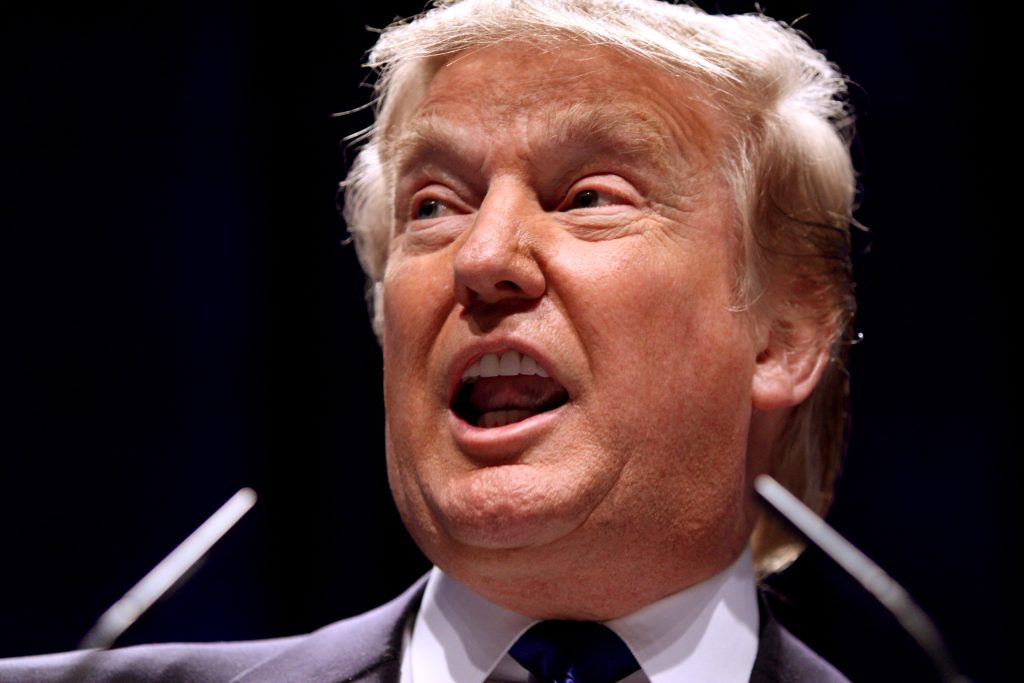
The meme account Saint Hoax describes “humour as a Trojan horse for fascism”. This is a provocative claim, but one worth considering in the age of arguably our first ‘meme president’: Donald Trump. On one hand, memes can play a democratising function. Publishing a meme is of low reputational cost, they are easy to replicate, and are accessible to many. This allows millions to criticise the Trump administration, effectively widening the base of political commentary. In a nation where more than half of the population say they get their news from social media, memes have become a dominant tool of political communication.
In anxious times, humour can offer a useful source of relief. Memes are undoubtedly humorous and Trump — with his appearance of constantly dodgy fake tan, exaggerated rhetoric, and theatrical gestures — seems almost engineered for meme culture. For many, politics is a source of constant anxiety. Turning on the morning news rarely lifts the mood. One is usually inundated by a sense of ubiquitous instability and gloom. In this global context, memes of the US President can serve as a form of comic relief, offering distraction as a way to process current events without feeling overwhelmed. Here lies the crux of the risk: making Trump into a meme trivialises his behaviour and creates a culture of acceptance surrounding a leader whose actions should call for outrage.
Meme-ifying Trump risks him turning into a cartoon villain. When the ‘leader of the free world’ becomes first and foremost a punchline, serious political actions can blur into entertainment. Serious political failures, such as Trump’s inadequate assistance for hurricane victims in Puerto Rico in 2017, get overlooked by a swathe of hilarious meme possibilities. The humanitarian crisis itself risked being overshadowed by the infamous photo of Trump throwing paper towels at the issue, captioned in one meme with, “let them eat towels”. Similarly, when Trump used the bizarre phrase “local milk people”, during a leaked phone call between him and the Australian president about refugees, meme content fixated on this strange phrasing. The hostility embedded in the sentiment of Trump’s rejection of Australian refugees as, “not going to be wonderful people” was overlooked by many.
This is not to deny the power of political satire and mockery — which has long been a check on authority — nor the entertainment value of individual memes. The risk comes where there is the total memeification of a leader. Trump’s scandals, indictments, and aggressive rhetoric become absorbed entirely into a continuous stream of ironic content. Memes allow Trump to become an entertaining spectacle, rather than truly allowing any grounds for accountability.
Memes, by design, oversimplify and often exaggerate. This characteristic brings some benefits to politics, transcending traditional means of political communication and engaging a wider, usually younger, demographic in political discourse. By Trump becoming what could be deemed the first “meme president”, it becomes a much more powerful political façade for him. It isn’t just that individual actions of his are transformed into silly jokes, it is that the larger strategy of the Trump administration can be categorised like this. Often the deeper message of a political event or action of Trump’s is lost. Complex, polemical issues become flattened into humorous, brief fragments and much of the audience receives this without considering context or nuance. As a result, increasing use of humour in place of sober political discussion can insulate Trump’s most extreme remarks and actions from serious scrutiny. Humour in this way wraps his behaviour in a layer of irony which gradually blunts public outrage.
The question is not whether political memes should exist. Rather, the world should be asking the extent to which memes should be accepted as a dominant force of scrutiny in the world of politics. If Trump’s behaviour becomes too deeply absorbed into a framework of entertainment, the world risks reaching a culture of dangerous acceptance.