


A Plate I Rarely Post
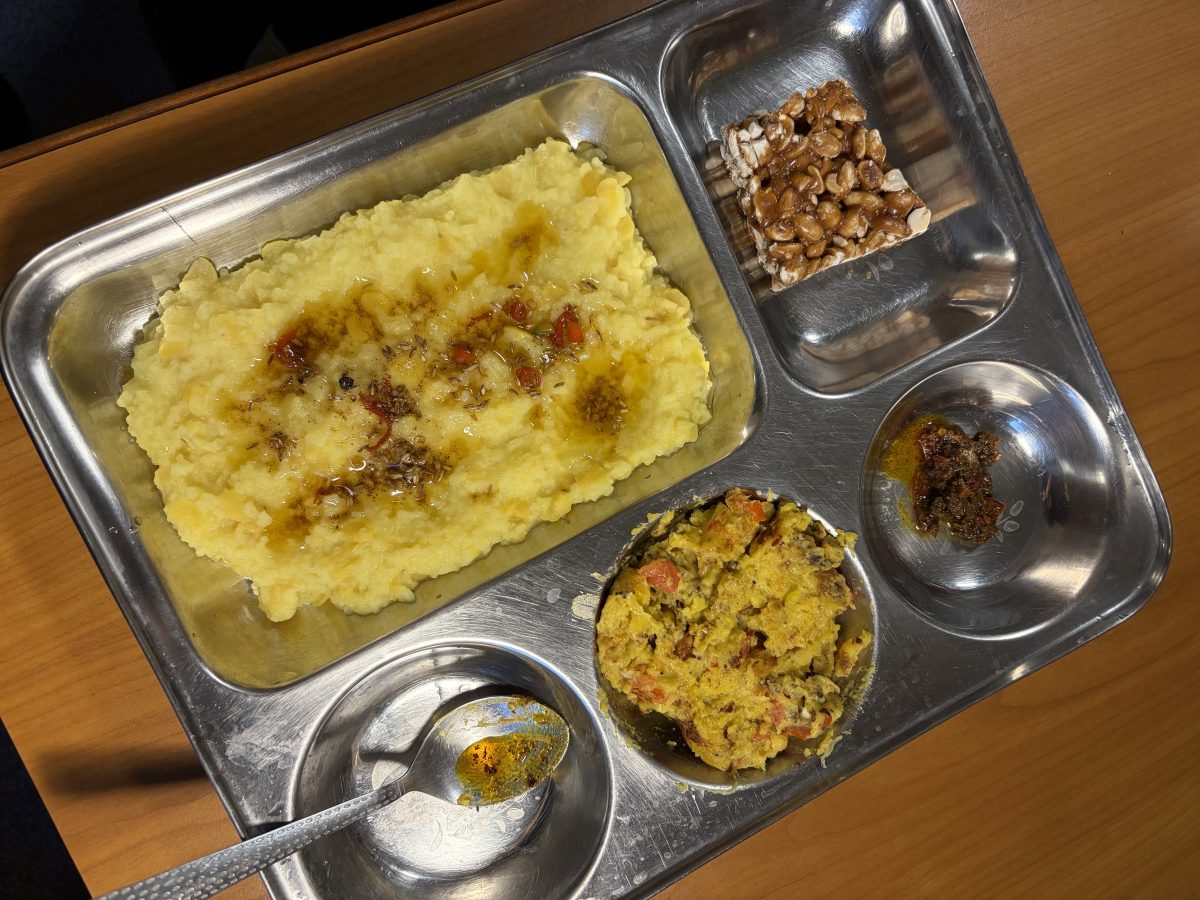
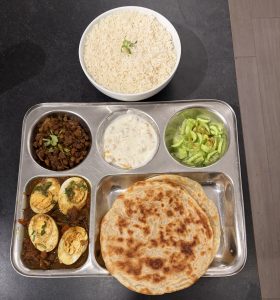
I absolutely love all kinds of food but my love for Indian cuisine runs deeper because of my roots. When I moved to Oxford in October, I came with bags of masala (ground spices), a jar of ghee, and my trusty steel plate. The plate wasn’t particularly attractive or special in most people’s eyes, but it was the first plate I bought when I started living alone. It is practical, durable, and easy to wash. It also holds the kind of meals I grew up eating: rice, roti, dal, sabzi, alongside maybe some raita, salad, or pickle on the side.
And yet somehow it is something I rarely show online. As someone who often posts about food, I have noticed a small but persistent hesitation: I do not always want people to see my steel cutlery. On social media, food seems to belong to a very particular visual world — bone china, ceramic bowls, wooden boards, linen napkins, candle-lit tables. Steel plates, tainted pressure cookers, slightly overcooked dal, or reheated leftovers rarely appear in that aesthetic landscape.
It makes me wonder: does all food need to be ‘Instagrammable’?


When Food Becomes Spectacle
Especially since the pandemic, social media platforms have quietly transformed food into a commodity of digital visual consumption in unprecedented ways. Meals are no longer just eaten; they are styled, photographed, filtered, and shared.
The phrase “the camera eats first” is often used jokingly, but it captures a deeper cultural shift. Food is increasingly evaluated by its aesthetic value. Bright smoothie bowls, layered desserts, colourful salads, elaborate brunch plates, or pizzas engineered for dramatic cheese pulls circulate widely because they look striking on screen.
This transformation of everyday life into images is not entirely new. Marxist theorist Guy Debord famously described modern society as a “society of the spectacle”, where social relations increasingly unfold through images rather than direct experience. Food becomes part of this spectacle — valued not only for taste but for its visual appeal.

Foods That Resist the Feed
Platforms prioritise colour contrast, symmetry, and curated abundance. Within this visual economy, value is closely tied to spectacle. Meals that are vibrant, layered, and photogenic travel easily across feeds and algorithms.
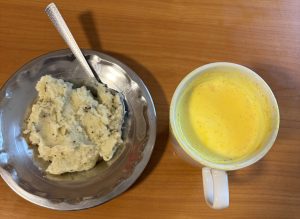
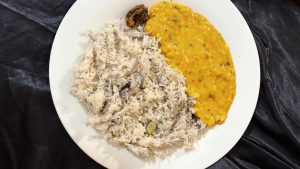
In reality, much of the food people actually eat does not look like this. Across South Asian households, many of the foods that structure everyday eating are precisely those that resist the visual logic of dominant social media trends. Indian dishes such as khichdi, dal/rasam, sabzi, or leftovers rarely fit the aesthetic grammar of platforms like Instagram, Youtube or Tiktok. They are often soft, brown or yellow in colour, slightly oily, and served together on the same plate (or banana leaf in many South Indian homes) rather than carefully separated and plated.
Everyday South Asian food, however, derives its significance from entirely different qualities. Its meaning lies in repetition rather than novelty, intimacy rather than display. Take khichdi for example. A simple preparation of rice and lentils, it is often associated with care and recovery. It is the meal cooked when someone is unwell, exhausted, or in need of something gentle and nourishing. Growing up, I remember disliking khichdi for precisely this reason; it felt like a food reserved for sick days rather than something to look forward to. Yet the dish carries meanings far beyond illness. In North Indian states such as Uttar Pradesh and Bihar, khichdi is also traditionally prepared during the harvest festival of Makar Sankranti, where it becomes a symbol of seasonal change, community and agricultural abundance. What these foods lack in visual drama, they make up for in social meaning — reminding us that some foods are meant to sustain relationships, cultures, and routines, not attract an audience.

Everyday Food and the Labour of Care
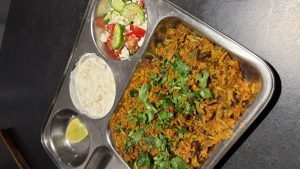
A bowl of dal eaten at the end of a long day, or khichdi cooked quickly when one is tired or unwell, carries emotional and cultural weight that far exceeds its visual appeal. These meals are embedded in routines of care — cooked by parents, shared with family, reheated quietly in the kitchen, or eaten alone after work. In this sense, many everyday foods resist the aesthetic demands of the platform not because they lack value, but because their value is located elsewhere: in memory, labour, and social context.
This resistance becomes particularly visible when we consider the labour behind these meals. Much of everyday cooking in South Asian homes is repetitive, time-consuming, and performed by women. Lentils are washed, rice is rinsed, vegetables are chopped, spices are tempered in hot oil. These acts do not aim to produce visually spectacular outcomes but sustain households day after day. On social media, however, domestic labour is often aestheticised and repackaged as content — styled kitchens, carefully plated meals, and the promise of effortless creativity. The everyday meal does not easily participate in this performance.
For someone studying influencer culture, this contrast is striking. Social media platforms encourage users to transform ordinary activities into shareable content, turning cooking and eating into forms of digital performance, but some foods remain stubbornly resistant to this transformation.
Food scholar Krishnendu Ray notes that everyday dishes often carry meanings tied to memory, migration, and cultural belonging — meanings that cannot easily be reduced to visual appeal.

The Politics of the Plate
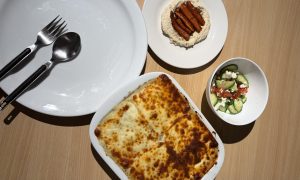
Even the materials surrounding food carry loaded meanings. In many Indian households, stainless steel is the most common dining ware. Steel plates, bowls, and tumblers are durable, practical, and deeply familiar. They are also reflective and difficult to photograph well.
When I noticed my reluctance to post my steel plate, I realised it was not about the plate itself. It was about the visual expectations of the audience. Sociologist Pierre Bourdieu argued that taste is never simply a matter of individual preference; it reflects broader structures of class and cultural capital. The aesthetics of ‘Instagrammable’ food frequently embody middle-class aspirations tied to lifestyle and refinement, leaving little room for something as unassuming as a steel plate.
The Rise of “Ugly Restaurants”
Recently, I have noticed a growing trend online: creators documenting “ugly restaurants.” These are places that might look unremarkable — fluorescent lighting, plastic chairs, slightly faded menus, steel tumblers instead of aesthetic glassware — but serve incredible food. The purpose of these videos is to highlight underrated spots that do not photograph well but are beloved by locals.
The popularity of these series reveals how deeply we eat with our eyes. Restaurants that do not fit the visual language of exposed brick walls, curated interiors, and carefully plated dishes can easily be overlooked, regardless of how good the food actually is. Calling them “ugly restaurants” is itself revealing. It shows how strongly aesthetic expectations shape our perception of food spaces.
Even attempts to challenge this hierarchy remain tied to the same system. As media scholar Brooke Erin Duffy has argued, social media platforms transform everyday activities into forms of aspirational labour. Cooking, plating, and sharing meals become content — carefully produced for public consumption. In such cases, even resistance must be filmed, edited, and uploaded to be recognised.

Beyond the Camera
Food is not only an image. It is smell — the aroma of asafoetida (hing) crackling in hot ghee. It is sound — the whistle of a pressure cooker. It is touch — eating with your hands. It is also time, habit, labour and care. These sensory and social dimensions cannot be fully captured in a photograph.
Of course, people will continue to photograph their meals, and there is nothing inherently wrong with that. Sharing food online can be joyful, creative, and even meaningful, and I, for one, am the friend whose food stories are reposted by others after a lovely dinner. But the pressure for food to look beautiful can sometimes overshadow the quieter realities of how we actually cook and eat.
Not all food needs to be ‘Instagrammable’. Some meals exist outside the economy of images. They exist simply to be eaten — quickly, messily, privately. Some food carries the taste of belonging rather than the promise of likes. Sometimes the most meaningful meal of the day is the one served on a scratched steel plate, eaten without a camera in sight.