



The Editor’s Note
Warm Sunday greetings from the Global Affairs team with another issue of Outside OX1! There was a sad start to the week with the passing of the great Robert Duvall, and the collapse of Italy’s famous “Lovers’ Arch”. However, spirits were certainly lifted with Team GB’s skeleton racer Matt Weston becoming the first Brit to win two gold medals at a Winter Olympics, and then with the figure skating finals – both Japan’s incredibly deserved comeback to reach for gold, then Alysa Liu’s joyous and victorious routine after having retired at the age 16 due to burnout. It just goes to show that we should never give up, and I think it is a particularly important message for all of you surviving Week 5. Remember to seize the day, take a break when needed, check in on that one friend who has gone MIA, and to read this week’s issue of Outside OX1… and oh my goodness what a coincidence, here it is!
It has been revealed that Russian opposition leader and anti-corruption activist Alexei Navalny did not die of natural causes in prison, and was instead poisoned with epibatidine, a toxin produced by dart frogs which are native to parts of South America. Two years after his death, the governments of the UK, Sweden, France, Germany, and the Netherlands have now all confirmed Russia’s complicity in Navalny’s death.
In Peru, following the ousting of José Jerí, 83-year-old José María Balcázar of the left Peru Libre Party has now been appointed as the country’s ninth president in a decade, highlighting the ongoing crisis of instability that Peru continues to face. Balcázar will serve as the interim president until 28 July 2026, and the decision has faced controversy given Balcázar’s public support for child marriage as well as sexual relations between students and teachers.
US President Donald Trump has warned UK PM Keir Starmer that he would be making a grave mistake in granting possession of the Chagos Islands to Mauritius, just one day after the US government gave its official support for the deal. The archipelago is home to a US-UK military base, and marks just another U-turn in America’s stance over its future. Meanwhile, the treaty awaits ratification in the UK, with delays given the Trump’s latest social media criticism.
Russian Opposition Leader Alexei Navalny Died by Poisoning, UK and European Allies Find

Nancy Gittus
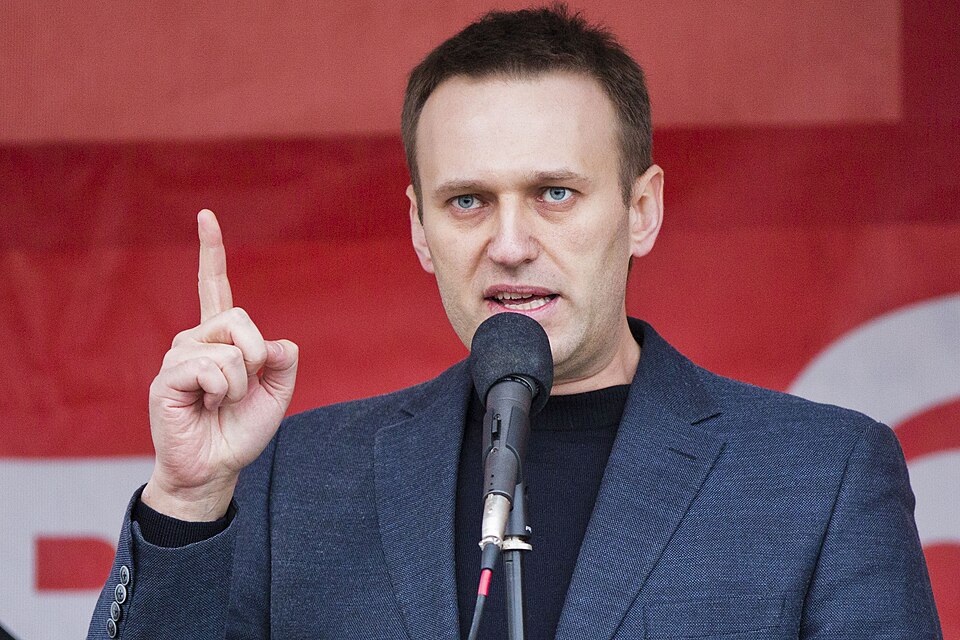
On 16 February 2024, Yulia Navalnaya stood on stage at the Munich Security Conference and declared, “my husband Alexei Navalny was poisoned.” Now, almost exactly two years later, the governments of the UK, Sweden, France, Germany and the Netherlands have confirmed the truth of her claim. Alexei Navalny did not die of natural causes. He was murdered; poisoned by the Russian state.
Alexei Navalny was a fierce critic of the Russian President Putin’s regime. He organised campaigns against the corruption of the Russian government and encouraged hundreds of thousands to march in protests, quickly becoming known as Russia’s only opposition leader.
Navalny survived a first poisoning in 2020, being transported to Germany for treatment. However, not wanting to “give up my country or my beliefs”, Navalny returned to Russia the following year. There, he was arrested at the airport, found guilty of “extremism”, and sentenced to 19 years in the Polar Wolf penal colony.
Upon his sentencing, Yevgenia Albats, an independent Russian journalist in direct communication with Navalny, stated: “They are trying to silence him. To make him dead for the outside world.” Two years later, these fears would no longer be metaphorical.
However, until last week controversy and mystery remained as to the exact cause of the political activist’s death. Whilst many accused the Russian government of murder, Moscow always maintained Navalny died as a result of “combined diseases”. Now, this statement has been proven false. Although Moscow’s London embassy continues to deny Russian wrongdoing, stating that “The goal of this ridiculous circus performance is transparent: to stoke waning anti-Russian sentiment in Western society”, for many the finding simply confirmed what they already knew. Speaking at her son’s graveside, Lyudmila Navalnaya told the BBC, “We knew that our son did not simply die in prison, he was murdered.”
The poison used was epibatidine, a toxin produced by dart frogs. This confirms Russia’s pre-mediated role in the killing. These dart frogs are native to parts of South America. Therefore, according to the UK Government, “Only the Russian state had the means, motive and opportunity to deploy this lethal toxin to target Navalny during his imprisonment”. As Dr Brett Edwards argues, “[Navalny] was in a high-security prison. So […] nothing gets in there unless they wanted [it] to get in there”. Indeed, Navalny’s death serves as the latest in a long line of Russian state poisonings. Notable other incidents include the poisoning of former KGB agent Alexander Litvinenko in 2006 by radioactive polonium-210 and former Russian agent Sergei Skripal and his daughter Yulia in 2018 by the nerve agent, Novichok. The toxin used to kill Navalny, however, was particularly brutal. With no known antidote, it is a painkiller hundreds of times more potent than morphine.
It is significant that the UK and its allies chose this moment to break the news of the truth behind Navalny’s death. The announcement on Saturday 14 February coincided with the second day of the 2026 Munich Security Conference. This is not only the same conference at which news of Navalny’s death was broken two years ago, but also a conference at which many NATO allies are hoping to improve resolve and boost resilience against Putin’s repeated “disregard for international […] law” and flagrant violations of the “Chemical Weapons Convention”. In this way, NATO is using Navalny’s murder as an “information weapon” to foster global support for the West and distrust of Moscow.
In recent years Russia has been growing increasingly repressive, intensifying censorship laws particularly after the invasion of Ukraine in February 2022. Many Russian dissidents and associates of Navalny have either been jailed or fled the country. This includes Navalny’s widow. Yulia Navalnaya now lives abroad, and has, since his death, taken over control of her husband’s Anti-Corruption Foundation. For her, this revelation is just one more step towards her ultimate goal, writing in a social media post: “we have achieved truth and we will achieve justice one day too.”
Peru’s Ninth President in a Decade Appointed Following the Ousting of José Jerí Over Accusations of Corruption

Laura Beard
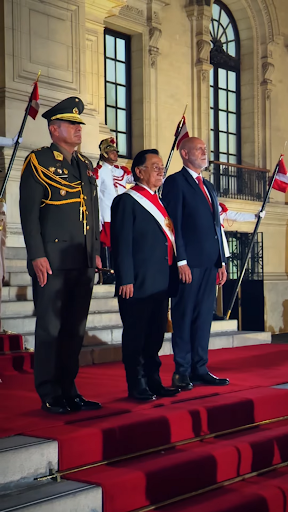
José María Balcázar, Peru’s latest President, was appointed on 18 February 2026 following the ousting of José Jerí. His inauguration marks the appointment of Peru’s ninth president in a decade, demonstrating the country’s ongoing crisis of instability. Four of Peru’s previous eight presidents were impeached, with two others resigning before their terms ended. In fact, Ollanta Humala, whose term ended in July 2016, was the last president to serve a complete five year term almost a decade ago, justifying the description of Peru’s highest office as a ‘revolving door’ presidency.
Balcázar’s predecessor, Jerí, was removed from the presidency on 17 February 2026 after only four months in office. Lawmakers overwhelmingly voted to eject him, despite his declaration “I will not resign, because that would imply that I had done something wrong, which is not the case”.
This comes after Jerí was exposed on video attending two secret meetings with Yang Zhihua, a Chinese businessman facing scrutiny from the Peruvian government. Jerí failed to disclose the out of hours meetings on his official agenda and wore a hood and dark sunglasses to conceal his identity. Another Chinese citizen, Ji Wu Xiaodong, who had been under house arrest for illegal timber-trafficking, was allegedly in attendance at the first meeting in December, although Jerí claimed that Ji Wu only served food and the two did not communicate. After the first video was released, Jerí issued a public apology, but justified the meetings as part of plans to organise a Peruvian-Chinese festival of friendship. Following the release of the second video, Jerí vehemently denied any accusations of corruption, labelling himself the victim of a smear campaign.
The scandal, which has been dubbed ‘Chifa-gate’ in reference to Peruvian-Chinese fusion food, is particularly politically salient due to current tensions between China and the US as they vie for influence in Latin America. As Peru’s largest trading partner, China has become a key source of foreign investment, funding a fully automated deepwater port in Chancay. Beginning operations in November 2024, the port offers express trade routes with China, further boosting cooperation between the two countries, and provoking anger from the Trump administration. The US Bureau of Western Hemisphere Affairs labelled the Chinese investment “predatory” and warned it could leave Peru “powerless”. Meanwhile, the US state department has just approved a $1.5bn sale of equipment and services to Peru to support the relocation of the country’s main naval base, demonstrating US-China rivalry.
Jerí’s outsting will likely exacerbate the crisis of low trust in Peruvian politics. In an interview with Reuters, one Lima resident described the country as experiencing “a crisis where Congress only dedicates itself to changing the president and looking out for their own well-being“. Balcázar will face a significant challenge, not only to restore trust but also to confront growing rates of extortion and murder across Peru.
Balcázar, an 83 year old leftist from the Peru Libre Party, was selected for the presidency by Congress over conservative favourite María del Carmen Alva in the second round of the surprise election. The decision has become highly controversial, following revelations that in 2023 Balcázar publicly supported child marriage and sexual relations between students and teachers. As chair of the congressional education committee, he argued “there should be no impediment” to sexual relations between pupils over 14 and their teachers, even labelling these relationships “beneficial”. In a radio interview on Thursday, he restated these beliefs, declaring “I will not change my mind, I am firm in my convictions”.
He has also faced further scrutiny after allegations resurfaced that he had been involved in a bribery scandal concerning the former Attorney General Patricia Benavides, and had been accused of embezzlement leading to his expulsion from the bar association in Lambayeque.
Balcázar will act as interim president until 28 July 2026, when the candidate elected in June’s presidential run-off election will take power. Although a president might technically be chosen in the general election on 12 April, it seems unlikely that one of the dozen candidates will manage to achieve a majority in the first round. Both Balcázar and Jerí are prohibited from standing in the election, due to a rule barring presidents from holding consecutive terms. Current opinion polling indicates that Keiko Fujimori or Rafael López Aliaga, two right wing candidates, will take the lead. Fujimori, daughter of ex-president Alberto Fujimori who was sentenced in 2009 to 25 years in prison for human rights abuses in office, has been narrowly defeated in every runoff election since 2011. However, it remains to be seen whether Peru’s next president, whichever party they hail from, will manage to last their full five year term, potentially ending Peru’s streak of instability.
US Flipflops Over Official Position on Chagos Islands Deal – Again



Thomas Yates
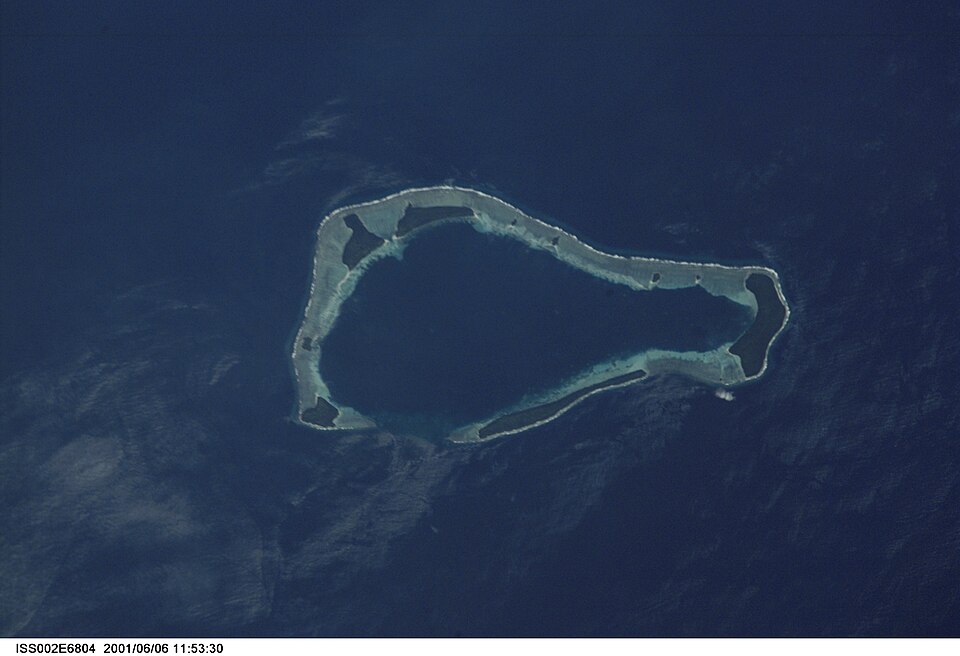
US President Donald Trump has told UK Prime Minister Keir Starmer that he would be making a “big mistake” to grant possession of the Chagos Islands to Mauritius, just one day after the US government gave its official support for the deal. This marks the latest in a series of U-turns in America’s stance over the future of the archipelago, which is home to a US-UK military base. This most recent swing in policy has encouraged Starmer’s administration to delay reviewing the relevant legislation in the House of Lords.
On 17 February, the US Department of State, which deals with American foreign policy, released a statement which said that “the United States supports the decision of the United Kingdom to proceed with its agreement with Mauritius concerning the Chagos archipelago.” The statement, which emphasised the importance of the military base on the island of Diego Garcia for US national security, also announced plans for discussions to be held between the US and Mauritius. These will take place in the Mauritian capital, Port Louis, from 23 to 25 February. However, on 18 February, Donald Trump appeared to contradict the State Department, posting on Truth Social that Starmer “is making a big mistake by entering a 100 Year Lease with whoever it is that is ‘claiming’ Right, Title, and Interest to Diego Garcia, strategically located in the Indian Ocean.” He dismissed Mauritius’ claim of sovereignty over the islands as lacking justification, calling it “fictitious in nature.” Trump furthermore asserted the importance of having a military base which could be used “to eradicate a potential attack by a highly unstable and dangerous” Iranian regime. He closed the post with a capitalised warning: “DO NOT GIVE AWAY DIEGO GARCIA!”
Mauritius gained independence from the United Kingdom in 1968. However, the UK maintained control over the British Indian Ocean Territory (BIOT), which includes the Chagos Islands, that were legally separated from Mauritius in 1965. In the years 1968-73 between 1,400 and 1,700 Chagossians were removed from the BIOT, and were legally forbidden from returning. A military base was constructed on Diego Garcia, with runways suitable for B-52 bombers, and a deep-water port capable of docking aircraft carriers and destroyers.
Since the 1980s, Mauritius has claimed sovereignty over the islands. Chagossians have also expressed a desire to return to their homeland. A breakthrough came in 2019, when the International Court of Justice considered that “the process of decolonisation of Mauritius was not lawfully completed when that country acceded to independence” and that therefore “the United Kingdom is under an obligation to bring an end its administration of the Chagos Archipelago as rapidly as possible.” Despite the government initially dismissing the decision as “not a legally binding judgment,” and highlighting that the UK was committed to handing the territory to Mauritius when no longer needed for defence, the UK began negotiations with Mauritius on the sovereignty of the archipelago in 2022. In May 2025, an agreement was reached whereby the islands would be handed over to Mauritius, but the US and UK would be granted continued access to the military base for an initial 99 years. The UK would also pay Mauritius an average of £101 million for each of those 99 years. US Secretary of State Marco Rubio stated that America “welcomed the historic agreement between the United Kingdom and the Republic of Mauritius on the future of the British Indian Ocean territory,” and that “we commend both the United Kingdom and Mauritius for their leadership, vision, and commitment to ensure that Diego Garcia remains fully operational for the duration of this agreement.”
After this initial American green light, though, Trump lambasted the deal. On 20 January 2026, he called the transfer of sovereignty “an act of GREAT STUPIDITY” in a Truth Social post. But, just a fortnight later, Trump posted that he had had “very productive” discussions with Starmer, calling it a deal that was, “according to many, the best he could make.” White House press secretary Karoline Leavitt later reiterated that Trump supported Starmer’s position. The Department of State statement issued on 17 February reaffirmed this.
However, Trump’s latest post regarding Chagos shows that America is still making up its mind on its position regarding the deal. Meanwhile, the treaty still awaits ratification in the UK. The domestic legislation has been put on pause since Trump’s 20 January statement, with plans to bring it back to the House of Lords believed to have been shelved in response to the president’s latest social media criticism.
The swings in the US government’s agenda raise questions as to how ‘official’ Trump’s Truth Social posts are. Even when in direct contradiction to previous communications, Trump’s messages must be taken as genuine. Commenting on the latest ‘Truth,’ Leavitt said that “the post should be taken as the policy of the Trump administration, it’s coming straight from the horse’s mouth. When you see it on Truth Social you know it’s directly from President Trump, that’s the beauty of this president in his transparency and relaying this administration’s policies.” Such is the nature of government by social media.