
Editor’s Note
Welcome back to Week 4 of Outside OX1! Over the weekend, the sun has returned, although this time with something closer to a heatwave. Whether you are enjoying Trinifree in the sunshine, heading for a swim to escape the near-30-degree weather, or still knee-deep in exams and revision, we are back once again to bring you some of the biggest global developments from the past week. So, take a few minutes between deadlines, post-exam recovery, or simply trying not to melt in Oxford, and catch up on what we’ve been following this week.
This week, Lewis Haynes turns to developments in the United States following Tulsi Gabbard’s resignation as Director of National Intelligence. His article explores the political tensions surrounding her departure, the wider pressures facing the Trump administration, and what growing instability within the cabinet may suggest as the White House continues to face mounting domestic and foreign policy challenges.
Elsewhere, Niamh Tarrant examines the rise in Ebola cases in the Democratic Republic of Congo. Her piece considers both the humanitarian consequences of the outbreak and the international response led by organisations such as the WHO and Doctors Without Borders, while also assessing why the broader public health risk beyond the region remains limited.
Finally, I take a look at Vladimir Putin’s visit to Beijing just days after Donald Trump’s own trip to the Chinese capital. The article explores how Xi Jinping’s back-to-back meetings with two of the world’s most influential leaders placed Beijing at the centre of key geopolitical relationships, while also highlighting the increasingly uneven economic dynamics between China and Russia, particularly through delayed negotiations over the Power of Siberia 2 pipeline.
As always, thank you for reading Outside OX1. We hope you are managing to enjoy some of the sunshine to help power through the Week 5 blues! We look forward to continuing to bring you stories from around the world until the end of term.
Tulsi Gabbard steps down as US intelligence chief in the Trump administration

Lewis Haynes
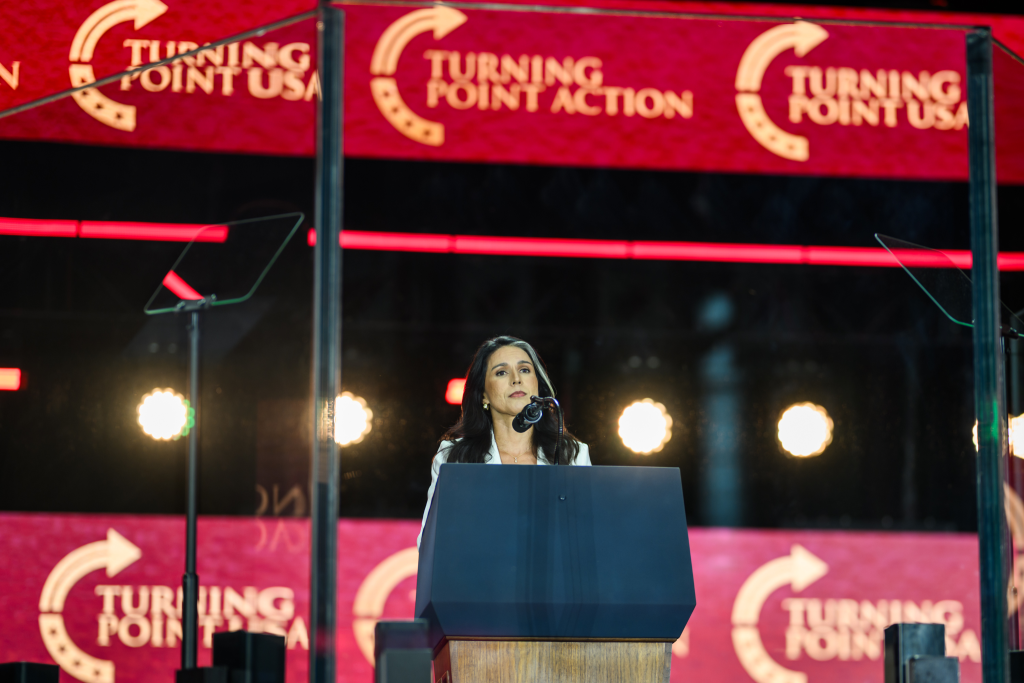
Tulsi Gabbard has announced she will be stepping down from the position of US Director of National Intelligence in the Trump administration. In a letter to President Trump, posted online, Gabbard cited her husband’s recent bone cancer diagnosis as behind her resignation. However, alternative reports have suggested Gabbard may have been forced out of the cabinet, this linked to the US war in Iran.
Gabbard’s official reason for stepping down was the fact that her husband “has been recently diagnosed with a rare form of bone cancer”. Therefore, she said, she saw it necessary to step down from her post, calling the position “demanding and time-consuming” and saying she “cannot in good conscience ask him to face this fight alone”.
Despite this letter, Reuters reported Gabbard was, in actuality, forced out of her position by the White House, citing a “source familiar with the matter”. Prior to the announcement, Reuters had already reported that several sources saw a cabinet shakeup to be likely in the midst of the Iran war fallout, pointing particularly to Gabbard’s post. One of these sources, reportedly a senior White House official, said Trump had recently voiced displeasure with Gabbard and sought advice on potential replacements for the intelligence head. White House spokesperson Davis Ingle maintained on X that Gabbard’s resignation was a result of her husband’s cancer diagnosis.
Gabbard had, for a while, seemed an outsider on foreign policy in the administration. She has in the past critiqued the US intervening in war abroad, putting her at odds with a government that has deposed a President in Venezuela, and which has, more recently, begun a war in Iran. Gabbard, prior to the Iran war, in March 2025, testified on Capitol Hill that Iran was not building a nuclear weapon. This led to Trump criticising her directly, calling her judgment of the situation “wrong”. She came to alter her stance, stating in June 2025 that Iran could produce nuclear weapons “within weeks”. Nevertheless, she was left out of decision-making for both of these military campaigns.
For some, Gabbard’s appointment was controversial, given that she lacked any experience in intelligence. However, the controversy surrounding her time in public office spans back long before her appointment as Director of National Intelligence. Her previous statements on Russia, Putin, and Assad brought out serious concerns. When Russia entered the Syrian war, backing dictator Bashar al-Assad, she praised Putin on Twitter, despite the thousands of deaths from Russian airstrikes that ensued. When Russia invaded Ukraine in 2022, Gabbard posted to Twitter: “This war and suffering could have easily been avoided if Biden Admin/Nato had simply acknowledged Russia’s legitimate security concerns”.
Critics blamed Gabbard for politicising intelligence while in office, with the actions in question arguably being attempts to better ingratiate herself with the President. Shortly following Trump’s criticisms of her statements on Iran, she called for former US President Barack Obama, alongside multiple senior national security officials from his administration, to be prosecuted. She claimed they were responsible for a “treasonous conspiracy” to paint Russia as interfering in the 2016 election for Trump. Similarly, in January of this year, top Democrats questioned Gabbard’s presence at a raid on an election office in Georgia. The office had been central in conspiracy theories over Trump’s Presidential election loss in 2020. Sen. Mark Warner and Rep. Jim Himes stated in a letter that Gabbard’s presence there was “deeply concerning”.
On 26 February 2026, just two days before the Iran war began, The Guardian’s David Smith contrasted the rates of cabinet turnover in Trump’s first and second terms. He emphasised that while the beginning of Trump’s first term “saw the highest cabinet turnover of any president for a century”, the President’s second term has begun with more relative stability. Trump’s development of a “cult of loyalists” alongside the risks involved in the Senate confirmation process has inclined him towards continuity within his cabinet.
This strategy is still seemingly in place. Yet, the growth in the administration’s firings and resignations in recent months perhaps reflects the increasing pressure the government is under. As the midterms approach and Trump’s approval rating reaches its lowest point of his second term, the cabinet has increasingly bled officials. Joe Kent, Director of the National Counterterrorism Center, resigned in protest of the Iran war on 17 March 2026. Growing criticisms of, and protests against, the administration’s crackdowns on undocumented immigrants played a significant role in Trump’s firing of Kristi Noem on 5 March 2026. Particularly influential were the protests in Minnesota. There, ICE officers shot dead two people: Renée Good and Alex Pretti. Kristi Noem described them afterwards as aggressors, contradicting video footage and descriptions of their deaths by bystanders. Tulsi Gabbard’s resignation is arguably part of this wider pattern; her stepping down is evidence of the problems the White House is confronting.
Gabbard’s resignation raises the question of whether further shifts in the cabinet are to come. For one, Commerce Secretary Howard Lutnick was named alongside Gabbard by Reuters’ White House sources as a figure “potentially on the chopping block”. Lutnick’s closed-door testimony before the House oversight committee on his ties to Jefferey Epstein prompted Congressman Ro Khanna on 6 May to say: “If Donald Trump had seen the video transcript, he would have fired Howard Lutnick”. Beyond this, multiple officials, the Reuters report indicated, were “in some degree of danger”.
Tulsi Gabbard’s resignation will be effective on 30 June 2026. Aaron Lukas, the current principal deputy director, will take her place, Trump said.
Ebola Cases Rise in Democratic Republic of Congo

Niamh Tarrant
What is Ebola?
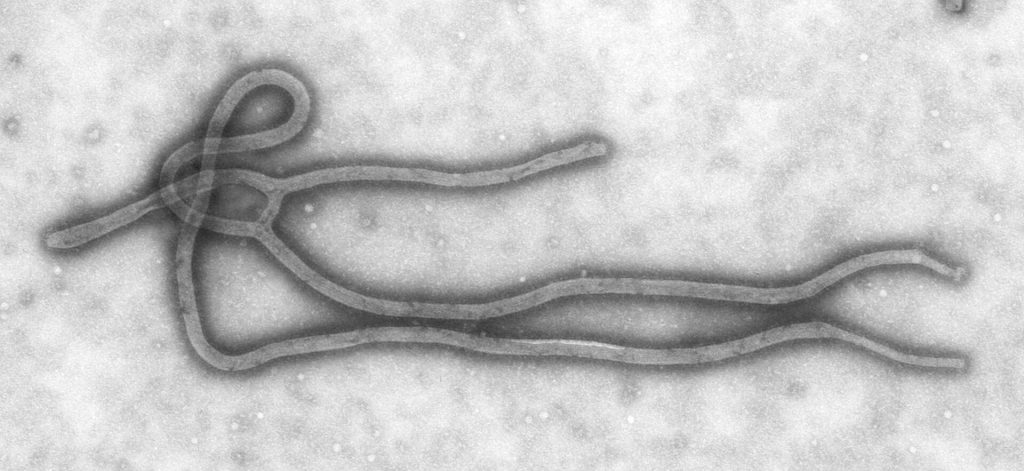
Ebola is a rare virus that can be contracted in a number of ways. It was first identified in the Democratic Republic of Congo (DR Congo) in 1976. Between 1979 and 1994, no human cases nor outbreaks were reported. However, since 1994, there have been several outbreaks across West Africa. At no point has an outbreak been recorded in the UK. The disease can be fatal, but the correct treatment can prove to be life-saving, particularly if there has been early intervention. Different medical prevention techniques have generally proved to be effective in minimising the rate of infection of Ebola. However, disease prevention is not completely effective; as recent events have shown, it is still very much possible for an Ebola outbreak to occur in 2026.
The Current Picture
Over the course of this week, the World Health Organisation (WHO) has declared that the Ebola outbreak in the DR Congo is both a ‘public health emergency and a matter of international concern.’ The outbreak started on 24 April after a nurse (who is believed to be the first case) developed symptoms. The current death toll is 139, with hundreds of others also expected to be infected with the virus, although some organisations are recording higher death tolls. The epicentre of the outbreak appears to be in DR Congo; cases have also been reported in Uganda. It seems that the patients in the early Ugandan cases were individuals who had recently been in DR Congo. For now, the outbreak appears to be centred around these two nations with no evidence to suggest outbreaks beyond DR Congo and Uganda. Among the cases reported is an American doctor who has since been transported to Germany for treatment. There is nothing at this time to suggest any kind of outbreak in Germany, at least not as a consequence of the evacuation of this individual.
What is being done to help
The Congolese people have received both national and international help in the fight against the disease, with the Congolese government sending health teams to the capital, Bunia. Furthermore, both the WHO and Doctors Without Borders have set up treatment centres and enacted other countermeasures against the disease. This includes setting up a helpline that people can use free of charge to report their symptoms. This will be crucial in ensuring that individuals get the help they need in the event that their symptoms do match those of Ebola, and will also strengthen preventative measures as patients become aware of their illness sooner. Consequently, those around them can begin implementing measures to prevent them from also becoming ill before it is too late. Doctors Without Borders and the WHO are working to educate communities across the affected areas about, and provide them access to, preventative measures.
What does this outbreak mean for the UK?
Currently, the Ebola virus does not appear to be a threat to those living in the UK. This is because it is rare for travellers to return to the UK with Ebola, and thus, there is no one to pass the disease on. In the event that Ebola is brought into the UK, the NHS already has ‘specialist centres and safety procedures’ for those impacted by the virus. These also minimise any kind of risk involving an outbreak, as in the event that someone in the UK was suffering from Ebola, the procedures to help any patients are already established, likely leading to a more effective treatment. The risk of fatalities in the event of a case of Ebola in the UK is therefore incredibly low, and an outbreak in the case of an isolated case is similarly slim in chance. Therefore, there is no reason to view the Ebola outbreak as a current threat to those residing in the UK.
Putin Visits Beijing Days After Trump Amid Deepening China-Russia Ties
.jpg)
Chaehyeon Moon
Russian President Vladimir Putin arrived in Beijing on 20 May for a highly anticipated summit with Xi Jinping, only days after Donald Trump visited the Chinese capital. With Xi hosting both the American and Russian leaders in the span of a week, Beijing was placed at the centre of two of the world’s most closely watched geopolitical relationships.
Putin’s welcome into the Chinese capital was almost identical to Trump’s, with military honours, a red carpet, and children waving flags outside the Great Hall of the People. There were also subtle contrasts. While Trump’s visit was accompanied by business executives and major American technology leaders, Putin travelled largely with deputy premiers, ministers, and heads of state-backed energy firms. Compared to Trump’s focus on trade and economic engagement, it was clear that Putin’s visit centred more on bilateral co-operation with China.
During the summit, China and Russia signed more than 40 bilateral deals covering trade, education, technology, nuclear security, and wider economic co-operation. Xi described China-Russia relations as being at their “highest level in history,” while both governments reaffirmed commitments to “good-neighbourliness” and continued “friendly co-operation”. The outstanding number of deals signed alone was enough to signal the political closeness between the two states, both of which have aligned themselves against Western-led influence and US hegemony.
However, one of the most closely watched outcomes of the summit was what did not happen. Despite repeated discussions, China and Russia failed to finalise a breakthrough on the long-delayed Power of Siberia 2 gas pipeline. The project, expected to carry up to 50 billion cubic metres of gas annually from Russia through Mongolia into China, has become strategically crucial for Moscow as it attempts to redirect energy exports away from Europe following the fallout of its 2022 invasion of Ukraine. Kremlin spokesperson Dmitry Peskov later stated that both sides had reached understandings on key parameters, but that “some nuances remain” unresolved. No completion timeline was announced.
Russia had a strong motivation to walk away with a deal on the matter, particularly as its gas exports to Europe have shrunk significantly since the start of the Ukraine war. Although Beijing signed a legally binding memorandum in September 2025 to advance the project, negotiations have reportedly slowed due to disagreements over pricing, financing, and delivery timelines. At the same time, China had appeared cautious about becoming overly dependent on any single external energy supplier.
The implications of this also point to the shifting economic relationship between the two countries. China is now Russia’s largest trading partner, while Russia accounts for only around 4% of China’s total trade. The relationship does remain strategically important for Beijing, particularly in energy and security matters, but Moscow depends on Chinese markets far more than China needs Russian exports. The unresolved pipeline issue, therefore, suggests that while bilateral ties remain strong, Beijing increasingly holds the upper hand at the negotiating table.
At the political level, strategic co-operation between the countries remains strong. During the summit, China and Russia agreed to strengthen military trust through expanded joint exercises, maritime patrols, and air patrols. Moscow also reaffirmed support for Beijing’s One China principle and opposition to Taiwanese independence. Alongside this, both governments jointly criticised what they described as destabilising foreign interference, military strikes on third countries, and actions that undermine sovereign political systems, a subtle dig at the United States’ongoing foreign operations.
As for the ongoing Ukrainian war, Xi publicly maintained the familiar position of calling for diplomatic solutions, avoiding direct criticism of the Russian invasion. However, according to CNN, some international reports suggested Xi had previously indicated that Russia may ultimately regret invading Ukraine, though this was not publicly repeated during the visit. This shows that although Russia remains a useful political and military partner to China, especially regarding Beijing and Moscow’s position against American influence and for a more multipolar world order, Beijing seeks to avoid appearing fully aligned with Moscow’s wartime agenda in efforts to maintain strong economic ties with Western powers.
Overall, hosting both Trump and Putin within days of one another showed that China appears increasingly eager to position itself not simply as a participant in global competition, but as a central actor within it.