


The charm of being a humanities student is enclosed in the endless reading lists. Yet, my TBR (to be read) is longer than all my reading lists compiled.
2021-22 were the peak years of my reading journey, in terms of quantity. My record from that time has not been beaten, and it won’t be for a long time, even if most of my waking hours for the past two years have been spent reading.
In secondary school, I read whenever I could: in the corridors waiting for the school day to begin; in form time; and at lunchtime. Of course, at home as well, even between revising for my GCSEs. But it changed in sixth form.
No longer was I reading. Suddenly, I was working, revising, or thinking about all the unending work and revision I had yet to do. Since the beginning of my degree, reading is no longer a hobby, it has morphed into my principal form of studying.
Nonetheless, I have managed to fit a few reads for pleasure in between the endless History reading lists.
The summer vacation last year is witness to me reading nearly thirty books (although the following Christmas and Easter vacations were not privy to such a strong streak).
Here are some of the highlights from my reading:
Stoner – John Williams
I read this as I was impatiently awaiting my Preliminary Exam results. Rather than dissuade the doubts I held regarding my performance, it led me to a brief existential panic. (Please be aware of possible upcoming spoilers!) It follows the story of William Stoner, who comes from a farm in Missouri and moves to the city to study at the university there. His family decides that he should study a subject related to farming, as he will inherit the family farm. His time at the university shows that he does not want to do this, as he instead changes his course to English Literature. From here on, the reader becomes the shadow that follows Stoner through his life until its end.
Stoner’s lacklustre student career, stifling family life, and constrained academic career felt like predictions of my future. I spiralled for a few days, but my stupor ended when I realised my destiny was not made, and, apart from the general strokes, Stoner and I did not have much in common. Unlike him, I am not a man, white, American, nor alive in the 20th century. Plus, my future is not yet chiseled into stone. Hence, the existential panic was short-lived and I aptly moved on.
Selection of Michael Morpurgo
Many people are familiar with Michael Morpurgo, a staple author of many school libraries. My local charity seemed to have an endless supply of his work, so each of my visits there ended in me buying most, if not all, of his books available.
These were also my reads from last summer. My first year at Oxford pushed me to resort to children’s literature to wind down from the stress. Some of my favourites include Homecoming, The Mozart Question and Mr. Nobody’s Eyes. All these embed lessons, and not just for children. Morpurgo’s works encourage the reader to question the importance of story telling, friendship between people from different backgrounds, and the respect people owe animals.
Morpurgo’s range is vast, spreading from the impact of scientific discoveries on the environment and community, to the experience of the Holocaust both individually and generationally, as well as the relationship between children and animals.
My biggest recommendation is for everyone to read a children’s book once in a while. It won’t take very long, but it might stay with you and make you reminisce about library day in primary school. Children’s literature reminds us of the virtues of empathy, inquisitiveness, resilience and openness, which adulthood can make us neglect.
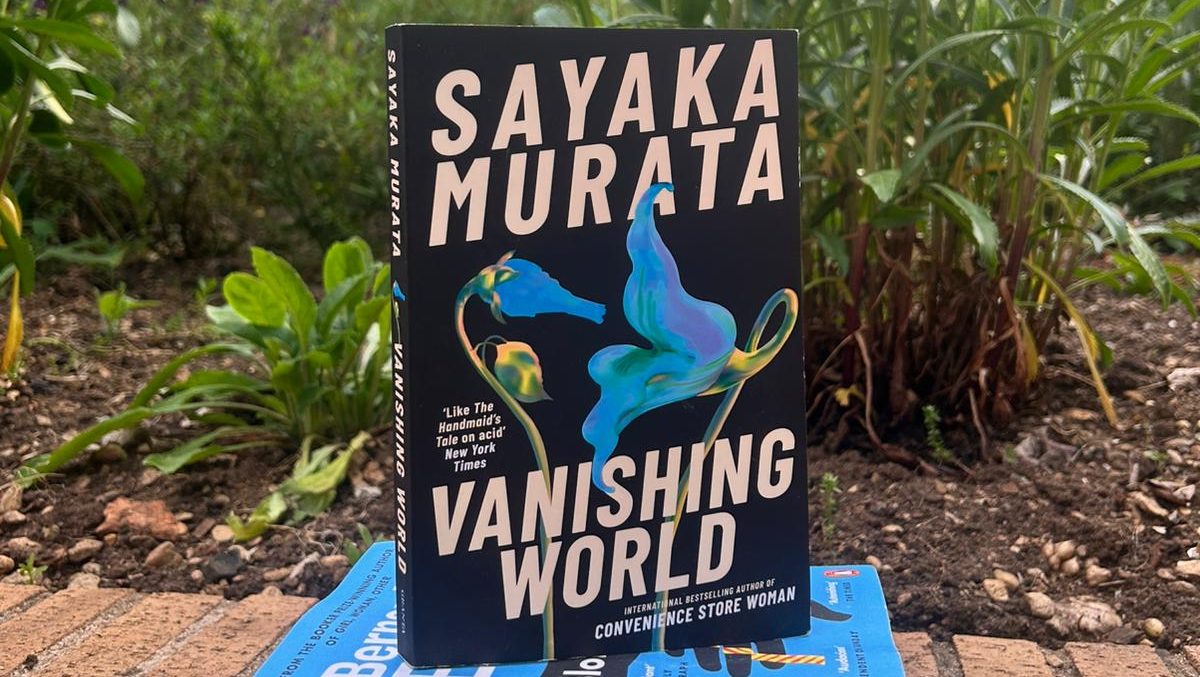
Vanishing World – Sayaka Murata
This is one of the few reads I managed to squeeze into this term. I used it as a palate cleanser, between Girl, Woman, Other and Blonde Roots, both by Bernardine Evaristo. My friend recommended it, and, since it is relatively short, I picked it up to avoid feeling fatigued by reading too much of one author too close in time.
At the end of Hilary, I had read Never Let Me Go by Kazuo Ishiguro. The former and Vanishing World are good to read in close proximity. They more or less fall into a similar genre or category, a dystopian, speculative, disturbing one. I do not wish to spoil anything about it, as it needs to be experienced first hand to feel the visceral emotions Murata planned for her readers. It felt like the book was keeping me hostage and I developed Stockholm’s syndrome, because I did not put the book down until I had finished it.
My time at Oxford has shown me that there is no good time to read for pleasure. Most of my reading in term time was done as an act of procrastination to avoid doing the reading required for my degree. The feeling of pleasure and happiness does not come from the quantity of books I read, but from the emotional journeys I walk down through my reads. ‘Quality over quantity’, a saying as old as time, fits rightfully here. If only this applied to my actual reading lists.