


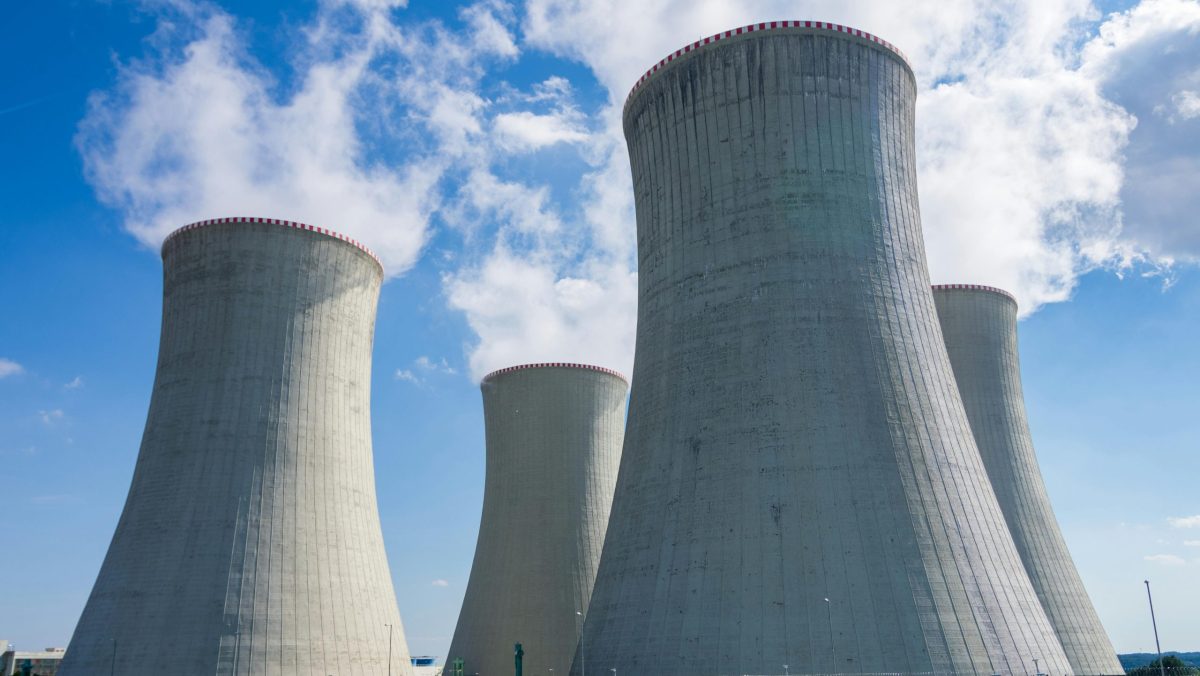
Since 2022, the start of the Russo-Ukrainian War, there is a clear drive for governments in the West to consider nuclear sources as part of their energy mix. Primarily, this is due to both the lack of natural gas imports received because of the conflict, but it also stems from the push towards Net Zero goals this decade. Nuclear energy is often perceived as a sustainable alternative to fossil fuels, without completely switching to renewable sources. Whilst nuclear energy is mostly supported by both political parties and energy companies, concerns remain regarding the environmental, monetary and human impacts that the scaling up of nuclear energy could cause.
What is Nuclear Energy?
For many, nuclear power recalls the past, with accidents such as Chernobyl coming to the forefront of people’s minds. Nuclear energy comes from the splitting of an atom, the heat released during the process is used to drive generators that make electricity. The concept of splitting atoms to generate electricity is not a new one, with the idea first developed during the Second World War. In the modern world, nuclear power claims to be the second largest source of low-carbon power, adopted by countries across the globe. The carbon footprint produced by nuclear energy is similar to that of renewables: the majority of emissions produced occurs during the construction of the plant. As countries, such as the UK, try to reduce their global carbon emissions, nuclear energy seems to be a reliable source of energy to help achieve global climate targets.
Why Are More States Turning Towards Nuclear Power?
It is clear that nuclear energy discussions have increased in the last few years. As Russia’s invasion of Ukraine triggered an energy crisis, the need for European countries to be more self-sufficient became apparent. Prior to this, Western governments were extremely dependent on Russian oil and natural gas, causing development in their own energy industries to lack. The mix of high energy prices and limited imports means that the future of nuclear power is fuelling intense debate.
Nuclear energy seems a logical step in countries split by strong political opinions. Far-right political parties, such as the AfD and French National Rally, who deny the climate crisis (so strongly oppose renewable sources) have not outwardly rejected the possibility of nuclear as an alternative to fossil fuels.
Currently in the UK, nuclear sources account for 15 percent of the energy mix, with plans to increase this figure to 25 percent by 2050. Construction started on Hinkley Point C Reactor, in north Somerset, in 2017, being one way in which the government decided to achieve this goal. Despite the political hope, concerns about the storage of the radioactive waste, ecosystem impacts and public health cast shadows on public opinion, making the energy source a contentious topic of debate.
The ‘Pros’ of Nuclear:
The U.S. Government states nuclear energy to be the “largest source of clean power” in the country. They liken the success of the power to be equivalent to removing “100 million cars” off the road. But can this triumph be easily replicated?
Closer to home, EDF Energy predicts that Hinkley Point C will provide zero-carbon electricity to around six million homes. Whilst some argue that the UK’s privatisation of the energy sector has halted past developments, EDF strongly implies that this is not the case, with the plant hoping to provide £13 million for the British economy. Whilst this seems largely positive on the surface, there are discussions whether companies, such as EDF, can claim that their energy is ‘zero-carbon’ because of the carbon intensive building processes. Despite this, the on-paper benefits that Hinkley Point will provide appear to be huge for both the energy industry and the British job market, with employment figures at the site itself reaching around 4,000.
Despite fears about another nuclear disaster, research has shown nuclear energy to produce one of the lowest deaths per terawatt produced (0.03), being lower than that of renewable sources, including wind (0.04). However, can the research be that compelling when recorded disasters are still in living memory?
The ‘Cons’ of Nuclear:
The 1986 Chernobyl nuclear accident is one that is often brought up when concerns over nuclear energy arise. Over 30 people died directly because of the accident at the plant itself as well as a similar number passing away shortly after due to Acute Radiation Syndrome. The wider effects of the incident must also be noted, with the deposition of radioactive materials contaminating many parts of the European continent. Some may argue that because of technological improvements, this will no longer pose a threat. Yet, when Russian forces took control of Chernobyl in 2022, the control levels of gamma radiation dose rates were exceeded, causing the site to be returned to Ukrainian personnel within a month. There is also still a lack of knowledge about a safe place to store the radioactive waste, raising questions about the safety of modern nuclear operations.
The environmental impacts of nuclear energy is also a topic that frequently resurfaces. Organisations, such as Greenpeace, argue that money could be better invested in truly clean energy, stating that nuclear power isn’t a plausible alternative to renewable energy sources because of threats to surrounding wildlife. For example, the Wildlife Trust has questioned the risks posed to the Severn marine ecosystem because of Hinkley Point C. EDF Energy have been controversial in their implementation of environmental protection measures, announcing in 2021 that they will not install the Acoustic Fish Deterrent and would instead introduce measures to compensate for the loss of fish life, one of which being local community involvement. With the Severn Estuary being a wetland of international importance, the motives behind EDF’s lack of environmental protection have been questioned, as well as the continuation of the plant itself.
To further this, the monetary cost of a nuclear plant is extortionate. Hinkley Point C is set to cost £46 billion for construction alone, being called the “most expensive object on Earth”. With challenging market conditions, there are fears that nuclear energy would not be able to compete. Is something as economically precarious as this the right choice under current economic conditions?
Depending on who you ask, you will always receive different views about the role that nuclear energy will play in the future. Will it be sustainable? More information needs to be obtained about the impacts of the process.
The role that Hinkley Point C will play in the UK’s energy mix is crucial to seeing whether nuclear power will be a success, or whether the perceived negatives will become too much for the plant to be supported in future years. No matter who you ask, it is clear that nuclear shouldn’t become the sole energy reliance, with the belief that it shouldn’t deter away from renewable investment becoming more prominent. So, will projects like Hinkley Point C be a huge success, or be remembered as yet another nuclear disaster?