


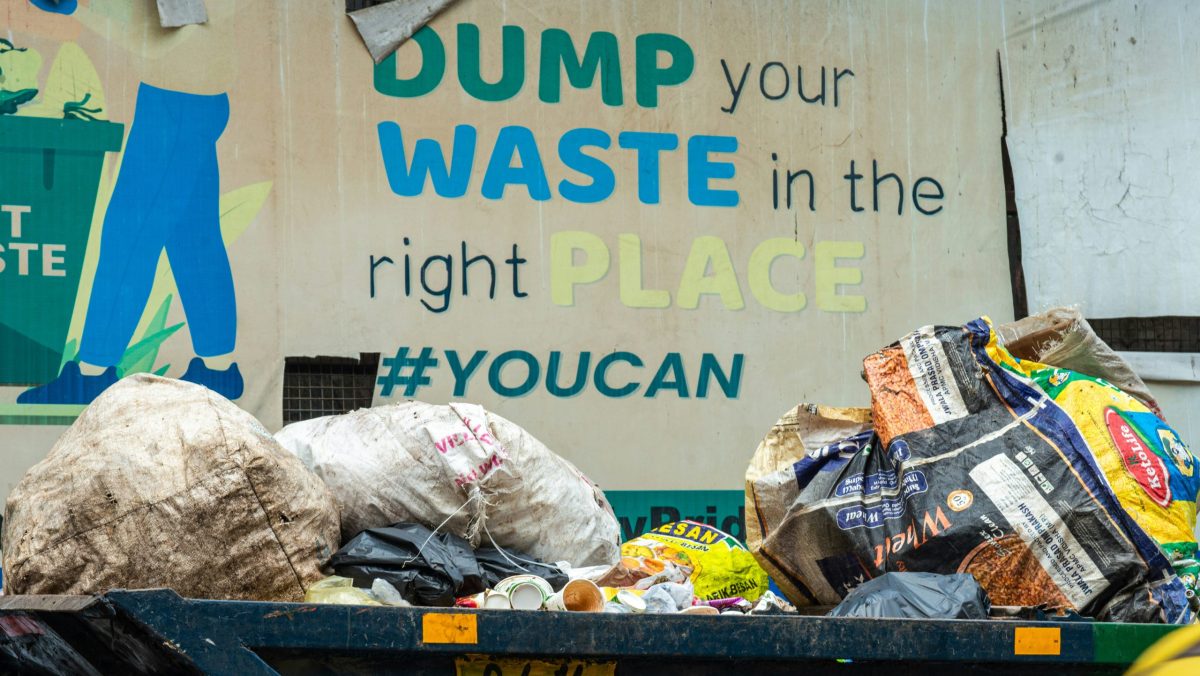
On 21 November 2025, between the river Cherwell and the A34, the Environmental Agency declared the presence of a 150m (490ft) long and 6m (20ft) high mound of waste a “critical incident”. The mammoth pile is made of processed domestic waste, shredded plastics, polystyrene, tyres and other household items.
The issue has reached national attention through the BBC’s reports and the Prime Minister’s Questions on Wednesday 25 November, during which Keir Starmer declared that “all available powers will be used to make those responsible pay for the clean-up.” Furthermore, a petition by Friends of the Thames, demanding emergency funding to help the clean-up, has reached over 14,000 signatures. This has become ever more crucial as the river Cherwell has risen due to heavy rain, particularly on the weekend of 16-17 November. The BBC described the Cherwell as “lapping against the 490ft trash pile,” with the river level having risen by 1.2m. According to data retrievable from GetTheData, the current danger of flooding in this particular part of Kidlington is high.
In order to prevent an “environmental catastrophe,” something must be done. Accordingly, Oxfordshire MP, Calum Miller, has urged ministers to review the government’s response to waste crime, arguing for a directive to be issued like one in May 2024 for the clearing of thousands of tonnes of illegally dumped waste from Hoads Wood, Kent. In that case, the Environment Agency was ordered to clear the site, with a written update given every two weeks, as demanded by Steve Barclay, the Secretary of State for the Environment at the time. But Environment Agency officers have known about the Kidlington site since July with little action to clear it. EA officers attended the site at the beginning of July 2025 after the report of the waste tipping, and a cease-and-desist letter was issued to prevent illegal activity. Despite the arrest of 39-year-old from the Guildford Area on the 25 November 2025, reported by Sky News, who has now been released, it is perhaps more interesting to question how the pile remains, or even better: how did it come to exist in the first place?
The Effects Of and Regulations On Fly-Tipping
Fly-tipping is the illegal dumping of waste in unauthorised places. The Anti Fly-Tipping Association (AFTA) detailed the environmental impacts of illegally dumped waste: soil and groundwater contamination due to hazardous materials and chemicals; harm to wildlife and livestock through injuries or poisoning; air pollution and increased flood risks through blocking waterways and clogging drainage systems. These impacts are also financial, and, particularly costly for the private sector. In the year 2018/2019, criminal activity related to waste management is estimated to have cost England £924 million, with fly-tipping like the Kidlington waste mound having the greatest overall financial impact. As fly-tipping is consistently growing, the inefficiency of mechanisms designed to prevent illegal waste disposal are becoming clearer.
English law relies upon two acts to prosecute illegal waste disposal: the Environmental Act, 1990 and the Clean Neighbourhoods and Environment Act, 2005. Of particular importance, Section 33 of the Environmental Act, 1990 defines the depositing of waste without a permit as illegal. In terms of consequence, the Clean Neighbourhoods and Environment Act, 2005 increased the maximum available fine for the offences (under Section 33 of the Environmental Act, 1990) from £20,000 to £50,000 and raised the maximum term of imprisonment for non-hazardous waste disposal to 5 years (the same for hazardous waste). However, despite an increase of 6% in fly-tipping incidents in England in from 2022/2023 to 2023/2024, the total number court fines decreased by 8 percent. Though this data could point to a decreasing severity of fly-tipping, the reality is that the likelihood of conviction is becoming more remote, with the latter being what Michael Watson argued in 2005 in Environmental Offences: the Reality of Environmental Crime. He also highlighted that when prosecuted, offenders’ fines are often much too low to deter future offending.
Beside criminal prosecution, an “environmentally-friendly” market mechanism was implemented by the Government in 1996. This was the landfill tax, currently at a standard £126.15 per tonne, charged for waste disposal in a landfill. Yet, the landfill tax may actually encourage fly-tipping. It might have been more expensive to dispose of the Kidlington waste in a landfill if it was over 400 tonnes (based on the £50,000 fine outlined in the Clean Neighbourhoods and Environment Act, 2005). This may have caused a shift from legal to illegal avenues for waste removal as the economically rational thing to do is to avoid the more expensive landfill tax. Furthermore, the revenue derived from the landfill tax is not used to tackle the costs of increased fly-tipping, leaving a funding gap for clearing up the increase in fly-tipping.
The Kidlington Waste pile will remain one of the many-to-come case studies of the inefficient, ineffective structural mechanisms regulating illegal waste disposal. The increase in sentencing since 2005 and the maximum fine being increase to £50,000 are welcome measures. They are however insufficient for larger waste loads, like in Kidlington. The pile exists because of inconsiderate, economically rational decisions, yet it is clear that the pile remains because of a slow response from the Environmental Agency, which has known about the pile since July. Because of poor regulation, it’s cheaper not only to let it stay there, but to let more piles like this grow.