

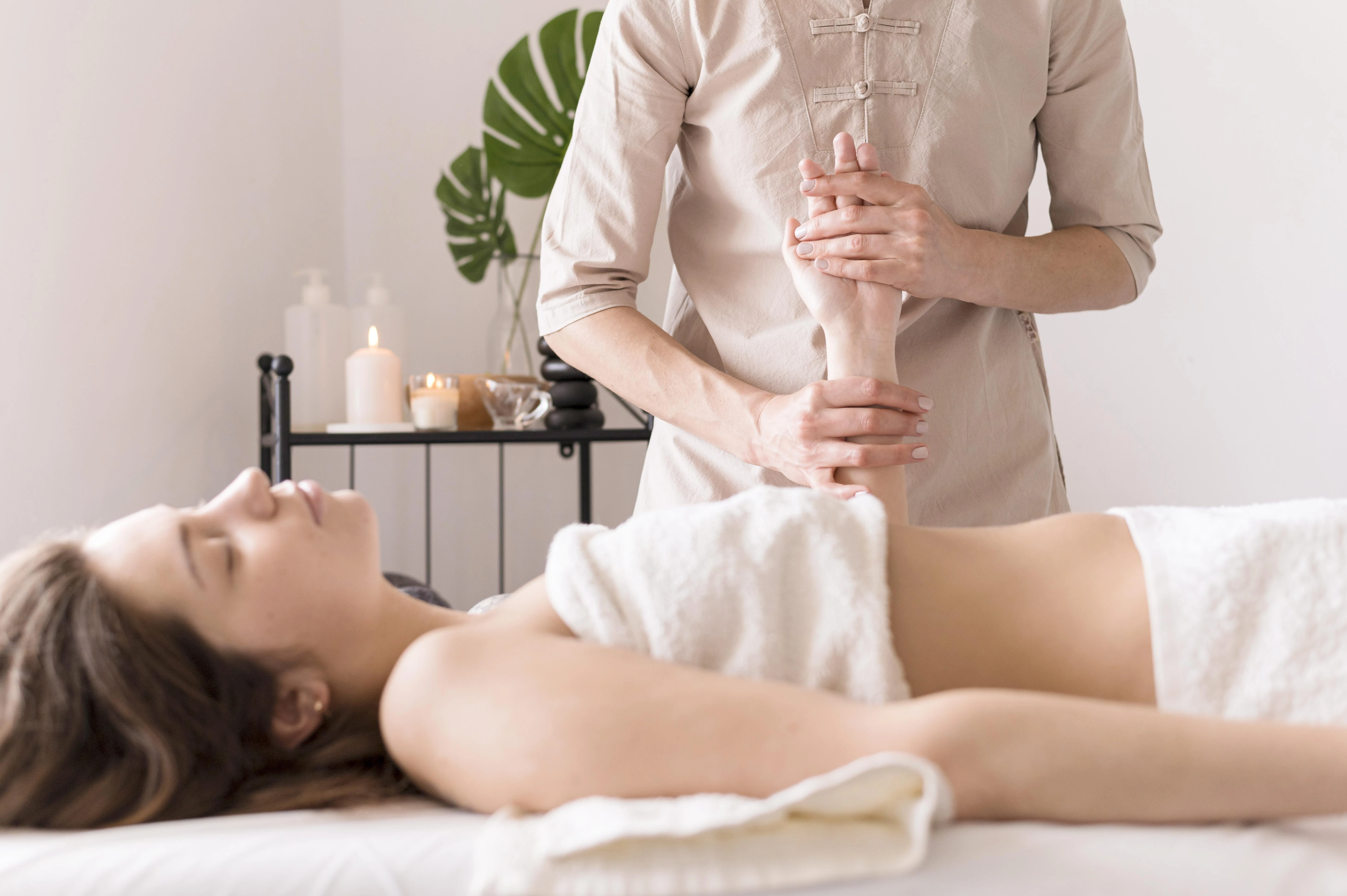
Modern life moves at a pace that the body was not designed for. The nervous system — evolved over millennia for a world of physical exertion, rest, and genuine quiet — now operates under conditions of chronic low-grade stimulation that leave almost no room for the kind of deep, settled presence in which real healing can occur. Therapy sessions are fifty minutes. Massage appointments are an hour. Everything is optimised for efficiency and measurable outcome. And meanwhile, the body waits — patient, persistent, carrying what it carries — for conditions that rarely arrive.
Authentic Tantric bodywork operates according to a fundamentally different logic. It is not efficient. It does not chase outcomes. It creates space — genuinely unhurried, genuinely attentive space — in which the body’s own intelligence is invited to do what it has always known how to do. This quality of time and presence is not incidental to the work. It is the work. And it is, for many people, the most unfamiliar and ultimately the most transformative thing about it.
The Particular Language of Touch
Touch communicates directly with the nervous system in a way that bypasses language entirely. Long before words, the human organism learned to read the quality of contact it received — its pace, its intention, its quality of attention — and to organise itself in response. Touch that is rushed or purposeful in a narrow sense produces a certain kind of response: the body mobilises, remains alert, stays in a mode of transaction. Touch that is slow, present, and genuinely without agenda produces something entirely different: a gradual settling, a deepening, an opening of layers that remain inaccessible when the system is in any degree of activation.
This is the register in which skilled Tantric bodywork operates. The practitioner’s touch is not applying a technique to a passive recipient; it is entering into a conversation with a living system — listening through the hands, tracking the subtle shifts of breath and tissue response, following rather than leading. The result, for the person receiving this quality of attention, is often an experience of being genuinely met in the body that is rare enough to be, in itself, profoundly moving.
Breath as the Bridge
If touch is the primary language of Tantric bodywork, breath is its grammar. The Tantric tradition understood centuries before modern neuroscience confirmed it that the breath is the one physiological process that operates both consciously and unconsciously — and that intentional changes in breathing produce direct, immediate changes in the state of the nervous system. Where the breath reaches, sensation follows. Where the breath is restricted, experience is truncated.
Throughout a session of Tantric bodywork, the practitioner works with the client’s breath continuously — not imposing a pattern, but inviting expansion, noticing where breath stops short, gently encouraging it deeper. For many clients, the experience of breathing fully into the belly, the pelvis, the chest simultaneously — without holding, without restriction — is itself a significant event. Something releases. Something that was being kept in place by the simple act of not fully breathing finds it can move.

Two Decades of Serious Practice
Those seeking this quality of work in the United Kingdom will find it at Tantric Therapy London, where Tantric Massage has been offered as a serious therapeutic practice since 2002. Established long before Tantra became a commercial phenomenon, the practice brings over twenty years of dedicated experience to this work — with women dealing with sexual difficulties, with individuals seeking deeper embodied aliveness, and with couples exploring the Tantric dimension of their relationship. The practice operates within a clear professional and ethical framework, entirely separate from the adult market, and with a thoroughness of consultation and consent that places the client’s wellbeing at the centre of every session.
What Unhurried Attention Produces
People who have experienced effective Tantric bodywork often struggle to describe what changed. Not because the change was subtle — frequently it was anything but — but because it occurred at a level beneath narrative. Something in the body reorganised. A quality of aliveness returned to areas that had been quiet. A chronic holding that had been so familiar as to be invisible became, suddenly, optional — and then, over time, absent.
This is what unhurried, skilled, genuinely present therapeutic touch produces when the conditions are right: not the resolution of a problem from the outside, but the restoration of the body’s own capacity to find its way back to ease. The Tantric tradition called this the natural state — the condition of unobstructed aliveness that is the body’s birthright, and that most people have simply forgotten is available to them. The work of authentic Tantric massage is, in the end, nothing more or less than the art of helping people remember.