

Investing in an orthodontist course can represent one of the most viable and financially advantageous ways to increase your proficiency as a dental professional, improve your practice’s reputation amongst local patients, and expand on the services you are qualified to provide. A diploma in Orthodontics and Dentofacial Orthopaedics can be more than an opportunity to enhance your skills as a dentist. It can represent a way to achieve the highest academic and professional standards in your field and obtain the ROI you always expected from the services your practice provides.
Why invest in orthodontist training courses? Quite simply, such year-long programs are the only way to increase your revenue, stay competitive, expand on your skills, and improve the patient care you are able to provide in your practice. Yes, you are already skilled enough, as becoming a dentist in the UK is far from being a walk in the park. But it never hurts to specialise in a particular subdomain of the dentistry field.
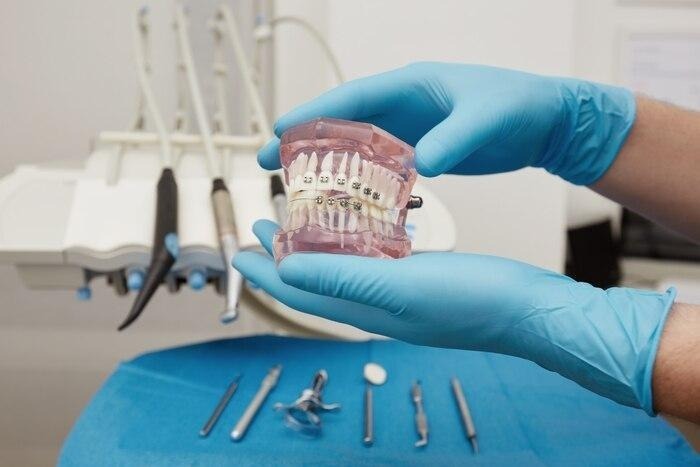
An orthodontist course can help you learn techniques that alleviate incorrect bite alignment. Moreover, you will learn how to apply fixed braces, clear aligners, perform interceptive orthodontics for children and adults alike, and deal with post-treatment care. How much will a course like this cost? Just £9,995, which, while it’s a lot of money, is also a sum that realistically, you should recoup in just a few weeks, with a new influx of patients.
A Development of Our Times
Crooked teeth are no longer as acceptable in a professional setting as they were twenty or thirty years ago. Nowadays, even if we don’t exactly want to admit it, a significant percentage of our avenues for professional development are influenced by the image we project at work. We want to look our best, and for this reason, orthodontic treatments are now looked upon as an investment in our career trajectory. In the UK, in 2026, around 25% of all orthodontic patients are adults, which is a departure from the single-digit percentages encountered before the 90’s.
Likewise, web searches for terms such as “clear aligners” have risen by more than 60% since 2022. As reported by the British Orthodontic Society, around 70% of the dental practitioners in our country have seen a sudden and persistent rise in the number of orthodontic patients over the age of 18. Worldwide, the demand for top-quality orthodontic treatments is rising, and nowadays, there are plenty of adults who never got braces as children, who now consider orthodontic treatment plans simply as a way to expand on their professional development.
The Field Is Changing
Top-quality orthodontist training courses are necessary not just because they can give a boost to your income, but also help you expand on the services you provide to patients. They can also be the only feasible way to gather the necessary hours for the completion of your continuous professional development. Out of all the medical fields, dentistry has probably seen the highest number of positive changes in the last couple of years, which is, of course, great news for patients, but hard to keep up with for dental professionals.
The integration of AI in treatment planning, the increased utilisation of digital scanners and the rise of clear aligners have represented a departure from the orthodontic training provided in the UK’s dental schools ten or fifteen years ago. The field has moved on, and the only way to keep up with the modifications happening in orthodontics is to invest in your professional development as a dental technician.
What Are the Financial Considerations of an Orthodontist Course?
An orthodontist training course, while not exactly free, can represent a robust financial investment, as the increased revenue generated by your expanded services could, in many cases, make it so the costs of the program are recouped in a matter of weeks after you start incorporating orthodontic treatments into your practice’s catalogue.
Yes, the costs of a PG diploma in Orthodontics & Dentofacial Orthopaedics will hover around the £10,000 mark. But you must also look at the potential expansion of your total revenue. Metal braces, in the UK, usually start at a bit over £1,500, while clear aligners, depending on complexity, can, in many cases, require an investment of more than £4,000.
Orthodontist Training Simply Makes Sense
Yes, you need to consider miscellaneous expenses, the costs associated with staff salaries and the materials used. However, at an estimated cas e value of £3,000 and a profit of at least £1,200 per case, with only 10 new patients per month, you are looking at a profit estimate of at least £12,000. In only ten cases, you will fully recoup the total costs of the investment in the orthodontist course.
Orthodontics are one of the highest-value dental treatments, and, realistically, most of your patients will require follow-ups, which will add up. Even at a net profit of only 30% of the total treatment costs per patient, if you have at least 30 new orthodontic patients per year, you should gain around £30,000 in net profit from orthodontic treatment plans alone.
It’s The Future of the Dentistry Field
The increased market demand for orthodontic treatments makes ROI enhancements more likely, and since you will no longer be forced to refer your patients to external specialists, you will also increase your patients’ retention, which will increase your revenue indirectly.
In the dentistry field, orthodontist training provides one of the most efficient and transparent avenues for prolonged ROI increases. People simply want to improve their smile, fix crooked teeth and make it easier to stop dental issues before they transform into situations that require specialised help.
But orthodontic treatments are not cheap, and are not exactly fast. No matter how we try to spin it, orthodontics looks to be the future of the dentistry field and they sit at the forefront of present-day medical innovation. So, wouldn’t it make sense to take advantage of the increased ROI of orthodontic operations and invest in an orthodontist course in order to further your educational development as an orthodontic professional?