
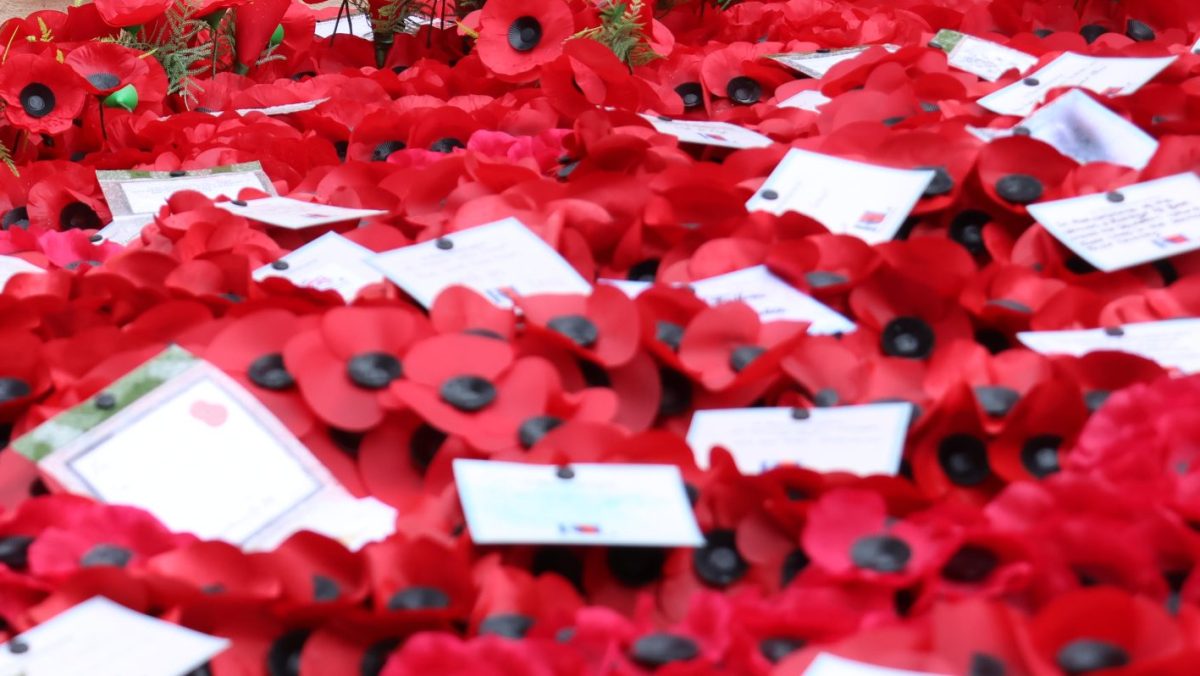
It is the 11th of November again, the date when the guns fell silent in 1918, when an armistice was signed in France marking the end of more than four years of devastating conflict.
This is why we all remember the war on November 11th with an artificial red poppy to commemorate the military personnel who died. But are they the only ones who suffered? Is this the only thing the poppy represents? And shouldn’t we all do more than just ‘remember’?
I did not wear a red poppy on November 11th.
Instead, I decided to wear the white poppy. I wear it to remember all the people and all the animals who have suffered in wars everywhere.
The white poppy is a symbol for remembering all victims of war, not just some. I come from a long line of Welsh conscientious objectors who claimed the right to refuse to perform military service. Today, we all command the right to voice our opposition to the government’s involvement in international conflicts and to refuse to serve. However, over 100 years ago, conscientious objection meant imprisonment. In the First World War, there were over 900 men from Wales who objected to fighting as a matter of conscience, and, by refusing conscription in 1916, many were court-martialled and sent to prison for their beliefs; some even died due to the conditions in which they were held, their stories hidden, forgotten.
There are more stories than just a red poppy. Therefore, we should not only remember those who fought despite their fear, but also those who had the courage and bravery not to fight. We should also remember those who are excluded from the mainstream, such as refugees and victims of colonial conflicts. All the soldiers that the colonies of the British Empire made to fight. The soldiers who were forced to fight for Britain in the First World War from the Punjab region of India. Forgotten. The 200,000 men who were recruited from West Africa, and so many more. Forgotten.
The red poppy has become a symbol of the British Empire’s inability to take responsibility, to address its crimes and atrocities. A justification of present wars and past actions of the British Armed Forces.
We should not only be remembering past wars, their horror and the sheer destruction they caused, but also using our remembrance to challenge war and practise peace. We should and must challenge the glorification of militaristic imperialism, the celebration of the atrocities committed by the military, and the soldiers who fought to preserve the empire. Are these causes to be celebrated?
Remembrance of war should serve as a reminder of the atrocities that should never happen again, but also of the many conflicts continuing to happen all across the world, affecting fellow human beings right now.
As a pacifist, it is not enough to just remember, for, as Benjamin Zephaniah stated with his favourite saying, “there is no way to peace, peace is the way”. We must collectively take action to work towards a world where there is no war and there exists only peace.
Peace is not only the absence of war. Peace is action. Peace is everyone working towards securing a world in which harmony exists. In a time like now, when a genocide is being live-streamed to the whole world, and conflicts are still happening all around us, the white poppy and what it represents remains of the utmost importance.
So I implore you to wear it, to consider it, and not only to remember military personnel, but also to think of all those who suffer. Not only to remember, but to take action and practise peace, so that we can one day say, “never ever again”.