
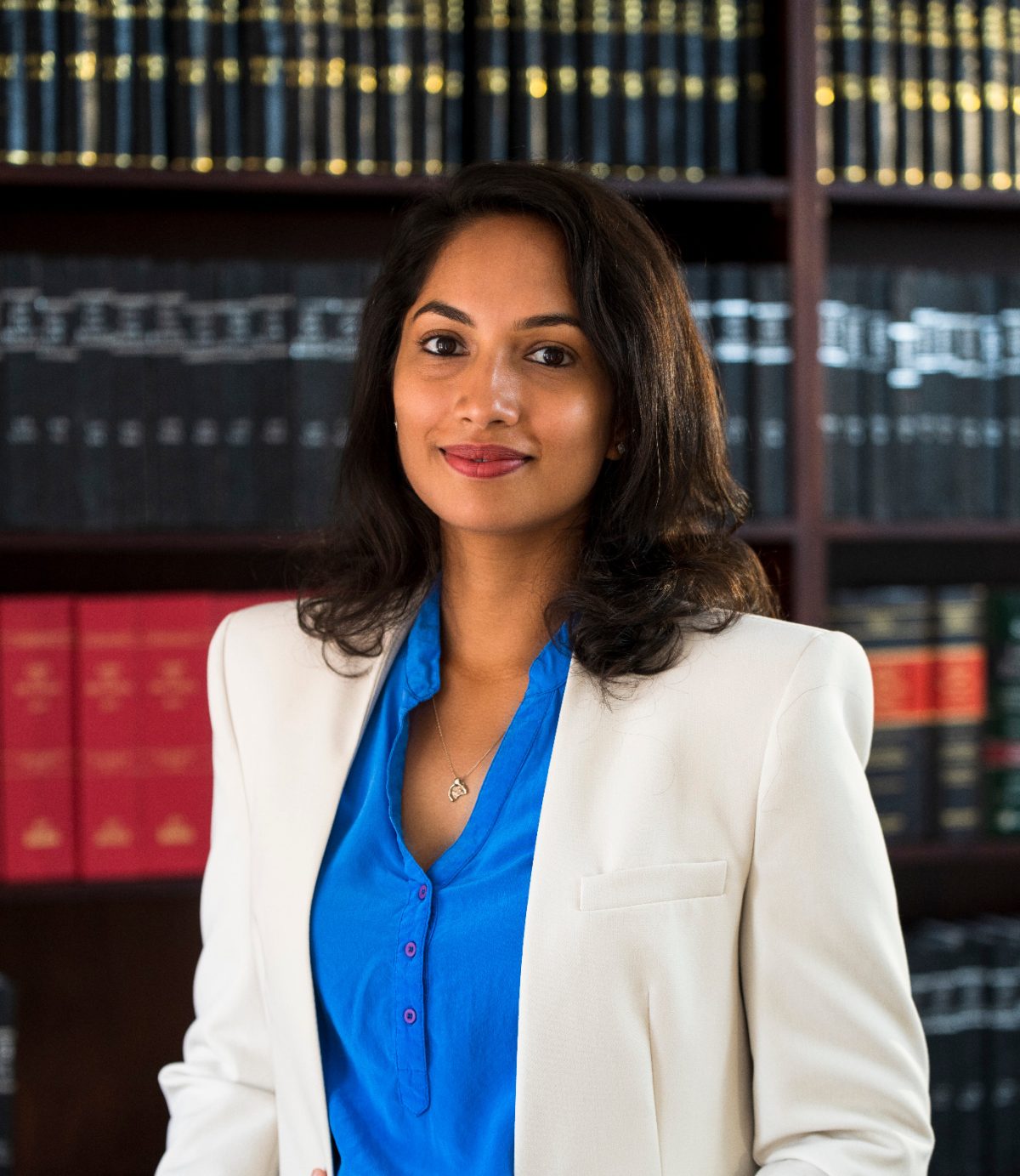
After hearing her speak on her research last term, I had the privilege of talking one on one with Shamara Wettimuny, historian and political analyst who is currently completing a Junior Research Fellowship at The Queen’s College. Her area of research is the 1915 anti-Moor pogrom, a major outbreak of violence against the Muslim Moor minority in British-ruled Sri Lanka. Her interest in this event sprang from working on issues of contemporary ethno-religious violence and discrimination at a Sri Lankan think tank. A historian by training, Shamara decided to explore the roots of the modern conflict. As I will discover by the end of our conversation, this insistence on the importance of digging deeper to understand the world around us is the backbone of her work.
To understand more about her attitudes towards history, we begin by talking about her recent area of study. Shamara’s research is set during British colonial rule in Sri Lanka, a period which one must approach with a strong awareness of the inequality and power dynamics of the time, especially when dealing with archival material. Shamara mentions Ann Stoler’s theory of reading ‘along the archival grain’, emphasising the importance of acknowledging silent voices in the archives, which are very often those of women and minority communities. While working in the archives in Sri Lanka, Shamara very quickly realised the alarming absence of these voices,which led her to turn towards alternative sources, including community and private collections as well as oral history interviews, a practice that was entirely new for her. “It’s a very specialised endeavour,” she expresses. “And you have to be really careful. It’s fraught with its own kind of limitations.” Shamara describes her process of visiting a series of mosques that had been targeted during the violence in 1915 in order to gain a greater understanding of the events which had taken place, and fill in some of the gaps she had discovered. Before this could be accomplished, however, many of the people she first spoke to either had no recollection of the anti-Moor pogrom, or were actively dismissive, unwilling to discuss matters that seemed too far in the past to have any bearing on the present. Shamara admits her initial disappointment at these results, yet is also sympathetic:
“I think there might have been a kind of pragmatism in choosing to leave all that unhappiness and vulnerability and insecurity behind, in terms of the violence they had experienced and might possibly experience in the future. They’re thinking: we need to survive; we need to be able to live here, and it’s done; it’s settled.”
However, Shamara was eventually able to access living testimonies. In one of her final interviews, for example, the trustees of the mosque were in fact the grandson and great-grandson of the trustee in 1915. Those who were able and willing to share stories were very keen to do so, expressing their frustration with the fact that formal histories tended to be one-sided and omit their experiences. Importantly, while female voices were often unrecorded in written material, it was in the spoken word that they emerged. Her interviewees had all inherited stories through their female line, who had kept the family memories alive.
Apart from her own historical research, Shamara has championed the practice of a critical and inclusive history for other academics in Sri Lanka, who do not always have the opportunity for academic exchange. Methods of education and the narratives told to students can vary greatly across the country with little awareness or acknowledgement of these differences; people in the North and in the South will hold different opinions on what ‘real history’ is defined as. For Shamara, this idea of a ‘real history’ is something we need to entirely move away from. Such a concept can never actually exist, and can certainly never be agreed upon, especially in a post-war country like Sri Lanka.
Aiming to break down such close-minded ideas, Shamara has helped to organise collaborations between junior lecturers from universities across the country, who often work so much in silos that they are not aware of each other’s research. The talks conducted during these events range around national issues, including the early settlement of the island of Sri Lanka, a deeply contested topic of ‘who got here first’. Academics can hear each other’s opinions as well as acknowledge different ways in which the same topic could be taught. For Shamara, these collaborations offer an opportunity to advance nuance, connection, and inclusivity.
Shamara’s work also extends beyond the sphere of pure academia. She tells me about her experience of ‘Aragalaya’, a series of anti-government protests that took place in Sri Lanka in 2022, on a scale that had never before been witnessed. During the protests, a new hunger for a greater understanding of Sri Lanka’s history became increasingly palpable. The protestors, made up in large part by Sri Lankan youth, many of whom were protesting for the first time, wanted to know what steps and what decisions had led to the conflict their country was struggling with. Shamara expresses with warmth her admiration for the efforts of this movement. The young protestors brought about the establishment of both a people’s library and a people’s university at the main protest grounds in Colombo. Inspired by these efforts, Shamara contributed her own knowledge, along with other academics, through public teach-outs organised for the protestors. The teach-outs and the communities built resulted in the creation of Shamara’s not-for-profit organisation, Itihas, which aims to teach a more inclusive and critical history beyond the school syllabus by focusing on non-state alternative history education.
Much of Shamara’s work has had to either skirt around or act without government support. Engaging with authorities at the National Institute for Education in Sri Lanka was largely ineffective because of a lack of bureaucratic and political will to enact formal change. “History”, she states, “is always political.” She describes her hesitancy when first using archival material in Sri Lanka to fully disclose her area of research, mentioning stories of historians being monitored and foreign academics having their visas rejected. However, with the new political and academic climate of the country, this situation has begun to improve, allowing academics to investigate the truth of Sri Lankan history, and share their discoveries with those who have a right to know and make use of this knowledge.
What comes through most emphatically as Shamara talks about her projects is her insistence on the importance of historical awareness for dealing with the problems of today. Shamara puts it quite simply: “You just cannot solve problems today without an understanding of the past. And this isn’t just the immediate past”. To understand how countries and communities have ended up where they are, we need to put things in their much broader context, which can mean decades or even centuries of history. Shamara brings up the Iranian protests happening today as an example, and the lack of historical awareness that has caused many to advocate for the return of the Pahlavi regime.
Yet she also draws my attention to the importance of history as a form of connection. Issues that we may view as intrinsically modern can often be better understood when we remember that no public movement or trend is completely new; there will always be parallels to learn from. While working on a project covering anti-Muslim discrimination, Shamara noticed parallels between what was being said on social media today and what was being printed in vernacular newspapers during the anti-Moor pogrom of 1915. “The medium may have changed from print to X or Facebook, but the message remains eerily familiar”.
An awareness of historical continuity allows for a more nuanced viewpoint on how we might begin to counter issues of hate speech. Governments around the world, including in Sri Lanka, have resorted to strict social media regulation or official blocks; without a platform, the problem is expected to go away. However, what is clear from a quick glance at history, is that social media has not created these issues. These tropes, stereotypes, and tendencies towards disinformation have been around for centuries, especially in the case of religious and racial discrimination. Even the speed granted by social media for information dissemination finds its parallels in the mass movements achieved in 1915. A rumour, for example, that people were coming to attack a temple would produce a defensive mob, which would become offensive as soon as no assailant turned out to be present. Violence could spread around the country within days, and even illiterate communities were able to communicate through verbal and nonverbal signage. Any opinion, in any time, will make its way to the public ear, and can always have a decisive impact no matter the platform used.
Shamara’s work reminds us of the need to go to the root of the problem, and question not only how we can contain hateful speech but how we can change it. Unsurprisingly, the answer is education. Reforming and broadening historical education must be done not only for its own sake, but because it is the only way we can truly understand the world we have to deal with today, and attempt to counter opinions that arise from ignorance. It’s a message that we can all learn from as we grapple with our surroundings, and one that can only foster growth and acceptance in our increasingly polarised world.
On the future of historical education, Shamara is ultimately hopeful. “There’s a long way to go. It’s a long history of teaching, and a certain type of history that needs to be undone, but I think we’re headed in the right direction. It does seem to be on the cards”.