

Readers are already voting with their eyes. In one blind test, fantasy fans picked an AI-written tale over work by award-winning authors, proof that these tools can charm real audiences.
That’s why we spent three weeks stress-testing eight “plot-bots.” We pushed each one through multi-chapter projects to see which models remember eye colour, respect your tone, and stay coherent scene after scene. In the end, five platforms earned a spot on our list—you’ll see exactly how we scored them and which one matches your writing style, minus the marketing fluff.
Ready to co-write with confidence? Read on.
How we tested

We treated every platform like a demanding co-author, not a showroom gimmick.
First, we reviewed the top 15 Google results for “AI plot generator.” Those articles praised everything yet skipped key facts such as context size and privacy policies, so we built our own scorecard to fill the gaps.
Then we spent hands-on time with eight contenders. We asked each one to draft multi-chapter arcs, noted whether it remembered a character’s eye colour, and logged every refusal or tangent. We also pulled data from pricing pages, patch notes, and update logs to be sure you are reading 2026 specs, not leftovers from 2025.
Real writers kept us honest. We scanned Reddit, Discord, and Twitter for candid feedback. If dozens of users reported that a tool forgets names after 3 000 words, we tested until we could confirm or refute the claim.
Finally, we scored each platform against the seven criteria storytellers care about:
- Narrative coherence: 25 percent
- Character consistency: 20 percent
- Creative control: 15 percent
- Feature depth: 15 percent
- Ease of use: 10 percent
- Pricing value: 10 percent
- Privacy safeguards: 5 percent
Each category used a one-to-ten scale. We multiplied the rating by its weight and summed the results for a final score. If two tools tied, an extra factor such as an active user community tipped the balance.
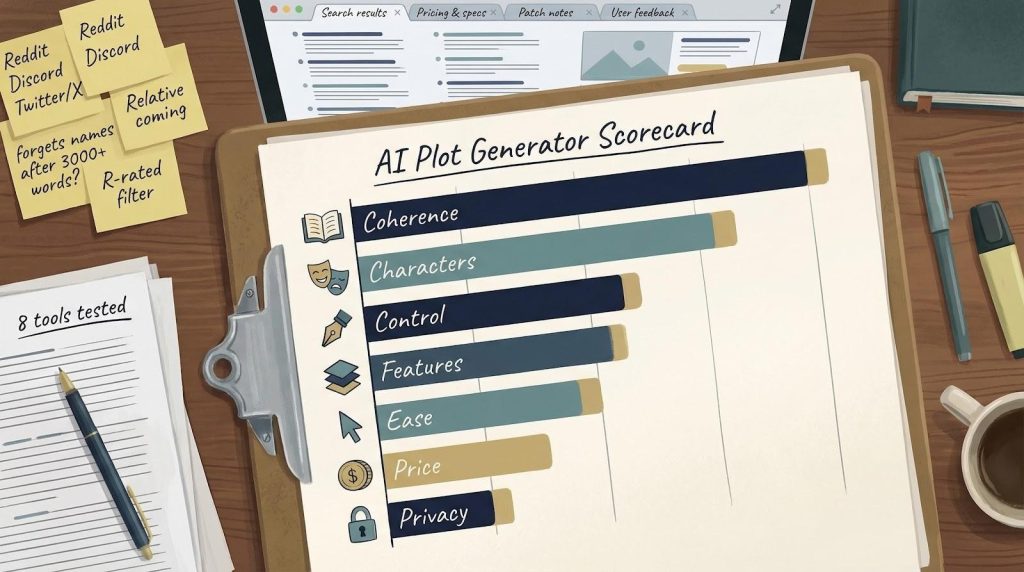
The outcome is a ranking you can rely on: evidence based, privacy aware, and priced for real-world budgets.
DreamGen: a story bible that keeps novel-length projects on track
DreamGen is built around what it calls the Scenario Codex, a living story bible where you define plot, setting, writing style, and multiple characters, each with their own personality, goals, and relationships. Pin down those details before writing a single paragraph, and the AI threads them through every scene. The rogue you introduce on page two still hates authority on page two hundred.
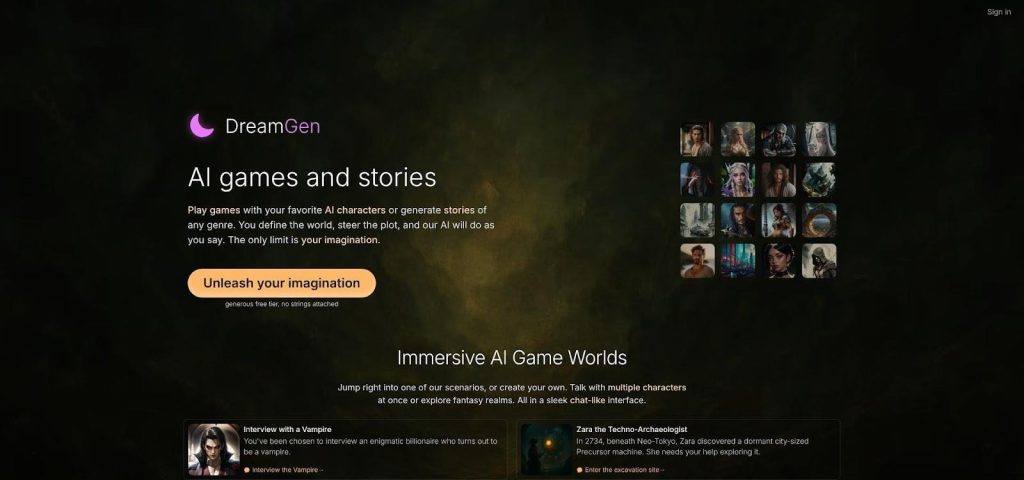
DreamGen Scenario Codex interface screenshot for AI plot generator
That depth matters for coherence. The Pro tier at https://dreamgen.com/ offers a 30,000-token context window (roughly 20,000 words), so the model can reference chapters you wrote last month without losing the thread. Free-tier users get 5,000 tokens of context and about 2,000 messages per month with daily credit refills, enough to test a multi-chapter project before committing to a paid plan.
Multi-character support sets DreamGen apart from most plot generators on this list. Drop several AI characters into the same scene, each with their own voice and motives, and watch them interact while you steer the plot with inline instructions. You can also edit, delete, or add any message in the conversation, including dialogue from other characters, giving you full control over every line of the narrative.
DreamGen offers two distinct modes: a chat-based Role-Play Mode for interactive dialogue, and a Story Mode with a text-editor interface for narrative prose. The Scenario Wizard helps you go from a loose idea to a populated world by generating plot hooks, character profiles, and setting details you refine. In our testing, we did not encounter filter-related interruptions, which kept writing sessions flowing without breaks in momentum.
NovelAI: privacy-first prose with a photographic memory
If DreamGen is a writer’s playground, NovelAI feels like a private study lined with locked filing cabinets.
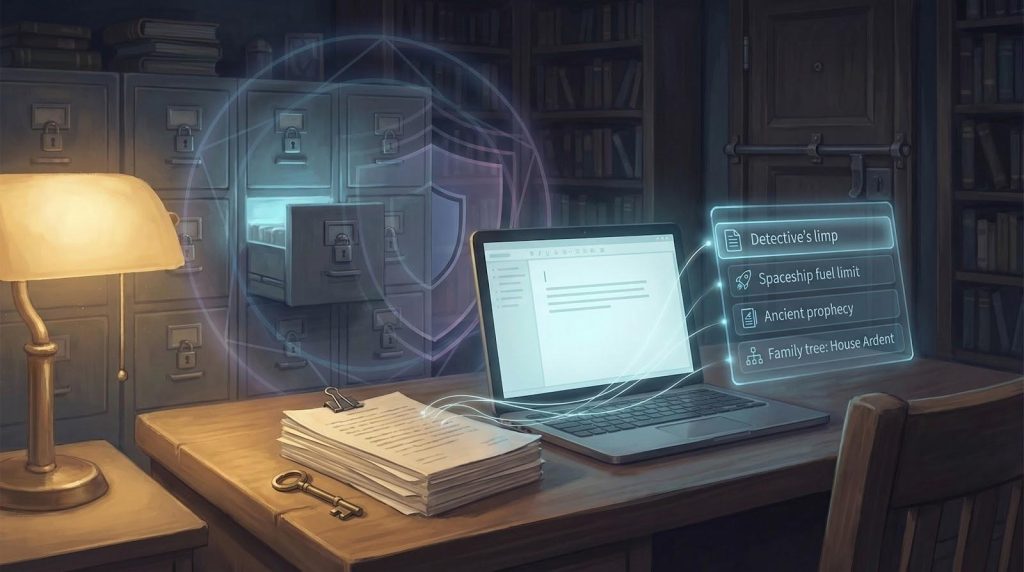
Every sentence you draft lives inside an encrypted vault that even the company cannot unlock. That promise of secrecy attracts professional novelists and academics whenever a manuscript must not leak.
Security still needs speed and recall. This is where the Lorebook excels. Paste character bios, family trees, or bits of world history into the side panel once, and the AI remembers them faultlessly across 8 000 tokens of context; your detective’s limp, your spaceship’s fuel limit, and your foreshadowed twist all stay intact.
The interface is spare on purpose. No chat bubbles, no gimmicks, just a focused editor where you press Continue and watch on-voice prose appear. Need a style shift? Adjust the Author’s Note, and the model slides from noir grit to whimsical fairy tale without losing momentum.
Pricing is simple: three flat-rate tiers with unlimited generation, so you never ration words. For authors who demand deep memory, refined tone control, and absolute confidentiality in a single AI story generator, NovelAI stands out.
Sudowrite: the idea machine that edits as well as it invents
Sudowrite never hijacks your manuscript; it nudges, suggests, and sometimes delights, like a seasoned writing coach who never sleeps.
Open a chapter, highlight a flat paragraph, and click Describe. The AI adds fresh sensory detail in seconds. Stuck on plot? Story Engine turns a one-line beat into a scene outline, then drafts the first version so you can polish instead of panic.
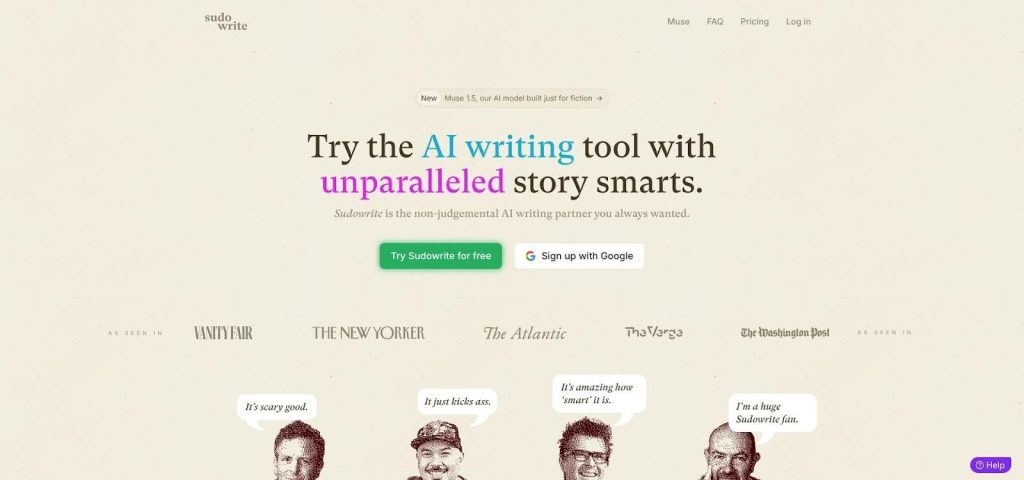
Sudowrite Describe and Story Engine interface screenshot
The magic lies in focused micro-tools. Dialogue feels wooden? Tap Rewrite and pick “more banter.” Need suspense? Ask What happens next, then skim six twist options before choosing your favourite. Each feature tackles one craft pain point, leaving you firmly in charge.
Sudowrite runs on OpenAI models, so prose quality stays high; output is metered through monthly credit bundles. Most authors finish a full draft on the mid-level Professional plan, and the cap encourages intentional generation, not filler.
If you want an AI story generator that brainstorms, critiques, and polishes without steamrolling your voice, Sudowrite is the smart, chatty partner you invite into your Google Doc.
ChatGPT (GPT-4): the all-purpose powerhouse with a cautious side
ChatGPT is the Swiss Army knife of AI story generators. Need a six-point outline for a space opera? Done. Want a Shakespearean sonnet about laser swords? Also done, usually in under ten seconds.
That speed and versatility come from GPT-4, one of the largest public language models available. It juggles facts, genres, and voices with ease, which makes it brilliant for rapid brainstorming and first-draft passages that feel polished.
The same guardrails that keep the model safe for classrooms can trip novelists who push boundaries. Ask for explicit romance, graphic horror, or intense violence, and the system politely declines. If your story lives in that R-rated zone, be ready to rewrite or choose another tool.
Memory is the other trade-off. The paid ChatGPT Plus tier keeps about 8 000 tokens of recent context in view; that is plenty for short stories, but a full novel requires feeding it chapter summaries along the way. Still, at twenty dollars per month for GPT-4 access (or free for GPT-3.5), the price-to-power ratio is hard to beat.
In short, ChatGPT is the idea fountain and line-level wordsmith you keep on call, even if you finish the manuscript in a more specialized space.
Character.AI: dialogue-driven inspiration with PG-13 guardrails
Character.AI feels like speed-dating your own cast. You type a line, the AI answers in perfect voice, and suddenly you are eavesdropping on banter that will brighten your next chapter.
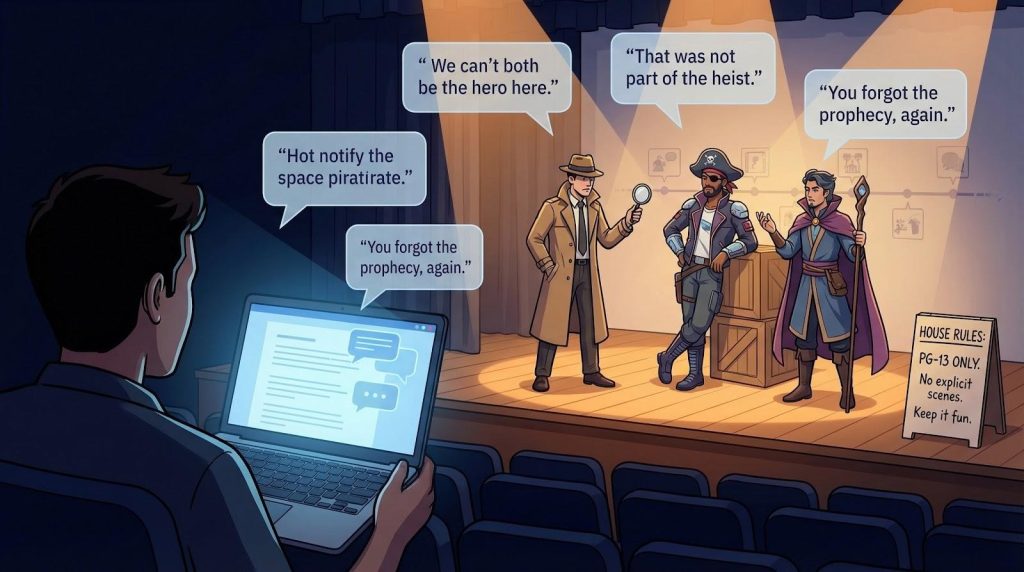
The appeal lies in personas. Thousands of public bots, such as Sherlock Holmes or a sarcastic space pirate, stand ready to spar or sympathise. You can also build originals in minutes: supply a short bio and a few sample lines, and the AI locks onto their cadence for the rest of the chat.
That quick feedback sparks ideas fast. Need sharper repartee between rivals? Drop both bots into one room and watch new twists emerge. Copy the best exchanges into your manuscript and refine them at leisure.
Freedom comes with filters. The platform blocks explicit sex and heavy gore, so darker or steamier stories stall at the door. Memory is tight too—about 3 000 tokens per chat—so long arcs need occasional recaps.
Cost is friendly. Unlimited role-play is free if you accept peak-hour queues, while the ten-dollar Plus plan removes wait times and adds voice chat. For writers who thrive on character chemistry and can stay within PG-13 lines, this AI story generator doubles as an endless improv stage.
Side-by-side snapshot: who wins on the metrics that matter
Put the AI story generators next to each other and clear patterns appear.
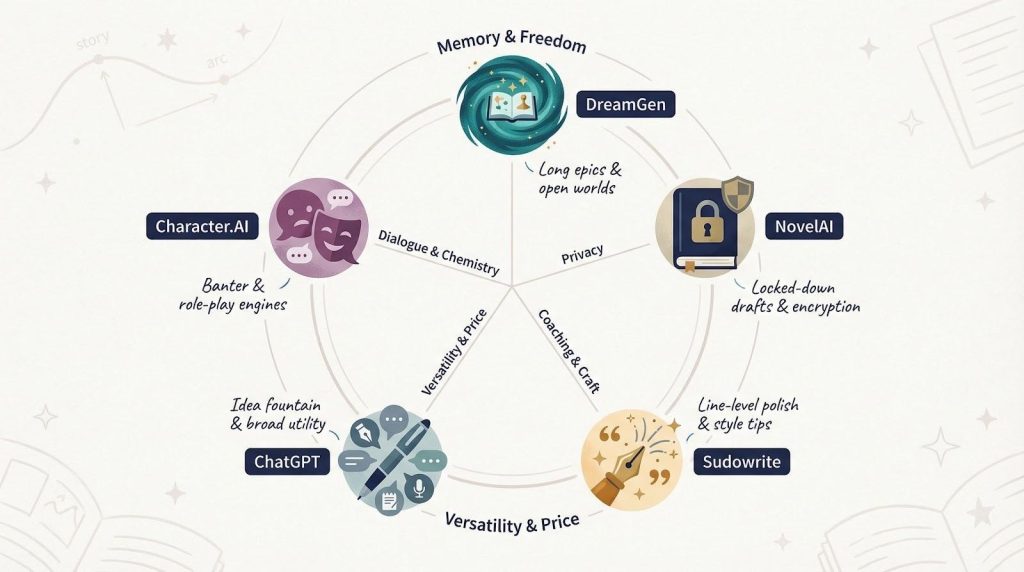
DreamGen owns deep memory and full creative control. Its 30,000-token context and Scenario Codex make it the go-to for sprawling, long-form epics.
NovelAI trades a slightly smaller memory window for ironclad privacy. If your draft cannot leak, this locked-down editor is the safest bet.
Sudowrite shines as a craft assistant. Micro-tools fix prose, suggest twists, and deliver line-level sparkle, all while you keep full artistic control.
ChatGPT dominates versatility and price. Twenty dollars buys GPT-4’s broad knowledge, but filter refusals and an 8 000-token ceiling limit edgier, longer fiction.
Character.AI is the dialogue dynamo. Free, persona-driven chats spark instant character chemistry, though strict PG-13 filters and short memory confine serious novel work.
Match those strengths to your current pain point: memory, privacy, coaching, cost, or conversational spark, and the right choice becomes obvious.
How to choose the right tool
Aim for rock-solid coherence and control
If your story spans kingdoms and calendars, you need an AI that remembers every prophecy and pastry crumb. Only two names qualify: DreamGen and NovelAI.
DreamGen wins on raw headroom. Its 30,000-token memory lets you paste an entire novella into context and still have space for the next chapter. Add the Scenario Codex, and the model clings to your lore like a continuity editor on espresso. We did not encounter filter-related interruptions during testing, which kept writing sessions flowing.
NovelAI counters with fortress-grade privacy. Your manuscript is encrypted before it leaves your keyboard, yet the Lorebook keeps 8 000 tokens of detail at the model’s fingertips. Characters stay in character, flashbacks stay consistent, and nobody—not even the developers—can peek at your draft.
Choose DreamGen when full creative control and marathon memory outrank price. Choose NovelAI when absolute confidentiality and a streamlined writing desk matter more than interactive extras. Either way, you get an AI story generator that shows up for the long haul instead of fading at chapter three.
Stalled on ideas? Pick the coach, not the ghostwriter
When the blank page stares back, Sudowrite is the faster rescue. Its Describe, Brainstorm, and Show-not-Tell buttons fix classic craft problems one at a time. You highlight a limp sentence, click, and vivid imagery appears like an editor on speed-dial. Because each tool tackles a micro-task, you stay in charge instead of watching a bot sprint off with your plot.
ChatGPT works better as an open-ended sounding board. Toss it a wild prompt such as “list five heist twists that don’t involve double agents,” and it fires back rapid options. The model’s vast training set covers tropes from noir to manga without pause. Perfect for broad ideation, less precise for line-level polish.
Credit limits separate the two. Sudowrite meters output, nudging you to request only what you need and refine from there. ChatGPT Plus costs twenty dollars per month with generous message caps, so you can riff all afternoon without watching a counter.
Use Sudowrite when prose needs altitude and every word matters. Use ChatGPT when you want an endless brainstorm partner that never says, “already tried that.” Together, they turn writer’s block into a scheduling question: which AI do we call first?
Want sharper dialogue or fan-fic chemistry? Step onto the improv stage
When character voice is your north star, nothing beats live role-play. Character.AI lets you talk to an AI Sherlock, Sailor Moon, or a custom creation of your own, and they answer in perfect cadence. The exchange feels like improv theatre in text form. Banter emerges organically, quirks surface, and you often leave with dialogue ready to paste into your manuscript.
Remember the house rules. The model forgets deep backstory after a few thousand tokens, so recap key beats in the chat now and then. The platform’s PG-13 filter is firm; if a scene turns explicit, the bot either deflects or stalls. For mature storylines, move the script to DreamGen and continue with full creative control.
Cost is friendly: free access if you accept occasional queues, or ten dollars per month for queue-free, faster chats. Think of it as hiring a voice actor rather than a co-author. Bring Character.AI into your workflow when dialogue feels flat or when you crave the spark only in-character banter can ignite.
Conclusion
Strong stories rely on memory, not miracles. Even the sharpest AI drifts if we let it. Use these five habits to keep chapters tight and characters consistent.
Declare the roadmap first. Start each session with a one-sentence recap of the current scene and the next required beat. The model treats that line like a compass and stays on course.
Pin facts where the AI can see them. DreamGen’s Scenario Codex or NovelAI’s Lorebook works like a shared wiki: list eye colours, back-story beats, and world rules once, then stop retyping them.
Recap after big moments. When a betrayal, death, or twist lands, add a two-line summary in the prompt: “Summary so far: X betrayed Y; Y fled the city.” The AI carries that truth forward without confusion.
Chunk long scenes. Instead of asking for a 2 000-word climax in one go, request two or three short segments, review, then continue. Smaller bites give you more chances to fix tone or logic slip-ups before they snowball.
Tell the model what to ignore. If you rewrite a scene, paste the final version and add, “Use this revised scene as canon; disregard earlier drafts.” That single note stops the AI from resurrecting deleted subplots later.
Master these moves and any tool above, even ChatGPT, will feel more like a seasoned co-author and less like a distracted intern.