
Isabel Martínez de Rituerto
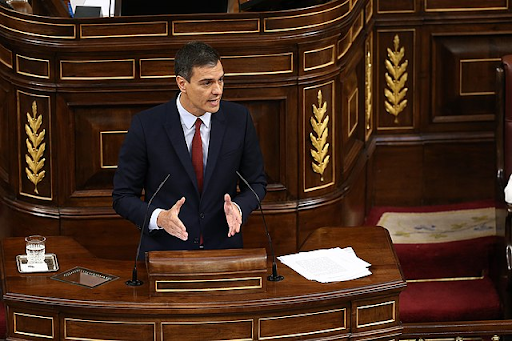
On 27 January, Prime Minister Pedro Sánchez announced a decree to create a legal pathway for undocumented migrants to gain residential status in Spain. While not the first time the country has implemented a large-scale regularisation programme, the measure comes at a time when many other nations are taking increasingly defensive stances towards immigration.
To understand its implications, we first need to understand the policy. Any undocumented migrant with no criminal record who entered Spain before 31 December 2025 and can prove a minimum stay of at least five months could be eligible to apply for a temporary but renewable one-year residential permit, allowing them to live, work, and access public services. With applications needing to be made between the months of April and June 2026, the policy represents a time-sensitive measure, rather than a long-standing reform. Although the practical details of the process have yet to be fleshed out, from an estimated 800,000 migrants currently living illegally in Spain, around 500,000 could become legal residents as a result.
An Economic and Moral Case
The Spanish government is framing the measure as both an economic and moral necessity. With an infamous shadow economy concentrated in the more informal sectors of the labour market, Spain’s undocumented workers make up a significant share of the workforce in hospitality, construction, and agriculture. However, by operating outside of the legal system, they have few to no labour rights in sectors that represent core economic activities and which can be difficult to staff with domestic workers.
In an opinion piece for the New York Times, the Prime Minister recently defended his belief that endowing marginalised individuals with legal and administrative rights is also a moral endeavour, and the measure itself can be traced back to a citizens’ initiative backed by hundreds of social organisations. Ultimately, through efforts to formalise their status, Spain is breaking away from its neighbours by arguing that migrants are a resource rather than a burden, betting on their potential to boost taxes and social security contributions at a time when Spain and similarly developed countries find themselves at a demographic crossroads.
Under Fire at Home and Abroad
But not everyone is convinced. Critics from the conservative opposition party, Partido Popular, worry that the measure could encourage irregular migration. Yet research on earlier regularisation campaigns failed to find clear evidence of a “magnet effect” – the idea that migration-friendly policies increase immigration. Although past outcomes cannot guarantee future results, an understanding of the effects of previous campaigns may provide a better basis for evaluation than claims that are otherwise hard to substantiate. Others are concerned that migration policy is being used as a bargaining chip by a government that depends on the support of smaller regional parties to pass legislation, with recent consequences including a national budget that has not been renewed since 2023.
Online reactionary forces have also chimed in to accuse the Prime Minister of manufacturing a voter base for his socialist party. But with the next general elections only 16 months away in August 2027, and a pathway to citizenship that requires two years of continuous residence in the best of cases, the accusation quickly loses its bite, at least in the short term. The government’s real challenge is more likely to be ensuring a fair distribution of the costs and benefits of the policy while managing pressures at the local level. Economic and demographic pressures alone do not preclude immigration but mishandling them could create backlash against the measure, adding fuel to a growing anti-migrant sentiment in Europe and beyond.
Old Tricks, New Parliament
An alternative criticism is raising doubts over the institutional mechanisms used to implement the measure, namely its reliance on a decree. Similar to an executive order in the US, decrees have been employed by previous ruling governments in comparable regularisation campaigns. But the political context within which this decree is being implemented is starkly different from that of earlier regularisations. Between 2000 and 2001, a conservative government helped 500,000 people gain legal residence status shortly after a major reform of Spain’s immigration framework under the Ley de Extranjería passed in parliament in 2000. In 2005, a socialist government facilitated the regularisation of 570,000 people at a time when the construction frenzy of the housing bubble meant many were in agreement on the benefits of expanding the workforce. This was especially true if it meant opening the country to individuals who could supply low-cost labour to key sectors during an economic boom. Perhaps more importantly, the lack of a far-right party in establishment politics at the time also meant that parliamentary conditions were favourable for such a policy to achieve relative consensus across political aisles.
Decrees may be a familiar tool to approve migration policy, but the political and economic landscape from two decades ago is very different to that which we face today. In a context of greater political fragmentation, with the Prime Minister leading a cabinet that frequently engages in difficult negotiations to reach compromises across a fractured coalition, the use of a decree could raise concerns of executive overreach. More pressingly, parliament is becoming harder to use as an arena for decision making and legislative shortcuts are filling the gap. But if decrees are to be a legitimate response to political paralysis, governments cannot pretend they are cost-free. Prioritising expediency at the expense of democratic debate must be openly acknowledged and justified if we are to avoid normalising a weaker and less deliberate form of democracy, not least on a topic as important as immigration, where the rights of potentially hundreds of thousands are at stake.
A Sign of the Times
Maybe more than an innovation, the measure is instead a sign of the times, both in Spain and abroad. At home, the Spanish government is weakened by a coalition strained under differing priorities, pressured by the growing popularity of the far-right party Vox, and undermined by the governing party’s recent corruption scandals. In neighbouring countries, this fragmentation is happening on a higher level with the outright disappearance of the old guard and the rise of new parties, including in the United Kingdom which shows a waning Conservative party amid growing support for Reform UK. Globally, there is much to be said about a policy that brings a pragmatic alternative to the table when many other nations are choosing to persecute rather than uplift individuals seeking better lives across borders. Ultimately we are seeing a renewal of the political landscape taking shape across the world on the back of migration policies whose economic and social outcomes beyond political polarisation have yet to fully materialise.
All things considered, Spain seems to be doing something right. Its 2.8% GDP growth last year was the fastest among eurozone countries and has been attributed in part to a workforce boosted by migrant labour. Beyond the contentious sphere of moral rhetoric, Spain’s measure is showing that economic arguments also exist in support of immigration. In doing so, it is sparking conversations on how countries can use the arrivals of migrants not as a tool to divide and conquer voters, but as a means to grow their economies and sustain public services, fostering social and economic integration in the face of a global movement of people that shows few signs of slowing down.