
The views and opinions expressed in this article are solely those of the author. They do not necessarily reflect the views, positions, or editorial policies of the paper, its editors, or its staff. The paper does not endorse any opinions or conclusions presented herein.
Instagram has a wide variety of functions these days. From the ridiculous Oxbridge admissions influencers to more personal photo diaries and, of course, the ever-prevalent brainrot accounts, there are sure to be decisions that trigger you. However, one sight that is sure to make my lips curl back in horror is found in the usually innocent ‘bio’ section: a Bible verse.
I have a rather complicated relationship with religion. After being baptised Catholic, I was an altar server until the age of 13. However, after encountering some books that challenged organised religion, I fell into a crisis of faith. My parents staged interventions with multiple priests, but my relationship with organised religion was completely crippled. I had an internal struggle with faith that dominated my life for more than a year. My frustration with religion was infused with fury, and I viewed any and all religious people with not just a sense of annoyance, but something verging on hatred. I’ve now come to respect religion and its place in people’s lives. My experience has shown me just how emotionally charged these issues can be. Religion is a serious matter, a matter that requires much introspection and that is intimately related to your identity, both on a personal level and a wider, cultural plane.
Whenever I read ‘John 3:16’, ‘Corinthians 16:14’ or, of course, the iconic ‘Philippians 4:13’, I can’t help but think, “Do you even know that verse?” It screams of insecurity, the need to let everyone know that you’ve looked up “best Bible verses” and picked one at random. I usually make no judgments about what you post on your Instagram. However, once you start to play with the dangerous game of religion, something that dominates people’s lives across the world, I can’t help but judge. Willingly invoking religion to attempt to protect yourself from moral criticism is not just disingenuous, but downright embarrassing. While the phrase, “my culture is not your costume”, has been meme-d to death by now, it says something about parading important, millennium-old symbols around as playthings, to be quickly deleted from your bio so you can put, “London | Oxford” in its place.
Instagram culture is based around an elevated and unrealistic perception of one’s world. It is, by nature, the highlights of your life, carefully manicured and posted for others to envy or admire. Thus, to suggest that you’re a pious and observing Christian while your Instagram story documents you travelling from nightclub to nightclub, partying into the wee hours of Sunday morning, is ridiculous on multiple fronts. Those who participate in this inflammatory trend are not just placing a glass shield in front of their, biblically speaking, sinful practices, but also sullying the already damaged societal reputation of religion.
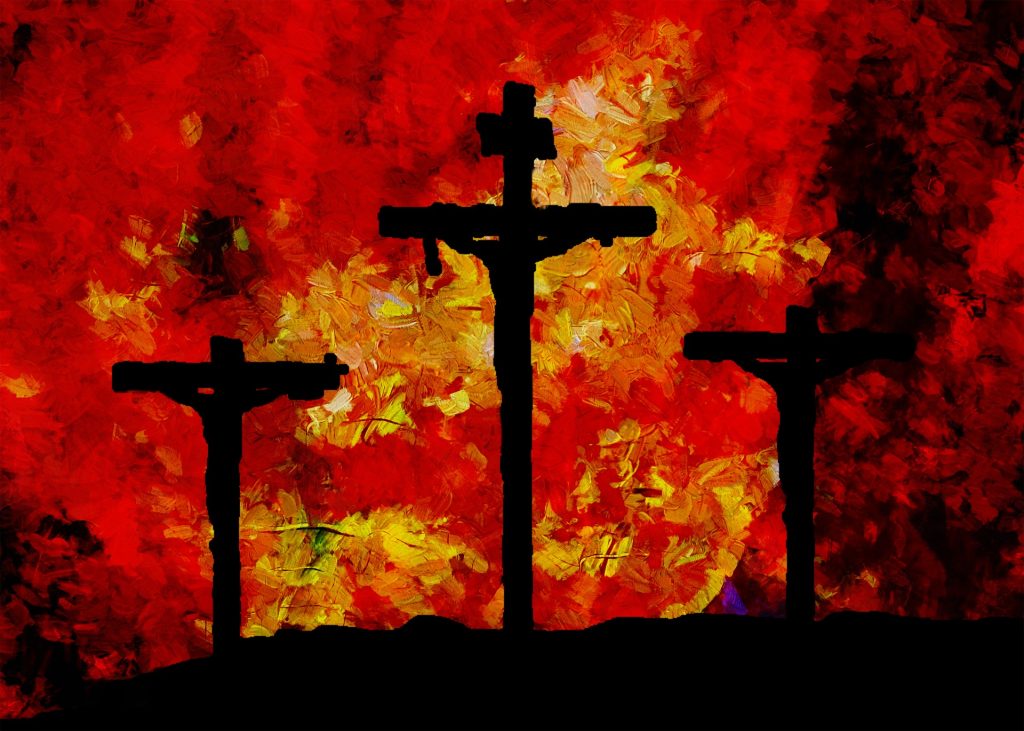
Fashion has a similar plague infecting its modern practitioners: crosses. From gold-embossed rosaries to crucifixes tattooed down the length of your spine, the most sacred of Christian symbols is being used just like the Bible verse. From Kendrick’s use of the Crown of Thorns to Cardi B wearing a rosary, religious iconography and calling on the image of God is an accepted part of the rap scene in the US. This is not to say that Kendrick isn’t a god-fearing Christian, but that his use of such deeply important symbolism is both lazy and totally incoherent with the Christian values he claims to practice. Placing a crown of thorns on his head, as if to consciously imitate Jesus, is something almost no theologically educated Christian would attempt. Cardi B commits a similar offence when she wears a rosary just above clothing that contradicts Christian modesty rules. While she might identify herself as a Christian, her public personality is simply not compatible with this fact. Parading around with a crucifix while her music is, to say the least, in total contrast with Christian values is just like the Instagram model in Dubai with a cross emoji in their bio.
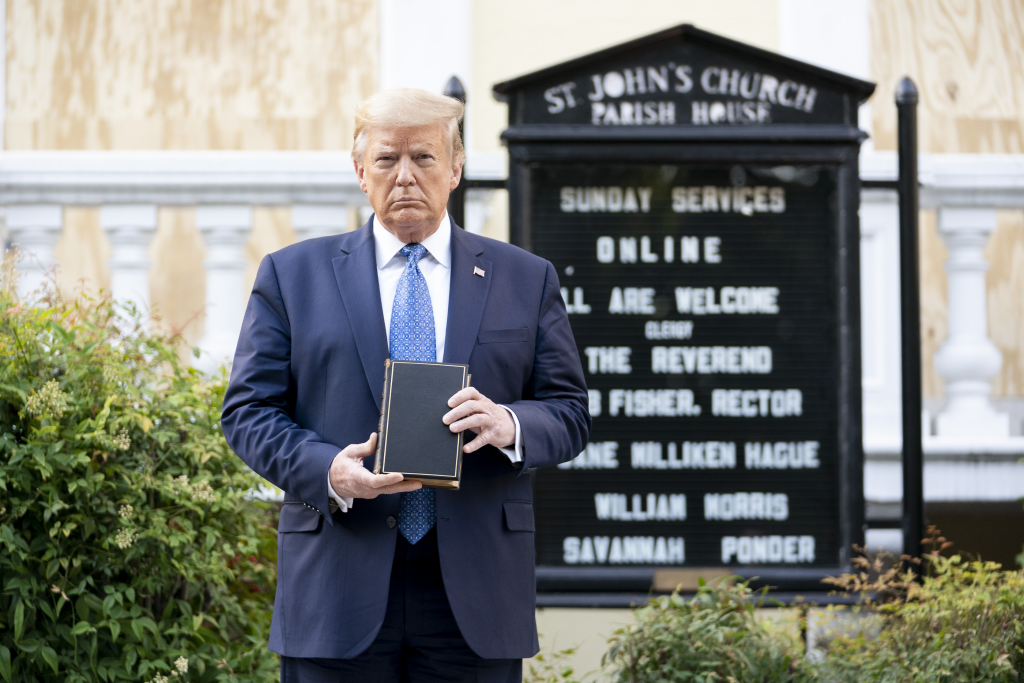
This critique can be expanded across the spectrum of seriousness. During the fallout of the 2020 Black Lives Matter Protests, Donald Trump ordered DC law enforcement to tear gas peaceful protesters in Lafayette Square, the historical location of peaceful protest outside the White House. This was all in the pursuit of a photo op with the Bible outside of St. John’s Church. A gross abuse of presidential authority, Trump did not “turn the other cheek”, nor “love your enemies”, but chose to violently clear a path through peaceful demonstrators so he could pose with the word of God, a word he was actively breaking. Trump, and many other political leaders, alignment with Christianity is almost laughable. This is not to say that political leaders cannot go against the Bible (in fact, in many aspects, I hope that they do), but that they should not virtue signal in an effort to win voters. With rappers, their obstruction of Christian virtue is cultural and may be slightly nit-picky on my part. But politicians, leaders of a nation, wielders of world bending authority, it is a much more serious offence.
This is not a defence of organised religion. My rather complicated relationship with this human institution has scarred me more than I want to share. But to plaster verses at the top of Instagram pages or sport a rosary to a bar without context and without respect makes a mockery of those who take their personal connection to their faith more seriously.
In the end, religion is a personal choice. However, this doesn’t protect you from accusations of hypocrisy and theological duplicity. No Christian is perfect, a fact that the Bible emphasises. I do not condemn those who lapse, even repeatedly, in their faith. But a repeated implying of religious piousness when evidence to the contrary is so clear, in my opinion, cannot be ignored. Religion is a major aspect of the human experience, with traditions reaching back thousands of years. Even in Oxford, Christians were martyred for their beliefs, dying for the same bible verses that litter your social media pages. To them, it was not a joke, nor a spiritual belief to seek shelter behind and only interact with when convenient.
The reason for this article is to highlight, in our contemporary, secularised world, that religion is not a distant relic of the past or a cool plaything of modern culture. Billions of people today don’t just take it seriously, but find it deeply entrenched into their identity and purpose for life. In a society that prides itself on working towards inclusivity and not placing prejudice upon others, I hope we will try to take that into account on these matters of eternal and traditional importance.