
Note: Both the author and those interviewed for this article prefer to use identity-first language (“autistic person”) rather than person-first language (“a person with autism”) however other people may prefer otherwise.
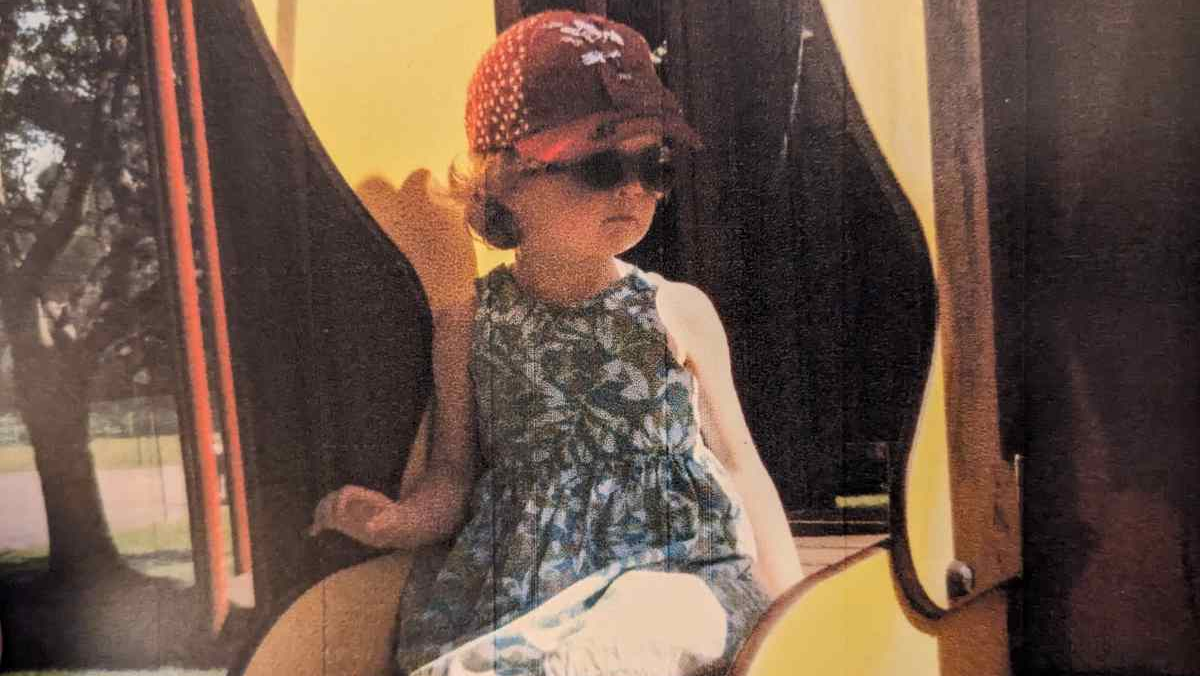
We all experience the passing of time differently. We celebrate or lament our birthdays; we have quarter and midlife crises; velcro shoes become laced shoes which become slip-ons. When I turned eighteen, however, I realised that autism had frozen me in time in the perception of others. I was a girl and then I was a woman and still I was a child.
Infantilisation presents itself in a variety of ways which all share a common theme of diminishing individual autonomy and capability. In many cases, it stems from the belief that allistic people know better and should make decisions on behalf of their autistic counterparts. The culprit here is one that lurks in the shadows of a multitude of problems: stereotyping. When you assume that you know who I am, you also assume you know what I need. I am aware that by telling someone I am autistic, I will bring forth a whole dreamland of assumptions about me – one that has been slowly built by poor media representation, fake news, and the one vague memory of a four-year-old autistic boy obsessed with trains which is then projected onto me as if I have, in the very instance of mentioning autism, morphed into a blank canvas, no longer a real human.
The reality is this: knowing that someone is autistic does not tell you anything about them as an individual. This is because autism exists on such a broad spectrum that it means differently for every person even if there are commonly shared characteristics. The concept that all autistic people are unique in the same way that all people are unique seems to be one that is hard to grasp.
One of the interviews I conducted for this article was with Rosie Wilkinson, a fellow Oxford University student, to hear her experiences of infantilisation as an autistic woman.
“I’m normal. I’m a normal person,” she said.
While allistic-centred society others our existence and finds us unsettling, we have lived as autistic people our entire lives. This is our normal. This is normal. The ostracisation of autistic people means that we are seen as a strange thing that must be generalised in order to accommodate the simplest and quickest comprehension. Autistic people are time and time again denied the privilege of an identity. There is a quasi-parasocial relationship between those who have met one autistic person and every other autistic person who is met by them afterwards. You do not know me just because you think you once knew someone like me. I did not simply crawl out of one autistic mould. Sometimes, to be autistic is to be afforded no more than a stick figure sketch while allistic people are coloured in and fleshed out. I have a belief system; a place I go when I am sad; a favourite shade of gold in the sunset; a thousand moments that replay in my head when I try to fall asleep; two miniature labradoodles; a second-hand bike, and a wish to be given the chance to be known.
It is true that many autistic individuals need extra support and may require full-time care or may not be able to live independently. At the same time, there are many autistic people who manage (in varying capacities and with varying degrees of masking required) to fit in with social conventions and adapt to our allistic-designed world. The frustrating element of infantilisation in this case is that no one would recognise a difference if it were not disclosed. To offer unsolicited and belittling “help” then is to wrongfully think that the autistic person does not see the switch in the way they are treated when assumed allistic and the way they are treated when revealed to be autistic. Rosie shared the difference she has noticed in relationships with people who knew her before her diagnosis and people who have only known her since. With the latter, she explained feeling, “I’ve never been just Rosie.”
Some individuals who I interviewed expressed a wish to be allowed the same ability for assertion of desires that allistic people enjoy. This included, for example, assumptions that autistic people did not date or would not want to talk about dating. Being able to ask for what we want is often not possible and we are instead given what it is thought we should have.
“Don’t treat people differently if they don’t need it,” Rosie said, which I think is key; help is not helpful when it’s unwanted.
Another person commented on the contrasting extreme where it is believed that autistic people should be treated exactly the same as anyone else. “I don’t want to be treated the same,” they reported. It seems that when autistic people do not ask for help, it is offered in unwanted ways, and when it is asked for, there is a refusal to treat people differently, mistaking equality and equity.
Additionally, needing help is not the same as needing to be treated like a child. Infantilisation pushes autistic individuals to avoid seeking the help that they need, fearing that it will be an uncomfortable and degrading experience. One person explained that autism, “like a lot of things, like ADHD and dyslexia… is seen as something that only affects children.” It forces autistic people into a situation where they feel they must mask their “autistic traits” in order to be taken seriously and treated like a normal human – which we are. In conversation with autistic peers, this included masking stimming behaviours, not mentioning special interests, feeling that they had something to prove, and needed to act “more mature.” In some cases, masking included not mentioning their diagnosis: “I think this limits the infantilisation to some extent.”
One anonymous source explained feeling like they needed to “prove… who I am and that I’m capable and intelligent.” Another described masking as “very tiring and makes me feel like people don’t really know me – only the pretend version of myself.” This was repeatedly mentioned in the interviews I conducted to be a problem in medical situations. In order to receive respectful and comfortable treatment, people felt that “childish” or stereotypically autistic behaviour had to be hidden. Experiences of infantilisation included medical professionals repeatedly talking to the autistic adult’s parent instead of to them, even when asked otherwise. Additionally, one person told me, “In medical settings I often feel that I am spoken to like a child – oversimplifying concepts that a non-autistic person my age would be expected to know about.” This even spanned to the language used in autism diagnoses, being described by one person to be “quite patronising.”
“You shouldn’t have to be proving yourself at a time when you’re vulnerable.” – Anonymous.
Furthermore, my discussion with Rosie led to us considering our experiences as late-diagnosed autistic women. It is a trend that autism in women is less frequently detected than in men. For a lot of late-diagnosed autistic women, and certainly was the case for me, we spent a large part of our lives not understanding that there was a reason for the differences between us and our peers and we exerted huge amounts of energy to replicate behaviours in our environments in order to fit in with everyone else. It is confusing for a child to know that the version of them that is liked is a performance that must be kept up. Rosie and I talked about how autistic women are often seen as rude, unlikeable or unpalatable due to the directness and bluntness of our unmasked communication styles. To be liked, I had to act. It feels isolating at times to never let on how hard I am kicking underwater to stay afloat.
“Late-diagnosed autistic women have lived three more lifetimes than you ever will” is a quote from Rosie which I think eloquently captures the frustration that can be felt from infantilisation, especially as a late-diagnosed autistic woman. Infantilisation undermines the lives we’ve led and lead, which are not ones of dollhouses and rainbows but rather, for me, practising as a child how best to conceal myself to be liked. There is no hide-and-seek; there is only hiding.
I would like to conclude this article with a wise and simple quote from a dear friend who wishes to remain anonymous: “Everyone should be equal and not treated differently because they struggle with something, as we all have strengths and weaknesses.” It is truly disappointing that this does not go without saying.
Many poets have played with the idea that we are mosaics of everyone we have ever loved. The truth is, it is impossible to have lived in the world without having entangled yourself in some way or another with an invisible string or two or a web of fateful missteps and burnt toast which distinguish you from the person next to you on the train or the neighbour down the street. I wear a red fleece that reminds me of my grandpa’s red raincoat he always wore. I cannot think of radishes without thinking of my grandma and the basket of them she brought to lunch one time though I have lived longer without her than I did with her. I am individual in all the parts of the world I have absorbed. This has nothing to do with me being autistic, and everything to do with me being human, and the symptom that presents itself in me is a desperation to tuck the ephemeral moments I see between my ribs in defiance of time passing and the forgetting of those who were here. They did not write this in my diagnostic report. You see how much you do not know? How could I be expected to be the same as anyone else? I am deserving of more than assumptions. I am normal – in my own odd way. And, most importantly, I am not a child.