
Editor’s Note
Welcome back everyone to the penultimate OX1 of both Trinity Term, and the academic year. Exams are truly in full swing now, so if you’re celebrating the joy of being done, or are still stuck in the depths of revision waiting for them to start in Week 8 or 9, your Global Affairs team have got you sorted with some quick stories for a revision break.
This week, Nancy Gittus takes a look at the results of Armenia’s General Election, and the victory of incumbent Pro-European PM Nikol Pashinyan. Throughout is a look at the conflict between increasing ties with the European Union, or moving closer to neighbour Russia, at a time of ever-increasingly volatile relationships between the two poles.
Building on this is Cormac Edwards, with his look at the St. Petersburg International Economic Forum, which took place earlier in June. “Putin’s Davos” as some have termed it is the culmination of those still economically engaged with the Russian Federation, and Cormac explores all the pomp and grandeur of such a forum at a time where Russia is so isolated from the west.
Finally, Chaehyeon Moon looks at the incumbent governing Democratic Party’s sweep of the local elections in South Korea. The party of incumbent President Lee Jae-myung strengthened their presence in local politics, only losing out in a limited number of locations, amid an election plagued with issues of ballot shortages for voters.
As we look ahead into our final week of term, our team would like to say a huge good luck to all currently sitting exams. We hope you enjoy this week’s edition, and we will back once more for our final outing next week!
Armenia Re-Elects Pro-Europe PM Nikol Pashinyan
.jpg)
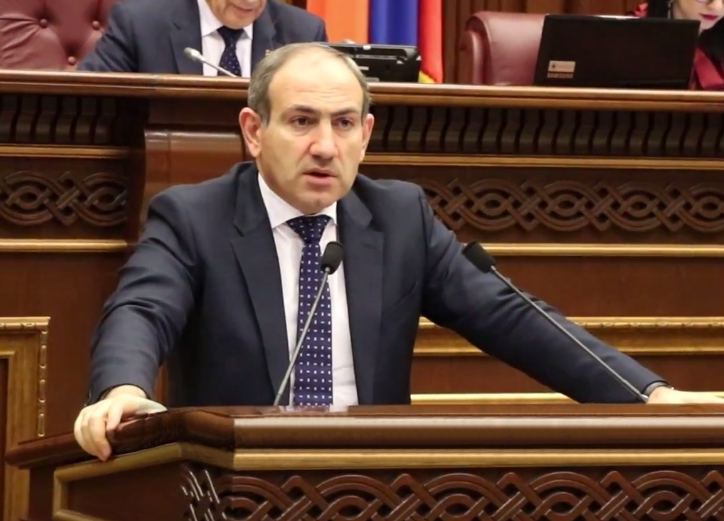
On Monday 8 June 2026 Nikol Pashinyan declared an electoral victory for his Civil Contract Party. He hailed his re-election as an “historic victory”. The PM’s party received a significant majority securing 49.81% of the vote. Although this is not a large enough majority to enact the changes hoped for in the constitution. For that he would’ve needed a two thirds majority. Nonetheless, Pashinyan still stands head and shoulders above his second place rivals Strong Armenia who secured 23.29%.
With a strong turnout of more than 58% of eligible voters the election results mark a decisive shift in Armenia’s political outlook, away from Russia and towards Europe. Pashinyan’s policies seek peace with Azerbaijan, a country Armenia has been in conflict with since the 1980s, and the normalisation of relations with Turkiye. Pashinyan states that, “the people of Armenia voted for peace, regional prosperity and regional cooperation and I hope this will be met with a positive response from Turkey and Azerbaijan”. The people of Armenia also voted for rapprochement with Europe, with Ursula von der Leyen celebrating, “a democratic Armenia” that was “drawing ever closer to Europe”. French President Emmanuel Macron also welcomed the election results, stating the result would shift Armenia’s “momentum toward closer ties with Europe”. The UK Ambassador to Armenia, Alexandra Cole also announced, “The United Kingdom remains committed to supporting Armenia in strengthening its democratic resilience and institution” and that, “I look forward to working with Armenia’s new government to advance our Strategic Partnership”.
However, these closer ties with the West come at the cost of Russian antagonism towards the South Caucasian state. In the two weeks preceding the election, Russian President Vladimir Putin banned the export of Armenian flowers, mineral water, brandy, fresh vegetables and fruit. Both Russia’s foreign ministry and the leader of Strong Armenia, Russian-Armenia billionaire Samvel Karapetyan (who is currently under house arrest for allegedly advocating for the government’s overthrow) accused Pashinyan of violation and repression during the election. Karapetyan claims dozens of his campaign staff have been arrested. Whilst the spokesperson for the Russian’s foreign ministry, Maria Zakharova, was quoted by the Tass new agency as stating “unprecedented pressure” had been put on opposition parties in Armenia. As well as alleging “interference” in the election by the West. In late May, Putin called on Armenia to hold a referendum, “as soon as possible” to decide whether to join the EU or remain in the Russian-led Eurasian Economic Union. Putin also stated in the run-up to the election that Armenia was heading down the same path as Ukraine. Despite the President’s threats, Pashinyan remains confident that a balanced foreign policy is possible. He states that there was “no question of choosing” between Russia and the West. He also announced on Monday that “we will continue the course of rapprochement with the West, but we will also continue our participation and membership in the Eurasian Economic Union.”
Indeed Putin’s attempted threats may have pushed voters into Pashinyan’s arms, particularly after relations with Russia cooled in 2023. This is because of Russia’s failure to intervene as Azerbaijan captured the Nagorno–Karabakh region of Armenia. Since then Armenia has withdrawn from the Russian led military alliance CSTO and invested itself in developing other diplomatic relations.
However, the conflict in Nagorno-Karabakh may have also driven some voters away from Pashinyan’s peace-seeking approach to Azerbaijan. Voters such as twenty-five year old Arshak are deeply concerned about the situation in Nagorno-Karakh. He stated, “It is their right to live in peace like we are living […] Before we talk about our external relations with the EU or Russia, we should first focus on the topic of displaced Armenians from Nagorno-Karabakh.” A peace deal with Azerbaijan remains one of Pashinyan’s most divisive policies with one recent poll showing 44% of public opinion in support and 41% opposed. Pashinyan’s opponents criticise the Prime Minister’s failure to campaign for the release of the former leaders of Nagorno-Karabakh who are currently in jail in Azerbaijan. They will not forgive the PM for making concessions in order to achieve peace with Azerbaijan and this will certainly make achieving the necessary constitutional referendum to secure a peace deal with Azerbaijan difficult, as Pashinyan failed to secure a two-thirds majority in the polls this time around.
Nevertheless, many remain optimistic for Pashinyan’s next premiership. 70 year old gardener Layla told the BBC, “I am excited. He is the one who is taking us to peace, he raised pensions and we have free healthcare”. Pashinyan’s main message, the message the former-journalist achieved his first electoral victory on, in 2018, and the one he still campaigns on today, is the dissolution of Armenia’s oligarchic system. Pashinyan declared that his party’s priority for the next term would be the complete dismantling of the “criminal-oligarchic system” and with Brussels announcing a £43m support package to help Armenia withstand Russian economic pressure, and Ursula Von Der Leyen’s promise that, “Armenia can count on us”, the future is looking quite bright for Armenia’s 3 million citizens.
The SPIEF 2026: a new world order
Cormac Edwards
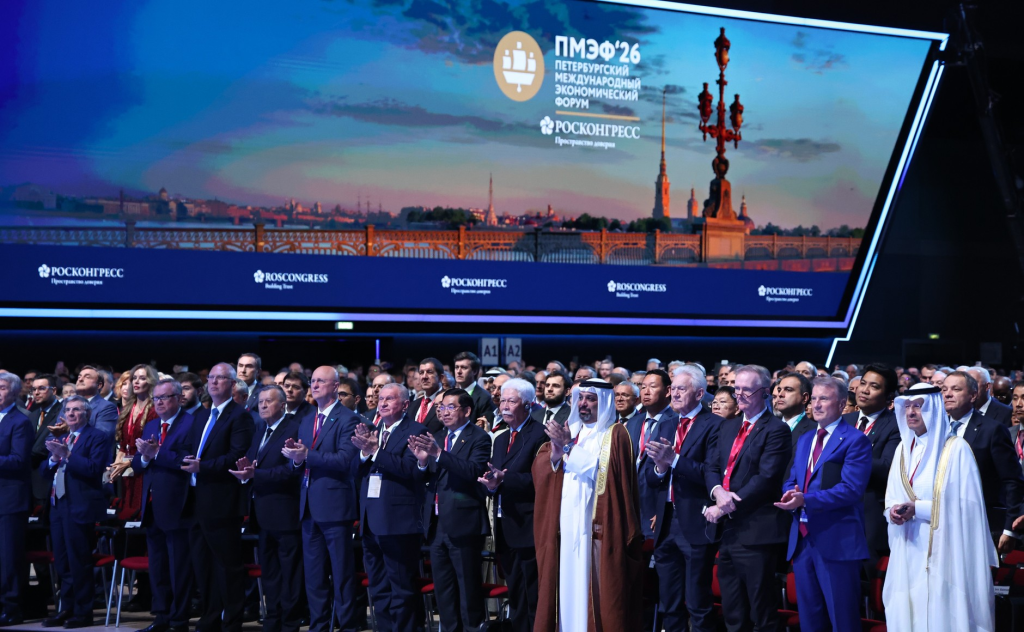
The St Petersburg International Economic Forum (SPIEF) took place this year from the 3-6 June under the theme “Pragmatic Dialogue: The Path to a Stable Future”. The forum, often referred to as “Putin’s Davos”, brought together over 20 000 participants from 130 countries to discuss investment and economic cooperation. This event, once attended by Western business CEOs and investors, has undergone a substantial shift after four years of war and sanctions on Russia. This year, however, did feature an appearance by a US official. Rodney Mims Cook Jr., chair of the US Commission of Fine Arts, responsible for overseeing the controversial White House ballroom renovation, was the first US politician to visit the forum in years, though he noted that he was representing the US as a minister of culture and as a Christian, and not as a politician.
Before any discussion got underway, however, Ukrainian drones managed to bypass Russian air defences, successfully striking a series of energy and military sites. The Kronstadt naval base and shipyard, where Russia’s Baltic fleet is stored, was hit, along with oil storage facilities. Pulkovo airport was temporarily closed, delaying the arrival of several guests to the forum.
Putin has long cultivated an image of himself as a decisive, strongman leader, yet has failed to translate it into tangible battlefield success. These “long-range sanctions”, as President Volodymyr Zelensky acerbically refers to them, were meant to upstage Putin, breaching security and casting a large shadow (quite literally) over the forum before it had even begun. The attacks led up to Zelensky publishing an open letter for peace talks on neutral ground between the two leaders. Putin refused. As a result, attacks continued throughout the duration of the forum, with over 100 Ukrainian drones targeting St. Petersburg on Saturday, 6 June.
Since the start of the war in Ukraine, Western companies pulled the plug on investment in Russia. As a result, the forum has come to serve as a meeting point for the Global South. The number of sanctions on Russia exceeds 30 000; the forum reflects Moscow’s ongoing efforts to adapt to the pressures of Western sanctions on the Russian economy. This attitude was reflected equally in Putin’s speech at the forum’s plenary session. Joined on a panel by President of Uzbekistan: Shavkat Mirziyoyev, President of the United Republic of Tanzania: Samia Suluhu Hassan, and Vice President of the People’s Republic of China: Han Zheng, Putin talked about how the world was moving towards a new multipolar international order and highlighted the need for alternative payment systems, new trade corridors, and technology cooperation in order for the Global South to achieve “true agency”.
Despite the obvious setback at the start of the forum, Putin still took the opportunity to try to reset the narrative. After months of economic difficulty and a lack of progress in Ukraine, this was an opportunity to regroup and project an image of strength in the face of what have been very adverse economic conditions for Russia. During the first quarter of 2026, it experienced a 0.3% contraction in GDP, its first quarterly contraction since 2023. Inflationary pressures, reduced oil export revenue, and a strong rouble are just some of the factors that have affected the Russian economy in recent months. Nonetheless, Putin was keen to project a positive outlook on the situation, stating that BRICS countries had accounted for 49% of global GDP growth in the past five years, and that they are expected to grow at a faster rate than that of the G7.
Saudi Arabia attended the forum as a guest of honour, marking 100 years of diplomatic relations between the Kingdom and Russia. They sent a delegation of 200 personnel, including the minister for Industry and Mineral Resources, Bandar Alkhorayef. Alkhorayef participated in a panel on cooperation in the rare-earth and critical mineral fields, as well as meeting with Kirill Dmitriev, CEO of the Russian Direct Investment Fund, to discuss cooperation and investment between the two nations. As the SPA has recently stated, rare earth mining is “the third pillar of the Kingdom’s national economy”, vital to developing renewable technology, deploying AI systems, and is key to Saudi Arabia’s plan to become a key player in the rare earth sector. These talks are important for Russia, which is striving to be competitive in this space. Currently, it imports an estimated 90% of its rare earth elements from China, despite having large reserves. Currently, it makes up less than 2% of the global supply of rare earths, but it aims to reach 10% by 2030.
According to state-owned media, Russia signed 74 agreements with a combined value in excess of $9.95bn, the third-highest figure in the forum’s history. It is worth noting, however, that agreements and Memorandums of Understanding do not equate to direct investment. It will still take time to understand the impacts of SPIEF 2026, and whether or not it will boost Russia’s image or economy. Both of which have taken damage in the past few months. Despite these setbacks, Russia has made clear that it will fight on. Adapting to sanctions, forging new relationships, and repositioning itself within a new global order
Democratic Party Sweeps South Korean Local Elections as Ballot Shortage Controversy Clouds Victory
.jpg)
Chaehyeon Moon
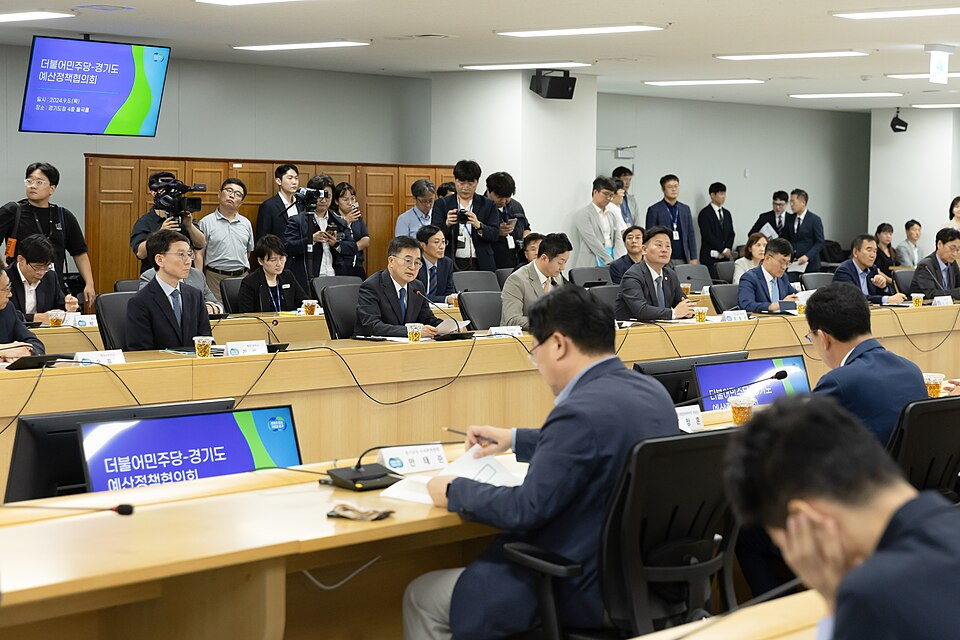
South Korea’s governing Democratic Party (DP) secured a sweeping victory in the local elections held on 3 June, strengthening President Lee Jae-myung’s political position one year into office. The party won 12 of the 16 contests for metropolitan mayors and provincial governors, including the mayoralty of Busan, the country’s second-largest city and traditionally a conservative stronghold.
Yet, the Democratic Party failed to take Seoul, where incumbent mayor Oh Se-hoon of the conservative People Power Party (PPP) narrowly defeated the DP candidate, Chong Won-o, despite exit polls initially predicting a win for Chong. Seoul’s mayor position is regarded as the most powerful elected office in South Korea after the presidency.
Despite the loss in Seoul, the Democratic Party already holds a majority in the National Assembly and sought a strong performance at the local elections as well to add momentum to President Lee’s political agenda. According to the Foreign Policy Research Institute, the scale of the victory could give Lee’s administration a greater mandate to pursue ambitious external agendas that would otherwise require more compromise.
Lee’s presidency began in unusually turbulent circumstances about a year ago. He came to office after former President Yoon Suk Yeol, who declared martial law in late 2024, was removed from office and later sentenced to life imprisonment. Since then, Lee’s approval ratings have remained in the 60% range for the last four months, giving his government a relatively stable base from which to govern.
By contrast, the election exposed continuing problems within the People Power Party. The party has struggled to cleanly sever ties with Yoon after his removal from office for insurrection. This has pushed some moderate conservatives away from the party. FPRI argued that unless the defeat forces the PPP into a “genuine centre-right realignment,” it may struggle to serve as an effective institutional counterweight on foreign policy.
Among unrest within the People Power Party, there were also signs of realignment in the conservative bloc. Former PPP leader Han Dong-hoon, who was expelled from the party after criticising Yoon, won as an independent in Busan Buk-gu Gap. His victory could give conservatives an influential voice outside the party’s current leadership, especially if the PPP remains unable to rebuild its appeal among moderate voters.
The results of the elections, however, have largely been overshadowed by unrest over an unprecedented shortage of ballot papers at polling stations in Seoul. Ballots ran out at 14 polling stations, including in Songpa and Gangnam districts, forcing voters to receive waiting tickets and delay casting their ballots.
The National Election Commission issued a public apology that evening, saying it would provide additional ballot papers as quickly as possible to those who had been unable to vote. It also clarified that voting remained open until there were no voters left waiting. Yet, with both the government and opposition parties expressing regret over the incident, hundreds of people gathered at the Songpa polling station where the shortage occurred, blocking the removal of ballot boxes and the counting process while calling for the vote to be invalidated. The National Election Commission later said it would identify the causes of the shortage as soon as vote counting had ended and prepare measures to prevent a recurrence.
By 7 June, the protest at the Jamsil and Olympic Park counting centre had entered its third day. Around 20,000 people were estimated by police to have gathered by the evening, with protesters blocking the eight entrances to the counting centre and chanting slogans such as “Hold a re-election” and “Dissolve the National Election Commission.”
At first, the protest did not fit neatly into the familiar pattern of South Korean conservative rallies. According to Hankook Ilbo, many participants framed the incident not as a “fraudulent election” but as a “poorly managed election” caused by administrative failure. One 32-year-old participant claimed that the problem was “less a fraudulent election than a poorly managed election caused by administrative failure at the National Election Commission.”
The age profile of the protest also stood out. People in their 20s made up the largest group at the site, followed by those in their 30s. This distinguished the demonstration from older conservative “Taegeukgi” rallies, which have often been dominated by older participants, right-wing YouTubers, and explicit pro-Yoon symbolism. Signs at the scene read “This is not a political protest” and “Do not be incited.” They aimed to keep the focus on voting rights, administrative failure, and accountability, rather than allowing the protest to become absorbed into a wider election-fraud narrative.
At the same time, Hankook Ilbo also reported attempts by far-right figures to impose a more conspiratorial frame on the protest. Some tried to introduce slogans such as “Stop the Steal,” while others appeared with MAGA hats, “Yoon Again” badges, or placards of former President Yoon. Experts warned that the protest would need to distance itself from far-right YouTubers and conspiracy theorists if the concerns of young protesters were to be taken seriously within the democratic process.