

Editor’s Note
Welcome back to Week 6 of Outside OX1! I hope everyone is surviving the final few weeks of Trinity well, although a few members of the Global Affairs team have suffered an unwelcome cold following the rather dramatic switch-up in weather after Week 5’s heatwave. The sunshine did not last long before Oxford reminded us that we are, indeed, still in the UK. As usual, we bring you some of the stories from around the world that you may have missed while trying to navigate the wind, rain, and end-of-term exhaustion.
First, Nancy Gittus explores the mouse plague currently sweeping across large parts of Australia. Triggered by the end of a prolonged drought and unusually favourable conditions for breeding, the infestation has left farmers battling thousands of rodents in their homes, vehicles, and fields. She examines both the economic and psychological toll of the crisis, as well as the measures being taken to prevent a repeat of the devastating 2021 outbreak.
Next, Cormac Edwards turns to China’s growing dominance in renewable energy and electric vehicle production. As Europe attempts to accelerate its green transition, Cormac considers the opportunities created by access to affordable Chinese technology, alongside the economic, political, and security concerns that come with increasing dependence on Chinese supply chains.
Lastly, Noah Allerton takes a look at California’s closely watched gubernatorial primary election. With the state’s unique “jungle primary” system producing an unusually competitive race, Noah explores the candidates vying to succeed Gavin Newsom, the shifting fortunes of both parties, and what the outcome may reveal about the future direction of American politics in the country’s most populous state.
We hope you enjoy this week’s edition of Outside OX1! Only two weeks remain until Trinifree (and three for those unfortunate enough to have Week 9 exams). Until then, best of luck with the final stretch of term.
Mouse Plague Hits Australian Agriculture, Leaving Farmers “Living the Nightmare”

Nancy Gittus
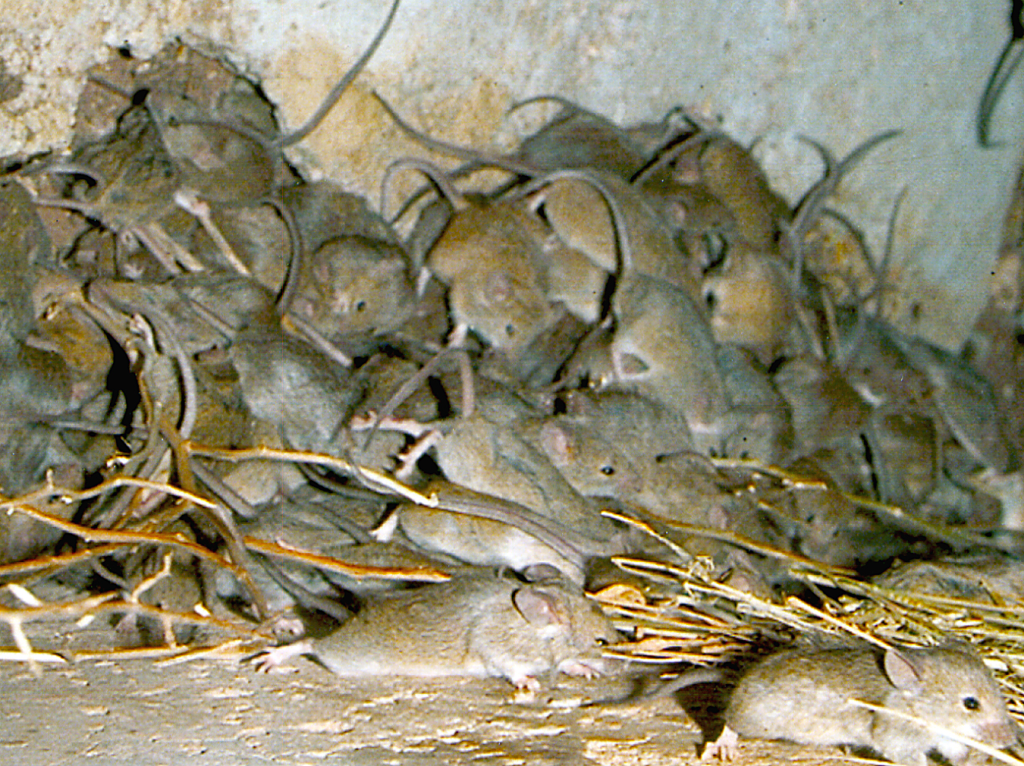
This week swathes of East, South and West Australia farmers have been inundated by thousands of mice. As Karen Chappel, Shire President of Morawa stated, “we have mice in our homes, we have mice in our cars; they’re in our sheds, they’re in our paddocks, they’re at the school, they’re everywhere.”
The plague has been brought about by the sudden end to 20 months of dry weather with 200 mm of rainfall. A year ago Australia had a record-breaking harvest, meaning that large amounts of grain were spilt in the paddocks during the harvest. The summer rain then spurred the growth of green shoots, giving mice the perfect conditions to thrive. As agronomist and farmer Belinda Eastough put it, “instead of just steak, they got steak and salad. Basically, the mice were in absolute mouse heaven.”
A plague is defined by the Commonwealth Scientific and Industrial Research Organisation (CSIRO) as more than 800 mice per hectare. However CSIRO, Australia’s national science agency, have estimated that in some farming communities the plague has reached up to 8 000 mice per hectare. This means that in the space of a rugby field there’d be 5440 mice and in a tennis court there’d be 156.
The consequences of the infestation have been devastating. In one video a farmer describes a loss of around $50 000 (£37 000) to $60 000 (£44 600) worth of hay not sure if you can cite a video?. Farmers have been forced to shed out hundreds of thousands of dollars to re-plant crops devoured by the mice. And it’s not just the crop that’s gone to waste, mice get into homes, chew through fridge and microwave cables, and even destroy cars and tractors. This has thrown yet more financial cost at farmers who are already grappling with high fuel costs and unpredictable fertiliser supplies due to the US-Israeli war on Iran. And mice are not just sticking to the countryside. Businesses in towns have also been hit, with some having to ditch thousands of dollars of stock.
The problems are not only financial, however. The mental strain is enormous. Steve Henry, a research officer from CSIRO points out, “if you’re dealing with a drought, you can go inside and close the door and turn on the air conditioner and get some level of respite […] But if you’re dealing with mice, you go inside, close the door, go to your cupboard, and the mice are in the cupboard […] You go to sleep at night, and the mice are running across your bed.”
Geoff Cosgrove, a farmer from Mingenew in Western Australia agrees: “They do lay with your mind – running around at night, in the ceiling, the air conditioning units. You can hear them and you can smell them – it’s like a decaying body.”
However, there is reason for hope. In 2021 a devastating infestation of mice ripped through the country, causing an estimated $1 billion in damages. Australia has learned from this brutal lesson. Lab tests and trials in the wake of the 2021 plague helped to develop a new poison, zinc phosphide, which was effective in eradicating mice. A single rodent needed to eat just two or three poison-coated grains in order for the dose to be fatal. The government has now issued an emergency permit to use this double-strength mouse-bait to quickly reduce the population. Steve Henry reports that, “when the bait is working well, we expect to see something in the order of 80 per cent of greater reduction in mouse population.”
Farmers do, however, need to act quickly. Eastough has been encouraging farmers to put down bait as quickly as possible after the plant. She warns that: “if the baiter hasn’t followed quickly enough behind the seeder, the mice are coming along at night and eating the seed out of the furrows […] If you finish seeding at 8pm at night and you come in the next day, you’ll have rows of crop missing.” The real kicker is that mice can start breeding at just six weeks old, and subsequently can have six to ten babies every 19 to 21 days. This problem is worsened by the fact that mice can rear one litter, whilst gestating the second. And although, normally the numbers decline once they run out of food, Eastough asserts that, “this year, they haven’t” link.
The light at the end of the tunnel seems dim then, for the farmers currently battling infestations of mice on their land and in their homes. Eastough’s words echo the desperation farmers must surely be feeling as the plague shows no sign of slowing : “I’m living the nightmare.”
China leads in renewables production. What are the risks for Europe?

Cormac Edwards
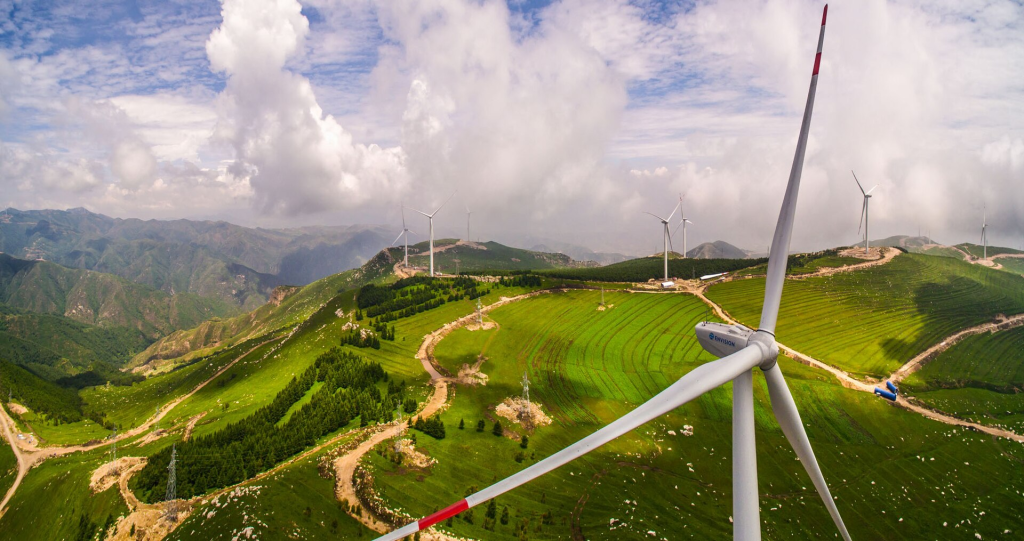
As the world moves towards renewable energy, one nation stands head and shoulders above the rest. China, the largest emitter of greenhouse gases since the early 2000s, is leading in the production, installation, and export of renewable technologies.
In 2020, China pledged to increase its solar and wind power capacity to 1200 gigawatts by 2030, three times its capacity at the time. In 2022, it installed roughly as much solar photovoltaic capacity as the rest of the world combined and went on to achieve its goal six years ahead of schedule. Despite this, China still generates 70% link of its energy from fossil fuels. This is partly due to inefficiencies in grid integration, a problem that the government is trying to fix. Nonetheless, it dominates the production of renewables, making up over 80% of the world’s solar manufacturing capacity and accounting for over 50% of predicted new wind energy capacity.
Renewables are now cheaper than ever, being cost-competitive with gas and coal. Given the experience of two major price shocks in recent years, the war in Ukraine and the American-Israeli war on Iran. These economic advantages are a reason for governments to invest in renewable energy beyond simply the health of the planet. Phasing out oil in favour of renewables can, to a degree, make energy markets more resilient in the face of uncertain geopolitical events. Whatever the outcome, China is ready to provide.
China is also leading in the production of Electric Vehicles (EVs). In 2024, it surpassed Japan to become the world’s largest car exporter, with EVs making up 40% of exports. As domestic growth starts to slow, China’s EV companies are likely to push aggressively into foreign markets. China has had great success in scaling up production of EVs whilst keeping costs down for consumers and producers alike as a result of significant government intervention. A combination of government grants and subsidies for manufacturers totalling over $230bn in the period of 2009-2023, as well as purchase tax exemptions, and government trade-in schemes that rewarded consumers up to a maximum of 20000 Yuan ($2850). Additionally, the ability to manufacture most EV parts, especially batteries, domestically gives China a significant advantage. Leapmotor reportedly produces roughly 60-70% of its components in-house. Leapmotor is a comparatively small brand compared to BYD, which overtook Tesla as the largest seller of EVs worldwide. BYD is reported to manufacture 80% of its Tier 1 components (a category comprising complex systems such as braking), in contrast to Tesla’s 37% of Tier 1 components, according to the Rhodium Group thinktank. This, as well as China’s success in scaling up renewables production, is owed to the country’s dominance in the rare earth sector. China accounts for 70% of global mining, 90% of separation and processing, and 93% of magnet manufacturing. This enables China to have tight control over the supply chains required to manufacture not only lithium-ion batteries and other EV components, but also photovoltaic and wind energy technology.
The scale of China’s vertical integration, subsidised manufacturing, and levels of production are cause for concern for many Western nations. In light of the use of government subsidies to keep prices “artificially low”, according to Ursula von der Leyen, an anti-subsidy probe was launched into the Chinese EV supply chain. It stated that China unfairly used subsidies to bolster its EV industry. The EU has imposed countervailing duties on imports of Battery Electric Vehicles (BEVs) from Chinese producers for 5 years. This may slow demand somewhat in the short term; however, some experts say that these measures are insufficient. Instead, they stress the need for a stronger industrial policy in Europe and more investment. A report by the European Parliament highlighted how China now produces over half of the world’s EVs, with many Chinese companies looking to break into the EU market. According to a recent JP Morgan report, China is likely to control 20% of the regional market by 2028. This is up from just under 3% in 2020. This year alone, industry giant Chery is predicting a 27% increase in EV exports, as the global energy crisis fuels demand for battery-powered vehicles. This, combined with many Western companies moving production to China, risks disrupting the automotive supply chain in Europe, which accounts for 7% of the EU’s GDP and 13.8 million direct and indirect jobs.
Whilst China may be able to provide for Europe’s, and much of the rest of the world’s, demand for renewable technologies, there are significant risks involved in investing. A report co-authored by Michal Meidan, head of China energy research at the Oxford Institute for Energy Studies, and Michael Collins, former deputy head of national security strategy, analysed Europe’s over-reliance on Chinese green technology. The report warns of unchecked dependence on China for renewable technologies. It highlights thepotential risks to the automotive, AI, and renewable energy industries, as well as the potential to increase China’s geopolitical leverage and to widen Europe’s trade deficit with China. For example, the report found that China accounted for 98% of European solar panel imports, 88% of lithium-ion battery imports, and 61% of inverter imports. The report went on to highlight the threats to national security that reliance on Chinese battery production could pose. The report explained that “China will almost certainly use its low-carbon technology to conduct espionage against key European intelligence priorities” link. Batteries are also vital components in modern warfare, used in the production of unmanned aerial vehicles, loitering munitions, autonomous underwater vehicles, and more.
Aside from the economic and security risks of using Chinese renewable technology, there are also the political risks. The report link highlighted the potential backlash from Washington if Europe continued purchasing Chinese renewables. Europe’s pivot towards America’s trade rival risks reducing fossil fuel imports at Washington’s expense. As a result, there could be repercussions. Such as sanctions, breakdowns in diplomatic relations, and withdrawal of diplomatic and military support are all potential scenarios, and are not without precedent. In January 2026 , Trump threatened sanctions on Canada if it signed a trade deal with China, which, among other things, included reducing tariffs on Chinese EVs. The US may also reconsider its position on NATO/Ukraine to put pressure on Europe if it feels that it is failing to meet its demands. Equally worrying is the potential for Europe to become over-reliant on China as it attempts to transition away from fossil fuels. China has a tight grip on international supply chains across many sectors, including rare earth materials, which it has previously weaponised for political gain. Beijing may use this influence to intimidate dissenting nations from opposing any future actions in the South China Sea, and to pull emerging economies further into its sphere of influence.
At this moment, Europe finds itself between a rock and a hard place regarding the future of its energy sovereignty. To move toward its goals of carbon neutrality and assert its energy sovereignty, the EU must invest in more renewable technologies. However, by doing so, it risks sacrificing its independence in the energy sector and becoming over-reliant on Chinese technology. The EU is aware of the challenges it faces and has enacted legislation such as the Critical Raw Materials Act, which sets out strategies to ensure a more robust and resilient rare earths supply chain, including setting targets for domestic production and processing of rare earths and limits on imports from other nations. However, the plan has yet to prove significantly effective. It is at present uncertain how Europe will compete with China’s already established and rapidly growing market presence.
America’s biggest prize: California heads to the polls for Gubernatorial Primary race

.jpg)
.jpg)

Noah Allerton
On Tuesday 2 June, voters in California headed to the polls for the primary election in the race for Governor. With almost 40 million inhabitants, California is the most populous state in the union, with its Governor being responsible for a state with a GDP larger than all other independent countries except Germany, China, and the US itself.
A primary is the election before the election; the two leading candidates in the primary will advance to the general election in November. California’s primary system is different from the way other states run it. Many states separate their primaries by political party, therefore ensuring that one candidate from each party is on the ballot paper. In California, this is not the case: all parties compete in the same primary, in a process known as a “jungle primary”. This system, and the plethora of candidates in 2026, has made this election in California perhaps even more important than November’s 2026 General election. Both parties have realistically aimed, at least at some points in the campaign, to secure a “lock-out”, where two candidates from the same party achieve first and second place in the primary.
Opinion polling in the immediate run up to election day showed three candidates who appeared best placed to make the top two: Xavier Becerra (Democrat), Steve Hilton (Republican), and Tom Steyer (Democrat). However, this has been a long campaign, with the leading candidates shifting greatly over the past six months. Earlier this year, opinion polls pointed to the possibility of a Republican lockout, with Hilton and fellow Republican Chad Bianco set to place first and second in many polls due to the greatly splintered Democratic field. This outcome would have been a first for the traditionally strongly Democratic state of California: Republicans have not won a single statewide race for any office since Arnold Schwarzenegger was reelected Governor in 2006.
This outcome became markedly less likely upon the withdrawal of Democratic candidate Eric Swalwell on 12 April. Swalwell, a seven-term Congressman in the Bay Area, was accused of sexual misconduct by four women, ranging from harassment to rape: Swalwell denies all allegations, but dropped out of the race saying that the fight against the “false allegations” was his own, not the campaign’s. With one fewer major Democratic candidate fighting for votes, and Chad Bianco’s polling declining, the chance of a Republican lockout looked very unlikely by late April.
Before Swalwell dropped out, the Democratic candidate closest to him in most polls was Tom Steyer. Steyer, a billionaire who founded hedge fund Farallon Capital in 1986, has never held elected office. He turned from the business world to an active role in politics in 2012, before founding the organisation NextGen America in 2013, an organisation designed to activate and mobilise younger voters in American politics. Steyer’s political efforts would culminate in a run for the Democratic nomination for President in 2020: Steyer spent an astonishing $341m according to some sources, but did not make any headway in the contest and withdrew in February 2020.
Steyer’s campaign for Governor has been incredibly untraditional. Despite his billionaire status and spending an eyewatering $215m of his own funds on the campaign by election day, Steyer has donned caps with the words “class traitor” and pledged to “tax the hell out of the rich and billionaires” should he win the election. Steyer has a unique challenge: he is the candidate of progressive voters in this race, but for many progressive voters the thought of voting for a billionaire is too much. As of 6 June, with 68% of results reported, Steyer is in third, however with many votes still to count in largely Democratic areas, with an estimated 650,000 left to come from Los Angeles county alone (more than double the gap between Steyer and Hilton), the Steyer campaign remains optimistic he may close the gap and make the General Election.
Currently in second is leading Republican, Steve Hilton. Hilton, like the last successful Republican candidate for Governor, Schwarzenegger, is not a born and bred American. Hilton was born in London as the child of Hungarian immigrant parents, and only moved to California in 2012, before becoming an American citizen in 2021. Before moving to California, Hilton was head of Strategy in Number 10 under David Cameron, and was a pioneer in the changing of the Conservative Party’s image to be closer to the centre. Since then, Hilton has hosted his own show on Fox News, “The Next Revolution”, from 2017 to 2023, becoming an ardent supporter of President Trump, before announcing his run for Governor in April 2025.
Hilton has secured the all important endorsement of President Donald Trump in this race, which came just a week before Swalwell dropped out. This endorsement perhaps seems peculiar: a man that aided in taking the Conservative Party to the centre, securing Trump’s endorsement seems incredibly difficult. However,Hilton’s politics have undergone a transformation in the past decade. In 2017, Hilton advocated for “positive populism”, and now nine years later his campaign for Governor has contained policy much in line with that of the Trump administration. This endorsement likely ensured that Hilton would be the top Republican, but whether he would make the top two overall would be a harder fight. On current figures, it is still deemed too close to call whether Steyer will usurp Hilton, however, it seems more likely than not that Hilton will remain in top two: he currently sits 30,000 votes behind leader Becerra at 68% counted.
Finally, the current leader: Xavier Becerra. Becerra is the continuity candidate in this election, having served as Attorney General of California under current Governor Gavin Newsom, and then as Secretary for Health and Human Services in President Biden’s cabinet. Becerra experienced somewhat of a late-stage surge in the polls, having gone from the mid single-digits to the leading Democratic candidate in most polls in just over a week. The primary explanatory factor for this is likely Swalwell dropping out of the race, but Becerra’s rise cannot be understated: it was a turnaround of monumental proportions.
On 5 June, the Associated Press made the call that Becerra had successfully advanced to the General Election in November. He currently leads at 68% reported, and whilst his opponent is yet to be decided, hypothetical polling for POLITICO released on 1 June had Becerra leading Steyer by 11 percentage points, and Hilton by 23 percentage points. Becerra therefore is in prime position to become the next Governor of California, and most projections agree: the race has been categorised by almost all predictors as being “Safe” or “Solid” Democratic for the entirety of the race. There is seen to be little way Hilton would win the General Election, should Steyer not overtake him.
California is incredibly slow at counting votes: in the 2024 Primary Election, it took ten days for the state to reach 95% reported. It therefore may be days, possibly even more than a week, before the final image of the election becomes clear. If there is one certainty however, it is that incumbent Governor Gavin Newsom will be succeeded by a Democrat, an outcome that was put into doubt as little as two months ago. There remains the possibility that Democrats reverse their fortunes entirely, and achieve a lockout themselves for the first time in a California Gubernatorial election. Should this happen, it will be a far more uncertain further five months of campaigning between the two Democratic candidates, who themselves have vastly different visions for the union’s most populous and wealthiest state.