


Editor’s Note
Outside OX1 is back for Week 5! I hope everyone has survived the heatwave that has swept Oxford in the past week; whether you’ve been punting, chilling in University Parks, swimming in Hinksey or Port Meadow, or just waiting for your college library to cool down so you can focus on work, the peaks of heat seem now to be behind us. What better way to start off your week than a quick round up of the top stories that you may have missed in the last 7 days in a heat-induced daze, and our Global Affairs team have got just that for you, with a look across Türkiye, Ghana, and the Iran War.
This week, Lewis Haynes takes a look at the ousting of Özgür Özel, leader of Türkiye’s main opposition party, the CHP, by the courts. They overruled the 2023 leadership election, and have ordered Özel be replaced by former leader Kemal Kilicdaroğlu, who lost the 2023 President Election to incumbent President Erdoğan. Lewis explores the implications of this ruling for the opposition in Türkiye, at a time where they have not been able to usurp Erdoğan’s Justice and Development party since it came to power 24 years ago, and how they can move on from this, and look forward to elections in 2028.
Then, I explore Ghana’s newest law cracking down on LGBTQ+ people in the country. New laws surrounding the “promotion” of LGBTQ+ themes and “lifestyles” with harsh prison sentences have been passed at the second attempt, after a five year process from their initial proposal. I take a look at the seemingly bleak inevitability of these laws, and how they are not too dissimilar from those recently applied by many other African states, in a damning blow to LGBTQ+ people across the continent as we enter Pride Month.
Finally, Niamh Tarrant takes a look at perhaps the biggest story of the week: a proposed deal between the United States and Iran to end the Iran War. Her article goes through previous attempts at deals, what makes this deal different, and the current state of it, answering the key questions: does it seriously have chance of being agreed to, and will Donald Trump or Mojtaba Khamenei stick to its terms?
We hope Outside OX1 gives you the round up you are after, and a quick escape from the fastly progressing Trinity. Not long until the long vac now, but our Global Affairs team will be right here with you up to the end of term bringing you more pieces from around the world.
Protests in Ankara Following Court Ruling Ousting Leader of the Opposition

Lewis Haynes
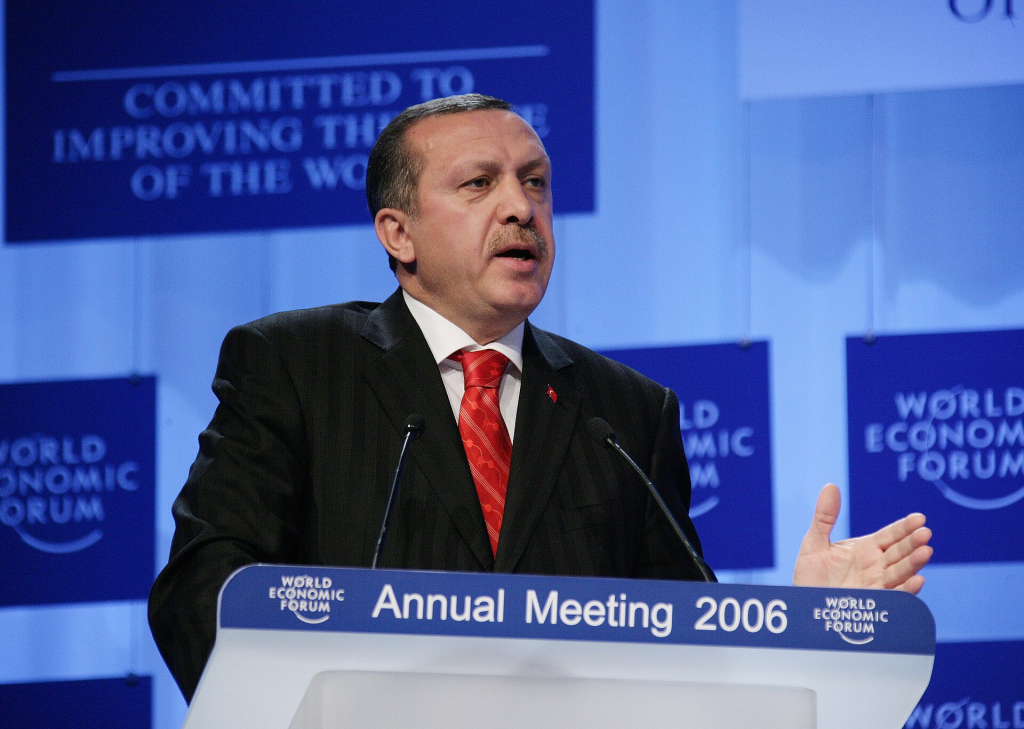
A court ruling on 21 May 2026 ousted Özgür Özel, leader of the Republican People’s Party (CHP), the main opposition party in Türkiye. This decision strengthened the ruling President Recep Tayyip Erdoğan but has caused popular and political backlash. Özel and other leading CHP figures have condemned the court’s decision as a “judicial coup” by Erdoğan and his Justice and Development Party. At a rally held by Özel in Ankara, protestors were dispersed using teargas and a water cannon. The ruling, however, is only one part of a long-running effort by Erdoğan to suppress opposition to his government. Erdoğan has previously been accused of wielding the judiciary as a political weapon, facilitated by constitutional reforms that have increased his presidential power.
The Court Ruling
The court ruling in question declared that a leadership contest inside the CHP in 2023 was invalid. This contest was where Özel came to lead the CHP. A lower court had previously rejected allegations of vote buying during the primary, but the appeals court overturned this 2025 decision. Now, the court has ordered that Özel be replaced by 77-year-old Kemal Kilicdaroğlu. Kilicdaroğlu lost the 2023 presidential election to Erdoğan, and then subsequently lost the CHP primary to Özel.
Ankara Mayor Mansur Yavaş told the BBC that the ruling aimed at dividing Türkiye’s main opposition party and making it ineffective. Yavaş was the CHP’s candidate for Ankara’s 2019 mayoral elections, being elected with 50.93% of the vote, around four points higher than the Justice and Development Party candidate. He noted the timing of this recent judicial development, with many predicting snap elections on the horizon.
Enforcement and Protest
On Sunday 24 May, Ankara’s governor ordered those inside the CHP headquarters to be evicted. Özel said riot police then violently broke into the CHP building, fired teargas, and beat party members before forcefully evicting them. Özel has vocally criticised the court’s decision. “We are experiencing a dark day for Turkish democracy”, he said, and stated his intention to challenge the ruling in courts and with Türkiye’s supreme election council.
Within a few days of the eviction, just before Türkiye shut down for the Eid al-Adha holiday, Özel called a midday rally. Attempts were made to prevent or limit the rally by the governorate in Ankara. It ordered for Cumhuriyet Square to be closed and for riot police to be deployed. Nevertheless, thousands gathered to demonstrate their support for Özel and opposition to the government. Atop a bus, Özel gave a speech to the crowd, calling for an immediate party congress for members to choose their leader.
Riot police forcefully broke up the rally, using tear gas and a water cannon on demonstrators.
The Wider Pattern
Nine members of the CHP have been arrested, reportedly due to alleged irregularities at the same party congress around which the court’s decision has revolved. Critics of the government have pointed to a wider pattern of judicial attacks on the opposition party.
Ekrem İmamoğlu, Istanbul’s mayor and seen by many as Erdoğan’s main political rival, was previously charged with 142 offences that could lead to 2,000 years of jail time. In the wake of this case, there have been multiple waves of arrests against the government’s political opponents. Human Rights Watch has argued the government is misusing criminal law as a weapon against political opponents, such as İmamoğlu. In the same report, HRW pointed to the judicial procedures for İmamoğlu’s trial. It argued these undermined his right to a fair trial.
Justice Minister Akin Gürlek insisted that the ruling “reinforces our citizens’ trust in democracy”. However, his own links to the judicial crackdown on the CHP have been the subject of much criticism. Gürlek, at the time Deputy Justice Minister, was appointed in October 2024 to be Istanbul’s chief public prosecutor and to head the investigations into İmamoğlu. In February, following the end of these investigations, Gürlek was appointed justice minister. Human Rights Watch stated that his “successive appointments highlight the flagrant nature of government influence over prosecutorial and judicial appointments and decision making in Türkiye”.
Erdoğan’s control over the judiciary emerged from constitutional reforms that were carried through on the back of a 2016 coup attempt. The Turkish government attributed the coup of July 2016 to the Gülen movement, an organised community (not a political party) named after the US-based Islamic cleric Fethullah Gülen. A state of emergency was declared on 20 July 2016. Over the course of this 2-year state of emergency, hundreds of thousands were arrested and detained due to alleged Gülen links. Meanwhile, Erdoğan simultaneously moved to pass constitutional reforms. These concentrated more power with the President, and reduced parliamentary power.
A report by the Turkey Human Rights Litigation Support Project (TLSP) links Erdoğan’s 2017 constitutional changes to the government’s influence over the judiciary. It found that these amendments expanded Erdoğan’s power over the selection process for judges and prosecutors. They said that this had undermined the judiciary’s independence. Following the coup, more than 4,000 judges and prosecutors were dismissed. Since then, close to 10,000 were recruited. The TLSP says these selections favoured candidates friendly to the ruling government.
What Now for Erdoğan’s Rule?
The government still denies the criticisms that it weaponises the court against political opponents. It maintains that the judiciary is independent.
Erdoğan has led Türkiye since 2003. He was first prime minister and now president. Many analysts predict snap elections will soon be called. The 72-year-old leader will be unable to run for president again if he waits too long to call elections. His two options are either to call elections or change the constitution. With these crackdowns on opposition, any election may be no contest at all.
Ghana Passes anti-LGBTQ+ Bill. Again. What’s Different This Time, and What Next?

Noah Allerton
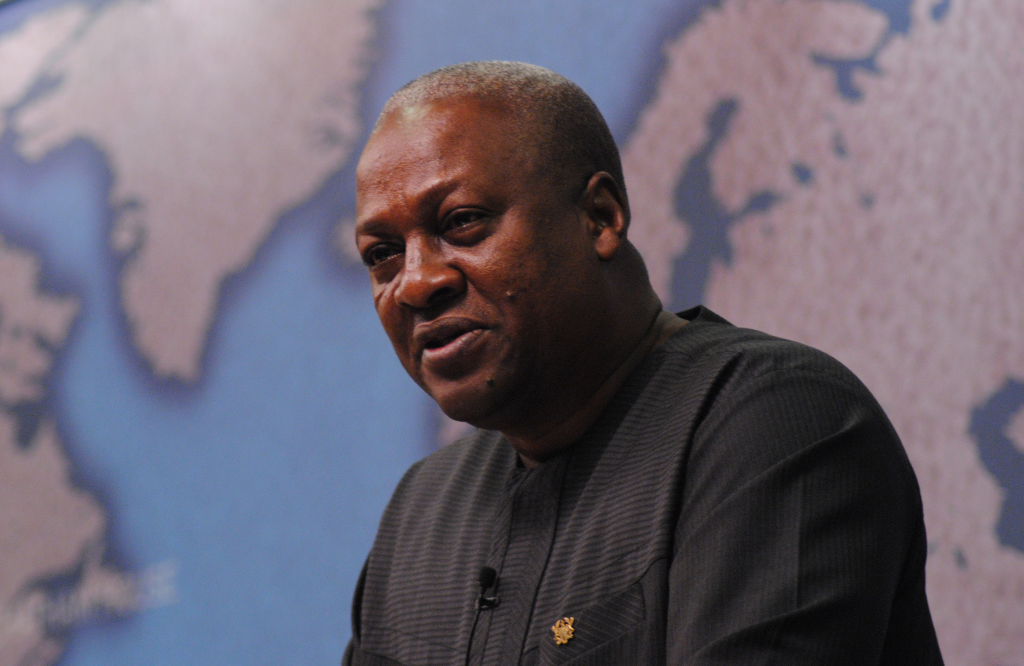
On 29 May 2026, the Ghanaian Parliament passed the “Human Sexual Rights and Family Values Bill”. This bill is designed to pass into law strict prison sentences for engaging in, or promoting, LGBTQ+ activities, intercourse, or organisations. This, however, is not the first time that the Ghanaian Parliament has attempted to pass this bill; it previously passed on 28 February 2024. At that time, President Nana Akufo-Addo refused to sign the bill, and it expired at the end of that parliamentary session. Now, two years on, it appears far more likely that President John Mahama will sign this bill into law. There are two important questions to be answered here: what has changed in the past two years, and what will this bill entail for LGBTQ+ people in Ghana?
The First Attempt
The Human Sexual Rights and Family Values Bill was introduced to the Ghanaian Parliament for first reading on 30 June 2021, by a group of eight MPs, primarily of the opposition National Democratic Congress. Importantly, the Speaker of Parliament Albin Bagbin believed that the bill would be passed “within six months”.He would quickly be proven wrong. The introduction of the bill was primarily in response to the opening of Ghana’s first LGBTQ+ community centre in the capital, Accra, earlier in 2021. Homosexual intercourse itself was already against the law in Ghana, carrying a three-year prison sentence, courtesy of a law that has been in effect since British colonial rule, dating back to 1892.
The bill would not reach parliament for third reading until February 2024, where it was voted unanimously to pass. The version of the law that was passed at this point was slightly more watered down than the original. Many prison sentences were slightly reduced, and a clause on conversion therapy was omitted. Had the bill been signed into law, it would have immediately criminalised the funding, or organisation, of LGBTQ+ advocacy groups, or any group that was deemed to be promoting LGBTQ+ people or their “lifestyle”.
The bill, however, would not become law without the President’s signature. Then President Akufo-Addo refused to assent to the bill until the multiple Supreme Court cases brought against the bill were resolved. A high court tossed out parliamentary calls to force Akufo-Addo to assent to the bill in April. Importantly, there was a ticking clock at this point: like many parliamentary democracies, Ghanaian legislation that is not given assent by the end of a legislative session must then be reintroduced in the next session. Ghana would be heading to the polls in December to elect a new parliament and President, so if Akufo-Addo did not give assent to the bill by then, it would need to be brought back after the elections. Akufo-Addo did this, staying true to his word, and the Supreme Court would not dismiss the cases until 18 December 2024, 11 days after the election. Three and a half years of attempts to pass the Human Sexual Rights and Family Values Bill, all to fail.
The Second, Successful, Attempt
John Mahama was elected President in 2024, having previously served as President from 2012 to 2017. Mahama, a member of the National Democratic Congress party that introduced the bill, strongly supported it and had accused Akufo-Addo of not signing the bill due to fears of losing foreign aid. Nevertheless, bringing the bill back to parliament was not at the top of his agenda. When it was scheduled to be brought back for consideration in October 2025, it ended up being cast aside due to a lack of parliamentary time.
Finally, on 29 May 2026, a month short of five years since it was first introduced, the Human Sexual Rights and Family Values Bill passed the Ghanaian Parliament for the second time. Mahama has said he will sign the bill into law, marking the end of this saga. For LGBTQ+ people, however, the end of this saga is a brutal blow. The bill’s headlines include ten-year sentences for those promoting LGBTQ+ activities, three-year sentences for identifying as LGBTQ+, which joins the existing three-year sentences for engaging in intercourse. Furthermore, the bill introduces a “duty to report” prohibited acts to police, introducing a culture of fear and scepticism for all LGBTQ+ people in the country.
Reaction from human rights organisations has been damning. Gloria Boadu, a human rights lawyer, condemned the bill as targeting not just queer people, but “anyone who believes in human rights”. Furthermore, Human Rights Watch emphasised the problems of the duty to report, claiming it places lives at risk whilst also “encouraging citizens to surveil and denounce one another”.
What next?
Due to the bipartisan support of the bill, it seems very unlikely that it could be reversed by a future force in Ghanaian politics. Mahama will almost certainly sign the bill, due to his previous support, and his belief that “marriage is between a man and a woman”. So, for LGBTQ+ Ghanaians, it is difficult not to feel that this is a bleak turning point.
Ghana is not the only African country to have introduced recent crackdowns on LGBTQ+ rights: in March, Senegal passed a law doubling prison sentences for sexual relations between homosexual couples from five to ten years, with similar provisions to Ghana’s law on the “promotion” of homosexuality. In Burkina Faso, a country that did not inherit criminalisation of homosexuality from colonial penal codes, same sex relations were criminalised in September 2025 for the first time. Furthermore, Uganda implemented one of the strictest LGBTQ+ laws in the world in 2023. The “Anti-Homosexuality Act” implemented life sentences for homosexual acts, and the death penalty for cases where one party is below the age of 18, or one party has an illness such as HIV.
The regression of LGBTQ+ rights in many African states causes great concern. As many LGBTQ+ people prepare to celebrate Pride Month during June, the increasingly discriminatory actions of a small number of states are very worrying. For LGBTQ+ people in these countries, there currently is no happy ending, and no celebrations without great consequence. As Oxford, the UK, and much of the Western World raise our rainbow flags for a month on 1 June, I ask that you spare a thought for those who do not have the privilege of being able to do so, in Ghana and beyond.
United States and Iran Come to a Peace Deal


.jpg)
_transits_the_Strait_of_Hormuz._(50679762106).jpg)
Niamh Tarrant
Previous Deals
In the months of the Iran and US-Israel war, the relationship of the nations to each other, and to peace, has been tumultuous. Although the ceasefire has been in place since 8 April 2026, there is currently no long-term agreement for the end of the war. This current deal is not the first attempt at peace between the states, but this does not mean that the current attempt will fail. The first round of negotiations was on 10 April, 2026. In these negotiations, Iranian and US officials (including JD Vance) met in Pakistan in an attempt to bring closure to the violence. After all-nightnegotiations, no agreement was formed. The second sporadic try at bringing the war to an end occurred over the week of April 18-24, 2026. There were several different plans for in-person negotiations; these failed, and once again, officials came back empty-handed without a peace deal.
What is in the agreement?
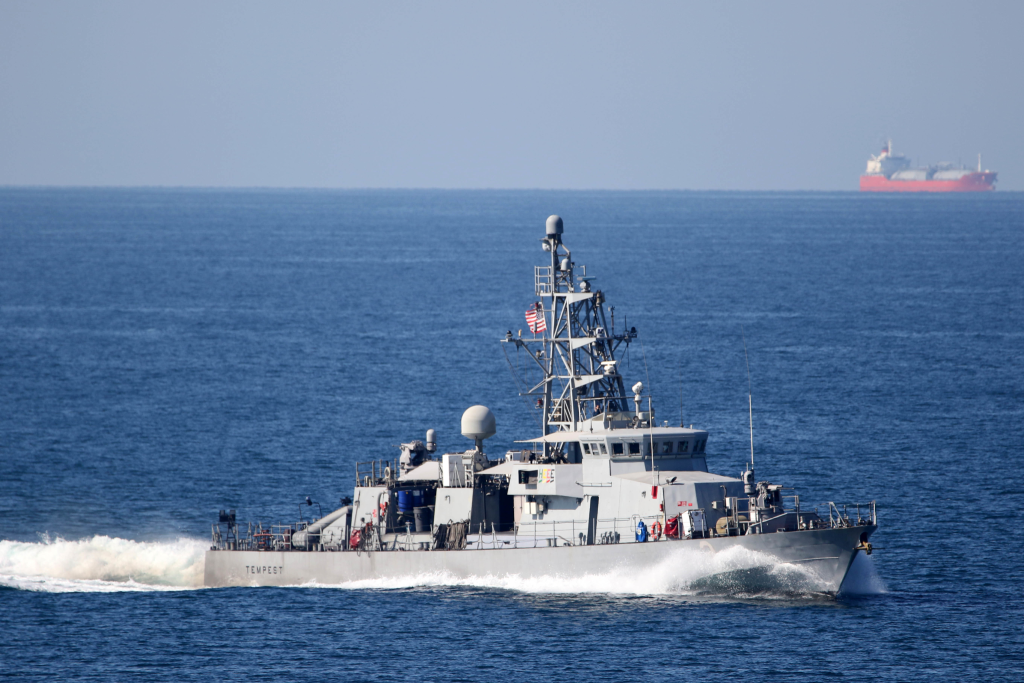
A proposed deal addresses many of the issues surrounding the Strait of Hormuz. Firstly, it outlines that the Strait of Hormuz will reopen, allowing shipping to return to pre-war levels. This reopening will occur over a period of 30 days, relieving some of the pressure on the oil market as more oil tanks are able to pass through the Strait. This will ultimately lead to lower gas prices, as one-fifth of the world’s liquified natural gas and oil usually passes through the strait. Allowing the supply chain to operate more smoothly will lower costs and hence prices. The conditions policing the Strait will impact not only American gas prices but global gas prices too. At this time, it appears that no toll will be collected for ships passing through the strait. This is beneficial as a toll would increase the cost of businesses shipping oil through the Strait. To manage this increase in cost, firms would then increase their prices. Due to the core role of oil and gas across different sectors, it is likely that any business that relies on these resources would also inflate its prices, escalating inflation. Nonetheless, there is some suggestion that Iran is going to maintain greater control than it previously had over the strait.
In exchange for opening the Strait, Iran has called for the US blockade on its ports to be removed. The removal of the blockade on ports will help Iranian trade. Iranian officials have also called for US military forces to leave Iran (according to the state-run Islamic Republic of Iran Broadcasting [IRIB]).
Iran’s nuclear program has been a long-term source of tension between the two nations, as well as a reason for the war. Iran’s uranium stock (uranium is a key resource for a nuclear bomb) has not been addressed in the deal. Regardless, both sides remain firm in their pre-existing stance regarding Iran’s nuclear program. Iran has made no promises to hand over any stock, and has insisted that any negotiations in regards to uranium can only occur after the war has come to an end. On the contrary, the US maintains that Iran needs to give up its uranium stores. It is clear that the negotiations have not managed to find an in-depth compromise to resolve these opposing views.
Iran is demanding the unfreezing of billions of dollars that are being held in foreign banks. There is some suggestion that $24 billion of Iranian assets could be unfrozen if the deal is signed. Although there is some suggestion that any unfreezing of assets will only occur after the strait is reopened. Either way access to this money will be beneficial to the Iranian government due to the current economic decline that the country is facing.
Any negotiations around sanctions have been postponed until after the memorandum is signed. Any alteration to sanctions will have a significant economic impact on whatever parties were involved in the sanctions to begin with.
Negotiations around ballistic missiles, both in terms of the program and the threat of long-term ballistic missiles, are absent from the memorandum. Whatever agreement is reached, if any, in relation to the weapons, will be influential in the national security of the countries.
It is unclear how the violence in Lebanon will be addressed by the memorandum. Iranian officials have pushed for the end of the war not only in Iran but in Lebanon, too. However, the US’s staunch pro-Israeli rhetoric could prove to be problematic. The US’s position in relation to Israel, and subsequently Lebanon, may conflict with Iran’s call for peace in Lebanon. Although Israel and Lebanon are currently in a truce.
The Current State of the Deal
The deal has not yet been signed by either party, but there is still a clear memorandum in place. Both parties continue to work on it and make the relevant adjustments and compromises. The fact that this process is taking time is not inherently a negative thing. It means compromises in relation to the nuclear program, missile programs, and sanctions could all still be reached. However, as of Thursday, both the US and Iran were victims of various forms of violence and have subsequently blamed the other. Moreover, conflicting reports of the memorandum, and the confirmation by US officials that they can and will still return to fighting, suggest that there could still be a long way to go before a deal can be finalised. However, the memorandum still marks the beginning of what could be the end of months of violence and turmoil.