


The Editor’s Note
Welcome back to another issue of Outside OX1! I hope everyone celebrated a lovely Valentine’s, Palentine’s or Galentine’s Day. It is easy to fall under the spell of February, donning those rose-tinted glasses, viewing the world with just a bit more love. I certainly have, as I dabbled in writing a romantic poem for my Valentine which is a grave mistake that nobody should ever encourage me to do. Whether you have been swooning with a significant other, celebrating your affection for your friends, watching the Six Nations, or just practicing a little self-love, it may happen that the news has slipped off your mind. To that I say, thank goodness. Now, however, it is time to touch down once again with some of this week’s global headlines.
In Canada, eight people were killed in two shootings in the town of Tumbler Ridge, British Columbia. After killing two family members at her home, then five students and a member of staff at a school, the only suspect also shot herself and died at the scene. As one of the deadliest shootings in Canadian history, it has shocked this small town with a population of just 2,400, and has brought citizens together in their grief.
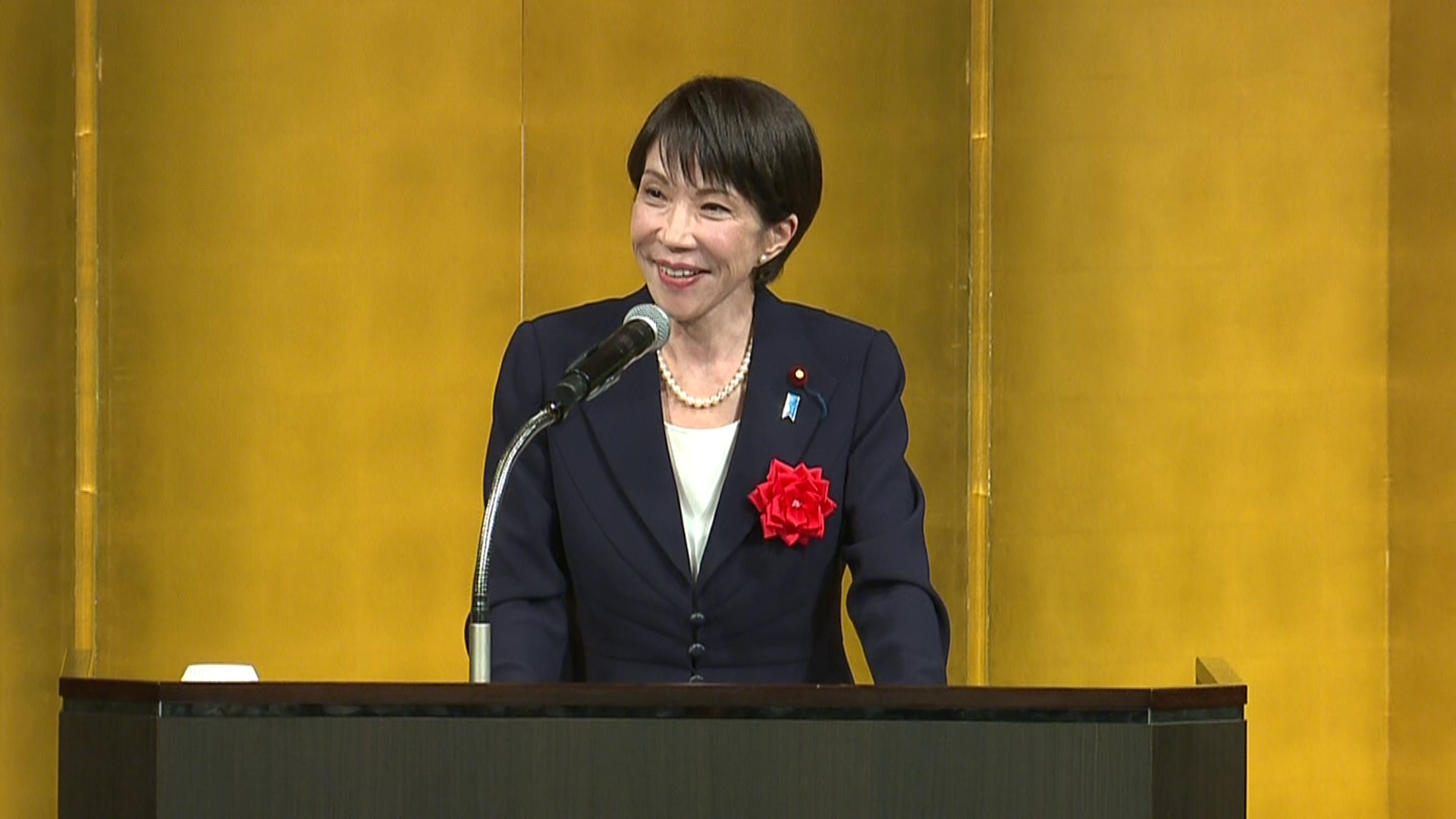
In Japan, Prime Minister Sanae Takaichi and her Liberal Democratic Party were reelected in a landslide, winning the greatest number of seats in the post-war era of Japanese politics. This comes just 16 months after the party had their worst results ever, barely clinging on to power. The first woman in Japanese history to serve in that office, Takaichi is now looking to live up the title some media outlets have bestowed upon her: Japan’s ‘Iron Lady’.
In Armenia and Azerbaijan, US Vice President JD Vance’s visit led to deals that would strengthen cooperation between the United States and the two neighbouring countries. It would also reinforce the position of the US as mediator in the Armenia-Azerbaijan conflict, consolidating the presence of the US in a region historically within Russia’s sphere of influence.
School Shooting Brings Canadians Closer Together


Thomas Yates
Eight people were killed in two shootings in the Canadian town of Tumbler Ridge, British Columbia, on 10 February. The only suspect, 18-year-old Jesse Van Rootselaar, also shot herself and died at the school where she murdered five students and a member of staff, after having killed two family members at her home. Taking place in a small, tight-knit community, in a country where gun violence is rare, the incident has brought both local concern and international attention.
A police briefing by Royal Canadian Mounted Police Deputy Commissioner Dwayne McDonald on 11 February outlined the key details. It is believed that Van Rootselaar shot and killed her 39-year-old mother Jennifer Strang, and her 11-year-old stepbrother, at their family home. She then made her way to Tumbler Ridge Secondary School, armed with a modified handgun and a long gun. There, one victim died in a stairwell, while the rest were found in the library. McDonald reported that the police were informed of an active shooter at Tumbler Ridge Secondary School at around 1:30pm (Pacific Standard Time, which has been used in most official reporting but runs behind the local Mountain Standard Time by an hour) and arrived within minutes. Hearing gunfire, they entered the building and found Van Rootselaar, killed by a suspected self-inflicted wound. Police were only alerted to the deaths at Van Rootselaar’s home later. They arrived at 2:45pm PST, after a young female relative at the house went to a neighbour, who proceeded to call the police.
No motive for the attacks has yet been established. Van Rootselaar was transgender, publicly identifying as female from around 2020, but when asked directly if she might have been the victim of transphobic bullying at school, McDonald suggested that there was no evidence of this. Moreover, though she was previously connected to Tumbler Ridge Secondary, Van Rootselaar had dropped out and not attended the school for about four years. The student victims were aged between 11 and 13; it is unclear what, if any, relationship she might have had to them, and no note from Van Rootselaar has been found to clarify matters. She may have had a difficult childhood; a judge in a family court dispute wrote in 2015 that the children had “an almost nomadic life,” having moved home with their mother multiple times. The outcome of the ruling was that their mother was to grant her children telephone access to their father.
It has, however, been confirmed that police had been called to Van Rootselaar’s home on multiple occasions in the last two years, at least some of which were related to mental health and weapons. She had been subject to mental health assessments under British Columbia’s Mental Health act several times. On one or more occasions, firearms were taken from the home by police, but the owner had successfully petitioned to have them returned. Van Rootselaar previously held a valid firearms license, which had expired by the time of the shooting. Her interest in weapons is recorded virtually, too. It has been confirmed that she created a shooting simulator set in a shopping mall on Roblox, a virtual platform that lets users design their own microgames. Her mother posted a photo on Facebook in 2024 of a cabinet filled with six hunting rifles, with the caption “think it’s time to take them out for some target practice.” But, Jesse Van Rootselaar did not have any firearms registered to her.
Indeed, it is illegal for minors to own firearms outright in Canada. A Minor’s Licence, which can be granted to people aged 12 to 17 (or possibly below 12, in the case of communities relying on sustenance hunting), permits the borrowing of non-restricted firearms for an approved purpose, such as shooting competitions or hunting. One must have passed the Canadian Firearms Safety Course (though, again, exceptions apply for hunting families) and have consent from parents or guardians over the terms of the license. Minors without a license may also use a firearm under the direct supervision of someone who is licensed to use it. Adults may have a Possession and Acquisition Licence, renewable every five years, which requires passing the same safety course. This allows Canadians to own firearms outright, though they should also have a registration certificate for each firearm that they own.
Effort has been made in recent years to tighten gun laws in Canada. A shooting in Nova Scotia that killed 22 people in April 2020 sparked a clampdown on assault rifles and similar weapons. More than 2,500 such makes have been banned since May 2020, and a buyback system has been implemented to encourage owners to turn these weapons in. Since 2022, there has also been a freeze on the acquisition and importation of handguns. Canada has 0.9 gun-related homicides per 100,000 people each year, just a fraction of the US’ 6.7 and Mexico’s 22.4, but this tragedy may well push restrictions further.
It has come as a huge shock that one of Canada’s deadliest ever shootings should strike this town, which is home to just 2,400 people. The town’s mayor, Darryl Krakowka, said, “I will know every victim. I’ve been here nineteen years, and we’re a small community.” A candlelit vigil on 11 February brought Tumbler Ridge, a remote former mining settlement, together. British Columbia’s Ministry of Health is sending professional mental health aid to the town, including a Disaster Psychosocial Support team.
World leaders have expressed their sympathies. King Charles III, Canada’s head of state, said: “We can only begin to imagine the appalling shadow that has now descended across Tumbler Ridge, and our hearts go out to all those whose lives have been so shattered by this senseless act of brutal violence.” President of Ukraine, Volodymyr Zelenskyy, stated: “When children are killed, no one should remain indifferent. Such tragedies should never happen anywhere, in any country in the world.” UK Prime Minister Keir Starmer told the House of Commons that he had “conveyed the UK’s deepest condolences to Prime Minister Carney and the people of Canada for the devastating shooting in Tumbler Ridge.” When Canada’s Prime Minister Mark Carney addressed parliament, he was emotional, praising Tumbler Ridge, in its history and its present day, as representing “the very best of Canada. Resilient, compassionate and strong.”
Takaichi’s Gamble: Japan’s First Female Prime Minister Secures Historic Election Win

Noah Allerton
On 8 February, Japanese Prime Minister Sanae Takaichi and her Liberal Democratic Party (LDP) were successfully reelected in a landslide, winning the greatest number of seats in the post-war era of Japanese politics. In contrast, just 16 months ago in October 2024, the LDP had their second worst ever result, barely clinging on to power in a hung parliament. Takaichi took a gamble by calling this election just short of three months after becoming Prime Minister; for her, the gamble has more than paid off.
Sanae Takaichi became the 66th Prime Minister of Japan on 21 October 2025, and is the first woman in Japanese history to serve in that office. She became leader of the governing LDP in a close three-way contest after the incumbent, Shigeru Ishiba, announced his resignation on 7 September. The LDP was facing low opinion polling, and poor results in the 2025 House of Councillors election (Japan’s upper house), leading to overwhelming pressure on Ishiba to resign. Ishiba himself narrowly defeated Takaichi to become leader just a year earlier, in October 2024.
After Ishiba became leader, he immediately called a General Election. The LDP has won all but one election since its formation in 1955, and has been in government for all but three years of that time, leading to descriptions of Japan as a “one-party dominant” system. The party is typically seen as a big-tent party of the right, ranging from centre-right views to ultranationalist far-right views. In the 2024 election, the LDP faced its second worst result ever, and its worst result since it lost power to the centrist Democratic Party in 2009. Capitalising on the LDP’s failures were predominantly the opposition Constitutional Democratic Party (CDP), the successor to the Democratic Party led by their last Prime Minister Yoshihiko Noda. The centre-right Democratic Party for the People (DPP) also made significant gains. The LDP and their traditional coalition partner, centre-right Komeito, were left 18 seats short of an overall majority, and formed a minority government, relying on support from other parties to pass legislation.
A year later, almost to the day, Takaichi inherited Ishiba’s minority government. However, after Takaichi emerged victorious in the leadership contest, Komeito announced on 10 October, that they would be withdrawing from the coalition agreement with the LDP. An agreement which had been in effect since 1999. Takaichi then opted to establish a coalition agreement with the Japan Innovation Party (Ishin), a party further to the right than Komeito. Takaichi has been described as a “hard-line Conservative”, and is considered to be on the right of the LDP; a coalition agreement with a party further to the right was her simply taking the first step in forming a government more to her own liking. The LDP/Ishin coalition were just four seats short of a majority, as opposed to the coalition with Komeito, giving Takaichi far more room for finding individual representatives to support legislation.
The real story behind Takaichi’s success is her surge in personal poll ratings and the surge in popularity of the government. Her approval ratings after taking office were extremely high. One opinion poll found the approval rating of the government to be 71%, within the top five highest results in nearly 50 years. With these high opinion poll ratings, speculation began to emerge in January 2026 about the possibility of Takaichi dissolving the House of Representatives in an attempt to secure a clear majority. After sending communications to senior LDP members on 13 January, on 19 January, she publicly announced her intention to dissolve the House, and the election date was set for 8 February.
Before the election, the CDP and Komeito announced they would be merging to form a new political party, the Centrist Reform Alliance (CRA). Projections have shown that had the CRA been in place at the 2024 election, they likely would have topped the poll, winning 203 seats and the LDP winning 156, effectively reversing the results of the election.
The true result of the election, however, was a bloodbath for the CRA, and an absolute triumph for Takaichi and the LDP. With 316 seats, Takaichi secured the largest number of seats for any Japanese political party since the Second World War, surpassing the previous record of 309 set by the Democratic Party in 2009. This seismic win gave the LDP a two-thirds majority in the House of Representatives, allowing Takaichi to push through bills even if they were to be rejected in the House of Councillors. The LDP-Ishin coalition does not have even a majority in the upper house following their losses under Ishiba in the 2025 election, making this two-thirds majority incredibly significant. The scale of the LDP’s victory was so large that they did not have enough candidates running to fill every seat that they won; they were entitled to 14 more seats in the “Proportional Representation Bloc” than they could fill, and these were reallocated to other parties.
The CRA suffered terribly, winning just 49 seats (down from 172), and losing nearly half of their vote share. Of these 49 seats, 28 of them were held by former Komeito members (successfully electing all of their candidates), and just 21 by former CDP members, meaning that Komeito now held the greater representative power within the alliance. Co-leaders Noda and former Komeito leader Tetsuo Saito both resigned after the election, with former CDP member Junya Ogawa becoming leader on 13 February.
Credit for the LDP’s victory has been given to Takaichi’s leadership, the strength she and her party appeared to have with younger voters, and former opposition voters dissatisfied with the CDP-Komeito merger voting for the LDP. A win of this size is almost unprecedented in Japanese politics, and presents Takaichi with a firm mandate to do almost anything she pleases. The LDP’s policy programme going into the election promised lower taxes and spending increases. In a country where Prime Ministers often last no longer than a couple of years, Takaichi will be looking to emulate the success of former LDP Prime Minister Shinzo Abe, and live up to the title some media outlets have now bestowed upon her: Japan’s ‘Iron Lady’.
JD Vance Consolidates US presence in South Caucasus in Deals with Armenia and Azerbaijan


Anastasija Vranjes
US Vice President JD Vance visited Armenia and Azerbaijan this week to sign deals that would strengthen cooperation between the United States and the two neighbouring countries, and reinforce the position of the US as a mediator in the Armenia-Azerbaijan conflict. This marks a significant development in the consolidation of US presence in a region which has historically been within Russia’s sphere of influence.
The deal, signed by Armenian Prime Minister Nikol Pashinyan and Vance on Monday, centres around collaboration in the energy sector. The two parties agreed to advance negotiations on a civil nuclear energy deal, including the building of a new nuclear power plant. The agreement licenses initial US exports to Armenia of a value of $5 billion (£3.67 bn), and an added $4 billion (£2.94 bn) in longer-term fuel and maintenance contracts. Vance stated that the US would also export advanced computer chips and surveillance drones, and invest in Armenia’s infrastructure.
Currently, Armenia has one Soviet-era nuclear plant run by Russian state energy corporation Rosatom. The country has plans to replace the ageing plant, and is now considering proposals from US, Russian, Chinese, French, and South Korean companies. This step is part of the country’s wider aim of diversifying partners in energy cooperation, and ending its dependence on imports of Russian and Iranian energy. In terms of an alternative, “the United States seems to be the preference now”, said Narek Sukiasyan, a political scientist in Yerevan.
Across the border, Azerbaijani President Ilham Aliyev and Vance met on Tuesday to sign a strategic partnership between Azerbaijan and the US. Vance said at a press conference that the areas agreed upon were collaboration on security, counter-terrorism, energy security, and defence sales; the building of AI data centres and other digital infrastructure; and the provision of US boats to help protect territorial waters.
However, the most significant point of the deal was the establishment of the Trump Route for International Peace and Prosperity (TRIPP) – a transit corridor connecting Azerbaijan to its exclave Nakhchivan that will run through Armenian territory. Aliyev has demanded in the past that Armenia give Azerbaijan a railroad corridor to connect the two territories, but due to disagreements on who would control the road, an accord was never reached. This point has stalled previous peace negotiations aimed at ending the military conflict. The aim of the newly agreed TRIPP is to encourage trade and cooperation on natural resources and critical minerals between Armenia and Azerbaijan, as well as to develop land, maritime, and air transport infrastructure. TRIPP will also facilitate the creation of a new east-west trade route through Armenia and Azerbaijan, and strengthen existing Eurasian trade routes. Seeing as Azerbaijan is a major oil and gas producer, this will provide an alternative to countries relying on Russian imports, a consequence clearly advantageous to Washington’s geopolitical ambitions. All this “will be another contribution to peace, development and cooperation in the region”, Aliyev stated, alluding to the peace agreement facilitated by the US last August that ended years of fighting between the two countries.
The peace agreement, brokered by US President Donald Trump at a summit last August, was seen as a major stepping stone to reaching a comprehensive peace deal between Azerbaijan and Armenia. At the summit, Armenia and Azerbaijan promised to stop all fighting “forever”, and to open up travel, business, and diplomatic relations.
The two countries have been in a thirty-five-year conflict (with roots much further back) over Nagorno-Karabach, an Azerbaijani territory with a majority population of ethnic Armenians. The region’s declaration of independence in 1991 led to an outbreak in fighting and bloodshed. A ceasefire in 1994 strengthened Nagorno-Karabakh’s autonomy, but the fighting did not end entirely: an estimated 35,000 people died as a result of the conflict in the 1990s, while 1.1 million people were displaced.
For 25 years the region was largely autonomous, until fighting broke out again in 2020. An initial Russian-brokered peace deal fell through due to the failure and early withdrawal of a Russian peacekeeping mission, a “lack of consensus” in the reinstation of regional communications, as well as increasing tensions between Russia and both Azerbaijan and its former close ally Armenia. Between holding Armenia-US military drills (scheduled in 2025 for the third consecutive year), the Armenian government’s approval to begin EU integration, and its decision to freeze its participation in the Russian-led Collective Security Treaty Organisation (CSTO), Armenia has signalled a wish to distance itself from its historic ally. The energy diversification deal signed on Monday marks another step in this direction.
A waning Russian influence has allowed the US to step in, first with a Strategic Partnership Charter signed with Armenia in January 2025, then the August peace agreement, and now the Armenian energy deal and Partnership with Azerbaijan. The question now stands: will Russia be able to retain its presence in the region, or will the US claim Russia’s former sphere of influence?