

The Editor’s Note
It’s the end of Week 3, which means it’s time for this week’s issue of Outside OX1! With the Winter Olympics officially underway in Milan and Cortina, I’m afraid that no opening introduction from me can rival the spectacle the Italians put up: celebrating the country’s legacy in the arts, the sciences and the sports, they brought together a rather endearing flag parade, a rather confusing trio of giant composer heads, and a rather emotional performance of ‘Nessun dorma’ by Andrea Bocelli. So while in Italy the greatest-calibre athletes showcase what feats the human body is capable of achieving, the strength it can gain and the grace with which it can move, take a look at some of the other headlines from throughout the world this week. Unfortunately, these are somehow about humans that inspire not awe, but rather shock.
Over 3 million documents have been released in the Epstein files, prompted by the Epstein Files Transparency Act. These now provied a detailed insight into the actions of convicted sex offender Jeffrey Epstein, and have revealed his ties to President Donald Trump, former prince Andrew Mountbatten-Windsor, ex-British ambassador to the US Peter Mandelson, and many more. Above all, they reveal an extreme network of elite influence and corruption.
In the rugged, rainforested country of Costa Rica, rightwing populist Laura Fernández from the governing Sovereign’s People Party has won the presidential election. She has vowed to crackdown on the country’s increasing crime rates and narcotics trade. However, critics worry that Fernández, the political heir of outgoing president Rodrigo Chaves, will try to change the constitution to ensure Chaves’ return.
In Hungary, Prime Minister Viktor Orbán has ordered the termination of a lawsuit brought by Budapest over a disrupted “solidarity tax”. This is a move which the city’s mayor denounced as a direct assault on judicial independence, as Orbán’s decree now prevents any existing and future municipality challenges to the tax from being tried in court.
Release of Epstein Files Further Exposes Elite Network of Influence and Sexual Abuse

Laura Beard
Warning: this piece includes references to sexual abuse, child sexual abuse, and suicide.
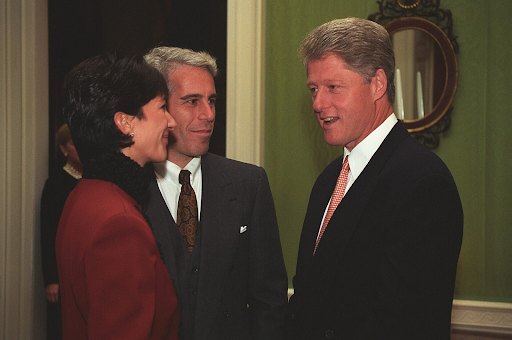
On 30 January 2026, over 3 million documents, including 180,000 images and 2,000 videos, were released from the Epstein files. This burst of disclosures, which brings the total number of released case documents to 3.5 million, was prompted by the Epstein Files Transparency Act. Originally signed into law in the United States in November 2025, the act set a 30 day deadline for a complete release, which the US Department of Justice repeatedly failed to meet.
The files provide an appalling and detailed insight into the actions of Jeffrey Epstein, convicted sex offender and wealthy American financier. In 2005, the first accusation of sexual abuse was made against Epstein, with an increasing number of alleged victims coming forward during the FBI’s investigation, culminating in a 2008 federal plea deal. Epstein, who pleaded guilty to just two counts of soliciting prostitution (including of a minor), served only 13 months in prison, during which he was allowed to spend six days of the week in his Palm Beach office. However, in 2018, following a report by investigative journalist Julie K Brown, which identified around 80 alleged survivors of abuse, the investigation was renewed, and Epstein was arrested in July 2019. While awaiting trial, Epstein committed suicide by hanging. Although it has been widely accepted that there was no foul play involved, some conspiracy theorists highlight strange details, including that multiple cameras malfunctioned, guards violated prison policy by not checking on Epstein for three hours, and his cellmate was removed and not replaced the day before his death.
The files comprehensively detail Epstein’s time in prison and his death, as well as records from the investigation of Ghislaine Maxwell (Epstein’s partner). However, the key focus of public discussion and scrutiny has been the emails between Epstein and other high profile figures.
According to The Independent, Donald Trump is mentioned over 3,000 times in the files, revealing a decades-long friendship with Epstein. Although The Guardian’s analysis of the files concludes that their relationship ended in 2004 after a dispute, an email from 2012 with a redacted sender and recipient reads “What does JE think of going to Mar-a-Lago [Trump’s Florida club] after xmas instead of his island?“. This seems to suggest that the men continued to socialise long after Trump claims the relationship ended. In fact, Trump denies any wrongdoing at all, and has not been directly accused by Epstein’s victims. His 2024 campaign promise to release the files was quickly reneged on.
Other key figures, including the former British prince Andrew Mountbatten-Windsor, are featured in the documents. Email exchanges between August 2010 and February 2011, more than two years after Epstein first pleaded guilty to sexual crimes, show Mountbatten-Windsor inviting Epstein to Buckingham Palace for “lots of privacy”. He is also featured in an image kneeling on all fours above an anonymous woman. A woman has since come forward, alleging that she was sent by Epstein to Mountbatten-Windsor to have a sexual encounter and that she received a tour of Buckingham Palace.
Many of the individuals named in the files deny knowledge of, or participation in, Epstein’s sexual abuse. In an unsent email draft, Epstein implicated Bill Gates, alleging that Gates had had extra-marital affairs, asked him to do things “potentially over the line into the illegal” and that he had contracted an STD, which he covered up from his wife. Gates’ spokesperson vehemently denied this to The Independent, stating “These claims are absolutely absurd and completely false. The only thing these documents demonstrate is Epstein’s frustration that he did not have an ongoing relationship with Gates and the lengths he would go to entrap and defame”.
Similarly, Peter Mandelson, ex-British ambassador to the United States, has strongly denied that he knew of Epstein’s crimes, and claims to have “learned the actual truth about him after his death.” The documents reveal a close friendship between the two men, detailing how Epstein allegedly made $75,000 worth of payments to Mandelson, as well as funding £10,000 towards his husband’s education. In 2009, Mandelson also requested to visit one of Epstein’s properties, during Epstein’s prison sentence for soliciting prostitution from a minor. A Financial Conduct Authority investigation has also been encouraged to determine whether Mandelson caused insider trading by leaking sensitive information to Epstein. Mandelson was removed from his position as ambassador in September 2025 and stepped down from the Labour party on 1 February 2026.
As the majority of news outlets have emphasised, being named in the files does not prove any wrongdoing. Yet, many featured individuals have been removed from their positions, including Peter Attia whose CBS segment 60 Minutes was axed after documents depicting his “crude banter” with Epstein were released.
The files do, however, show an extreme network of elite influence and corruption. They demonstrate that Epstein was repeatedly involved in “back-channel interventions in the political and business spheres”. This included advising Israeli prime minister Ehud Barak and receiving advance notice from Mandelson of the EU’s 2010 €500 billion bailout during the Greek debt crisis. Even after his first conviction, he remained integrated in elite business circles, with tech companies accepting his investments, Peter Thiel advising him on a Palantir investment (which he denies), and banks including JP Morgan and Deutsche Bank facilitating his actions. These banks have since been sued by 2 victims, accusing them of enabling Epstein’s sex trafficking operation by violating federal laws. Both companies settled in 2023.
Yet, the most appalling details revealed by the files relate to the sexual abuse which Epstein carried out. One file, which lists a number of high schools interviewed by the authorities, reveals how several girls under 18 were abused hundreds of times. The documents also indicate that other men were involved in sexual coercion and abuse that was facilitated by Epstein, particularly of minors. Sigrid McCawley, a lawyer representing Epstein’s victims, stated “it is without question that a significant piece of Epstein and Maxwell’s vast sex-trafficking operation was to provide young women and girls to other wealthy and powerful individuals.” A prior release of files also suggests that Epstein may have shared child sexual abuse images with other individuals.
Violations towards the victims have continued; the Department of Justice failed to properly protect the victim’s identities through redactions during the disclosure. As Gloria Allred, representative of many of the survivors, described, the files released a number of previously undisclosed victims’ names. Crossed-through names were still left visible, and the files also contained email addresses and identifiable (sometimes nude) photos of victims. In a statement, some survivors labelled this “outrageous,” criticising that they had been “named, scrutinized and retraumatized.” Following a legal request in New York to remove the website, the Department of Justice has deleted thousands of compromising documents, but many had been downloaded before this.
This release is expected to be the final disclosure, as indicated by the Department of Justice. Yet, Ro Khanna, the Democratic Congressman who spearheaded the Epstein Files Transparency Act, stated his concerns, since “the DOJ said it identified over 6 million potentially responsive pages but is releasing only about 3.5 million after review and redactions.”
Right-Wing Laura Fernández Wins Costa Rican Elections
.svg)
Lola Dunton-Milenkovic
Right-wing populist Laura Fernández, from the governing Sovereign People’s Party, has won Costa Rica’s presidential election in a landslide, following promises to crack down on rising violence linked to the cocaine trade.
Her nearest rival, centre-right economist Álvaro Ramos, conceded defeat when the results showed the incumbent party exceeding the threshold of 40% needed to avoid a runoff.
According to the Supreme Electoral Court of Costa Rica which is responsible for organising elections (TSE), with 94% of polling stations counted, Fernández had captured 48.3% of the vote compared to Ramos’s 33.4%. Voter turnout was 66.96%, higher than that in the last elections in 2022 when it was below 60%.
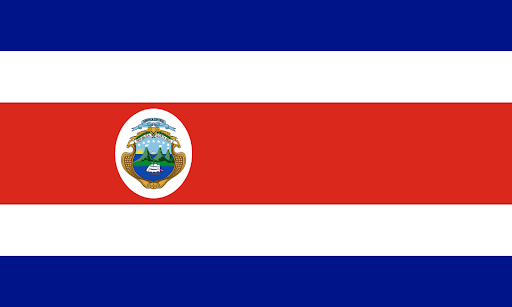
Fernández is the political heir of outgoing president, Rodrigo Chaves, who picked her out from relative anonymity to serve as planning minister and chief of staff. As soon as the first results were announced, members of her Sovereign People’s party began celebrating, waving the blue, red and white-striped Costa Rican flag, and cheering “Viva Rodrigo Chaves” as a nod to her mentor.
Appearing via video link at her party’s official election night gathering in the capital San Jose, Fernández vowed to “fight tirelessly” to ensure Costa Rica “continues on the path of economic growth, freedom, and above all, the progress of our people”.
The country of 5.2 million people, perhaps most famous for its white-sand beaches, has long been viewed as an oasis of stability and democracy in Central America. Formerly regarded as “the Switzerland of Central America”, it was known for its consolidation as a welfare state, its expansion of social rights, its strength of democratic institutions, and its remarkable leadership in environmental conservation.
In recent years, however, Costa Rica has shifted from transit point to logistics hub in the global drug trade, as drug trafficking by Mexican and Colombian cartels has entered local communities. It has ceased to be exclusively a temporary storage facility and transit route for drugs, and is instead now an active participant within organised transnational crime, which has contributed to an increase in homicides. According to Costa Rica’s independent Judicial Investigation Agency (OIJ), from January to September 2025, 614 homicides were recorded. 404 of these deaths were attributed by authorities to score settling and clashes between criminal gangs vying for control of drug trafficking territories. These turf wars have led the murder rate to spike by 50% in the past six years. The homicide rate reached 17 per 100,000 inhabitants in 2025, up from 11.2 in 2019. Despite all this, Costa Rica still maintains its position as the most peaceful country in Central America, ranking 54th globally in the 2025 Global Peace Index.
The first foreign leader to congratulate Fernández on her victory was the Salvadoran president Nayib Bukele, known for his mano dura or iron-fisted approach to crime crackdown. Fernández has cited him as an inspiration for tackling crime, given that he has locked up thousands of suspected gang members without charge. She also plans to complete construction of a maximum-security prison modelled on Bukele’s brutal Terrorism Confinement Centre (Cecot), which is known for its harsh conditions and has been accused of human rights violations including torture, inmate deaths and mass trials. She has also promised to stiffen prison sentences, and impose a Bukele-style state of emergency in areas worst hit by crime.
Fernández’s win is part of a wider lurch towards the right in Latin America, where conservative candidates have channelled anger towards corruption and crime to win power in Chile, Bolivia, Argentina and Honduras. With her party also winning 30 out of the 57 seats in parliament, Fernández will have more backing in the legislature than her predecessor.
Her critics, however, fear that she will try to change the constitution to allow her ally Chaves to return as president after her four-year mandate ends. Under the current constitution, presidents are not allowed to serve two consecutive terms, and Chaves was therefore barred from standing for re-election. Former president and winner of the 1987 Nobel Peace Prize, Óscar Arias, warned that the “survival of democracy” was at stake, adding “the first thing dictators want to do is to reform the constitution to stay in power”. In defence, Fernández has said that she is committed to upholding Costa Rica’s democratic tradition.
Fernández, the second woman to govern Costa Rica since Laura Chinchilla in 2010, will be sworn in on 8 May 2026.
Orbán Orders Courts to Terminate Lawsuits Against Government Tax Policies
.jpg)
Anastasija Vranjes
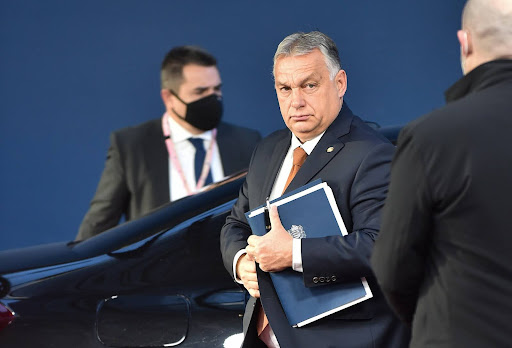
A new decree passed by Hungary’s prime minister Viktor Orbán on Tuesday orders courts to drop lawsuits filed by several municipalities against the contentious “solidarity contribution” tax. According to Budapest mayor Gergely Karácsony, this demonstrates that the government has “abandoned even the pretense of respecting the rule of law.”
A number of municipalities have filed lawsuits against the tax, which was first put in place in 2017 to help more affluent municipalities aid poorer parts of the country. The required contribution from each municipality is calculated based on their assessed Local Business Tax capacity per capita. Yet local newspapers have said that its “distribution is opaque, as is the collection”. Since 2018, the tax has risen almost twentyfold, contributing to serious budget concerns in populous cities such as Budapest.
Karácsony’s challenge to the tax was taken to the Kuria, Hungary’s highest court, where the forced deduction of €90 million from the city of Budapest was found to be illegal. Last week, however, the Constitutional Court, a body dominated by Orbán loyalists, ruled that the tax did not violate the constitution.
The new decree prevents any existing and future municipality challenges to the tax from being tried in court. Orbán has attempted to justify the enforcement of the decree by invoking emergency powers which were put in place in Hungary at the start of Russia’s invasion of Ukraine in 2022. Yet legal experts have condemned this explanation, claiming that the tax is unrelated to the war.
For years, Orbán’s government has de facto ruled by decree by declaring a number of states of emergency. The first was established in 2015 as a response to the European migrant crisis, followed by the Coronavirus pandemic, and, more recently, Russia’s invasion of neighbouring Ukraine.
The new decree has caused outrage amongst the country’s opposition and legal community. The Hungarian Bar Association has argued that the decree violates the separation of powers, legal certainty, judicial independence, the ban on newly instated laws having effect on past actions, and the human right to justice. The Kuria said that “in the solidarity contribution cases, proceedings are still ongoing in the lower courts. In those ongoing proceedings, the judges assigned to decide must decide”. The court later clarified that it was not taking a position on the decree. Both the Budapest Metropolitan Court and the Metropolitan Court ruled that they would not enforce the decree.
Karácsony has argued that the decree is a new low in the government’s “dismantling” of the legal system. On a Facebook post on Wednesday, he argued that Orbán’s move “sets a precedent: if a court appears likely to rule against the government, a decree can simply be issued afterwards to declare the government right and dismiss the case.” Experts have similarly argued that the decree shows that the government believes the courts will not side with them on the issue of the tax, and it is not ready to accept this.
Karácsony sent a complaint to the European Commission on Wednesday, urging it to “look into the steps they could take to protect the rule of law in Hungary.” The European Commission has confirmed that it is investigating the decree and any further developments.
This is not the first time Orbán has sidestepped the courts and faced scrutiny. After the Defence of Sovereignty law was passed in 2023, Brussels withheld €20bn in EU funds due to transgressions in the rule of law and the country’s corruption problems. In 2025, significant changes were made to the constitution and signed by the president without public debate, leading to criticism from Human Rights Watch. The NGO said this endangered human rights, democracy, and the rule of law in the country.
Local journalists have suggested that the decree was motivated by the ruling party’s hope to use Budapest’s unpaid funds in the April Parliamentary election. The newspaper Daily News Hungary has argued that the Fidesz party wants to “push the city to the brink of bankruptcy”, citing its campaign’s rural focus and promotion of the urban-rural conflict narrative.
The approach of the election in April has created tension in the country. Despite Donald Trump’s endorsement of Orbán’s campaign, the opposition Tisza party seems to be the favourite in this election, leading by 12 points in opinion polls. Local newspaper Válasz Online has stressed the danger of the decree in the context of the upcoming elections. “Where this is possible, anything is possible,” research fellow at Károli Gáspár University Ablonczy Bálint warned in an editorial. With the new precedent it has set, he argues, the ruling party could overrule the election results if the opposition wins in April.